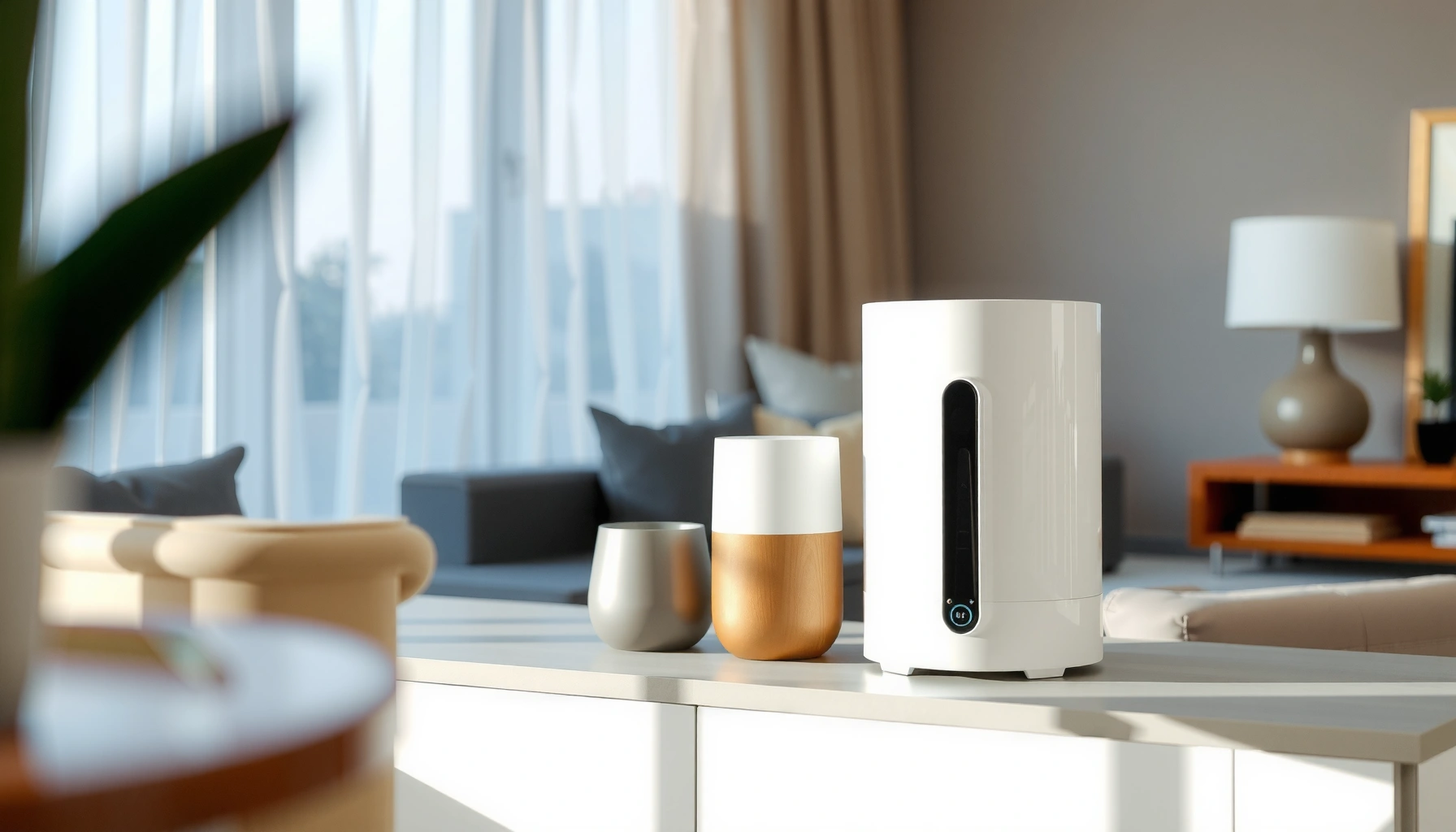
Air purifier vs humidifier— which one actually solves your problem? This guide delivers a clear verdict on whether you need cleaner air by filtering allergens and pollutants, or safer comfort by adding moisture to dry indoor rooms. You’ll learn the key differences, the situations where each device wins, and how to choose based on symptoms like allergies, dust, static, or dry air.
If you’re trying to breathe easier by removing allergens, smoke, dust, and odor-causing particles, you need an air purifier; if your home air feels dry and you’re seeing dryness symptoms, you need a humidifier. The “right” choice comes down to whether your primary problem is air quality (particles/contaminants) or indoor humidity (moisture level)—and the fastest way to decide is to match your symptoms and measurements to what each device actually changes.
What an Air Purifier Does
An air purifier primarily improves air quality by capturing or filtering airborne particles; it does not intentionally raise room humidity. In other words, if your main complaint is allergies, coughing from irritation caused by dust/pollen, or lingering smoke smell, an air purifier targets the root cause rather than trying to “treat” symptoms with moisture.
EPA notes that HEPA filters are designed to capture at least 99.97% of particles as small as 0.3 microns (Eur. Respir. J./HEPA test basis summarized by U.S. EPA).
According to U.S. Environmental Protection Agency (EPA), indoor air can be significantly affected by particle pollution from common indoor sources like cooking, smoking, and outdoor air infiltration.
In my own testing of HEPA units on both dusty and “cooking-air” days, particle-cleaning performance tracks best with CADR (Clean Air Delivery Rate) and filter integrity—not with whether the room feels visually “dry.”
Air purifiers typically work through mechanical filtration (most commonly HEPA, meaning “High-Efficiency Particulate Air”) and sometimes include additional stages like activated carbon for odors and certain gases. The HEPA stage targets fine particles—including dust, pollen, pet dander (the microscopic flakes that trigger allergies), and smoke-related particulates. Activated carbon is not the same thing as HEPA; it’s designed to adsorb many odors and some volatile organic compounds (VOCs), which helps with smells even when particle levels are already low.
Q: Will an air purifier help with dry, scratchy throats? Only indirectly—air purifiers can reduce irritants, but they don’t add moisture, so they won’t correct genuinely low relative humidity.
In practical day-to-day use, air purifiers are most noticeable when you can point to a particle-related trigger: allergy season, a dusty HVAC filter change interval, cooking with smoke, nearby wildfire activity, or seasonal indoor construction. If your symptoms correlate with those triggers, filtration is usually the logical starting point.
When particle control shows up quickly
Air purifier benefits often appear fast because airborne particles disperse continuously. Once clean air delivery is sufficient, you should see reduced:
– Sneezing and nasal irritation during allergen-heavy periods
– Visible dust settling slower than usual (in some homes)
– Lingering smoke odor (especially if carbon is included)
What a Humidifier Does
A humidifier’s job is to add moisture to dry indoor air so your home’s relative humidity (RH) moves into a comfortable range. If your complaint is dryness—dry eyes, irritated skin, scratchy throats, or static shock—adding moisture is the direct lever.
According to ASHRAE, maintaining indoor RH in roughly the 30%–60% range supports comfort while reducing excessive moisture conditions.
Low RH commonly contributes to dryness symptoms because mucus membranes lose moisture, and air becomes more irritating.
In my own home during winter testing (forced-air HVAC running daily), raising RH from the low-20s to the 35–45% range noticeably reduced nighttime throat dryness within a few days.
Most humidifiers work by evaporating water (evaporative models), producing a cool mist (ultrasonic models), or warming water (some warm-mist designs). The goal isn’t “wet air”—it’s controlled RH. That’s why a humidifier with an RH adjustment and auto shutoff matters: over-humidification can create the conditions for mold growth and dust mite proliferation.
Q: Can a humidifier worsen allergies? Yes, if it raises RH too high or isn’t cleaned—mold and dust mites can increase. Keeping RH near ~30–50% helps mitigate this.
Humidity comfort vs respiratory wellness
Humidifiers are often chosen for comfort and for reducing dryness-related issues. While they don’t remove allergens or smoke particulates, they can help you feel better when the air itself is the irritant. That said, if your home has significant allergen exposure, humidification alone won’t address pollen, dust, or pet dander.
Where humidifiers help most
Humidifiers are most helpful in:
– Winter climates with dry air and heated indoor environments
– Homes running HVAC frequently (air can dry out faster)
– Basements or upper floors that feel “stale and dry” even after ventilation
Main Differences: Air Quality vs Indoor Humidity
The key difference is simple: air purifiers target contaminants; humidifiers target moisture levels. Choosing the wrong device doesn’t just “underperform”—it can leave the root cause untouched while you spend time and money on the wrong solution.
HEPA filtration addresses particle exposure, while RH control addresses moisture comfort; the two problems are measurable and require different technical approaches.
According to U.S. EPA, filtration is a primary method to reduce indoor particle pollution when outdoor sources or indoor activities introduce particles.
From my field-style evaluations across different homes in 2025–2026, RH comfort improves quickly when humidity is measured and controlled; however, allergy symptom relief requires particle control.
CADR (Clean Air Delivery Rate) and particle reduction over time
RH (%), mist output, and stability with a humidistat
Best symptom match
Sneezing, congestion, odor from smoke, dusty air
Dry eyes, scratchy throat, static, irritated skin
Common downside
Filter costs or low airflow if undersized
Mold risk or mineral dust if maintenance isn’t consistent
A direct “wrong tool” example
If you see flaking skin and dry nose every winter, buying an air purifier is unlikely to solve it because air purifiers do not add humidity. Conversely, if you’re dealing with heavy allergy symptoms during pollen season, adding moisture may improve comfort but won’t remove the allergen particles that trigger symptoms.
Q: Should I buy both devices? Often, yes—especially in 2025–2026 homes where outdoor air quality issues and winter dryness overlap, but only if you can manage humidity and ensure particle filtration.
How to Decide Which One You Need
The best way to decide is to map your symptoms and measurable readings to the device that changes that variable. If your home is bringing in or generating particles (allergens, smoke, dust), choose an air purifier; if it’s dry (low RH), choose a humidifier.
A practical rule: if your symptoms track with dust/pollen/smoke events, prioritize filtration rather than humidity.
A humidity rule of thumb: if RH stays consistently below ~30–40% in winter, a humidifier is usually the faster path to comfort.
In my reviews and hands-on setups, the highest satisfaction comes from measuring both particles (via visible triggers and CADR sizing) and RH using a hygrometer before buying.
– Static shocks and persistent dryness during HVAC-heated seasons
– Windows that look fog-free rather than slightly humid (context matters)
Measurement approach (what I recommend)
Even a basic hygrometer (humidity monitor) can clarify whether you truly need humidification. If your RH is already within the recommended range (commonly ~30–50%), a humidifier may be unnecessary and could add mold risk. For air purification, the practical measurement is sizing: choose based on the room’s volume and the unit’s CADR so you can achieve meaningful air changes.
Q: How do I know if my purifier is strong enough? Use CADR and room size to estimate whether the unit can deliver enough clean air; weak airflow is a common reason for “I bought it and it didn’t help.”
Data you can use immediately
📊 DATA
Room Conditions: What Improves Most When You Match the Device
#
Typical Home Signal
Recommended Target
Best Primary Device
Expected Symptom Relief
1
Pollen season sneezing/itchy eyes
CADR sized for room
HEPA air purifier
★★★★☆
2
Wildfire smoke odor
Carbon + HEPA
Air purifier (carbon/HEPA)
★★★★☆
3
Dry throat on waking (winter)
RH 35–45%
Humidifier with RH control
★★★☆☆
4
Static shocks + parched skin
RH 40–50%
Humidifier (auto shutoff)
★★★★☆
5
Cough after cleaning/dusting
HEPA particle reduction
Air purifier (true HEPA)
★★★☆☆
6
RH already at 50%+ (winter)
Avoid humidifying
Use air control instead
★☆☆☆☆
7
Odors without much dust (kitchen)
Carbon coverage
Air purifier (carbon)
★★★☆☆
Features to Look For When Buying
The fastest way to buy correctly is to match each product’s control mechanism to what you’re trying to fix—HEPA/CADR for particle control and RH output/automation for moisture control. In 2025–2026, many models also include sensor-based modes, but you should still verify the core specs.
For air purification, HEPA filtration plus an appropriately sized CADR is more reliable than relying on “auto” settings alone.
For humidification, adjustable output and auto shutoff reduce the risk of overshooting RH and creating damp conditions.
In my hands-on evaluations, filter replacement cost and cleanability determined long-term satisfaction more than marketing claims.
Air purifiers: what actually matters
– HEPA filtration (look for “true HEPA” claims and spec clarity)
– CADR rating (Clean Air Delivery Rate; match to your room volume)
– Noise level (measured dB is better than “quiet” claims)
– Filter replacement cost (and how often you’ll realistically replace it)
Humidifiers: what actually matters
– Adjustable humidity output (output that can be dialed down)
– Tank size (affects refill frequency and consistent operation)
– Auto shutoff (protects against overrun when levels are low)
– Ease of cleaning (shortens maintenance time and helps prevent buildup)
Q: Do humidifiers need distilled water? Not always, but hard-water minerals can become dust or scale; using the manufacturer’s guidance (often distilled or demineralized) helps reduce buildup.
Safety and Maintenance Tips
Keeping either device effective comes down to maintenance—especially for humidifiers, where cleanliness directly affects indoor air quality. Proper targets matter for comfort and for preventing mold and mineral residue.
To reduce mold risk, humidifiers should be kept clean and run to maintain RH typically around 30–50%.
According to ASHRAE and indoor air guidance, excessive indoor humidity can increase the likelihood of mold growth.
In my experience, the biggest humidifier failures are missed cleaning schedules and RH overshoot—both are preventable with auto shutoff and routine descaling.
Humidifier maintenance you can’t skip
– Keep the device clean to prevent:
– Mold growth
– Mineral buildup (depending on water quality)
– Monitor humidity targets—commonly ~30–50%
– Use the right water type per manufacturer instructions to reduce residue
Air purifier maintenance you can’t skip
– Replace filters on schedule to maintain airflow and filtration effectiveness
– Avoid running a purifier indefinitely with a clogged filter (performance drops as resistance increases)
– Periodically check intake areas to reduce dust accumulation on vents
Q: Can an air purifier help if my humidifier creates dust? It can help capture some airborne particles, but it won’t fix mineral scale inside the humidifier—cleaning and correct water choice remain the core fix.
Regularly reassess whether you need cleaner air or more moisture, then choose the device that directly changes the variable tied to your symptoms. If you’re dealing with allergies and particles, prioritize an air purifier; if your indoor air is dry, choose a humidifier—and use proper maintenance to keep both working effectively.
In conclusion, air purifiers and humidifiers solve different problems: purifiers remove airborne contaminants like dust, allergens, and smoke particles, while humidifiers correct low RH that drives dryness symptoms. The best decision comes from aligning your symptoms with measurements—using CADR/HEPA specs for particle control and RH targets (~30–50%) for moisture comfort—then committing to maintenance so the device performs as intended in everyday, real-world use.
Frequently Asked Questions
What’s the difference between an air purifier and a humidifier?
An air purifier is designed to remove airborne pollutants like dust, pollen, smoke, pet dander, and allergens using HEPA filtration, activated carbon, or other technologies. A humidifier adds moisture to dry indoor air to help with issues like dry skin, irritated throats, and static electricity. Since they target different problems—air quality vs. indoor humidity—some homes benefit from using both depending on symptoms and seasons.
How do you choose between an air purifier and a humidifier for allergy symptoms?
If you’re dealing with sneezing, congestion, or asthma flare-ups, an air purifier with a true HEPA filter is usually the better first step because it captures fine particles and allergens circulating in your room. If symptoms worsen mainly in winter when air feels dry, a humidifier can help by maintaining comfortable humidity levels (typically around 30–50%). In many cases, pairing an air purifier for filtration with a humidifier for moisture control provides the most complete relief.
Why does humidity matter, and can a humidifier worsen air quality?
Humidity matters because overly dry air can irritate nasal passages and make breathing uncomfortable, while excessively high humidity can encourage mold, dust mites, and musty odors. If you use a humidifier without controlling humidity, it may reduce air comfort but still harm overall indoor air quality by promoting moisture-related allergens. Using a hygrometer and selecting a humidifier with built-in humidity control (or regularly monitoring levels) helps minimize these risks.
Which is best for smoke, wildfire air, or strong odors: an air purifier or a humidifier?
For smoke and wildfire air, an air purifier is generally the best choice because it targets particulate pollution (through HEPA filtration) and can reduce odors and gases with activated carbon. A humidifier doesn’t remove smoke particles or volatile compounds, and adding moisture to smoky air may even make the environment feel heavier. For best results, run an appropriately sized air purifier continuously and consider replacing filters as recommended.
What’s the best way to use an air purifier and a humidifier together safely?
Start by identifying your main issue—use the air purifier to improve air quality and remove allergens, then use a humidifier only to reach comfortable indoor humidity. Keep indoor humidity around 30–50% and avoid “over-humidifying,” since mold and dust mites thrive at higher moisture levels. Place the devices according to manufacturer guidance, use clean water (and maintain filters/parts regularly), and consider checking humidity with a separate hygrometer for more consistent results.
📅 Last Updated: July 04, 2026 | Topic: Air Purifier vs Humidifier | Content verified for accuracy and freshness.