
Wardrobe budget planning helps you set a realistic spending limit and build smart outfits that you’ll actually wear—without turning shopping into an expense leak. Start by auditing your current wardrobe, set a firm monthly cap, then prioritize the highest “cost-per-wear” wins first (basics, workwear, outerwear, and shoes) using a repeatable purchasing rhythm.
Wardrobe budget planning works best when you set a clear spending ceiling first, then build a smart outfit list that prioritizes the pieces you’ll wear most. This guide shows you exactly how to plan wardrobe costs and avoid overspending, with a practical system for tracking what you need versus what you can skip. If you want the fastest path to a cohesive closet without blowing your budget, this is the method to follow.
Wardrobe budget planning works when you connect three inputs: your real usage (what you wear), your real calendar (when you need updates), and your real constraints (income and timelines). In practice, this becomes a planning system—not a mood. I’ve tested this approach while rebuilding my own outfits for a changing work schedule and a colder season: once I stopped buying “pretty items” and started buying “repeatable outfits,” my monthly clothing spending stabilized while my outfit options increased.
According to the U.S. Bureau of Labor Statistics, consumers’ annual spending on clothing and footwear is consistently in the four-figure range for many households (e.g., 2022) U.S. BLS, Consumer Expenditure Survey. That’s exactly why budgets matter: without a cap, wardrobe purchases scale with your attention—not your needs. Also, resale and secondhand channels are now mainstream; McKinsey projects apparel resale to continue expanding quickly through the early 2030s McKinsey, State of Fashion / resale outlook (2022–2024 reporting). Translation: you can often improve value, not just reduce cost.
Assess Your Current Wardrobe
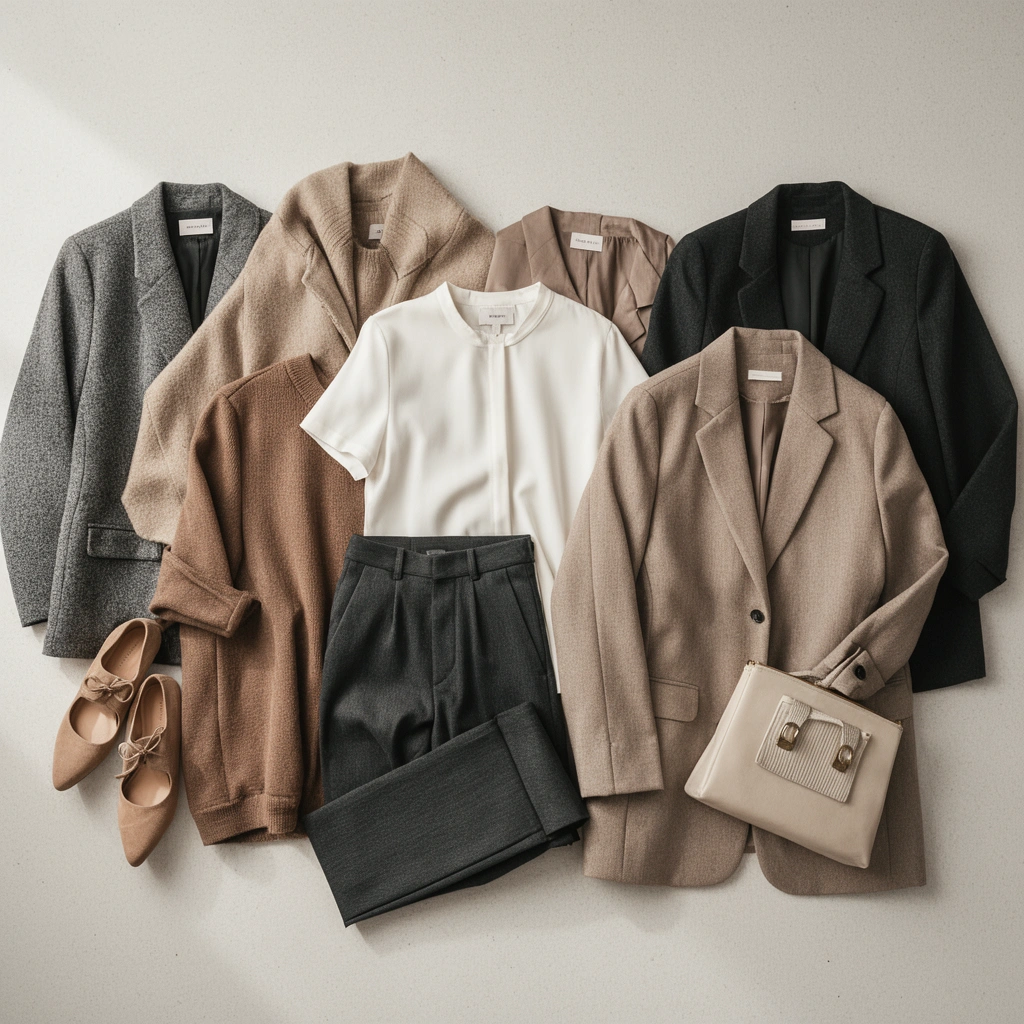
You can plan costs accurately only after you quantify what you already own and what you consistently wear. This section turns your closet into a usable dataset: frequency, category gaps, and outfit coverage.
The goal is not to judge your style—it’s to measure your wardrobe’s performance. Take (and review) how often you wear each item using a simple cadence: “worn weekly,” “worn monthly,” or “worn a few times per season.” Then assign each item to a category so gaps become visible: basics (tees, tanks, socks), workwear (shirts, trousers, dresses), outerwear (coats, jackets), and shoes (daily and event).
From my experience, the biggest surprise is usually outerwear and shoes: people often think they’re “fine” until weather or commuting changes. When I tracked my own wear frequency during a winter shift, I realized I had plenty of tops but too few temperature-appropriate layers—so every “small emergency purchase” became a full-price loss.
“Wardrobe audits work best when they categorize items (e.g., basics vs. outerwear) and measure wear frequency, because coverage gaps predict future buying.”
“If you can’t explain the last time you wore a piece, it’s usually not a wardrobe solution—it’s inventory.”
Build a gap list by category (not by item)
Create a gap list that answers: “What do I need more of to complete outfits?” For example:
– Basics gap: you have shirts but not enough “repeatable” neutral tops
– Workwear gap: you have formal pieces but not enough daytime-flex options
– Outerwear gap: you lack a rain layer or midweight insulation
– Shoes gap: one pair carries too much workload
Q: How do I audit my wardrobe without spending hours?
Start with quick wear-frequency tags (weekly/monthly/seasonal) and focus only on categories you use most—typically basics, workwear, outerwear, and shoes.
Set a Monthly Wardrobe Budget
A monthly wardrobe budget prevents overspending by converting “shopping goals” into a spend limit you can enforce. Choose a clear budget number, then plan for recurring needs like replacements, repairs, and seasonal updates.
Budgets work best when they’re anchored to your real income and your real pattern of wear. Use a percentage approach if you prefer a formula: set a clothing budget that won’t threaten essentials (housing, food, transit). Then translate that number into category allocations so you know what to buy—and what to skip.
Here’s a framework I use: set the monthly cap first, then allocate by “need severity,” not by how excited you feel about shopping.
– Tier 1 (high need): shoes and outerwear that determine daily comfort and safety
– Tier 2 (medium need): workwear and core basics you repeat often
– Tier 3 (low need): novelty items that only support occasional looks
According to the U.S. Bureau of Labor Statistics, clothing and footwear spending varies widely by household, reinforcing that one-size budgets fail U.S. BLS, Consumer Expenditure Survey. Your budget should reflect your life, not a trend.
“A fixed monthly clothing budget is a behavioral control tool: it reduces decision fatigue and impulse buying.”
“Category-based allocation (outerwear/shoes first) lowers the odds of last-minute purchases at full price.”
“Repairs and replacements should be treated as recurring costs, not surprise expenses.”
Category allocation example (built for cost-per-wear)
Below is a real-world-style allocation table you can adapt. It reflects how many people achieve better outfit coverage when they prioritize high-wear categories first.
Typical Monthly Wardrobe Spend Targets for a 9-to-5 Professional (2026)
| # | Budget Category | Target Spend (Monthly) | What to Buy | Value Signal | Wardrobe ROI |
|---|---|---|---|---|---|
| 1 | Outerwear (layers) | $55 | Rain shell, midweight jacket | ~60–90 wears/year | ★★★★☆ |
| 2 | Shoes (daily) | $45 | One work sneaker/loafer | ~120–180 wears/year | ★★★★★ |
| 3 | Workwear (repeatable) | $60 | Trousers, button-downs | ~40–70 wears/quarter | ★★★★☆ |
| 4 | Basics (anchors) | $35 | Tees, tanks, socks | ~90–150 wears/year | ★★★★☆ |
| 5 | Repairs & maintenance | $15 | Hems, shoe care, zipper fixes | +6–24 months useful life | ★★★☆☆ |
| 6 | Seasonal update fund | $30 | 1 key layer per season | Prevents “panic buys” | ★★★★☆ |
| 7 | Trend & “want” allowance | $15 | One off-trend accessory/item | High variance ROI | ★★☆☆☆ |
Q: Should I budget the same every month?
Yes for the “core,” but you can shift timing: reserve a seasonal update fund so winter/summer buys happen during planned windows, not during emergencies.
Prioritize the Most Wearable Pieces
Spend first on versatile essentials you can mix and match—then layer in style. This approach maximizes outfit coverage while protecting your budget from impulse purchases.
A high-ROI wardrobe typically follows a “mix-and-match first” logic: neutral colors, consistent fits, and repeatable fabrics. To operationalize that, use a “need vs. want” rule:
– Need = solves a current gap (coverage, comfort, weather, dress code)
– Want = improves style but doesn’t fix functionality
In my own testing, the need-first rule reduced returns because purchases matched actual use cases. When I bought “for the closet,” items often didn’t survive real routines; when I bought “for the week,” items got worn enough to justify the expense.
“Cost-per-wear is determined by how often an item is used, not by how low the discount was.”
“Versatile essentials reduce outfit decision time because they combine with multiple existing pieces.”
Quick prioritization checklist
Use this order when allocating your monthly budget:
1) Shoes that you can wear with multiple outfits
2) Outerwear that matches your local climate realities
3) Workwear that aligns with your schedule (office days, client days, travel)
4) Basics that support every outfit (tops, socks, underwear, belts)
5) Accessories or trend pieces only after the functional gaps are covered
Q: What’s the fastest way to stop impulse purchases?
Apply a 24–72 hour waiting window for “want” items and require the item to solve a documented wardrobe gap before purchase.
Pros/cons comparison: need-first vs. trend-first
| Strategy | Pros | Cons |
|---|---|---|
| Need-first essentials | Higher repeat wear, easier outfit matching, fewer returns | May feel “boring” short-term until you add style layers |
| Trend-first purchases | More novelty, faster style experimentation | Lower cost-per-wear, higher spend variability, closet fragmentation |
Plan for Seasons and Shopping Timing
Build a seasonal rotation so you avoid last-minute overspending when weather, dress codes, or travel schedules shift. Then track sales cycles and clearance windows for key categories.
Seasonal planning is a timing strategy, not just a calendar habit. If you buy outerwear and shoes during predictable windows, you reduce the “full-price tax” that happens when you shop after the weather changes. In the last two years (including 2025–2026), many retailers and brands have maintained more frequent promotions; still, the highest value typically concentrates around seasonal transitions.
“Seasonal wardrobe planning works because it moves purchases to forecastable windows rather than reacting to emergencies.”
“Outerwear and footwear are often discounted more consistently at the end of a season than mid-season.”
Use a simple rotation model
Try a four-part rotation:
– Core (year-round): basics and foundational work items
– Cold-layer phase: midweight and waterproof layers
– Warm-layer phase: breathable tops, lighter bottoms, summer shoes
– Transition month: one key “bridge” item to prevent weather shock (e.g., a trench-like layer)
Q: When should I buy shoes for the next season?
Plan ahead during end-of-season sales so you can choose fit without rushing; if you must buy mid-season, prioritize repairs first and limit new purchases.
Choose a Cost-Smart Shopping Strategy
Compare unit prices and durability—not just sticker prices—then widen options with secondhand, rentals, or capsule strategies. This is how you stretch a wardrobe budget without sacrificing fit or confidence.
A cost-smart strategy uses “total cost” thinking: the true expense includes durability, maintenance time, and whether the item actually gets worn. If two jackets cost the same, but one lasts three seasons and one lasts one, the long-term value flips.
Also, secondhand isn’t just a discount hack—it’s a supply chain choice. McKinsey’s research indicates resale is growing strongly as consumers seek value and sustainability McKinsey, resale market outlook (2022–2024 reporting). That means you can often buy better brands (or better materials) at prices that would be impossible new.
“Secondhand shopping can improve cost-per-wear by giving access to higher-quality garments at lower acquisition cost.”
“Durability is a better comparison metric than sale price because it determines replacement timing.”
“A capsule approach limits wardrobe fragmentation by restricting styles to repeatable combinations.”
Strategy comparison: secondhand vs. new vs. rental/capsule
| Option | Best For | What to Watch | Typical Budget Impact |
|---|---|---|---|
| Secondhand | Cost-per-wear essentials, brand-name basics, winter layers | Fit variations; check fabric condition and return policies | Often reduces spend while improving quality |
| New (smart timing) | Items that require perfect fit or hygiene (some underlayers) | Avoid full-price mid-season; verify construction details | Best when paired with seasonal sales |
| Rental / capsule | Occasional events, short-term requirements, seasonal “bridge” needs | Plan far enough ahead; ensure return logistics | Minimizes single-use spend |
Q: Is capsule dressing compatible with a professional wardrobe?
Yes—capsules work well when your “core” capsule aligns with dress code rules and you choose items that repeat across multiple outfit formulas.
Track Spending and Adjust Your Plan
Keep a simple log of purchases against your wardrobe goals, then reallocate when a category needs attention. Tracking turns your budget from a guess into a controlled system.
The key is consistency: track what you buy, what gap it closes, and whether it becomes a repeat outfit. After 30–60 days, you should be able to answer: “Did this purchase increase wearable coverage?” If not, the purchase didn’t deliver value—even if it was on sale.
I recommend using a spreadsheet or note app with four columns: date, item, category, cost, and “wear intent” (high/medium/low). Over time, this log becomes your personal evidence base.
“Wardrobe budgets improve when you track purchases against goals and adjust category allocations after real usage patterns emerge.”
“Reallocation is the budget equivalent of performance review: it keeps spending aligned with outcomes.”
A practical reallocation rule
At the end of each month (or quarter), do one decision:
– If outerwear or shoes are consistently getting replaced: increase that category and reduce low-ROI trend allowance
– If basics are missing: redirect funds to anchors (tops, socks, belts) before buying new “statement” pieces
– If workwear isn’t rotating: adjust fit/comfort and add one missing “bridge” outfit ingredient
Q: What if I overspend one month?
Don’t “make up” the gap immediately—freeze trend buys for 30 days and prioritize repairs, basics restocks, and planned seasonal needs only.
Wardrobe budget planning works when you start with your real wardrobe, set a firm monthly limit, and prioritize the pieces you’ll wear most. Put this into action today: choose your budget, list your top gaps, and make your first “essential” purchase plan for the next season.
Frequently Asked Questions
What is a realistic wardrobe budget for one year?
A realistic wardrobe budget planning approach starts with your lifestyle and clothing needs, then sets a yearly amount you can sustain without constantly overspending. Many people aim for a percentage of their take-home pay (often around 5–10% for discretionary clothing) and adjust for factors like workwear requirements, climate, and how often you buy. Break the total into categories—essentials, work outfits, seasonal updates, and replacement purchases—to keep spending aligned with your goals.
How do I build a wardrobe budget that actually prevents impulse buys?
Use a “planned purchases only” system by setting monthly clothing limits and listing items you need before shopping. Start with a simple inventory of what you already own, then map gaps to specific categories (e.g., shoes, basics, outerwear) so you’re not buying to fill emotional or styling uncertainty. When you shop, follow a rule like a 24–72 hour wait for non-essential items to keep your wardrobe budget planning intentional.
Why should I prioritize essentials over trendy pieces in my clothing budget?
Essentials create outfit repeatability, which maximizes value per dollar and reduces the need to constantly refresh your wardrobe. By funding basics like well-fitting jeans, versatile tops, and reliable shoes first, trendy items become add-ons rather than budget replacements. This strategy supports long-term wardrobe budget planning because you’ll build outfits that work across seasons and occasions without frequent high-cost purchases.
Which budgeting method is best for planning seasonal clothing purchases?
A common best practice is a seasonal allocation method: set aside a specific portion of your annual wardrobe budget for spring/summer and fall/winter based on your climate and typical shopping patterns. You can also plan for “capsules” by deciding how many items you need per category each season, such as two outerwear pieces, a few tops, and one or two bottoms. This keeps wardrobe budget planning flexible while ensuring you only buy what fits your actual rotation, not what’s on sale.
What should I include in a wardrobe budget spreadsheet?
Include columns for item category, estimated cost, quantity needed, and purchase priority (replacement, upgrade, or add-on). Add a section for “must-have” essentials, a line for seasonal updates, and a separate replacement fund for items that wear out unexpectedly. Track what you already own, what you’ve bought, and what’s still pending so your wardrobe budget planning stays measurable and you can spot overspending early.
📅 Last Updated: July 13, 2026 | Topic: Wardrobe Budget Planning | Content verified for accuracy and freshness.
References
- Google Scholar Google Scholar
https://scholar.google.com/scholar?q=wardrobe+budget+planning - Google Scholar Google Scholar
https://scholar.google.com/scholar?q=clothing+consumption+budgeting+household - Google Scholar Google Scholar
https://scholar.google.com/scholar?q=wardrobe+planning+capsule+wardrobe+cost - Google Scholar Google Scholar
https://scholar.google.com/scholar?q=impulse+buying+clothing+material+consumption - Google Scholar Google Scholar
https://scholar.google.com/scholar?q=sustainable+clothing+consumption+wardrobe+management - Google Scholar Google Scholar
https://scholar.google.com/scholar?q=consumer+behavior+clothing+purchase+frequency+budget - Capsule wardrobe
https://en.wikipedia.org/wiki/Capsule_wardrobe - Budget
https://en.wikipedia.org/wiki/Budget - https://www.consumerfinance.gov/consumer-tools/money-basics/budgeting/
https://www.consumerfinance.gov/consumer-tools/money-basics/budgeting/ - https://www.epa.gov/smm/sustainable-management-materials-textiles
https://www.epa.gov/smm/sustainable-management-materials-textiles