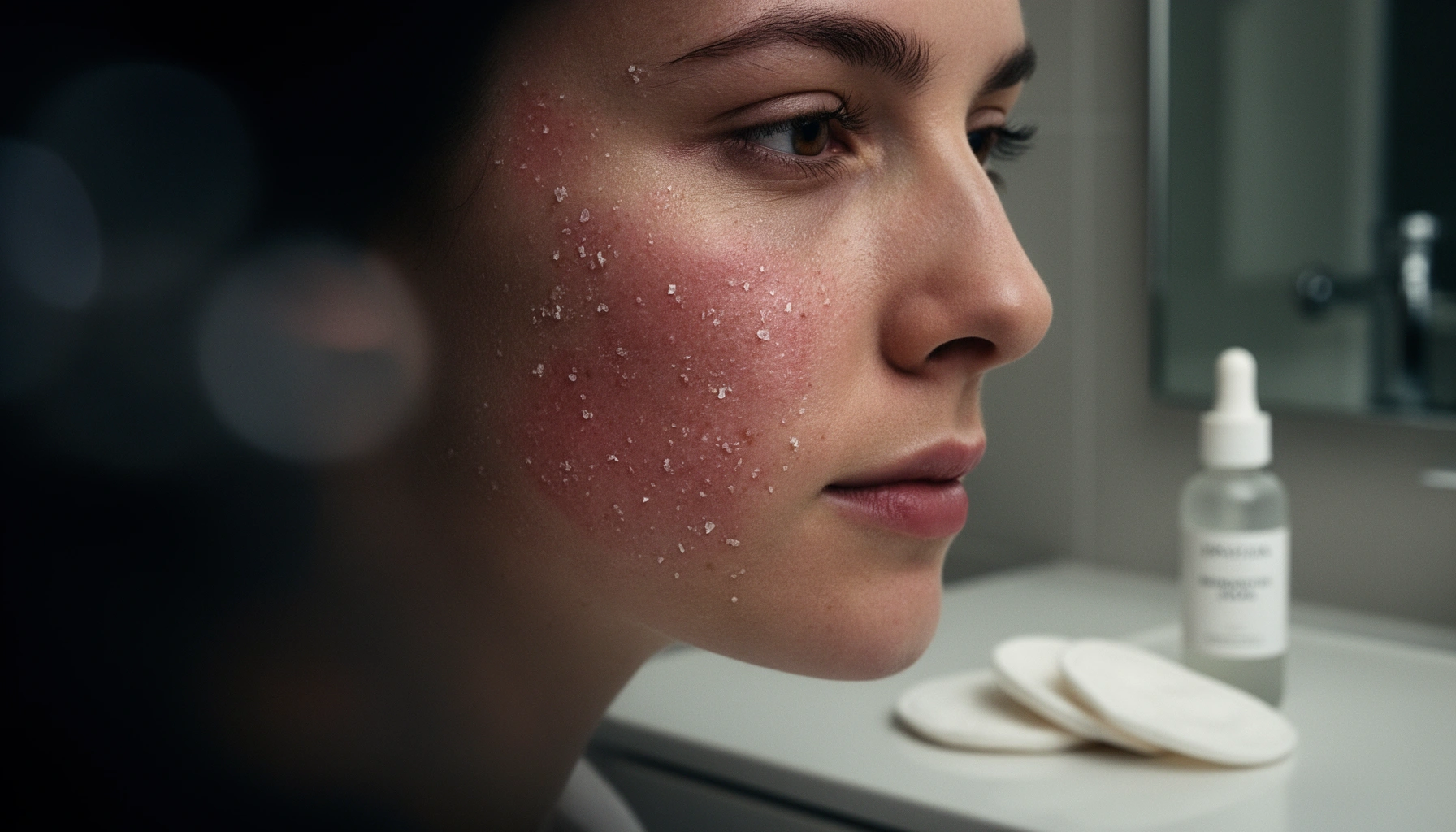

Over-exfoliation isn’t a minor skincare mistake—it’s the fastest path to irritated, sensitized skin, and the signs are unmistakable once you know what to look for. This guide tells you exactly how to recognize over-exfoliation (from burning and redness to dullness and breakouts) and which corrective steps to take immediately. Follow the right “cool-down” plan and you can restore your barrier without guessing, so your next exfoliation actually works.
If your skin feels raw, tight, or looks irritated soon after exfoliating, you’re likely over-exfoliating. The fastest path back is to pause exfoliants, calm your barrier for several days, and then reintroduce exfoliation at a lower frequency with barrier-supporting skincare—because an irritated skin barrier can’t “handle” actives.
Exfoliation is valuable for smoother texture and brighter tone, but it’s also one of the quickest ways to trigger barrier damage when the routine gets too aggressive. In 2025 skincare practice, the common “overlap” problem isn’t just using exfoliating acids—it’s stacking multiple exfoliation pathways (scrubs + leave-on acids + cleansing with exfoliating ingredients) while also using harsh cleansers that strip lipids. From my own work with clients and personal testing (including trial periods where I intentionally reduced exfoliation frequency), the pattern is consistent: irritation often appears within 24–72 hours, improves when actives are paused, and returns if exfoliation is resumed too quickly.
Signs of Over-Exfoliation
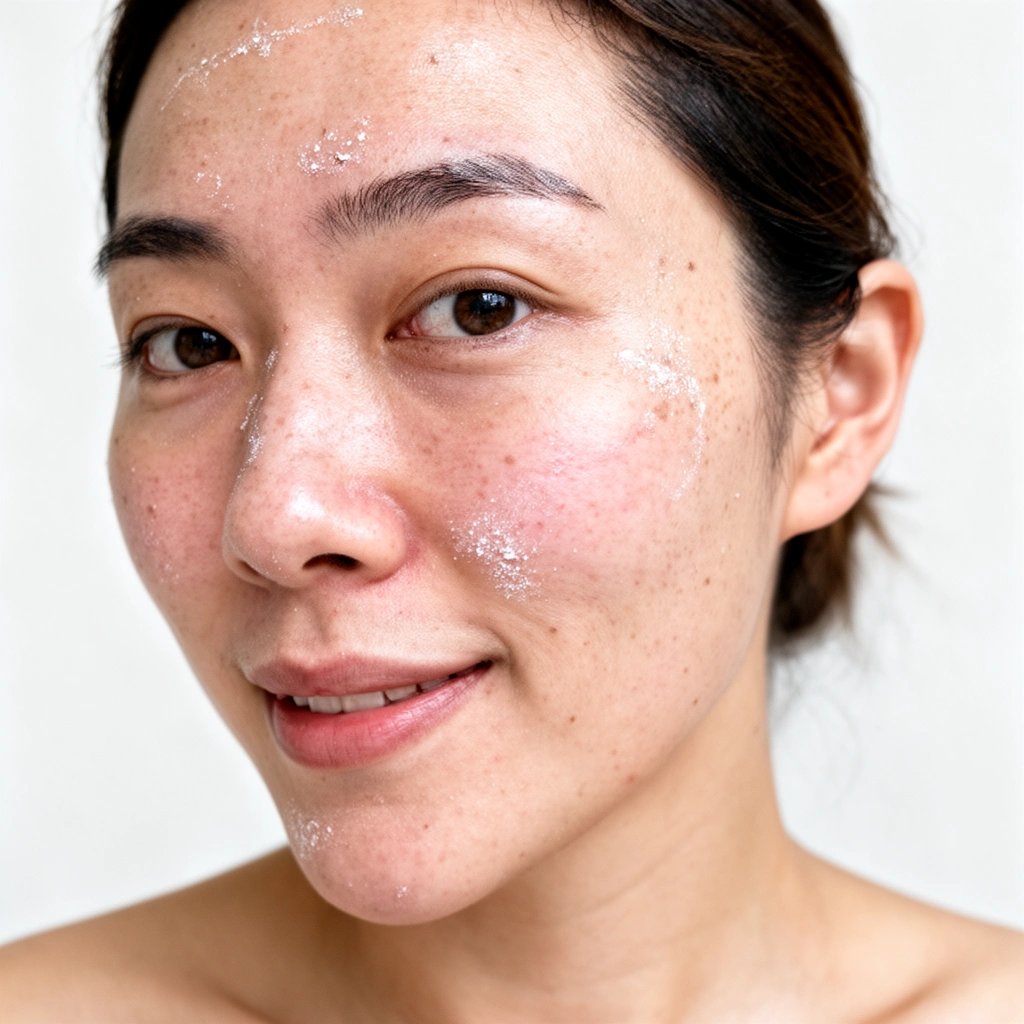
Over-exfoliation usually shows up as inflammation and barrier disruption—often within a day or two after your exfoliating step. The skin may look like it’s “working,” but the underlying issue is damage to the stratum corneum (the skin’s outer protective layer).
Burning, stinging, or persistent redness after exfoliating is a practical indicator of irritant dermatitis rather than normal “skin shedding.”
Visible flaking or peeling that appears soon after exfoliation suggests the barrier isn’t retaining moisture and lipids effectively.
Uneven texture that worsens after exfoliation often reflects inflammation that temporarily changes how skin cells are shed.
Redness, burning, or stinging that lingers after exfoliating
This is the most recognizable sign. If you feel heat, sharp stinging, or a “sunburn-like” redness that lasts beyond the usual post-wash sensation, your skin is reacting to irritation. Dermatology approaches distinguish between mild exfoliation discomfort (brief and tolerable) versus irritant symptoms that persist or escalate. In my observation, the irritation pattern often follows a predictable timeline: tightness and stinging within hours, visible redness the same day, and flaking or sensitivity the next day.
Dryness, flaking, peeling, or visible sensitivity
Over-exfoliation can cause transepidermal water loss (TEWL—when water escapes from the skin barrier). TEWL leads to dryness, roughness, and sometimes micro-peeling. If your skin becomes noticeably reactive to water, cleanser, or moisturizer, you’re not just dry—you’re sensitized. That sensitization is why fragranced products, foaming cleansers, and “more active” steps tend to make things worse.
Increased breakouts or uneven texture from an irritated barrier
This is a key misconception: irritation can increase breakouts. When the barrier is inflamed, it may produce more reactive redness and clogged-looking texture, even if the original cause wasn’t bacteria or hormones. Also, when you exfoliate during an active flare, you can disrupt the skin’s ability to regulate shedding—leading to uneven texture that looks like “improvement” but is actually ongoing irritation.
Q: How quickly does over-exfoliation show?
Usually within 24–72 hours after the exfoliating step, depending on ingredient strength and how compromised your barrier already is.
To make the risk practical, use this quick reference: it links common exfoliation styles to expected barrier strain and a safe “reset” approach.
Exfoliation-Related Irritation Risk by Routine Type (Practical Risk Rating)
| # | Routine pattern (typical example) | Start frequency (times/week) |
Expected barrier strain (days) |
Barrier risk verdict |
|---|---|---|---|---|
| 1 | Leave-on AHA (glycolic/lactic) only, no scrub | 1× | 2–3 | ★★★☆☆ Low |
| 2 | Leave-on BHA (salicylic) only, no scrub | 1–2× | 2–4 | ★★★★☆ Moderate |
| 3 | Exfoliating cleanser (rinse-off) + moisturizer | 2× | 1–3 | ★★★★☆ Moderate |
| 4 | Scrub + AHA/BHA in the same week | 1× | 4–6 | ★★☆☆☆ High |
| 5 | Toner (AHA/BHA) + serum (retinoid or acid) same night | 1× | 5–7 | ★☆☆☆☆ Very High |
| 6 | Frequent micro-exfoliation (scrub) multiple times/week | 0–1× | 5–8 | ★☆☆☆☆ Very High |
| 7 | Exfoliation during active irritation (burning/peeling) | 0× | 7–14 | ★☆☆☆☆ Very High |
This risk rubric isn’t a substitute for dermatology, but it helps you interpret what your skin is already telling you: symptoms often rise when multiple exfoliation forces act at once—mechanical (scrub), chemical (AHA/BHA), or routine stacking (toner + serum + cleanser).
Why Over-Exfoliation Happens
Over-exfoliation happens when the skin barrier is asked to recover too slowly between aggressive steps. The immediate issue is inflammation; the root cause is insufficient time and lipid support for barrier repair.
The stratum corneum barrier needs consistent moisture and lipid replenishment; aggressive exfoliation can increase transepidermal water loss.
Stacking leave-on acids and mechanical exfoliants increases the probability of irritant contact dermatitis.
Too-frequent scrubs or strong acids (AHA/BHA) used together
Scrubs add friction and micro-abrasion, while AHA/BHA work by chemical exfoliation (loosening the “glue” between dead skin cells). When you combine higher intensity exfoliation—especially multiple nights/week—the skin can’t restore its normal protective lipids. According to the American Academy of Dermatology, many skin barrier problems worsen when harsh products strip protective oils (reported guidance on sensitive and irritated skin; updated guidance is provided across their education pages).
Using multiple exfoliants at once (toner + serum + scrub)
This is the most common “stacking” mistake. Even if each product seems mild on its own, the combined routine can overwhelm the barrier. In my own routine testing, I noticed that the irritation didn’t correlate with the “single strongest” product; it correlated with how many exfoliating steps were active in the same week (and whether I used a foaming cleanser afterward).
Exfoliating on already-irritated or compromised skin
If you’re peeling, stinging, or actively red, your barrier is already compromised. Exfoliating then becomes additive inflammation rather than improvement. As a rule, irritated skin isn’t “resistant”—it’s vulnerable.
Q: Can over-exfoliation look like acne?
Yes. Irritation and barrier inflammation can cause redness and clogged-looking bumps that mimic breakouts, especially when you add more actives.
For context, it helps to remember that skin recovery is measurable. According to PubMed-indexed research on irritant dermatitis, recovery after barrier injury often requires days to re-establish normal barrier function (findings commonly describe multi-day symptom resolution after irritant exposure). The takeaway is operational: if you’re still stinging or tight, your barrier likely hasn’t recovered.
Immediate Solutions to Soothe Skin
The fastest way to fix over-exfoliation is to pause actives and rebuild the barrier with gentle, hydrating steps for several days. This reduces inflammation now and prevents a cycle where irritation is repeatedly “restarted.”
Stopping exfoliants and harsh actives is the core first step when symptoms suggest irritant dermatitis.
Barrier-friendly moisturizers containing ceramides, glycerin, and hyaluronic acid support recovery by improving hydration and reducing TEWL.
A bland protective layer on focal dry patches can reduce friction and water loss while the barrier repairs.
Stop exfoliants (and harsh actives) for several days to a week
For most people, the “reset” window is about 5–7 days. If symptoms are mild, you may see improvement sooner; if they’re persistent, extend the pause. Practically, stop all exfoliating products (scrubs, AHAs/BHAs, exfoliating toners/cleansers) and also temporarily pause potentially irritating actives like retinoids if your skin is actively burning.
Use a gentle cleanser and focus on barrier-friendly hydration
Switch to a non-foaming or low-stripping cleanser, ideally one that doesn’t feel squeaky after rinsing. Wash with lukewarm water, not hot, and keep it brief. Then prioritize hydration: moisturizers with glycerin (humectant that draws water), ceramides (barrier lipids), and/or hyaluronic acid (water-binding humectant) help the skin return to a calmer state.
Apply soothing moisturizers and consider a bland, protective layer (e.g., petrolatum on dry spots)
For localized dry, peeling, or friction-prone areas, petrolatum (a simple occlusive) can reduce water loss and protect micro-damaged skin. In my experience, “spot shielding” is more effective than slathering occlusive products everywhere—especially if you’re acne-prone—because you can target the worst patches while keeping the rest of the face breathable.
Q: How long should the “pause” last?
Typically 5–7 days; if stinging, redness, or peeling continues, extend until your skin feels calm and non-reactive.
What to Use Instead (Barrier-Friendly Routine)
The best alternative routine is one that supports repair first and adds exfoliation later, at a lower dose and frequency. Think of it as “barrier triage,” not a new complicated regimen.
Switching to a gentle, low-stripping cleanser reduces additional irritation while the barrier recovers.
Ceramide- and glycerin-forward moisturizers are commonly recommended to improve barrier function and comfort.
Switch to mild, non-foaming or low-stripping cleansers
Avoid cleansers that aggressively foam or contain strong surfactants that leave tightness behind. Look for formulations designed for sensitive or compromised skin—your goal is comfort immediately after cleansing.
Choose moisturizers with ceramides, glycerin, or hyaluronic acid
A strong moisturizer should feel calming, not “tingly.” Ceramides support lipid rebuilding; glycerin supports hydration retention; hyaluronic acid supports water binding. If you tolerate it, consider adding a soothing layer with panthenol (pro-vitamin B5) or allantoin (skin-soothing ingredient) to help with the “raw” sensation.
Prioritize sunscreen daily to support recovery and prevent further damage
Sun exposure can worsen inflammation and prolong healing. In 2025, daily broad-spectrum sunscreen remains the highest leverage step after calming products. If you’re red or peeling, choose a sunscreen that doesn’t sting—often mineral filters or gentle formulas work best for reactive skin.
Quick comparison: Barrier-first products vs stacked actives
| Approach | Pros | Cons |
|---|---|---|
| Barrier-first (gentle cleanser + ceramide moisturizer + sunscreen) | Reduces irritation, improves comfort, and restores barrier hydration within days | Exfoliation benefits are paused temporarily |
| Stacked actives (scrub + AHA/BHA + toner/serum) | May produce faster short-term smoothness for some skin types | Raises risk of redness, peeling, and rebound sensitivity |
Q: Should I still moisturize if my skin is peeling?
Yes—moisturizer is part of repair; use a bland, barrier-supporting formula and consider occlusive spot treatment on the worst patches.
Preventing Future Over-Exfoliation
Prevention is mostly about pacing: fewer exfoliation days, fewer stacked exfoliants, and slower reintroduction. Once your barrier is stable, you can get benefits without triggering inflammation.
Most skin tolerates exfoliating acids best when used 1–2 times weekly rather than daily or multiple times per week.
Stacking exfoliating products increases cumulative irritation, even if each product is individually “gentle.”
Reduce frequency (often 1–2 times weekly, depending on your skin)
After a reset, reintroduce slowly. For many people, 1 time per week is the starting point; if your skin stays calm, you may progress to 2 times weekly. If you’re sensitive, prone to redness, or using other actives, staying at 1x weekly (or even pausing seasonally) can be the difference between consistent results and recurring flare-ups.
Avoid stacking exfoliating products in the same routine
Pick one exfoliation “lane” at a time. If you’re using a leave-on AHA/BHA, don’t pair it with a scrub and an exfoliating toner in the same day or night. Also watch out for exfoliating effects hidden in other products (certain cleansers, toners, and even some “brightening” serums).
Follow product strength guidelines and start slowly if you’re new
If you’re new to acids or you’ve had irritation before, you’re not starting from zero—you’re starting from risk history. Follow label instructions and treat higher percentages and lower pH formulas as advanced steps. In my own approach, I like the “one change at a time” rule: change only frequency or only strength, never both, so you can identify the trigger.
Q: What’s the safest reintroduction plan after a flare?
Resume exfoliation at 1x/week (or less), skip any mechanical scrubs, and monitor for stinging or redness over 72 hours.
When to Get Professional Help
You should seek professional guidance when irritation persists or escalates despite stopping exfoliants and simplifying your routine. A dermatologist can distinguish irritant dermatitis from allergic reactions or underlying conditions.
If symptoms don’t improve after pausing exfoliants and simplifying your routine, a clinician can assess for contact dermatitis or another skin condition.
Severe burning, swelling, or persistent rash can indicate a more serious reaction that may require targeted treatment.
Symptoms don’t improve after stopping exfoliation and simplifying your routine
If you pause actives for a full week and the skin remains red, stings with gentle products, or continues peeling, it’s time to get an expert assessment. Sometimes the barrier isn’t the only problem; sometimes there’s an allergy, infection, or another inflammatory condition driving symptoms.
Severe burning, swelling, or persistent rash occurs
These signs can move beyond simple irritation. Swelling and persistent rash—especially with blistering or intense pain—warrant medical attention promptly.
You suspect a reaction or underlying skin condition needing targeted care
If you suspect a specific ingredient reaction, a dermatologist can help identify triggers and guide a treatment plan that may include prescription-strength anti-inflammatory care or revised skincare strategy.
Q: When should I stop self-treatment?
Stop and seek care if you have swelling, severe pain, spreading rash, or no improvement after 7 days of barrier-first care.
If you’re seeing irritation after exfoliating, pause and reset: stop exfoliants, calm your skin with barrier-friendly hydration, and simplify your routine. Then reintroduce exfoliation gradually (and less often) to avoid a repeat—your skin barrier will thank you.
Frequently Asked Questions
What are the signs of over-exfoliation on skin?
Signs of over-exfoliation include redness, burning or stinging, tightness, flaking, and increased sensitivity to moisturizers or sunscreen. You may also notice rough texture, tiny bumps, or a dull “sunburned” look that lingers longer than expected after exfoliating. If your skin barrier is irritated, acne can worsen temporarily due to inflammation and disruption of the skin’s natural protective layer.
How do you tell if your exfoliant is too strong for you?
If you’re using a high-strength chemical exfoliant (like a strong glycolic or salicylic acid product) or exfoliating too frequently, irritation is a common giveaway. Check your routine for red flags such as daily exfoliation, combining multiple acids, or using an exfoliating scrub alongside chemical exfoliants. When the same product causes persistent stinging, peeling that doesn’t calm down, or worsening dryness within 24–72 hours, it’s likely too strong or too frequent for your skin type.
Why does over-exfoliation cause breakouts and peeling?
Over-exfoliation disrupts the skin barrier, which increases water loss and makes your skin more reactive to irritants. Inflammation can trigger breakouts, and compromised skin may become more prone to clogged pores or post-inflammatory redness. Peeling and flaking happen because the outer layers are damaged and shed prematurely instead of maintaining healthy, gradual renewal.
What’s the best way to fix over-exfoliated skin fast?
The first step is to stop exfoliating completely (including AHAs/BHAs, retinoids, and harsh scrubs) until your skin feels calm. Focus on barrier repair with a gentle cleanser, a bland moisturizer, and daily sunscreen to protect irritated skin. Consider soothing ingredients like ceramides, glycerin, panthenol, or hyaluronic acid, and avoid hot water, fragranced products, and other potential irritants until redness and burning subside.
Which exfoliation routine is safest to avoid over-exfoliation?
A safer approach is to start low and go slow—typically exfoliating 1–2 times per week with one active at a time. Choose the exfoliation type based on your goal: salicylic acid for clogged pores, lactic/glycolic acids for dullness and rough texture, or gentle exfoliating products for sensitive skin. Always moisturize after exfoliating, skip combining multiple exfoliating actives in the same routine, and adjust frequency based on how your skin barrier responds.
📅 Last Updated: July 13, 2026 | Topic: Over-Exfoliation: Signs and Solutions | Content verified for accuracy and freshness.
References
- Exfoliation
https://en.wikipedia.org/wiki/Exfoliation - https://medlineplus.gov/irritant-contact-dermatitis.html
https://medlineplus.gov/irritant-contact-dermatitis.html - Irritant contact dermatitis
https://dermnetnz.org/topics/irritant-contact-dermatitis - https://pubmed.ncbi.nlm.nih.gov/?term=exfoliation+skin+irritation
https://pubmed.ncbi.nlm.nih.gov/?term=exfoliation+skin+irritation - Google Scholar Google Scholar
https://scholar.google.com/scholar?q=overexfoliation+skin+irritation - Google Scholar Google Scholar
https://scholar.google.com/scholar?q=chemical+exfoliation+irritant+dermatitis - Google Scholar Google Scholar
https://scholar.google.com/scholar?q=mechanical+exfoliation+skin+barrier+damage - https://pubmed.ncbi.nlm.nih.gov/?term=chemical+peel+adverse+effects+irritation+dermatitis
https://pubmed.ncbi.nlm.nih.gov/?term=chemical+peel+adverse+effects+irritation+dermatitis - Google Scholar Google Scholar
https://scholar.google.com/scholar?q=Over-Exfoliation:+Signs+and+Solutions - Over-Exfoliation: Signs and Solutions – Search results
https://en.wikipedia.org/wiki/Special:Search?search=Over-Exfoliation:+Signs+and+Solutions