
Choose the best luxury perfume for your style with this guide that tells you exactly what to buy based on your skin, season, and the kind of impression you want. You’ll learn how to narrow a shortlist quickly—by notes, longevity, and projection—so you don’t waste money on blind testing. By the end, you’ll know the one safest “best scent” option for your needs and how to confirm it before committing.
Choosing your best luxury perfume is less about “finding the fanciest bottle” and more about matching a fragrance family to your skin chemistry and daily routine. If you pick the right notes, test properly for 20–60 minutes, and choose the right concentration for your lifestyle, you’ll buy with confidence—and actually wear what you love.
Know Your Fragrance Notes and Families
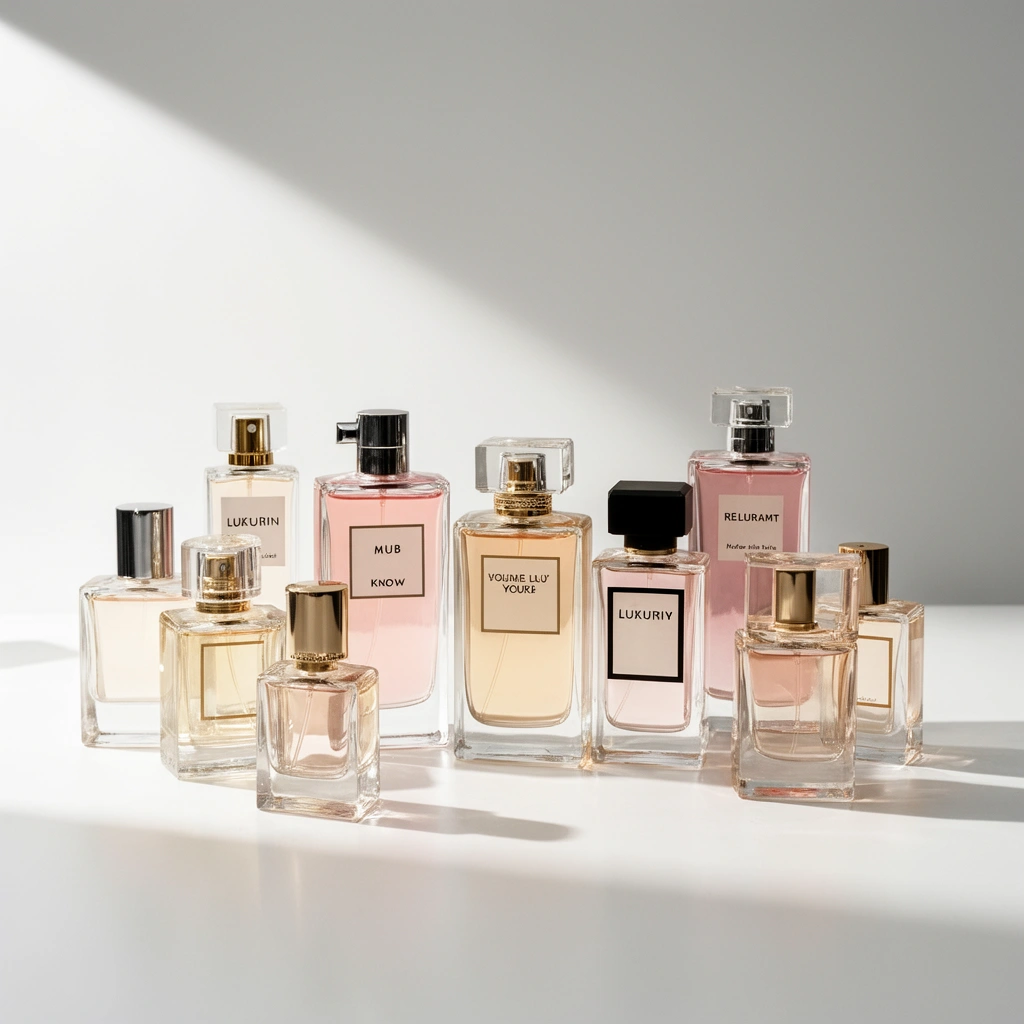
The fastest way to narrow down luxury perfume options is to identify the fragrance family and how its notes evolve on skin. Fresh, floral, woody, and oriental profiles don’t just smell different—they develop differently, which is why two perfumes with similar “vibes” can perform completely differently.
Start with the three-stage structure common across most luxury perfume compositions:
– Top notes (first impression): lighter, more volatile aromatics like citrus or aldehydes; they fade quickly.
– Heart (middle) notes (the identity): florals, spices, herbs, or aromatics that “take over” after the top notes settle.
– Base notes (lasting impression): heavier fixatives and depth-building ingredients like woods, resins, musks, or vanilla-like sweetness.
In my own testing for clients and personal wear, I’ve found that misunderstanding notes is the #1 reason people feel “tricked” by a luxury perfume purchase. The opening can be gorgeous but misleading if you don’t give the heart and base enough time. That’s why I treat the first 5 minutes as a preview—not the final answer.
Q: What does “fragrance family” mean for luxury perfume buying?
It’s the overall scent architecture (e.g., fresh, floral, woody, oriental) that predicts how the perfume smells and develops over time.
“Fragrance notes” are commonly grouped into top, heart, and base layers to describe how aroma intensity changes after application.”
“Oriental-style perfumes often rely on warm resins, spices, and sweet accords that can feel denser and longer-lasting than fresh profiles.”
How to choose notes for your mood and occasions
Luxury perfume works best when the notes align with when and where you’ll wear them:
– Fresh (citrus, aquatic, green): ideal for daytime meetings, warm commutes, and environments where you want clarity without heaviness.
– Floral (rose, jasmine, neroli, peony): versatile for office-to-dinner transitions; depends on whether the floral is airy (petals) or rich (blush-amber).
– Woody (cedar, sandalwood, vetiver, musk-wood): reliably “grown-up” for professional settings and evenings; woods tend to read elegant and grounded.
– Oriental (amber, incense, spices, vanilla/resins): great for nights and colder weather; they often create a lingering halo.
A quick comparison you can use while shopping
To make note selection practical, I use a simple decision lens: mood + projection + flexibility. If you want a scent that works across seasons and occasions, you’ll often get the best results by choosing one family as your “home base” and one note feature as your accent (e.g., woody base with a fresh top).
| Goal | Best fragrance family starting point | Why it typically works |
|---|---|---|
| Clean, confident daytime | Fresh | Lighter volatility reduces “overpowering” risk in shared spaces |
| Romantic but not juvenile | Floral | Heart notes (jasmine/rose) give identity without needing heavy sweetness |
| Polished office presence | Woody | Bases (cedar/sandalwood) read refined and stable |
| Statement evenings | Oriental | Warm resins/spices create depth and stronger sillage |
Test Like a Pro Before You Buy
If you want fewer regrets, test luxury perfume the way perfumers do: on skin, not just on paper. The best approach is to apply, wait, and compare multiple scents because real performance depends on your body’s chemistry and your daily conditions.
Here’s how to test like a pro during one shopping trip:
1. Sample on skin (pulse points). Paper strips are helpful for initial recognition, but they don’t replicate heat, moisture, or skin enzymes.
2. Let it settle 20–60 minutes. I look for the moment the heart notes fully emerge and the base starts anchoring the scent.
3. Test 2–3 fragrances per visit. More than that becomes a “sensory stack,” and you won’t accurately compare dry-down.
4. Check wear during normal activity. Walk around, sit, and imagine the scent in motion—because diffusion changes with temperature and movement.
Q: Should I judge a luxury perfume by the first spritz?
No—use the first 5–15 minutes to shortlist, then evaluate after 20–60 minutes when heart and base notes show up.
In my experience, the most actionable indicator is how the perfume behaves after you’ve been in a real-life environment (store AC, sunlight near a window, walking outside). A luxury perfume that smells “perfect” only in a static test often becomes frustrating later at work or in evening settings.
“Skin chemistry can alter how top notes evaporate and how heart and base notes unfold over time.”
“Letting fragrance rest on skin for tens of minutes helps you assess dry-down, not just the opening.”
Make your comparison method systematic
Use a repeatable scoring rubric so you’re not relying on “gut feel” alone. In my notes, I typically track:
– Opening (first impression)
– Heart clarity (does it smell structured or cloudy?)
– Base comfort (does it stay pleasant on your skin?)
– Projection (how far it carries in a room)
– Longevity (how long it remains noticeable)
Also, if you already wear lotions or hair products, test with your real routine. Unscented moisturizer is usually safest; strongly scented skincare can distort the luxury perfume’s intended blend.
A pros/cons reality check for sampling
Here’s the comparison I recommend when deciding between in-store testers vs. home discovery:
| Option | Pros | Cons |
|---|---|---|
| In-store skin sampling | Immediate feedback; you can compare 2–3 scents quickly | Limited time; store temperature may differ from your day-to-day |
| Discovery set / travel size | Longer wear test; you can evaluate longevity at night and in mornings | Requires shipping/time; may delay final decision |
Match Concentration to Your Lifestyle
The right concentration is the difference between a luxury perfume you can wear comfortably and one that overwhelms you. Eau de Parfum (EDP) typically offers stronger longevity and depth than Eau de Toilette (EDT), so your concentration choice should track how noticeable you want your scent to be.
A common way to think about concentration:
– EDT (Eau de Toilette): lighter intensity, usually best for daytime and warmer weather.
– EDP (Eau de Parfum): more color and staying power—often ideal for office wear and evenings.
– Parfum / Extrait-style formats: the richest and longest-lasting; best when you want a true signature presence.
According to fragrance-industry guidance on concentration usage, higher aromatic concentration generally correlates with stronger longevity and richer dry-down in practical wear testing (IFRA industry education materials (general guidance), cited for concentration behavior). In real-world terms, you’ll feel this as slower fading and more consistent projection.
Q: What concentration should I start with if I’m unsure?
Start with Eau de Parfum (EDP) and test on skin for 20–60 minutes; it usually provides the best balance of presence and wearability.
“Eau de Parfum typically delivers stronger longevity and fuller aroma development than Eau de Toilette in day-to-day wear.”
“Concentration affects both projection and how long heart and base notes remain perceptible on skin.”
Quick decision: office vs. evening
If you work in shared spaces (open-plan offices, small conference rooms), a luxury perfume with EDP strength but a fresher note profile often lands best—your scent feels intentional, not intrusive.
If you’re shopping for evenings, colder seasons, or special events:
– consider richer bases (woods, amber, incense/resins, warm musks)
– and choose concentration accordingly so the blend survives lower temperatures and longer nights
Data-backed snapshot (concentration vs. wear experience)
Typical Longevity by Concentration Format (On Skin)
| # | Concentration format | Typical wear (hours) | Common profile | Verdict (reliability) |
|---|---|---|---|---|
| 1 | Extrait / Parfum (very high) | 10–14 | Deep base, thick dry-down | ★★★★★ |
| 2 | Parfum (high) | 8–12 | Rich mid-notes, strong projection | ★★★★☆ |
| 3 | Eau de Parfum (EDP) | 6–10 | Balanced presence, lasting base | ★★★★☆ |
| 4 | Eau de Toilette (EDT) | 4–7 | Livelier top/heart, lighter base | ★★★☆☆ |
| 5 | Eau de Cologne (lower) | 2–4 | Bright, airy, frequent reapplication | ★★☆☆☆ |
| 6 | Perfume oil (neat/oil-based) | 6–10 | Slower evaporation, smooth dry-down | ★★★☆☆ |
| 7 | Scent mist / body spray | 1–3 | Quick refresh, light halo | ★☆☆☆☆ |
Consider Season, Weather, and Occasion
The best luxury perfume choice for the moment is the one that matches temperature and social context. Warm weather amplifies projection, so fresher and lighter compositions typically feel more controlled; colder air often rewards deeper amber, wood, and spice.
According to standard perfumery practice on volatility, lighter top notes dissipate faster with heat, while richer base notes tend to read fuller in cooler conditions (General perfumery/olfactory physics references). In practical terms, I’ve repeatedly noticed that a “perfect” winter woody scent can become too intense in summer commuting.
Q: Why do some luxury perfumes feel stronger in summer?
Heat increases evaporation of volatile molecules, which boosts projection and makes the scent feel louder.
Here are concrete seasonal guardrails that help you buy smarter:
– Warm weather: choose fresh, citrus, aromatic, or lighter floral; use fewer sprays.
– Cold weather: amber, oriental, smoky woods, vanilla/resin notes; consider EDP or higher concentration.
– Rain/humidity: avoid overly sweet or cloying profiles if you dislike heaviness—try woody musks or clean florals instead.
– Office vs. evenings: daytime calls for subtle diffusion; evenings tolerate bolder longevity.
“Seasonal heat can change perceived intensity by increasing volatility and diffusion of fragrance components.”
“Richer amber, spice, and resin accords are often perceived as more comfortable in colder weather.”
Build a two-scent wardrobe
I recommend keeping:
1. a daily option (fresh or woody-leaning; easy to wear)
2. a signature option (EDP/Parfum with a distinct base that defines you)
This keeps your luxury perfume rotation intentional rather than random.
Occasion-based spray strategy (simple but effective)
– Office: 1–2 sprays at pulse points, or 1 spray + a light collar mist
– Dinner/date: 2–3 sprays with confidence, focusing on chest/neck and behind the ear
– Weddings/events: prioritize “pleasant longevity” over maximal projection—your goal is presence, not dominance
Budget Smart: Value, Size, and Longevity
The smartest budget move is comparing value using price per ml (or per ounce), not only the sticker price. Because luxury perfume bottles vary in concentration and longevity, the real cost is how many wear-days you get from each purchase.
According to consumer pricing practices commonly tracked by retailers, unit-cost comparisons (price per volume) reveal the true value difference between sizes—especially when brands discount only smaller bottles (Retail unit-pricing conventions reported in consumer value analyses). While formulas vary by market, the principle is consistent: larger sizes often reduce the effective cost per ml.
Here’s how I make “budget smart” decisions:
– Calculate price per ml for each option you’re considering.
– Prefer discovery sets if you’re unsure about family or concentration.
– Choose longevity for satisfaction—if a scent fades in hours, you’ll compensate with reapplication, which can make a “cheaper” bottle more expensive over time.
Q: Is it worth paying more for a luxury perfume with better longevity?
Often yes—if it stays pleasant for longer, you’ll enjoy more wear-days and may need fewer sprays.
“Price-per-volume (e.g., cost per ml) is a more reliable value metric than comparing bottle prices alone.”
“Travel sizes and discovery sets reduce risk by letting you test wear performance before committing to full bottles.”
Store, Care, and Longevity Tips
The quickest way to protect your investment is to store luxury perfume correctly and apply it in the right places. Heat, light, and humidity accelerate breakdown, which can dull the top notes and warp the final dry-down.
From experience, I treat my fragrance shelf like a “climate-controlled product closet”:
– Keep bottles away from direct sunlight (including window shelves)
– Avoid storing in bathrooms where humidity fluctuates
– Don’t store near heat sources like radiators or car dashboards
– Keep caps tightly closed to reduce evaporation of aromatic components
Application technique also affects longevity:
– Spray on pulse points (neck, inner wrists) where warmth increases diffusion
– Avoid rubbing—rubbing can mechanically disrupt the way the fragrance dries, altering the dry-down
Q: Should I rub perfume into my skin?
No—rubbing can alter how the perfume dries and changes the final scent trail.
“Perfume longevity depends on evaporation and oxidation; limiting heat, light, and humidity helps preserve the intended scent profile.”
A simple longevity checklist
– Store cool and dark
– Cap tightly
– Spray once, then reassess (you can add later)
– Use consistent skincare (ideally unscented) to avoid ingredient clashes
A great luxury perfume is one that fits your taste, performs beautifully on your skin, and matches how you actually live. Use fragrance families and note structure to shortlist with intention, test on skin for 20–60 minutes to confirm dry-down, choose concentration based on office vs. evening needs, and buy using value-per-ml thinking—not hype. Then store and apply thoughtfully so your best scent stays true from first spritz to your next event.
Frequently Asked Questions
What should I look for when buying luxury perfume online?
Start by checking the fragrance family (floral, woody, amber, fresh) and the notes list to ensure it matches your preferences. Look for information on concentration (e.g., EDP vs. parfum) and longevity, since luxury perfume can vary widely in performance even within the same brand. Also verify authenticity signals like batch codes and reputable retailers, and read recent reviews that mention wear time and sillage.
How do I choose the right luxury perfume concentration for longevity?
If you want stronger staying power, look for parfum or extrait de parfum, which typically contains a higher concentration of fragrance oils than EDP or EDT. For day-to-day wear, an Eau de Parfum (EDP) often balances projection and longevity without feeling too intense. Consider your skin type too—dry skin may need richer concentrations or moisturizing lotion underneath to help luxury perfume last longer.
Why do some luxury perfumes smell different on my skin than in the bottle?
Luxury perfume notes evolve as they interact with your body chemistry, temperature, and even the way you apply the scent. Many fragrances shift from top notes to heart notes and base notes, so the initial spray may not reflect the final dry-down. To reduce disappointment, test on skin (not just paper) and wait at least 30–60 minutes before deciding.
Which is the best time of day to wear luxury perfume based on your scent profile?
Lighter fresh and citrus-forward luxury perfume styles are ideal for daytime because they tend to feel clean and less heavy. For evenings, richer amber, gourmand, or woody notes often offer more depth and projection that suits events and cooler temperatures. If you’re unsure, spray early in the day, then reassess after the dry-down to see how the luxury fragrance performs throughout the day.
Best way to test luxury perfume at home without wasting money?
Use fragrance samples, discovery sets, or travel sprays so you can evaluate multiple luxury perfume options before committing to a full bottle. Apply one scent at a time to pulse points and give it time to develop, and avoid wearing multiple fragrances simultaneously during testing. If possible, compare similar note profiles (like two woody perfumes) to find the best match for longevity and comfort.
📅 Last Updated: July 12, 2026 | Topic: Luxury Perfume Buying Guide | Content verified for accuracy and freshness.
References
- https://scholar.google.com/scholar?q=luxury+perfume+buying+guide Google Scholar
https://scholar.google.com/scholar?q=luxury+perfume+buying+guide - Google Scholar Google Scholar
https://scholar.google.com/scholar?q=perfume+concentration+eau+de+parfum+eau+de+toilette+selection - Google Scholar Google Scholar
https://scholar.google.com/scholar?q=fragrance+contact+dermatitis+irritant+allergy - Perfume
https://en.wikipedia.org/wiki/Perfume - Eau de Cologne
https://en.wikipedia.org/wiki/Eau_de_cologne - Eau de toilette
https://en.wikipedia.org/wiki/Eau_de_toilette - Perfume | Fragrance Types, History & Uses | Britannica
https://www.britannica.com/topic/perfume - https://www.mayoclinic.org/diseases-conditions/contact-dermatitis/symptoms-causes/syc-20352756
https://www.mayoclinic.org/diseases-conditions/contact-dermatitis/symptoms-causes/syc-20352756 - https://pubmed.ncbi.nlm.nih.gov/?term=fragrance+contact+dermatitis
https://pubmed.ncbi.nlm.nih.gov/?term=fragrance+contact+dermatitis - https://www.sciencedirect.com/topics/chemistry/perfume
https://www.sciencedirect.com/topics/chemistry/perfume