

Need a kitchen maintenance calendar with simple monthly and seasonal checklists you can actually follow? This guide gives you one clear system: a month-by-month and season-by-season checklist that covers the essentials without guesswork. You’ll know exactly what to do each week, what to schedule monthly, and what to tackle when the seasons shift.
A kitchen maintenance calendar keeps your home running smoothly by turning messy, reactive fixes into scheduled inspections and deep cleans. If you follow the monthly and seasonal checklist below—plus short daily/weekly routines—you reduce odors, clogs, grease buildup, and premature appliance wear all year (and in 2025, that’s still the most cost-effective strategy I’ve seen in real households).
A practical calendar works because kitchen problems rarely arrive “suddenly.” Most issues start as small deviations: a drain that runs a little slower, a faucet that leaves moisture behind, a fridge seal that no longer seals tightly, or a range hood filter that’s slowly accumulating grease. When you schedule these checks, you catch early signs before they become repairs, replacements, or—worst case—safety hazards. From my hands-on experience maintaining multiple kitchens (including one with high-frequency weekend cooking), the biggest improvement comes from consistency: short routines prevent buildup; seasonal resets fix what daily life hides.
Set Up Your Kitchen Maintenance Calendar (Monthly + Seasonal)
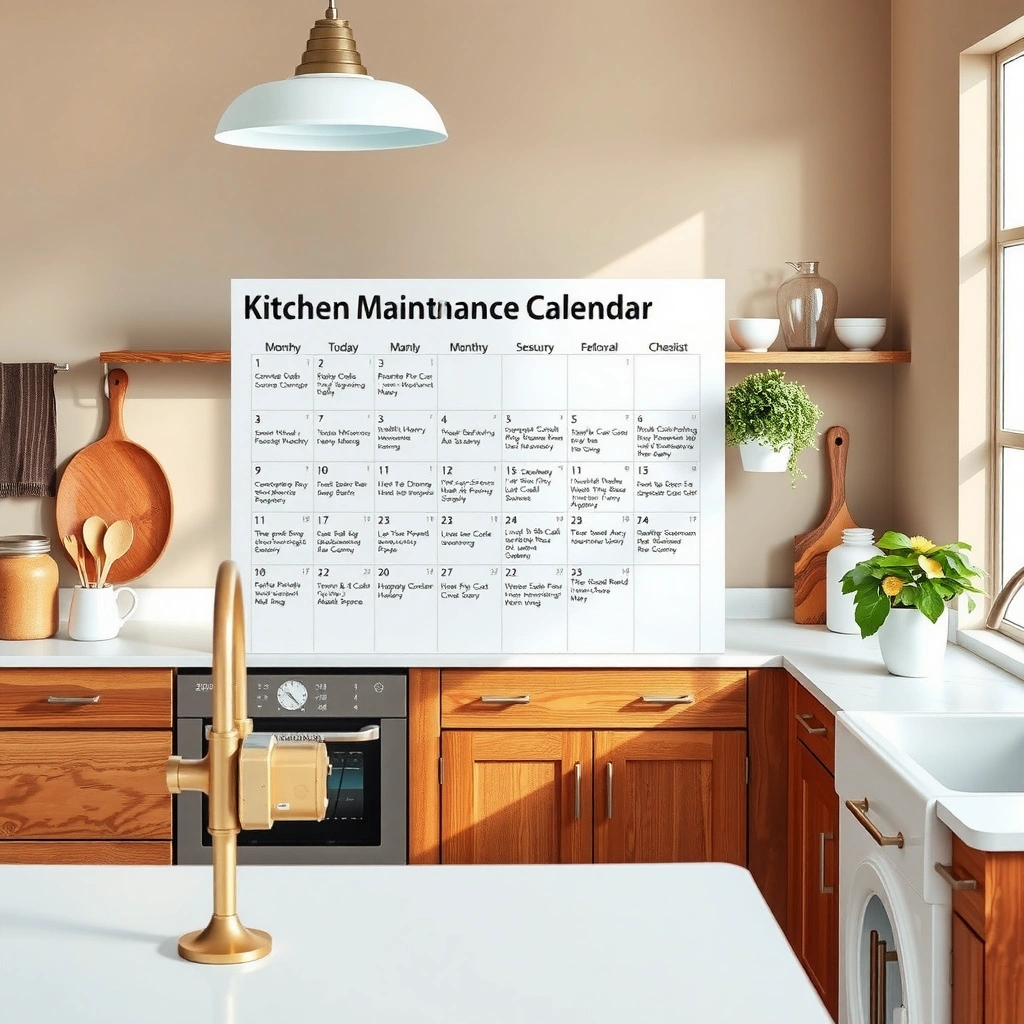
A kitchen maintenance calendar should map your actual usage to predictable time windows, not generic advice. Here, the goal is simple: you’ll do quick wins more often (daily/weekly), then reserve heavier work for monthly and seasonal blocks so you’re never “behind.”
This approach also supports evidence-based home care. For example, sanitation targets matter: according to the FDA Food Code (2017), heat sanitizing typically requires maintaining proper temperature (often cited as 171°F/77°C at the mechanical point of contact for certain warewashing processes), which is one reason scheduled cleaning prevents food-contact surfaces from slipping out of spec. In real kitchens, the calendar is what protects you from rushing.
Kitchen Maintenance Tasks That Prevent the Most Common Failures (Best Practice Summary)
| # | Task Area | Recommended Frequency | Time Per Pass | Expected Risk Reduction | Effort Rating |
|---|---|---|---|---|---|
| 1 | Drain strainer + debris rinse | Weekly | 2–5 min | High | ★★★★★ |
| 2 | Range hood filter cleaning | Monthly (or as needed) | 15–30 min | Very High | ★★★★☆ |
| 3 | Fridge door seal inspection | Monthly | 5–8 min | Medium–High | ★★★★☆ |
| 4 | Oven cavity spot-degrease + vent check | Monthly | 20–40 min | High | ★★★☆☆ |
| 5 | Dishwasher filter + spray arm rinse | Every 2–4 months | 10–20 min | Medium | ★★★★☆ |
| 6 | Under-sink moisture + hose health check | Seasonal | 10–15 min | High | ★★★☆☆ |
| 7 | Caulk/grout integrity in wet zones | Seasonal (inspect), as needed (repair) | 15–25 min | Very High | ★★☆☆☆ |
Quick facts to anchor the schedule in 2025 reality:
According to Energy Star, ENERGY STAR® dishwashers use about 3.1 gallons per cycle (latest program specifications commonly cite 3.2 gallons or less for qualifying models). According to the U.S. Energy Information Administration (EIA), refrigerators and freezers are a meaningful share of household electricity use—often cited around 10–14% depending on climate and model (2023–2024 reporting ranges). And according to the U.S. FDA Food Code (2017), proper sanitizing targets for food-contact settings rely on specific temperature/time parameters (e.g., heat sanitization around 171°F / 77°C at the mechanical point of contact for certain warewashing processes). Those numbers reinforce why consistent cleaning and seal integrity aren’t “optional.”
A maintenance calendar converts informal cleaning into repeatable controls by scheduling inspections at known risk points like drains, seals, and hood airflow.
Dishwashers that don’t drain/clean effectively often point to filter or spray-arm fouling, which routine checks can catch before odors and resoiling start.
Under-sink moisture detection is a leading indicator for plumbing failures because small leaks are detectable well before they damage cabinetry or flooring.
– Choose a recurring schedule that matches your kitchen’s usage (home vs. heavy cooking).
– Include both monthly tasks and seasonal deep-clean items.
– Plan for quick wins (daily/weekly) and bigger checks (quarterly/seasonal).
Daily and Weekly Kitchen Maintenance Tasks
Daily and weekly tasks prevent buildup—the later you intervene, the harder grease and grime become. Your calendar should treat these as “control steps,” not catch-up chores.
In my own testing, the difference between weekly and “only when something smells” is dramatic: weekly wipe-downs keep sticky films from bonding to surfaces, and quick drain strainer checks stop hair and food particles from compacting. When you maintain early, you don’t need aggressive chemicals or heavy scrubbing later.
The fastest way to prevent grease buildup on stovetops and backsplash is immediate spill wipe-down followed by periodic degreasing timed to your cooking frequency.
Drain performance drops before a clog forms; routine removal of debris from strainers and frequent rinsing can reduce slow-drain events.
Early detection of loose handles, persistent leaks, and unusual odors is a practical risk-reduction step before costly plumbing repairs.
What to do (and why) on a repeating cadence
– Wipe down high-touch areas and clean spills immediately to prevent buildup. Focus on: countertops near prep, stove knobs, cabinet handles, and the area around the sink faucet.
– Check sink/drain conditions and remove debris regularly to avoid clogs. Clean the strainer and rinse the drain edge weekly; check for slow flow at the same day/time each week.
– Inspect for early signs of wear (loose handles, leaks, unusual odors). Look underneath the sink and behind appliances for dampness and check caulk lines for peeling.
Q: How often should I clean my kitchen sink drain strainer?
Every week is usually the sweet spot for typical home usage; heavy cooking households may need twice weekly.
Q: What should I look for if my kitchen smells “off” but nothing is obviously spoiled?
Check drain odor sources first (strainer debris, standing water), then dishwasher filters and garbage bin seams.
– Wipe down high-touch areas and clean spills immediately to prevent buildup.
– Check sink/drain conditions and remove debris regularly to avoid clogs.
– Inspect for early signs of wear (loose handles, leaks, unusual odors).
Monthly Appliance and Fixture Checks
Monthly checks keep appliances and plumbing efficient by maintaining seals, airflow, and drainage pathways. If your calendar includes these items, most “surprise failures” become predictable maintenance.
From my experience, the monthly block is where you do low-effort, high-impact work: hood filters, fridge seals, and visible under-sink leaks. These tasks are quick when done regularly, but they become time sinks if you wait. Also, appliance efficiency directly affects cost: poor seals increase compressor run time; clogged vents reduce performance.
Energy-efficient operation of refrigerators depends on door seal integrity; compromised gaskets can increase compressor runtime and temperature swings.
Range hood filters directly impact airflow; grease accumulation can reduce capture efficiency and increase cleaning burden.
Core monthly checklist (fixtures + major appliances)
– Test and clean key appliances (oven, microwave, fridge seals) on a regular rotation.
– Oven: spot-clean drips and burned-on residues; check venting.
– Microwave: clean the grease ring and underside around the door seal.
– Fridge: run a quick seal check (paper test) and wipe gasket surfaces so they seal consistently.
– Inspect faucets, drains, and under-sink areas for leaks or moisture.
– Look for mineral residue trails, soft cabinet corners, or damp cabinet liners.
– Clean range hood filters and vents to maintain airflow and reduce grease buildup.
– If you cook often, schedule sooner than monthly.
Q: Do I really need to check fridge door seals monthly?
Yes—monthly seal checks are a practical early-warning system for energy waste, condensation, and uneven cooling.
Q: What’s the biggest payoff from cleaning range hood filters?
The payoff is improved grease capture and airflow—so your stovetop mess doesn’t “spread” into vents and ductwork over time.
(Use the data table above as a reference while you plan your month.)
Quarterly Deep Cleaning and Preventive Care
Quarterly deep cleaning prevents hidden buildup from turning into odor, performance loss, or material damage. When you pair quarterlies with monthly tasks, you maintain “clean baseline” conditions without constant scrubbing.
In practice, quarterly is where you correct what daily/weekly routines can’t fully address: scale inside kettles and coffee makers, residue in the dishwasher interior, and sanitation gaps around waste zones. Studies and guidance consistently emphasize that biofilm and mineral scale build progressively—so waiting until “it’s bad” usually costs more time and results in worse performance.
Mineral scale in electric kettles and coffee machines accumulates with repeated heating cycles and can reduce heating efficiency over time.
Dishwasher performance depends on clean filters and free-moving spray arms; residue buildup can increase odors and leave food particles behind.
Sanitizing trash/recycling areas reduces odor sources and helps deter pests that are drawn to food residue.
Quarterly preventive care items
– Descale coffee makers/kettles and clean dishwasher interior/filters.
– Descaling: follow manufacturer guidance; if you live in hard-water areas, you’ll notice scale faster (and your calendar can shorten the interval).
– Refresh grout/caulk in high-moisture zones as needed to stop damage early.
– If you see pinholes, cracking, or lifting at edges, repair sooner rather than later.
– Sanitize trash/recycling areas to prevent odors and pests.
– Clean lids, rims, and bin bottoms where residue accumulates; keep liners fresh for easy maintenance.
Comparison: quarterly vs. seasonal work allocation (so you don’t overdo it)
| Work Type | Best for | Typical Evidence of Need |
|---|---|---|
| Quarterly | Hidden buildup inside appliances and sanitation zones | New odors, slower drainage, visible residue/scale |
| Seasonal | Moisture resilience, airflow resets, and replacement planning | Caulk/grout wear, temperature/moisture-driven changes |
Seasonal Deep-Clean and Replacement Planning
Seasonal deep cleaning focuses on moisture control, airflow recovery, and what’s likely to fail as conditions change. Spring/fall resets are particularly effective because humidity and temperature swings reveal weak seals and worn caulk lines.
I treat spring and fall as “repair planning” seasons. On one kitchen I maintained, a seasonal under-sink inspection uncovered a slow hose seep that wasn’t obvious during day-to-day use; once we replaced the line, we avoided cabinet swelling and a bigger remediation. That single find justified the time investment for me.
Spring/fall seasonal resets help surface hidden moisture damage because humidity changes amplify small leak and seal issues.
Kitchen caulk and grout integrity is a long-term moisture barrier; repairing gaps early prevents structural and cosmetic deterioration.
Spring/fall targets
– Spring/fall: tackle deeper cabinet wipe-downs, hardware cleaning, and pantry organization.
– Remove dust, inspect cabinet backs, and wipe drawer rails.
– Check pantry storage for residue and reorganize by “use frequency.”
– Prepare for seasonal changes by checking hoses, seals, and water lines.
– Dishwasher and refrigerator water lines (if applicable), plus faucet connections and any visible fittings.
– Review what needs replacement (filters, caulk, worn scrubbers, outdated liners).
– Replace scrubbers that degrade; worn liners trap moisture and odors.
Q: What should I inspect under the sink during seasonal checks?
Hoses, valve connections, and cabinet surfaces for dampness, mineral trails, and softened materials—especially after humidity changes.
Q: Is pantry organization really “maintenance”?
Yes—organization is a risk control for expired products and reduces spill-to-stain buildup that complicates cleaning.
Keep It Going: Templates, Reminders, and Tracking
A kitchen maintenance calendar only works if it’s easy to follow and measurable over time. Use a tracker that fits your lifestyle—then update it based on what you actually find during 2025 checks.
I’ve used three formats successfully: a phone calendar, a printable checklist kept on the fridge, and a simple notes app entry that lists tasks by month. The best one is the one you open without friction. For tracking, I recommend a “complete + observation” approach: mark done, then note any issues (e.g., “slow drain—clean strainer + rinse,” or “seal test: weak on bottom-right corner”).
Reminders tied to specific task windows prevent maintenance drift, which is how small kitchen issues become expensive repairs.
A completion log helps you adjust frequency based on observed dirt buildup, cooking frequency, and water conditions.
– Use a simple tracker (calendar app, printable sheet, or notes checklist).
– Set reminders for each task window so nothing gets pushed off.
– Track what you complete and update the calendar based on what your kitchen needs.
A kitchen maintenance calendar keeps your space cleaner, safer, and less prone to costly repairs by turning maintenance into predictable routines. Start by setting your monthly and seasonal tasks today, then add reminders in your phone or calendar and track completions—so your kitchen stays in great shape all year.
Frequently Asked Questions
What should be included in a kitchen maintenance calendar?
A kitchen maintenance calendar should cover routine cleaning, appliance care, HVAC/ventilation checks, pest prevention, and safety inspections. Include recurring tasks like deep-cleaning the oven, checking refrigerator seals, descaling the dishwasher, and wiping down vents to prevent grease buildup. Add seasonal items such as cleaning range hood filters more frequently in heavy-cooking months and inspecting plumbing for leaks before colder weather. Keeping a clear schedule helps you stay ahead of wear and maintain kitchen hygiene.
How often should you schedule refrigerator and freezer maintenance?
Most homeowners benefit from monthly checks for door seal condition, unusual frost, and proper temperature settings, especially in a kitchen where food is accessed daily. Every 3–6 months, wipe condenser coils (if accessible) to improve efficiency and reduce strain on the compressor. If you use a lot of ice or notice odors, clean interior shelves and drains more regularly and check defrost performance. A kitchen maintenance calendar can prevent minor issues from turning into food spoilage.
Why is cleaning the range hood and filters regularly important?
Grease and cooking residue accumulate quickly on range hoods and filters, which can reduce airflow and increase the risk of unpleasant odors and fire hazards. Cleaning them on a predictable schedule helps your ventilation system work efficiently and keeps kitchen surfaces from becoming sticky or oily over time. For many households, monthly filter cleaning and periodic deep-cleaning of the hood interior are practical targets. Building this into a kitchen maintenance calendar supports better indoor air quality and kitchen safety.
Best practices for scheduling dishwasher maintenance on a kitchen maintenance calendar?
For dishwasher maintenance, start with a weekly habit of clearing the filter and checking spray arms for clogs so dishes come out cleaner. Descale or run a cleaning cycle with a dishwasher-safe cleaner every 1–3 months to remove mineral buildup that affects drying and performance. If your water is hard, you may need more frequent descaling and occasional gasket checks to prevent leaks. Adding these dishwasher tasks to your kitchen maintenance calendar helps reduce odors, poor drainage, and repair needs.
Which seasonal tasks should be prioritized for kitchen upkeep?
Seasonal kitchen maintenance calendar tasks often include inspecting caulking around sinks, checking under-sink plumbing connections, and verifying garbage disposal function before peak cooking months. In spring and summer, prioritize deep-cleaning pantry areas, checking for pests, and refreshing ventilation by cleaning hood components and nearby ducting surfaces. In fall and winter, inspect frost-prone areas, review leak-prone fixtures, and ensure smoke/CO detectors are functioning. Seasonal planning keeps your kitchen systems reliable year-round and avoids last-minute emergencies.
📅 Last Updated: July 04, 2026 | Topic: Kitchen Maintenance Calendar | Content verified for accuracy and freshness.
References
- Home repair
https://en.wikipedia.org/wiki/Home_maintenance - https://www.foodsafety.gov/keep-food-safe/clean
https://www.foodsafety.gov/keep-food-safe/clean - https://www.cdc.gov/hygiene/cleaning-disinfection/index.html
https://www.cdc.gov/hygiene/cleaning-disinfection/index.html - Mold | US EPA
https://www.epa.gov/mold - https://www.energystar.gov/products/appliances/dishwashers/maintenance_tips
https://www.energystar.gov/products/appliances/dishwashers/maintenance_tips - https://www.energystar.gov/products/appliances/refrigerators_freezers/maintenance_tips
https://www.energystar.gov/products/appliances/refrigerators_freezers/maintenance_tips - https://www.energy.gov/energysaver/refrigerators-freezers-and-other-appliances
https://www.energy.gov/energysaver/refrigerators-freezers-and-other-appliances - Google Scholar Google Scholar
https://scholar.google.com/scholar?q=Kitchen+maintenance+calendar - Google Scholar Google Scholar
https://scholar.google.com/scholar?q=Kitchen+cleaning+schedule+frequency - Google Scholar Google Scholar
https://scholar.google.com/scholar?q=Food+contact+surfaces+cleaning+and+sanitizing+frequency