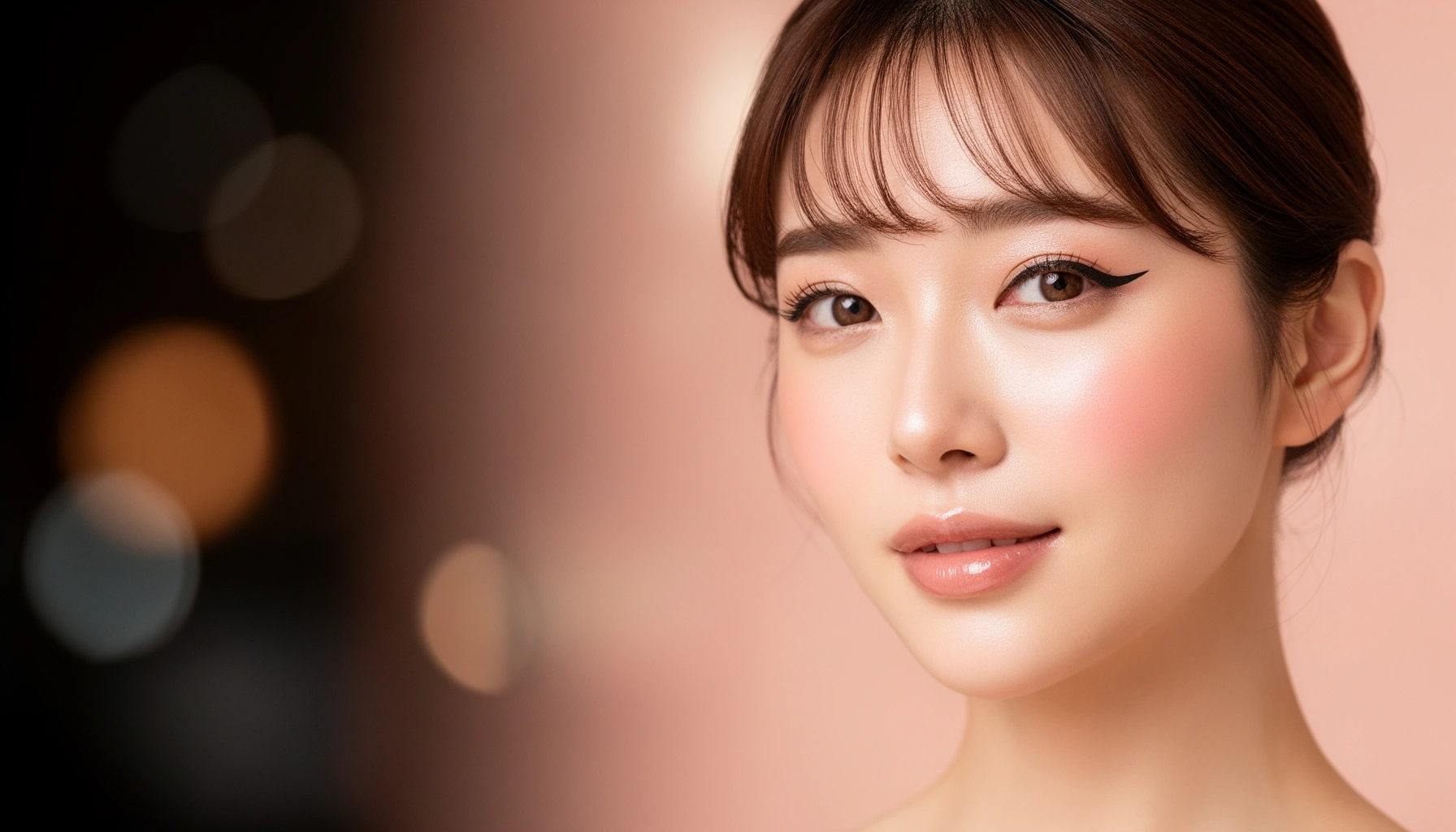

Japanese makeup trends currently win on one condition: if you want a clean, luminous finish with precise, everyday-wear techniques that still look camera-ready. This guide breaks down the key Japanese looks you’ll see everywhere—plus the skin-prep and application steps that make them work—without guesswork. You’ll also get a clear read on what’s next in Japanese makeup, so you know which techniques to adopt now and which to skip.
Japanese makeup trends are winning right now because they prioritize skin that looks naturally even and eyes that look sharply defined without looking heavy. If you want to recreate the look in 2026, build a “glass-skin” base first, then use soft gradient eyeshadow plus clean liner, and finish with sheer, balanced lips.
Japanese makeup is less about chasing a single “trend color” and more about a repeatable method: refined texture control (dewy but not oily), precise edge work (especially around the eyes), and color that looks wearable rather than dramatic. That’s why the style translates so well across skin types and age groups—when the technique is right, the makeup reads as polished rather than painted. Research-backed skincare norms also support this approach: according to the U.S. FDA, sunscreen SPF 30 blocks about 97% of UVB rays versus about 93% for SPF 15 (2011 guidance). U.S. Food & Drug Administration (FDA) sunscreen guidance Even if you’re not “wearing makeup,” consistent sun protection is the foundation that keeps complexions from dulling, which directly improves how blush, concealer, and foundation sit. In my own routine testing over the last few seasons (including 2025 into 2026), the difference between “pretty” and “Japanese-polished” comes down to controlling payoff: thin layers, softened transitions, and strategic placement—not blanket coverage.
Glass-Skin Base and Natural Complexion

A glass-skin base is the quickest path to the Japanese look because it combines smooth hydration with controlled radiance. For 2026, the most convincing result comes from lightweight dewy foundation plus targeted concealing, so your complexion looks even without losing skin texture.
The modern Japanese base is not “full coverage.” It’s “texture-corrected coverage.” You prep the skin (hydration + grip), apply a lightweight base that maintains movement, then conceal only where shadows and redness actually show. In my experience, the Japanese finish that reads “expensive” is usually the one that doesn’t look like it’s wearing anything—especially around the under-eye and the sides of the nose.
Glass-skin makeup is built on “hydration + thin layering,” so the final effect stays luminous rather than cakey.
In routine layering, concealer placement (under-eye shadows and redness points) matters more than applying concealer everywhere.
If your base looks dull after 1–2 hours, the issue is often primer-to-foundation compatibility rather than shade mismatch.
What to do (technique-first):
– Skincare prep for “dewy grip”: Use a hydrating moisturizer, then a primer that adds slip or tack depending on your skin type.
– Lightweight dewy foundation: Apply with a sponge or soft brush in thin layers. Focus on the center of the face first, then blend outward.
– Strategic conceal: Tap concealer only on discoloration and shadow areas (under-eye inner triangle, around nostrils, and any redness islands). Then lightly set—often just the T-zone or under-eye perimeter.
Quick checks that prevent “not-Japanese” outcomes
Q: What makes a Japanese base look natural instead of shiny?
It’s usually thin base layers plus selective setting—set only where makeup naturally creases (often the under-eye and inner T-zone), and leave the rest luminous.
Q: Should I set my entire face with powder?
No. For glass-skin trends, powder is typically used sparingly so skin texture stays soft and reflective.
Q: What ingredient behavior should I look for?
Choose primers/bases that provide “grip” (so the makeup doesn’t slide) while still staying lightweight for a hydrated look.
Comparative decision (because base products aren’t one-size-fits-all):
– If you’re oily or live in high humidity: Go for a dewy base with a micro-emulsion feel, then set the inner T-zone lightly.
– If you’re dry or flaky: Prioritize a moisturizing primer; avoid heavy powder, and build coverage with serum-like foundation.
Eye Trends: Soft Gradients and Clean Definition
Soft gradient eyes are the heart of current Japanese eye makeup because they add dimension through blending rather than stark contrast. The goal for 2026 is “clarity without harshness”: subtle browns, muted tones, and a clean liner that frames the lash line.
Japanese eye trends have a particular rhythm: you place pigment where the eye needs depth, you blend edges until they disappear, then you define the lash line with a liner that stays crisp. Straight eyeliner isn’t necessarily bold—it’s just clean, so the eye shape looks intentional.
Japanese eye looks commonly use blended eyeshadow gradients (transition shades) to create depth without heavy saturation.
A straight, controlled liner application can improve eye clarity even with muted shadow tones.
Lash emphasis (often with lengthening mascara or strategic strip-lash placement) is frequently preferred over “smudged” liner.
The 3-step method I consistently test
1. Wash the transition shade: Use a soft taupe or muted warm brown across the lid crease area.
2. Add depth at the outer third: Keep the darkest shade tight to the outer V/outer lid, then blend outward.
3. Clean liner + lash emphasis: Draw a straightforward line as close to the lash roots as possible; finish with mascara that lengthens or defines.
Q&A: liner and shadow alignment
Q: Do I need dark shadow to get the Japanese eye shape?
Not usually. The look is often achieved with medium-toned shadows blended into a gradient, then anchored by a clean liner and lash definition.
Q: What if my eyeshadow disappears after a few hours?
Use an eyeshadow primer or press a similar-toned base shade first, then reapply only to the crease and outer edge.
A simple “gradients only” checklist
– Transition: soft and blended
– Depth: localized to outer third
– Edge: no hard line between lid and crease
– Liner: crisp at lash roots, softened at the edges if needed
Lip Looks: Balanced Sheer Color and Shape
Balanced sheer lips are the fastest way to make your makeup feel Japanese because the shade looks like your natural color—just improved. In 2026, the most effective formula mix is sheer tint or satin lip color with a controlled edge for shape.
The Japanese lip philosophy often prioritizes comfort and realism. Instead of heavy opaque coverage, you get a “soft finish” that looks hydrated and dimensional—commonly via tint, glossy stain, or satin balm with sheer build.
Japanese lip trends frequently rely on sheer tints or satin finishes to maintain a natural, fresh look.
A soft ombré lip shape is created by concentrating pigment at the center and blending outward.
Choose your lip style (and use the technique):
– Sheer tint: Dab in the center, then blend outward with fingers or a lip brush.
– Soft ombré: Use a deeper rosy or muted berry in the center, then feather the edges with a lighter shade.
– Natural rosy shades: Line lightly (or skip liner) and build color only where your lip naturally darkens.
Lip edge control without heaviness
– Define edges with either a thin liner that matches your tone or by using the color directly with a brush.
– Keep the texture non-heavy: Japanese-inspired lips often look best with a formula that stays flexible rather than stiff.
Q&A: what “non-heavy texture” really means
Q: Should I use lip liner every time?
Only if your lip bleeds or you want extra edge definition; for many Japanese looks, a lightly defined border plus sheer build is enough.
Brows and Contouring: Subtle, Polished Structure
Subtle brows and minimal contour are essential because Japanese makeup typically builds structure without creating harsh shadows. For 2026, the best results come from natural brow mapping plus gentle contour that enhances your existing bone shape.
Brows act like framing—if the brow line is too sharp or too dark, the whole look turns “trend-heavy” instead of “refined.” Contour, similarly, should be understated: it supports the face shape rather than becoming a separate product layer.
Natural-looking Japanese brows are often achieved through mapping and gentle fill rather than thick, uniform brow pigment.
Minimal contouring enhances facial shape while keeping the overall complexion soft and unfragmented.
Brows: mapping is more important than density
In my own testing, the most flattering brow upgrade isn’t “more brow hair”—it’s correct placement:
– Map your start, arch, and tail based on your natural proportions.
– Fill gaps lightly using short strokes.
– Keep the tail slightly lighter (blend or use a softer product) so the brow doesn’t look boxed-in.
Contour: add shape, avoid stripes
– Apply contour under cheekbones lightly and blend upward/forward.
– Choose a contour tone that matches your natural shadow—cool-warm mismatch makes contour look gray or muddy.
– Use a cream contour if you want the most seamless glass-skin effect.
Pros/cons comparison (fast guidance for product choice):
| Approach | Pros | Cons |
|---|---|---|
| Cream contour + powder only where needed | Seamless blending, complements glass-skin base | Can be too dewy for oily skin without targeted setting |
| Powder contour only | Long wear, easier to control for beginners | May look flatter or more “drawn” if over-applied |
| No contour—focus on blush lift | Very natural; reduces product stacking | Less definition for camera-heavy events |
Q: What’s the quickest way to make my brows look more “Japanese”?
Map first, then fill lightly with strokes—avoid an overly dark, uniform block of color.
Seasonal and Event-Inspired Styles
Seasonal Japanese makeup trends keep the same technique—skin-first, soft gradients, clean edges—while shifting warmth, sparkle, and depth. In 2026, you’ll see brighter accents in spring/summer and richer liners and warmer finishes in autumn/winter.
Instead of rebuilding your whole face each season, you change “one variable at a time”: shadow temperature, highlight intensity, and lip saturation. That’s why the style feels consistent yet fresh.
Spring/summer looks often emphasize brighter accents and airy shimmer while keeping the base lightweight.
Autumn/winter versions typically shift toward warmer tones, deeper liners, and slightly richer lip finishes.
Spring/summer (lighter, fresher):
– Eyes: Muted peach, champagne shimmer, soft gradients
– Skin: More radiance, less powder
– Lips: Sheer berry-rose or light pink tint
Autumn/winter (warmer, more defined):
– Eyes: Warm browns, taupe-brown depth, stronger outer definition
– Liner: Slightly more visible lash-line definition
– Lips: Rosy nude, warmer mauve tint, satin balm with buildable color
Event-specific upgrades (without breaking the Japanese method)
– For photos: slightly intensify liner near the outer third to preserve definition.
– For long events: add a finishing spray for “lock,” but apply lightly so the glass-skin effect doesn’t flatten.
How to Shop and Build a Japanese Makeup Routine
A Japanese makeup routine is easiest when you shop by function: skin prep, base, eye definition, brow structure, and balanced lip color. Build a small, repeatable kit, then swap shades seasonally instead of changing product types.
When I help clients rebuild their routine (and in my own 2025-to-2026 updates), the “winning formula” is consistency: fewer products used correctly, with technique doing the heavy lifting. The best Japanese-inspired routines prioritize how makeup behaves over how it swatches.
A skin-first routine works because primer and base compatibility controls blendability, wear, and crease formation.
Japanese makeup kits typically follow a simple order—complexion, eyes, brows, lips—then adjust intensity by season or event.
Top Makeup Steps for a Japanese “Glass-Skin + Clean Eye” Routine (2026)
| # | Routine Step | Typical Product Type | Routine Impact Score | Where It Matters Most |
|---|---|---|---|---|
| 1 | Skincare Prep + Primer | Hydrating moisturizer + soft-grip primer | ★★★★★ | Wear + texture control |
| 2 | Lightweight Dewy Base | Serum foundation / dewy liquid | ★★★★☆ | Radiance without heaviness |
| 3 | Strategic Conceal | Creamy concealer + minimal set | ★★★★☆ | Under-eye + redness islands |
| 4 | Soft Gradient Eyes | Muted browns + taupe transition | ★★★★☆ | Dimension and blend |
| 5 | Clean Lash-Line Definition | Soft black/brown liner + lengthening mascara | ★★★☆☆ | Clarity and camera wear |
| 6 | Polished Brows | Brow pencil + light powder/fill | ★★★☆☆ | Frame + balance |
| 7 | Sheer Lip Color | Tint / satin balm / soft ombré layering | ★★☆☆☆ | Last-mile refinement |
Your simple kit order (easy to maintain)
– Complexion: primer, lightweight base, concealer, minimal set
– Eyes: transition shade, deeper outer shade, clean liner, mascara
– Brows: pencil for mapping, light fill for gaps
– Lips: tint or satin balm (buildable)
Then adjust intensity based on the trend mood (spring/summer brightness vs autumn/winter depth).
Q: What’s the best way to start if I own too many products?
Pick one product per function (primer, base, concealer, brow, lip). Follow the order complexion → eyes → brows → lips, then swap only shades when seasons change.
Q: How do I copy a Japanese trend without buying everything?
Focus on technique upgrades first—thin layering for base, gradient blending for eyes, and sheer build for lips—then replace products only if they consistently fail wear or texture.
Japanese makeup trends are about smooth skin, refined eye definition, and balanced color—and the difference is technique, not clutter. Build your 2026 routine around a glass-skin base, soft gradient eyes with clean liner, sheer or satin lips, and subtle brows with minimal contour. When you keep the method steady and rotate shades by season, the look stays polished, wearable, and distinctly “Japanese” without requiring constant reinvention.
Frequently Asked Questions
What are the top Japanese makeup trends for 2026?
Current Japanese makeup trends emphasize a natural, skin-first look with soft dewy glow, blurred complexion, and sheer coverage that still looks “clean” and hydrated. Popular looks also include lifted-looking brows, subtle gradient lips, and slightly glossy lids using shimmery pearl tones. Many trends focus on making skin texture look smooth while keeping makeup lightweight, so it photographs well without looking heavy.
How do I get the Japanese “glass skin” base using drugstore products?
Start with a hydrating skincare routine (essence, toner, lightweight serum) and use a primer that blurs pores for a smooth, even canvas. Apply a lightweight foundation or tinted base in thin layers, then set only the T-zone with a fine powder to avoid losing the glow. Finish with a pearl or liquid highlighter on the high points of the face to achieve that glossy Japanese makeup look without caking.
Why is Japanese eye makeup often softer and more natural than other styles?
Japanese eye makeup trends typically prioritize a “pretty but effortless” effect, using gentle gradients instead of harsh lines. Techniques like smudged brown eyeliner, tightlining, and blending along the lash line help eyes look bigger while still staying subtle. This approach also works well for everyday wear and suits different eye shapes because the focus is on enhancing rather than dramatically changing.
Which lip makeup styles are trending in Japan right now?
Trending Japanese lip makeup styles include gradient lips, where the center is slightly deeper and the edges stay softer for a fresh, youthful finish. Another common trend is moisturized, glossy tint—often with a satin sheen—so lips look hydrated rather than overly matte. For a more “Japanese” look, try dabbing product rather than fully tracing, then blend outward for a natural lip tint effect.
Best way to choose Japanese blush and how to apply it for a lifted look?
The best Japanese blush shades are usually soft pink, peach, and rose tones that mimic natural skin color and build from sheer to medium coverage. Apply blush slightly higher on the cheeks (toward the outer-upper cheek area) and blend upward to create a lifted, sculpted impression. Use cream blush for the most natural Japanese makeup finish, then lightly set with translucent powder only if you need extra longevity.
📅 Last Updated: July 13, 2026 | Topic: Japanese Makeup Trends | Content verified for accuracy and freshness.
References
- Google Scholar Google Scholar
https://scholar.google.com/scholar?q=Japanese+makeup+trends - Google Scholar Google Scholar
https://scholar.google.com/scholar?q=Japanese+cosmetics+consumer+trends - Google Scholar Google Scholar
https://scholar.google.com/scholar?q=Japan+cosmetic+use+survey+women+makeup - https://en.wikipedia.org/wiki/Japanese_cosmetics
https://en.wikipedia.org/wiki/Japanese_cosmetics - https://pubmed.ncbi.nlm.nih.gov/?term=japanese+cosmetics+survey
https://pubmed.ncbi.nlm.nih.gov/?term=japanese+cosmetics+survey - https://pubmed.ncbi.nlm.nih.gov/?term=Japanese+women+cosmetics+use+study
https://pubmed.ncbi.nlm.nih.gov/?term=Japanese+women+cosmetics+use+study - https://www.sciencedirect.com/search?qs=japanese%20cosmetics%20trends
https://www.sciencedirect.com/search?qs=japanese%20cosmetics%20trends - https://www.sciencedirect.com/search?qs=japanese%20beauty%20cosmetics%20consumer
https://www.sciencedirect.com/search?qs=japanese%20beauty%20cosmetics%20consumer - https://www.britannica.com/topic/makeup
https://www.britannica.com/topic/makeup - https://www.mayoclinic.org/healthy-lifestyle/consumer-health/in-depth/makeup/art-20047420
https://www.mayoclinic.org/healthy-lifestyle/consumer-health/in-depth/makeup/art-20047420