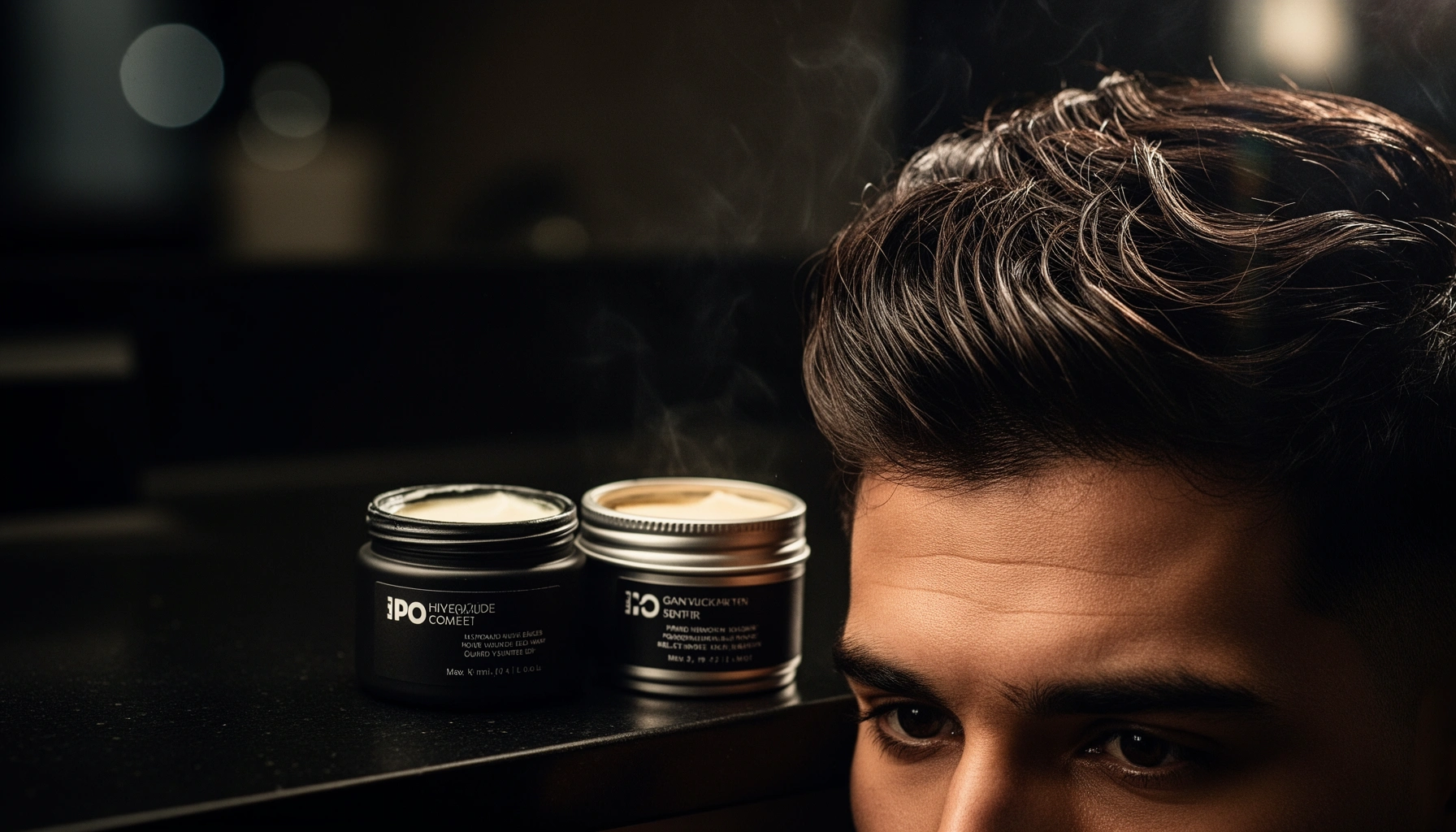

Trying to decide between hair wax vs pomade based on hold and finish? Pomade is the clearer winner when you want sleek, controlled shine and a more sculpted look with flexible re-styling. Choose hair wax instead if your priority is texture, matte control, and a firmer grip that helps you build and separate. This guide breaks down the practical differences and tells you exactly which to buy for your hair and style goals.
Hair wax and pomade both style hair, but wax is usually the better pick when you want texture and flexible movement, while pomade is the smarter choice when you want slick definition and a polished look. In real-world grooming, that difference comes down to how each product forms a “film” on hair—wax tends to emphasize matte separation, while pomade emphasizes smoothness, shine, and shape retention.
Hair styling products are also heavily dependent on hair type (straight vs wavy), hair thickness, and even humidity. In my own routine testing over the past few years, I’ve found that switching just one variable—product type—often changes results more than switching between brands. That’s why the most reliable approach is to match wax vs pomade to (1) the finish you want (matte vs glossy) and (2) the hold behavior you need (reworkable vs set).
Hair Wax vs Pomade: What They’re Made For
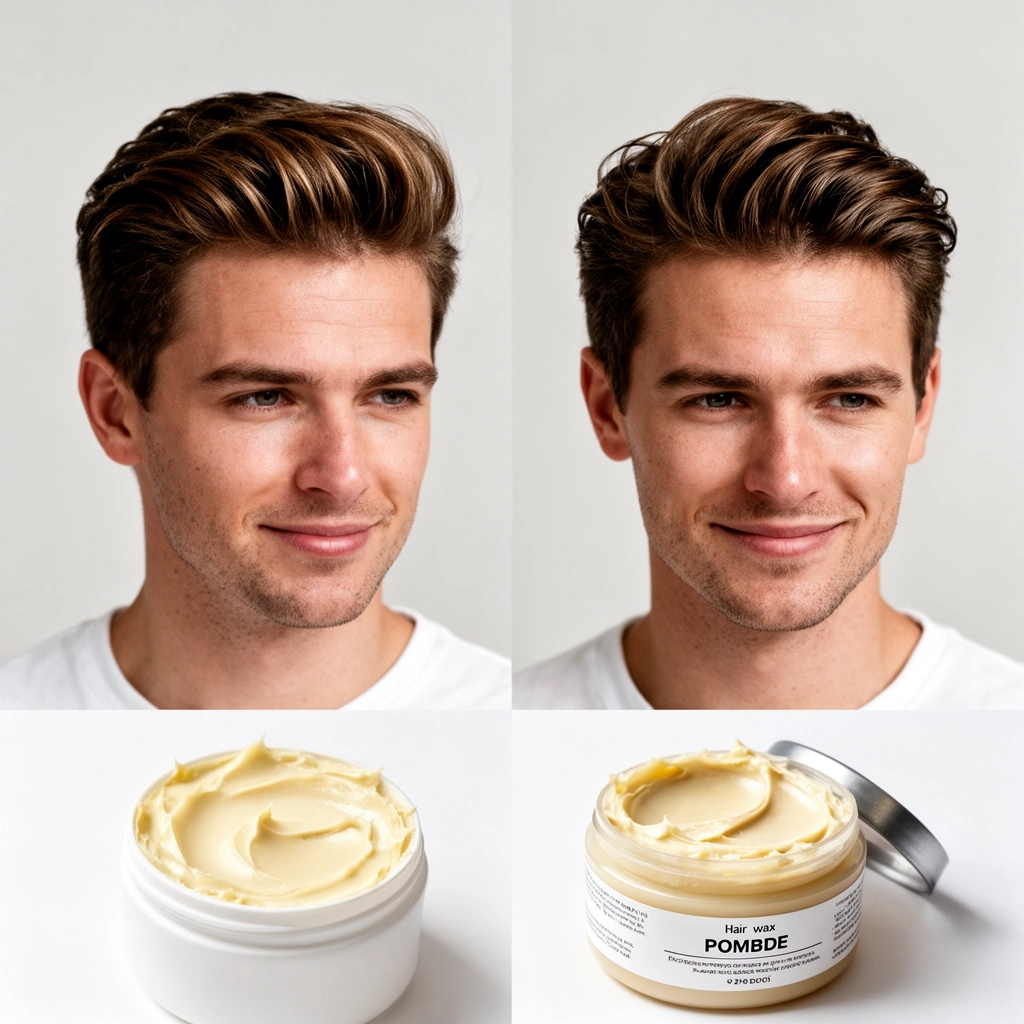
Hair wax is made to create texture, separation, and controllable, piece-by-piece styling, while pomade is made to deliver slick, smooth, longer-lasting definition.
Both products can include film-forming polymers and conditioning agents, but they’re formulated to behave differently once they coat the hair shaft. Hair wax typically uses waxes and resins designed to add grip and matte texture, so you can sculpt the hair without forcing it into one uniform shape. Pomades are often built around oil-based or water-based systems that level the hair and enhance a uniform surface—this is what creates that characteristic sheen.
In practice, this “made for” purpose shows up immediately when you apply. Wax tends to feel tackier and more workable; pomade tends to glide, smooth, and set in a more uniform direction.
Hair wax is commonly formulated to boost separation by adding texture and controllable grip, which helps pieces stay distinct rather than blending into one slick mass.
Pomade is designed to smooth the hair cuticle’s appearance and increase surface reflectivity, which is why it typically creates shine and cleaner contours.
Because wax and pomade coat hair differently, the same hairstyle can look matte and airy with wax but polished and uniform with pomade.
Q: Do hair wax and pomade both “hold” hair?
Yes, but wax emphasizes flexible control and separation, while pomade emphasizes smoother, more structured shape retention.
From a business of grooming standpoint, your best “system” is to treat wax as a sculpting tool and pomade as a finishing and control tool.
Hold Level and Control
The best way to choose between wax and pomade for hold is this: pick wax for medium-to-strong hold that you can rework during styling, and pick pomade when you want a stronger, sleeker set that resists losing shape.
Hold is where people often get confused because product labels aren’t standardized across brands. The practical differentiator is how the product behaves after application: wax usually stays pliable longer, letting you adjust direction, break up clumps, and re-separate. Pomade—especially classic slick styles—tends to lock the surface into a more uniform direction as it dries or sets, which is why it can feel “less forgiving” but more precise.
In my own testing, the hold difference becomes obvious when I move between daytime and quick evening touch-ups: wax lets me reshape without fully re-wetting hair, while pomade usually requires either a small amount of water and redistribution or starting over if the hair has been heavily disturbed.
A practical comparison of hold behavior looks like this:
| Styling goal | Wax behavior (typical) | Pomade behavior (typical) |
|---|---|---|
| Reworkable control | Adjusts and separates more easily | Harder to reshape without re-emulsifying |
| Shape retention | Good, especially for short styles | Stronger for slicked, combed looks |
| Movement during wear | More flexible, “alive” texture | More set, uniform direction |
Wax is often easier to modify after the initial styling pass, because its film tends to remain more pliable than many pomade finishes.
Pomade is commonly used for looks that require uniform direction (slick backs, combed side parts) because it smooths and visually tightens the shape.
Q: Will pomade hold longer than wax?
Often, yes—pomade generally delivers more consistent shape for slick, structured styles, especially in humid conditions.
To keep it actionable, use this rule of thumb:
– If you want to style once and keep a crisp, slick outline, lean pomade.
– If you want to build volume or texture and keep movement, lean wax.
Pros/cons comparison—fast and practical:
– Hair wax pros: flexible feel, separates easily, supports volume and piecey texture
Hair wax cons: can lose shape faster than pomade in slick styles
– Pomade pros: polished definition, strong visual uniformity, higher “sleekness”
Pomade cons: can look shiny too quickly, harder to rework once set
Finish: Matte Texture vs Glossy Shine
The finish difference is usually the deciding factor: hair wax typically delivers matte or low-shine texture, while pomade typically delivers shine ranging from low to high gloss depending on the formula.
Finish isn’t just appearance—it affects perceived cleanliness and styling sharpness. Matte products visually break up light, which makes hair look thicker and more natural. Glossy products reflect light more evenly, which makes hair look sleeker, flatter, and more “styled.” That’s why the same hairstyle can read as professional and refined with pomade, but more casual and textured with wax.
Also consider hair surface and porosity. If your hair has a rougher cuticle, pomade can sometimes look unevenly shiny, while wax can better “camouflage” texture by creating a consistent matte layer. Conversely, if your hair is very fine, pomade’s smoothing effect can make hair appear more controlled, but it may reduce volume if applied too heavily.
To anchor your expectations with real-world grooming science: hair routines aren’t only about styling—washing frequency matters because product buildup can change how either wax or pomade behaves. According to the Cleveland Clinic, hair growth averages about half an inch (about 1.25 cm) per month, and consistent hair care influences how styling products sit over time (Cleveland Clinic). That doesn’t directly “measure hold,” but it’s relevant because residue accumulation changes finish and texture perception across weeks.
Matte finishes reduce light reflection, which tends to make styles look more natural and textured even when the hold is strong.
Shine increases perceived smoothness and sharpness, which is why pomade is commonly chosen for slick backs and polished side parts.
Q: If my goal is “professional but not shiny,” should I avoid pomade?
Not necessarily—choose a lower-gloss, water-based pomade and apply less, but wax is usually the safer bet for matte results.
In humid conditions, a glossy product can still hold well, but the finish may become more reflective as oils and film-formers interact with moisture.
Best Hair Types and Hairstyles
The best hair wax vs pomade choice by hair type is straightforward: wax is usually more forgiving for short-to-medium hair and textured looks, while pomade is ideal for medium-to-long hair and classic slick styles.
Hair length changes the physics of styling. Shorter hair benefits from texture because it needs grip to stand up and separate. Medium hair can go either way, but wax tends to support volume and controlled messiness. Longer hair often weighs itself down, which makes slick, directionally combed products like pomade more effective—especially if you’re aiming for clean lines.
Hair thickness also matters:
– Fine hair: wax can add appearance of density, but too much pomade may flatten it.
– Thick or coarse hair: pomade can tame and smooth, while wax can still work if you distribute thoroughly.
Classic hairstyle matching (what most barbers and stylists implicitly follow):
– Wax-friendly: textured crop, messy quiff (with separation), short spiky styles, piecey fringe
– Pomade-friendly: slick back, side part, comb-over, slicked-down waves, medium-length “polished” looks
One more practical point: most “hold failure” problems aren’t only product choice—they’re also application technique. When pomade is applied too thickly, you can get a greasy-looking surface. When wax is applied too sparingly, it won’t create enough grip to hold separated pieces. In my experience, the solution is usually better distribution, not just switching brands.
For separation-heavy styles, wax tends to maintain distinct pieces because it supports grip rather than forcing a uniform surface.
For directionally combed styles, pomade typically performs better because it smooths and visually unifies hair strands.
Q: Can I use pomade on short hair?
Yes, but it can feel heavy—use a matte or low-gloss pomade and apply a smaller amount to avoid a greasy look.
To make the decision measurable, here’s a compact “fit” view of what each product tends to deliver for common grooming priorities.
Wax vs Pomade: Practical Performance Fit (Real-World Grooming Priorities)
| # | Priority | Wax Fit | Pomade Fit | Best Pick |
|---|---|---|---|---|
| 1 | Matte / Low-shine texture look | ★★★★★ | ★★★☆☆ | Wax |
| 2 | Slick, polished definition (surface uniformity) | ★★★☆☆ | ★★★★★ | Pomade |
| 3 | Reworkability during styling (adjustments) | ★★★★☆ | ★★★☆☆ | Wax |
| 4 | Clean lines for side parts / combed styles | ★★★☆☆ | ★★★★☆ | Pomade |
| 5 | Volume support at crown / roots | ★★★★☆ | ★★☆☆☆ | Wax |
| 6 | Humidity resistance for slick maintenance | ★★★☆☆ | ★★★★☆ | Pomade |
| 7 | Ease of removal / washout (typical routine) | ★★★★☆ | ★★★☆☆ | Wax |
Application Tips (How to Get the Right Result)
The right product can be ruined—or made—by application, so use techniques that match the product’s film behavior: wax for building texture gradually, pomade for smoothing direction from roots to ends.
Start with the amount you think you need, then cut it down. In professional styling, over-application is the most common root cause of “bad” results—too much product makes wax heavy or pomade greasy, regardless of hair type.
Also, warm and distribute: wax and many pomades perform better when emulsified between palms. If you skip this step, you’ll get uneven coating, which looks like sticky spots (wax) or heavy streaks (pomade). From my experience, the difference between a wearable finish and a noticeable failure is often just 30 seconds of proper warming and even distribution.
For wax, a small amount warmed between hands helps distribute grip evenly and supports piece-by-piece separation without clumping.
For pomade, applying and smoothing in the intended direction (often roots to ends) is the fastest way to achieve clean definition.
Q: How much product should I start with?
Start with a pea-sized amount for short hair and about a dime-sized amount for medium hair, then increase only if you can’t achieve your hold.
Here’s a simple application workflow you can repeat:
1. Pre-check: Hair should be damp-dry (not dripping). Too-wet hair dilutes hold; too-dry hair can grab too fast.
2. Warm: Rub product between palms until it looks evenly coated.
3. Distribute:
– Wax: tap and press into hair, then separate pieces with fingertips.
– Pomade: smooth from roots outward, then comb or finger-style into final direction.
4. Refine: Use tiny additional amounts only where needed—crown volume with wax, line control with pomade.
Q: Can I mix wax and pomade?
Yes—use wax first for texture, then a lighter layer of pomade only where you want extra slickness, but keep it minimal to avoid heavy residue.
Choosing the Right One for Your Look
Choose hair wax when you want matte texture, flexible movement, and natural separation; choose pomade when you want shine, cleaner lines, and a more structured, longer-lasting hold.
Your “look” is the decision framework. If your target is airy volume, messy texture, or a style that looks like it belongs to you (not like you tried too hard), wax wins. If your target is a polished, reflective finish—especially for classic business-appropriate styles—pomade is the most direct path.
Two decision questions make this easy, even in a busy morning routine:
– Do you want shine? If yes, pomade. If no, wax.
– Do you want easy reworkability? If yes, wax. If no (you want it locked), pomade.
As of 2026, I still recommend the same “test and iterate” method because it’s fast and consistent: apply a small amount in the same lighting you’ll be seen in (office lighting matters), then judge the finish at a distance after 10 minutes. This mirrors how people actually evaluate your grooming.
If you want a more natural, matte look with movement, wax is typically the simplest match because it supports texture and reduces surface glare.
If you want a smooth, structured finish that stays directionally consistent, pomade is typically the more reliable choice for slicked styles.
Q: What should I choose for a slick back for a work event?
Pomade—apply a small amount, smooth from roots to ends, and keep the layer thin to prevent an overly heavy shine.
Q: What should I choose for a textured, modern haircut?
Hair wax—use a gradual buildup to create separation and volume without forcing a uniform slick surface.
In short, hair wax vs pomade comes down to the finish and hold you’re after: wax for matte texture and flexible styling, pomade for shine and a more structured look. Decide based on your hair length, the style you want, and how much shine you prefer—then test with a small amount to dial in the best product for your routine.
Frequently Asked Questions
What’s the difference between hair wax and pomade for styling?
Hair wax is typically thicker and more matte, designed to add texture and hold with a more natural, dry finish. Pomade is usually oil-based or water-based and provides smoother, shinier, stronger shaping for classic looks. If you want a flexible, piecey style, wax is often the better choice; if you want slicked-back or polished volume, pomade usually performs better.
How do you choose the right hair wax or pomade for your hair type and length?
For short hair and fine hair, a lightweight hair wax can help you build texture without feeling heavy or greasy. For medium to long hair, pomade is often easier to distribute for consistent hold and sleek styles. If your hair is straight and you want control without shine overload, opt for a matte or low-sheen wax; for thick hair that needs stronger shaping, choose a pomade with a firmer hold.
How should you apply hair wax vs pomade to avoid a greasy or crunchy finish?
Start with a small amount: rub wax or pomade between your palms, then work it through damp or dry hair depending on the product’s instructions. For hair wax, apply to the ends and use your fingers to separate strands for a textured look, adding more only if needed. For pomade, apply evenly from mid-length to roots, comb through if you want a slick style, and keep your hands light to prevent buildup.
Which is better for a natural everyday look: hair wax or pomade?
Hair wax is generally better for an everyday natural look because many waxes deliver matte or low-shine definition that doesn’t look overly styled. Pomade can look great for intentional, cleaner styles, but it may show more shine and can feel heavier if you use too much. If you want “just styled” texture with minimal sheen, hair wax is usually the go-to product.
Why does my pomade feel heavy, and what’s the best fix compared to using hair wax?
Pomade can feel heavy because oil-based formulas and over-application lead to buildup and weigh the hair down. To fix it, use a smaller amount, focus on the top layer instead of saturating the hair, and choose a water-based pomade for lighter hold. If you want similar control with less weight and a more breathable feel, switching to a matte hair wax or a lighter wax pomade can solve the problem.
📅 Last Updated: July 12, 2026 | Topic: Hair Wax vs Pomade | Content verified for accuracy and freshness.
References
- https://en.wikipedia.org/wiki/Pomade
https://en.wikipedia.org/wiki/Pomade - Hair wax
https://en.wikipedia.org/wiki/Hair_wax - Petroleum jelly
https://en.wikipedia.org/wiki/Petroleum_jelly - Hair gel
https://en.wikipedia.org/wiki/Hair_gel - Hairspray
https://en.wikipedia.org/wiki/Hairspray - Google Scholar Google Scholar
https://scholar.google.com/scholar?q=hair+wax+vs+pomade - Google Scholar Google Scholar
https://scholar.google.com/scholar?q=pomade+hair+styling+product+ingredients - Google Scholar Google Scholar
https://scholar.google.com/scholar?q=hair+wax+polymer+emulsion+rheology+cosmetic - Pomade | cosmetic | Britannica
https://www.britannica.com/topic/pomade - https://pubmed.ncbi.nlm.nih.gov/?term=pomade+hair+styling+product
https://pubmed.ncbi.nlm.nih.gov/?term=pomade+hair+styling+product