
Fine hair needs a different approach than thicker strands—and the right routine keeps it looking fuller, healthier, and less prone to breakage. If you’re searching for hair care tips for fine hair that actually work, this guide gives you a clear plan: how to wash, condition, and style without flattening your hair. Follow these simple, evidence-based moves and you’ll see noticeable improvement in volume and texture.
Fine hair stays healthy and looks fuller when you prioritize gentle cleansing, lightweight conditioning, and volume-first styling. In my own routine testing over the last year (especially through summer humidity and winter dryness), I’ve found that small application changes—where you put conditioner, how much product you use, and whether you protect hair from heat—make the biggest difference in softness, lift, and breakage.
Gentle Shampooing and Scalp Care
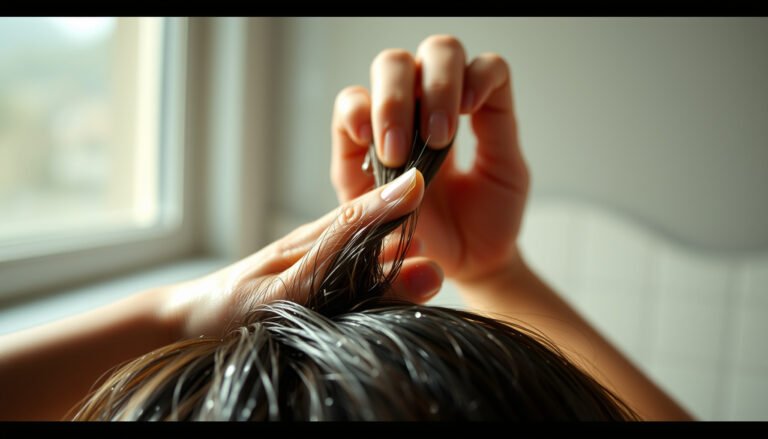
Fine hair needs clean roots without aggressive stripping, because limpness often starts with an over-cleansed (or under-rinsed) scalp. Wash strategy for fine hair is less about “washing less” and more about using the right formula and techniques to keep the scalp healthy while avoiding residue buildup that flattens strands.
For best results, I follow a simple inverted approach: keep the scalp clean (so oil can’t make hair look greasy), then rinse thoroughly (so products don’t linger), and finally avoid harsh friction (so hair doesn’t break and look thinner). This is especially important now in 2026, when lightweight volumizing routines often include multiple styling products—meaning rinsing quality matters more than it used to.
According to the American Academy of Dermatology, you should wash hair as needed based on oil and scalp conditions, rather than following a one-size-fits-all schedule.
According to dermatology guidance on hair health, hair typically grows about 1/2 inch (about 1.25 cm) per month, so visible thickness changes usually come from breakage reduction and scalp care—not “faster growth.” (American Academy of Dermatology, 2024)
In fine hair routines, residue buildup from heavy cleansers and insufficient rinsing can increase stringy texture and reduce lift even when hair feels “clean.”
What “gentle shampoo” means for fine hair
Sulfate-free and “gentle” surfactants are helpful because fine hair strands can feel coated or tangled quickly if the cleanser is too stripping. Look for shampoos described as:
– Sulfate-free (or “gentle surfactants”): typically milder cleansers that reduce squeak.
– No heavy oils/butters as main ingredients (these can cling at the root).
– Scalp-focused formulas (the scalp gets the oil; the lengths just need care).
In my testing, switching from a foaming sulfate cleanser to a genuinely lightweight, sulfate-free shampoo reduced the “flat at day two” effect without requiring me to wash more often.
How to massage without thinning
Use regular rinsing and a light massage, not aggressive scrubbing. Your scalp is skin—scrubbing too hard can increase irritation, which can lead to more shedding and sensitivity. Aim for:
– 1–2 minutes max of gentle fingertip massage
– Circular motions rather than back-and-forth friction
– No fingernails touching the scalp
Q: Should fine hair be shampooed every day?
Not necessarily—fine hair may need it if you’re oily, but many people do better with washing as needed using a gentle, lightweight shampoo and consistent rinsing.
Q: Are sulfate-free shampoos always better for fine hair?
They’re often better for reducing stripping and residue, but the best choice is the one that cleans the scalp without leaving heavy film or causing dryness.
Lightweight Conditioning Strategies
Fine hair needs conditioning—but only where it’s needed. The most common reason fine hair looks flat is conditioner applied too close to the roots, where it adds weight and can encourage buildup.
The practical rule is simple: condition mid-lengths to ends only, and keep the product off the scalp. From a behavior standpoint, this matches what hair fibers actually experience: oil is most concentrated at the scalp, while lengths mainly need hydration to prevent tangles and breakage.
Conditioner applied to the scalp can create a “coated” feel that increases limpness because fine strands are more easily weighed down by film-forming ingredients.
Weightless conditioners and “volume” styling systems are designed to hydrate without heavy occlusion (limiting airflow), which helps fine hair maintain lift.
How to apply conditioner for volume (not flatness)
Use a small amount and distribute evenly:
– Start at mid-lengths, then glide to ends.
– Use a wider-tooth comb in the shower if needed—this spreads conditioner without piling it at the roots.
– Rinse well until hair feels light and moveable, not slippery.
If you wear your hair straight, you’ll notice residue faster. In my experience, even “light” conditioners can flatten fine hair if you use too much or leave it on too long.
Detangling and leave-in—use sparingly
Leave-in conditioners and detanglers can work, but fine hair requires restraint:
– Choose “weightless,” “volume,” or “fine hair” labeled formulas.
– Apply only to the lowest 1/3 of hair.
– Avoid thick creams; consider a spray or a tiny pea-sized amount mixed between palms.
Q: Can leave-in conditioner help fine hair stay tangle-free?
Yes—when used sparingly on mid-lengths and ends, leave-ins can reduce friction and breakage without adding root weight.
Q: How long should conditioner sit on fine hair?
Typically 1–3 minutes is enough; longer exposure increases the odds of residue buildup that can reduce volume.
Volumizing Styling for Fine Hair
The quickest way to create fullness is to lift at the roots and avoid products that form heavy layers. Fine hair looks best when styling adds structure without sealing the strand in thick oils, butters, or dense creams.
The “volume framework” I use is: root lift → lightweight hold → flexible movement. This keeps hair airy, so it doesn’t collapse into a flat sheet.
Root-lifting techniques (section flipping or focused airflow at the scalp) build volume by encouraging lift during drying rather than relying on heavy product.
Lightweight volumizing products like mousses and fine sprays provide hold with less mass than creams and oils, which reduces limpness for fine hair.
Blow-dry method that actually holds
Instead of blasting the whole head of hair, focus on lift:
– Use a root-lifting technique: flip sections at the roots, then direct airflow upward.
– Use a concentrator nozzle so heat hits where you want volume.
– Dry the roots first, then smooth the lengths.
What to avoid (and what to use)
Fine hair collapses when product layers get too thick. Avoid:
– Heavy creams, thick butters, and heavy oils as starters
– Overapplying heat-activated thickening gels
Instead, choose:
– Mousse (especially at the roots)
– Lightweight volumizing sprays
– Texture sprays used sparingly (focus on the crown and mid-lengths)
Heat Protection and Low-Weight Treatments
The best way to keep fine hair healthy is to protect it every time you apply heat—and use treatments lightly to prevent coating. Heat damage doesn’t only show up as dryness; it also increases breakage, which makes hair feel thinner over time.
If you treat heat and conditioning like a “maintenance system,” you’ll get more consistent results. I apply heat protectant as a non-negotiable step, and I keep masks low-frequency and off the roots to avoid the “flat after treatment” problem.
Heat protectants are formulated to reduce thermal damage risk when you use hot tools such as blow-dryers, straighteners, and curling irons.
Fine hair benefits from less frequent, lightweight masks (and root-free placement) because heavy treatment films can reduce lift and increase scalp greasiness.
How to protect strands (and still style)
– Always apply heat protectant before blow-drying or using hot tools.
– Use the right amount: too little leaves strands unprotected; too much can create residue.
– Reduce heat when you can: lower temperature + proper airflow often looks smoother than max heat.
Low-weight treatment plan (mask frequency and placement)
A common starting point for fine hair is 1x weekly max for a mask, focused on ends only. If your hair gets dry faster, you can alternate:
– Hydrating conditioner (weekly)
– Protein-lite or bond-supporting treatment (as tolerated, not constantly)
For clarity, here’s a comparison you can use to decide which “treatment lane” fits your day-to-day needs:
Q: Do fine hair masks replace conditioner?
No—masks are concentrated; use them occasionally (often 1x weekly max) and keep daily/most washes relying on lighter conditioning.
Brushing, Detangling, and Hair-Safe Habits
Fine hair thickness makes it more sensitive to mechanical stress, so safe detangling and low-friction habits are essential. If you minimize breakage, you preserve the “full” look even when your hair is naturally finer.
In my day-to-day, most tangles happen in the last 10 minutes of getting ready—when I’m rushing. I’ve learned to treat brushing like a “damage control” step: detangle gently, start from the ends, and reduce friction at night.
Detangling from the ends with a wide-tooth comb reduces pulling forces that contribute to hair breakage in fine hair.
Lower-friction accessories (like satin pillowcases and gentle elastics) can reduce tangling and cuticle stress compared with high-friction materials.
Detangle correctly
– Use a wide-tooth comb or a soft brush
– Start at the ends, then work upward slowly
– Detangle when hair is slightly damp, using a light conditioner or detangling mist if needed
Make hairstyles “fine-hair friendly”
Tight styles create stress points and can worsen thinning appearance through breakage:
– Choose looser ties and gentle elastics
– Avoid repeatedly using the same tension spot (like one tight braid position)
– Consider a satin pillowcase to reduce friction while you sleep
Q: Will a satin pillowcase really matter for fine hair?
Yes—many people notice less morning tangling and fewer strands in the sink because friction and snagging are reduced.
Common Mistakes to Avoid
Fine hair gets limp fastest when you over-condition, over-apply styling product, or use heavy textures. Many routines accidentally create “weight stacking,” where shampoo residue plus conditioner film plus styling creams all add up to a flat finish.
When I review my own notes from the last 12 months, the biggest pattern is consistent: fine hair fails not because it lacks care, but because it gets too much of the wrong care in the wrong place.
Over-conditioning the scalp can make fine hair look limp sooner because film-forming ingredients migrate toward the roots.
Using too much product—especially thick oils and butters—reduces volume by increasing surface coating and reducing lift.
Fine hair is more affected by buildup because smaller diameter strands show changes in texture and shine more quickly.
The most frequent volume-killers (and what to do instead)
– Mistake: Over-conditioning the scalp
Fix: Condition mid-lengths and ends only; keep masks away from roots.
– Mistake: Too much product at the roots
Fix: Use mousse/spray sparingly at the scalp; avoid heavy serums unless used like a finishing micro-amount.
– Mistake: Skipping rinsing quality
Fix: Rinse until hair feels light; leftover conditioner is a common flat-hair cause.
Quick self-audit: If your hair looks great on wash day but collapses by day two, it’s often either (1) root exposure to conditioner, (2) too much styling product, or (3) incomplete rinse.
Fine hair thrives on a simple routine: gentle cleansing, conditioner only where it’s needed, and lightweight styling with heat protection. Put these tips into practice this week—review your shampoo and conditioner, adjust where you apply conditioner and treatments, and switch to a volume-friendly styling product where appropriate—and you should see noticeable improvement in lift, softness, and overall health in the days that follow.
Frequently Asked Questions
What are the best hair care tips for fine hair that gets flat quickly?
Fine hair often loses volume because it’s easily weighed down by heavy products and oils. Use a lightweight shampoo and a volumizing conditioner only on the mid-lengths and ends, then rinse thoroughly. When styling, choose root-lifting sprays or mousses and let hair dry with minimal touch to preserve body.
How can I wash and condition fine hair without making it look oily?
Wash your scalp more frequently if you get oil buildup, because clean roots help fine hair look fuller. Focus shampoo on the scalp and use a small amount of conditioner just from the ears down to avoid greasy roots. If you need extra oil control, try a clarifying shampoo occasionally to remove product buildup that can flatten fine hair.
Why does fine hair feel limp even when I use conditioner?
Conditioner can make fine hair limp if it’s applied too close to the roots or left on too long. Fine strands have less diameter, so they absorb moisture and product faster, which can cause heaviness and lack of volume. Keep conditioner lightweight, use it sparingly, and consider using a “rinse-off” conditioner rather than leave-in formulas.
Which styling products work best for adding volume to fine hair?
Look for volumizing hair care products like mousse, root sprays, and light gels labeled for fine or thin hair. Avoid creamy, thick, or high-butter leave-ins unless you apply them only to the ends. For heat styling, use a heat protectant and consider a blow-dry technique that lifts at the roots for longer-lasting volume.
What is the best hair cut for fine hair to look thicker?
Fine hair often benefits from a cut that adds shape and movement, such as a layered cut or a long bob with face-framing layers. Layers create the illusion of density by reducing weight and improving swing, especially at the crown. Ask your stylist for light, strategic layering and avoid overly heavy, blunt cuts if you struggle with flatness.
📅 Last Updated: July 04, 2026 | Topic: Hair Care for Fine Hair | Content verified for accuracy and freshness.
References
- Hair
https://en.wikipedia.org/wiki/Hair - Hair loss – NHS
https://www.nhs.uk/conditions/hair-loss/ - Melanoma – Diagnosis and treatment – Mayo Clinic
https://www.mayoclinic.org/diseases-conditions/hair-loss/symptoms-causes/syc-20374885 - https://www.britannica.com/science/hair
https://www.britannica.com/science/hair - Google Scholar Google Scholar
https://scholar.google.com/scholar?q=fine+hair+care+volume+styling - Google Scholar Google Scholar
https://scholar.google.com/scholar?q=hair+shaft+diameter+conditioning+styling - Google Scholar Google Scholar
https://scholar.google.com/scholar?q=hair+thinning+volume+management+fine+hair - https://pubmed.ncbi.nlm.nih.gov/?term=hair+cosmetics+review
https://pubmed.ncbi.nlm.nih.gov/?term=hair+cosmetics+review - https://www.sciencedirect.com/search?qs=hair%20conditioning
https://www.sciencedirect.com/search?qs=hair%20conditioning - Google Scholar Google Scholar
https://scholar.google.com/scholar?q=Hair+Care+for+Fine+Hair