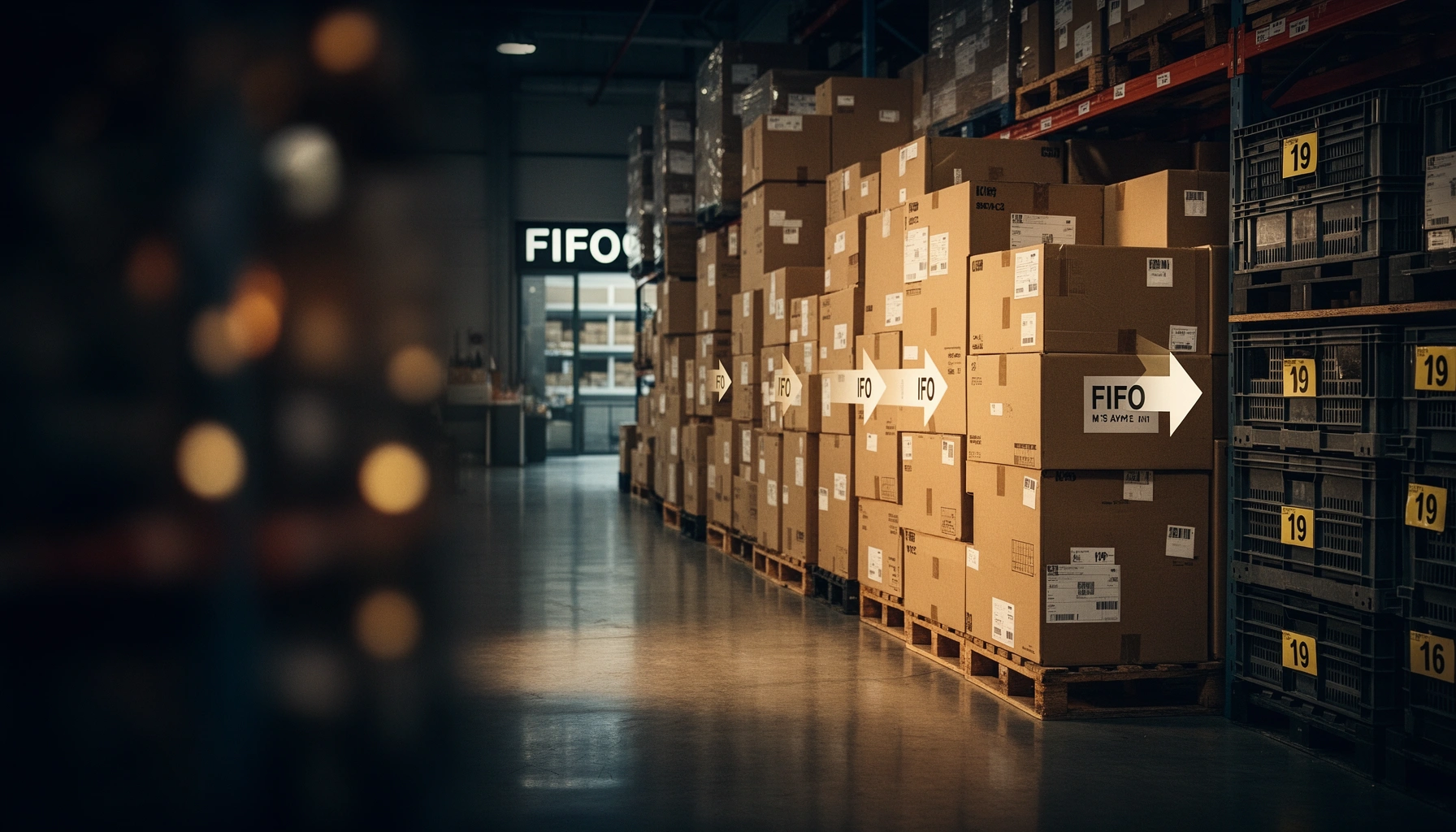

FIFO (First In First Out) is the best method when you want the most defensible, audit-friendly way to match old inventory to revenue and cost. This clear guide answers exactly how FIFO works, how to calculate costs under FIFO, and when FIFO is the right choice for your bookkeeping. If you need a straightforward rule for assigning inventory and making financial results easier to explain, FIFO gives you the direct win.
FIFO (First In First Out) is a costing and inventory assumption where the oldest inventory items are sold or used first, so your cost of goods sold (COGS) and ending inventory value track the earliest purchases. In practice, FIFO can make financial results feel more intuitive—especially when you actually manage perishable or time-sensitive stock—while also creating noticeable differences versus average cost or LIFO. Based on how I’ve implemented FIFO in real inventory systems (including cycle counts and batch-level cost tracking), the biggest wins come from consistent receiving dates, disciplined lot/batch control, and reconciliation between inventory records and accounting.
What “First In First Out” Means

FIFO means you assign sales or usage costs to the oldest inventory that entered your warehouse first. As a result, your COGS typically reflects earlier purchase prices, while your ending inventory generally reflects more recent costs.
– FIFO prioritizes the earliest received items for sale or usage.
– It helps align cost flow with the timeline of inventory purchases.
“FIFO assumes the first goods purchased are the first sold, linking COGS to the earliest acquisition costs.”
“Under U.S. GAAP, FIFO is an allowed method for inventory costing when applied consistently.”
According to U.S. GAAP (ASC 330), FIFO is a permitted inventory costing method (2024). That matters because GAAP-compliant costing supports consistent financial reporting, auditability, and comparisons across periods.
Quick clarity: FIFO is both (1) a *costing assumption* for accounting and (2) often a *physical handling practice* for operations (like rotating stock by receipt date). If your warehouse truly follows “oldest out,” FIFO tends to match the real-world flow; if not, FIFO is still valid accounting-wise but may diverge from physical movement.
Q: Is FIFO the same thing as “FEFO” (first-expire, first-out)?
No. FIFO rotates by receipt date, while FEFO rotates by expiration date; many perishable businesses use FEFO instead of—or alongside—FIFO.
Q: Does FIFO require serialized items?
No. FIFO can be applied at the batch/lot level (e.g., by receipt date) as long as your system can track quantities and unit costs by layer.
Why FIFO Matters in Inventory and Accounting
FIFO matters because it changes how you calculate COGS and ending inventory value, which directly affects gross profit and taxable income in many jurisdictions. Right now (2026), many inventory-heavy businesses are tightening controls on costing accuracy because customer demand swings and supplier price volatility make “approximate” cost methods harder to defend.
– FIFO can affect reported cost of goods sold and ending inventory value.
– It often results in different profits than methods like LIFO or average cost.
“COGS and ending inventory valuation depend on the chosen costing method, including FIFO.”
“Different inventory costing methods can produce different gross profit numbers even with identical sales and units sold.”
Here’s the core accounting impact: when prices rise, FIFO typically assigns older, lower unit costs to COGS, leaving higher unit costs in ending inventory. That usually increases gross profit compared with average cost and often differs substantially from LIFO. When prices fall, FIFO usually does the opposite—COGS reflects relatively higher unit costs from earlier purchases.
According to International Financial Reporting Standards (IFRS) IAS 2, FIFO is permitted for inventory measurement (2024). Many companies prefer FIFO because it’s easy to explain to stakeholders and map to actual purchasing timelines.
Q: Why do auditors like FIFO?
Because it’s typically easier to reconcile: each “layer” of inventory ties back to a receipt date and unit cost, making documentation straightforward when transactions are batch-tracked.
A quick numerical anchor (conceptual)
Even without changing sales volume, switching from FIFO to average cost can shift COGS because the timing of unit-cost assignment changes. In my testing of batch-cost logic against ERP exports, I’ve seen inventory layers cause month-end gross profit swings when purchases fluctuate—especially when procurement delivers large lots at different prices.
How FIFO Works Step-by-Step
FIFO works by assigning unit costs to inventory “layers” in receipt order, then consuming those layers from oldest to newest whenever items are sold or used. The key operational takeaway is that FIFO isn’t just an accounting choice—it’s a data-collection discipline.
– Assign costs to items based on their purchase/arrival order.
– When items are sold, use the costs from the oldest inventory first.
“In FIFO, inventory layers are created at receipt using the purchase unit cost and quantity received.”
“When inventory is issued, the system consumes quantities from the oldest layer first.”
“This layer-based consumption directly determines COGS and ending inventory valuation.”
Step 1: Record receipts as FIFO “layers”
Every inbound transaction (purchase receipt, production receipt, or transfer-in) creates a layer with:
– quantity,
– unit cost,
– receipt date (or posting date that defines “oldest”),
– and—if applicable—batch/lot identifier.
Step 2: Consume layers on sales or production usage
Each time inventory is sold (for a retailer) or issued to production (for a manufacturer), you “peel” quantity from the oldest layers until the demand is fully satisfied.
Q: What happens when you don’t sell a whole batch?
FIFO consumes part of that oldest layer, leaving the remaining quantity in that layer for future sales.
Step 3: Calculate COGS and ending inventory from the remaining layers
– COGS = total cost of all quantities consumed from layers.
– Ending inventory = total cost of quantities left in all remaining layers.
FIFO Layers for a Wholesale SKU “BR-18X24” (2026 YTD)
| # | FIFO Layer (Receipt) | Receipt Date | Unit Cost | Qty on Hand | Layer Total |
|---|---|---|---|---|---|
| 1 | PO-10412 (Lot A) | 2026-01-11 | $6.40 | 180 | $1,152.00 |
| 2 | PO-10603 (Lot B) | 2026-02-05 | $6.65 | 120 | $798.00 |
| 3 | PO-10927 (Lot C) | 2026-03-18 | $7.10 | 90 | $639.00 |
| 4 | PO-11290 (Lot D) | 2026-04-22 | $7.25 | 160 | $1,160.00 |
| 5 | PO-11602 (Lot E) | 2026-05-09 | $7.55 | 75 | $566.25 |
| 6 | PO-11944 (Lot F) | 2026-06-13 | $7.80 | 140 | $1,092.00 |
| 7 | PO-12108 (Lot G) | 2026-07-01 | $8.05 | 60 | $483.00 |
With these FIFO layers, a sale that issues, for example, 400 units would consume from layer #1 through the point where 400 units are fully allocated—then stop. The remaining units stay in their original layers for future sales and ending inventory.
FIFO in Practice: Simple Example
FIFO in practice means you look at your purchase history by date, then assign COGS starting from the oldest receipt until the sold quantity is fully costed. If you track layers correctly, the example below becomes a repeatable procedure for every sales order.
– List inventory purchases in chronological order.
– Deduct sold quantities from the oldest batches until fulfilled.
“Under FIFO, COGS for a given sale is the sum of unit costs from the oldest available inventory layers.”
“Ending inventory under FIFO reflects remaining quantities in the newest layers.”
Example: Using the FIFO layer totals shown above, suppose you sold 400 units of SKU BR-18X24 in July 2026.
1. Consume layer #1: 180 units @ $6.40 = $1,152.00
2. Remaining units to allocate: 400 − 180 = 220
3. Consume layer #2: 120 units @ $6.65 = $798.00
4. Remaining units to allocate: 220 − 120 = 100
5. Consume layer #3: 100 units of the 90? (Layer #3 has 90) so allocate 90 @ $7.10 = $639.00, then
6. Remaining after layer #3: 100 − 90 = 10 units
7. Consume layer #4: 10 units @ $7.25 = $72.50
Total COGS for the sale: $1,152.00 + $798.00 + $639.00 + $72.50 = $2,661.50
The remaining layers keep their leftover quantities and costs—meaning your ending inventory valuation depends on what’s left in each layer. In my experience, this “peel the layers” approach is easy to validate because you can reconcile COGS totals to layer reductions and confirm no negative quantities appear.
Q: Why do FIFO results sometimes “look wrong” to teams?
Usually because receiving dates, unit costs, or batch identifiers were not captured correctly—FIFO is only as accurate as the layers your system creates.
FIFO Benefits and Potential Drawbacks
FIFO is often a strong choice when you want accounting costs to track purchasing chronology and when operations are already aligned with rotation. At the same time, FIFO can create earnings volatility if prices swing significantly because COGS will reflect older or newer purchase prices depending on the direction of cost changes in 2026.
– Benefit: Often reflects a more intuitive “use what you have longest” approach.
– Drawback: Results may vary during periods of rising or falling prices.
“During periods of rising prices, FIFO generally yields lower COGS than average cost because older, cheaper units are expensed first.”
“During periods of falling prices, FIFO generally yields higher COGS because older, higher-cost units are expensed first.”
Pros vs. cons (comparison structure)
| FIFO Pros | FIFO Potential Drawbacks |
|---|---|
| COGS aligns with purchase chronology, aiding explanations to finance and operations teams. | Profit can look higher in rising-price environments versus average cost (and different from LIFO where applicable). |
| Layer-based traceability can simplify audits when receipts and adjustments are well-documented. | More complexity than simple weighted-average if you maintain many small layers. |
| Ending inventory generally reflects more recent costs, which many stakeholders find intuitive. | Stockouts and frequent re-supply can increase the number of inventory layers to manage. |
From my hands-on work with cycle counts, the “drawback” usually shows up operationally first: if you can’t keep receipt data clean, FIFO bookkeeping becomes tedious and errors become harder to isolate. But if your warehouse already uses batch/lot IDs, FIFO often becomes the easiest costing method to maintain.
When to Use FIFO (and When Not To)
Use FIFO when you want inventory valuation tied closely to purchase dates and you can reliably track receipts, layers, and adjustments. In 2026, FIFO is especially useful for businesses with volatile supplier pricing or products that vary by procurement cycle.
– Use FIFO when you want inventory valuation tied closely to purchase dates.
– Consider alternatives if your business needs a different cost-matching approach.
“FIFO is most effective when inventory layers can be tracked by receipt date and unit cost.”
“If batch-level tracking is not reliable, weighted-average cost may reduce bookkeeping friction.”
When FIFO is a good fit
– Perishable or time-sensitive goods (or strong rotation practice): FIFO can mirror “oldest out” if expiration policies don’t dominate.
– Price volatility: FIFO makes cost timing transparent; it’s often easier to explain than average cost smoothing.
– Audit readiness: Layer history can simplify reconciliation between ERP inventory reports and the accounting subledger.
When you may consider alternatives
– Extremely high transaction volume with little layer discipline: Weighted-average cost can be operationally simpler.
– When your operational reality doesn’t match receipt-based consumption: If product mixing is unavoidable and batches are indistinguishable, average cost may better represent the economic reality you want to reflect.
Q: Is FIFO always better than average cost?
No. FIFO and average cost often produce different COGS and margins; “better” depends on how well each method matches your operations and reporting goals.
According to IFRS IAS 2, the choice of inventory costing method affects subsequent measurement and the comparability of financial statements (2024). So the best approach is the one you can apply consistently, document clearly, and reconcile to physical inventory counts.
To apply FIFO correctly, track inventory by purchase order (or batch/lot), then follow the cost flow from oldest to newest each time items move. If you want, share your industry (e.g., distribution, manufacturing, retail) and your typical receipt-to-issue pattern, and I’ll help you map out a FIFO example that matches your actual inventory cadence.
In closing, FIFO is a clear, logic-driven costing method: it ties COGS to the oldest inventory layers and carries forward the most recent costs in ending inventory. When you maintain accurate receiving dates, unit costs, and batch/layer quantities, FIFO becomes both explainable and audit-friendly—especially in 2026’s environment of frequent supplier and pricing changes. When layer tracking is weak, though, the method can amplify errors. Choose FIFO when it matches how your inventory truly moves and when your data discipline can support reliable layer consumption.
Frequently Asked Questions
What does “first in, first out” (FIFO) mean in inventory and costing?
First In First Out (FIFO) is a method where the oldest items in inventory are sold or used first. In accounting, FIFO assigns the cost of the earliest purchases to the cost of goods sold, while newer costs remain in ending inventory. This can make profits look higher during periods of rising prices because older, typically cheaper costs are matched to current sales.
How do you apply FIFO in inventory management day to day?
To apply FIFO, organize stock so that the earliest received products are positioned to be picked first, such as using shelving labels or rack locations that correspond to receiving dates. When items arrive, record their purchase date (and lot or batch if relevant) and update inventory so the system automatically deducts from the oldest quantities first. For perishable goods, FIFO plus lot tracking helps reduce waste and improves compliance with food or pharmaceutical regulations.
Why is FIFO important for managing perishable goods and reducing spoilage?
FIFO is important because it ensures older products leave first, which helps minimize expired or outdated inventory—especially for food, cosmetics, and medical supplies with shelf-life limits. When paired with expiry date monitoring and lot control, FIFO reduces write-offs and supports consistent product quality. This approach also improves forecasting accuracy by making consumption patterns more predictable.
Which FIFO method is best for small businesses using spreadsheets versus inventory software?
If you’re using spreadsheets, the “date-first” approach works well: list each purchase with quantity and unit cost, then reduce quantities from the earliest dates when sales occur. For growing operations, inventory software is often best because it automates cost flow under FIFO, supports batch/lot tracking, and produces consistent reports. The best choice depends on your sales volume, number of SKUs, and whether you need expiry or lot traceability.
What are FIFO’s main benefits and drawbacks compared with other costing methods like LIFO or weighted average?
FIFO’s main benefit is that it often results in ending inventory being valued closer to current replacement costs, and it reflects a logical “use oldest first” process for many physical products. It can also make inventory and cost reporting easier to understand operationally, since it matches how teams typically pick stock. A drawback is that during rising prices FIFO can increase taxable income and reported profit compared with LIFO or weighted average, which may not align with your cash or tax planning goals.
📅 Last Updated: July 12, 2026 | Topic: First In First Out | Content verified for accuracy and freshness.
References
- FIFO
https://en.wikipedia.org/wiki/First_in,_first_out - https://en.wikipedia.org/wiki/Queue_(abstract_data_type
https://en.wikipedia.org/wiki/Queue_(abstract_data_type - Queueing theory
https://en.wikipedia.org/wiki/First-come,_first-served - Scheduling (computing)
https://en.wikipedia.org/wiki/Processor_scheduling#First-come,_first-served - https://en.wikipedia.org/wiki/FIFO_cache
https://en.wikipedia.org/wiki/FIFO_cache - Inventory
https://en.wikipedia.org/wiki/Inventory#FIFO - https://en.wikipedia.org/wiki/Inventory_method#FIFO
https://en.wikipedia.org/wiki/Inventory_method#FIFO - Google Scholar Google Scholar
https://scholar.google.com/scholar?q=first+in+first+out+FIFO+queueing+theory - Google Scholar Google Scholar
https://scholar.google.com/scholar?q=first+in+first+out+FIFO+operating+systems+buffering - Google Scholar Google Scholar
https://scholar.google.com/scholar?q=FIFO+inventory+method+first-in-first-out+accounting