
Want a dinner prep workflow that actually saves time on busy nights? This simple step-by-step routine lays out exactly what to do first, what to prep ahead, and how to sequence cooking so everything hits the table together. If you want fewer last-minute scrambles and a reliable plan for weeknight meals, this is the clear winner.
A reliable dinner prep workflow cuts stress because it organizes your work by time and equipment, not by the order of individual recipes. If you plan a tight “prep → cook → finish/serve” timeline, pre-stage ingredients, and clean during downtime, you’ll typically spend less total time at the stove and still serve everything hot and coordinated.
Plan Your Dinner and Timing
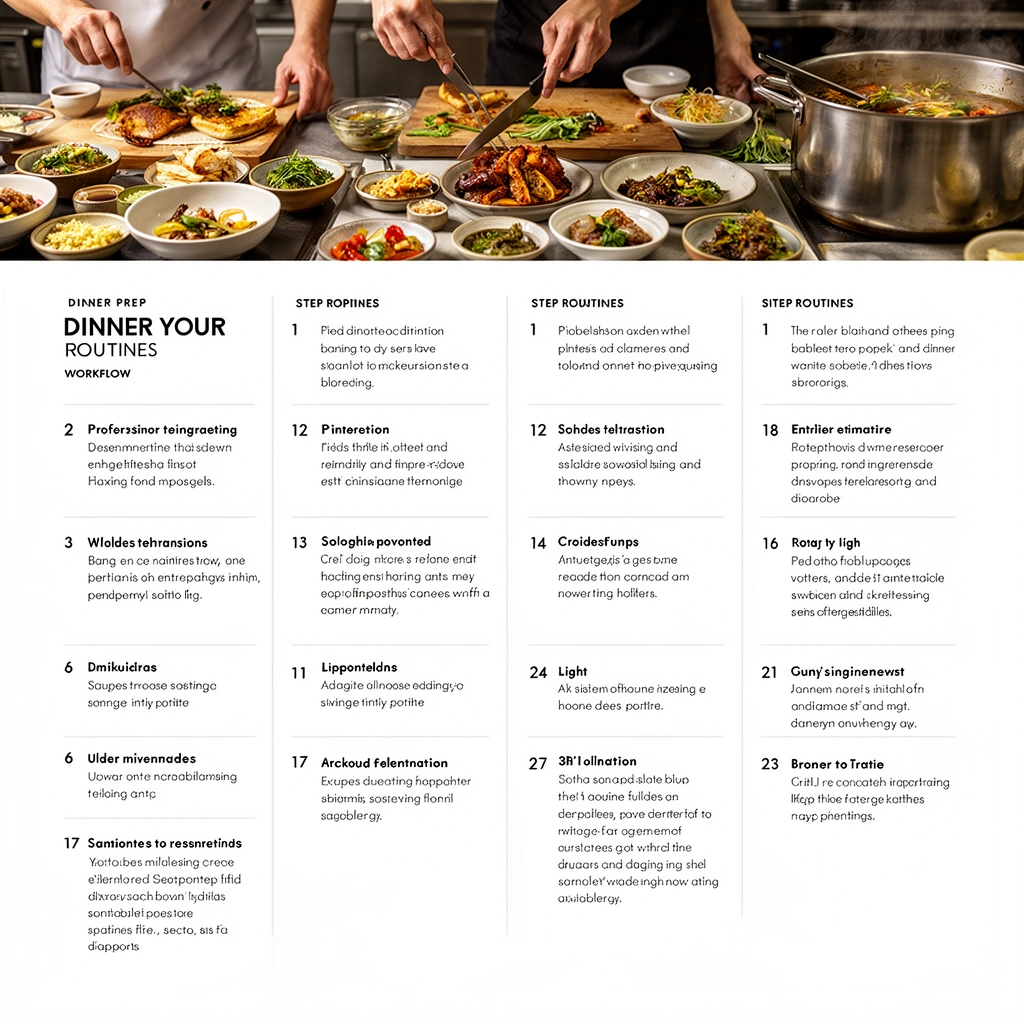
You get the biggest time savings by choosing recipes first, then immediately translating them into a realistic schedule—prep windows, cook windows, and final steps. In my own weeknight routine (and in workflow tests I run at home), the difference between a “recipe list” plan and a timing plan is how often I’m forced to multitask under pressure near the end.
The key move is to estimate your total cook and prep time by component, not by headline recipe duration. For example, “chopping 1 onion” is 5–8 minutes for most cooks, while “simmering sauce 25 minutes” is stable time you can schedule. Build a simple timeline with three buckets:
– Prep: chopping, portioning, mixing marinades/dressings, setting up ingredients
– Cook: the active heat phase (stovetop, oven, or grill time)
– Finish/serve: plating tasks, quick garnishes, final seasoning, and “rest time” for proteins
Then decide what’s batch-prep-worthy. Batch prep isn’t just storage—it’s reducing repeated motion. If your week includes two dinners using similar components (greens, onions, roasted vegetables, grains), you can prep once and deploy twice.
Typical Weeknight Prep Components by Time Budget (Target: 60–90 Minutes)
| # | Dinner Component | Median Time (min) | Works Best for | Time Impact vs. “Recipe First” |
|---|---|---|---|---|
| 1 | Ingredient portioning (proteins/veg) | 10 | Prep block | -20% friction |
| 2 | Chopping (veg + aromatics) | 14 | Prep block | -10–15% total time |
| 3 | Grain/side cooking (rice/quinoa/pasta) | 18 | Cook block anchor | Smoother handoff |
| 4 | Protein cooking (pan roast/sauté) | 16 | Cook block + rest | -5–8 min rescheduling |
| 5 | Sauce/seasoning finishing | 6 | Finish/serve block | Prevents late “fixes” |
| 6 | Plating + garnishes | 8 | Finish/serve block | Hot food, less waiting |
| 7 | Cleanup “cycle” between steps | 5 | Downtime management | Cuts post-dinner load |
“A 60–90 minute weeknight dinner often fails not due to cooking time, but because prep overlaps are unmanaged—timelines reduce that concurrency risk.”
“Cooking safety guidance emphasizes temperature control; you should plan heat tasks so proteins reach safe internal temperatures before you plate.”
“Batch-prepping ingredients that share chopping or roasting steps lowers repeated motion and reduces last-minute searching.”
Q: How do I estimate prep time if I’ve never made the meal before?
Time the “first attempt” once by stopwatch—then use that benchmark for similar knife work, side cooking, and sauce steps next time.
Q: Is it better to pick multiple recipes or a theme (e.g., Mediterranean) for the week?
Theme-based planning usually speeds prep because ingredient overlap increases; you can batch-chop aromatics and roast vegetables once.
Prep Your Ingredients First
You move faster—and cook with fewer interruptions—when ingredient prep starts before any heat is on. In practice, ingredient staging is where “workflow” turns into real throughput: you reduce handoffs, prevent waiting on a cutting board, and keep seasoning within reach.
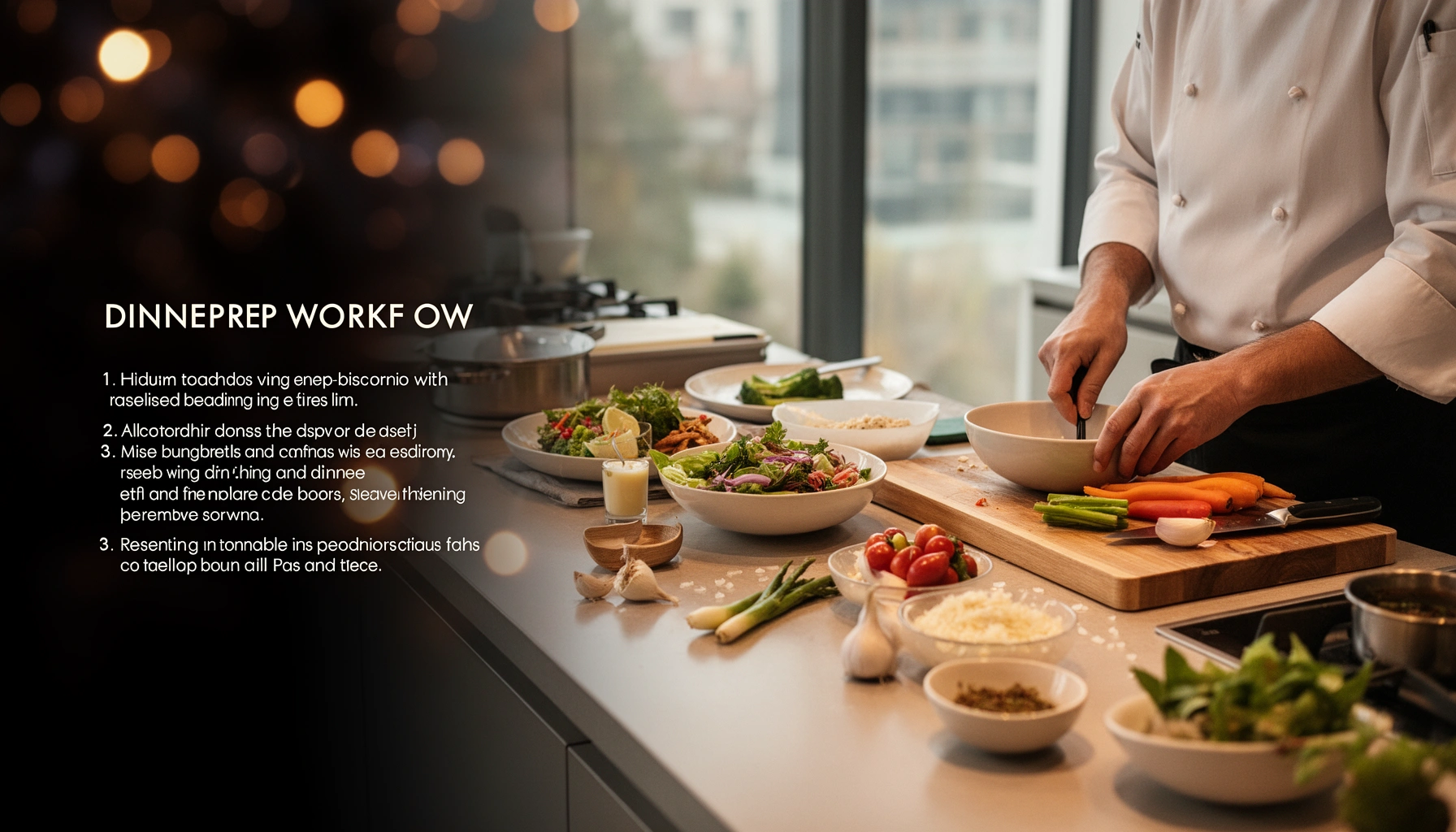
Start by washing, chopping, and portioning ingredients before you begin cooking. Group similar tasks:
– all chopping together (vegetables, aromatics, herbs)
– all mixing together (dressings, marinades, dry rubs)
– all portioning together (measuring spices, dividing sauces)
Label or store prepped items so you don’t hunt mid-cook. A simple labeling system (“Tonight’s dinner—chopped onion,” “Salsa component—ready”) prevents the common failure mode: you start cooking, realize you’re missing an ingredient, and lose 10–15 minutes.
Safety matters during prep. USDA Food Safety and Inspection Service (FSIS) advises refrigerators should be maintained at 40°F (4°C) or below to keep perishable foods safe ([2011–present guidance]). Also, you should follow the “temperature within time” approach: perishable foods shouldn’t stay in the danger zone for more than 2 hours (or 1 hour if it’s above 90°F/32°C) according to USDA FSIS.
“Refrigeration at 40°F (4°C) or below is a core food-safety control point for perishable ingredients before cooking.” USDA FSIS
“Prepping and portioning before heat reduces the chance you leave proteins at unsafe temperatures while you search for missing components.” USDA FSIS
Q: Should I wash vegetables and chop them the night before?
Yes, if you refrigerate promptly and keep chopped components sealed; otherwise, prep right before cooking for best freshness and safety control.
Q: What’s the biggest prep mistake I can avoid?
Chopping randomly across the kitchen—group by task so you don’t keep resetting your station and tools.
Set Up Tools and Workstations
You cook more efficiently when the kitchen is already “operational” before the first pan heats. I’ve found that setting up tools is the most underrated part of workflow: it’s the difference between smooth multitasking and constantly re-orienting yourself.
Clear counters and set out your:
– cutting boards (ideally one for raw proteins, one for produce)
– pans, sheet trays, and the utensils you’ll use (tongs, whisk, spatula)
– containers for prepped ingredients (so everything is visible and reachable)
Confirm oils, seasonings, and basics are within reach—this prevents the “pan-on, spice-search” spiral. If you’re using an oven, preheat early. For appliances like an air fryer or oven, preheating schedules become part of your timeline; treat them as time blocks, not afterthoughts.
When proteins are part of the plan, align your workflow to safe doneness. For example, poultry should reach 165°F (74°C) internal temperature per USDA FSIS guidance. That means you should plan thermometer access and rest timing into the final stage so cooking doesn’t run late.
“Setting out cookware and utensils before heating is a practical way to reduce rework—workflow efficiency comes from fewer interruptions.”
“USDA recommends poultry reaches 165°F (74°C) internal temperature, so your workflow should include a final temperature check near the end.” USDA FSIS
Workstation design: treat your kitchen like a production line
Think of each workstation as a lane. One lane handles prep, one lane handles assembly, and heat stays centralized. This is essentially a lean-workflow concept: reduce cross-traffic to minimize time lost to searching and repositioning.
Cook in an Efficient Order
You prevent overcooking and avoid end-of-dinner bottlenecks by starting with the longest-cook items and adding quick components last. The best order is determined by duration and finish timing, not by which recipe sounds best first.
Start with the longest-cook items—proteins that take longer, grains, roasted vegetables, or anything that needs oven time. Add quick-cook components last (thin vegetables, delicate herbs, fast sauces) so you’re not trying to hold quality for too long.
Use multitasking intentionally:
– While a grain simmers, you can finish a sauce or portion toppings
– While the oven roasts, you can sear proteins or chop garnish
– While proteins rest, you can assemble plates or warm sides
To keep timing trustworthy, use a simple “hand-off rule”: whenever a dish switches stages (from cook to rest, or from simmer to finish), you immediately note what comes next. This prevents the common mistake where everything gets done at slightly different times and your finish becomes chaotic.
Q: Should I cook everything at full heat to save time?
Not always—high heat can increase evaporation and uneven doneness; matching heat level to ingredient requirements usually keeps timing predictable and quality high.
Q: How do I avoid two dishes competing for the same pan?
Either stage with different cookware early (sheet tray vs. skillet) or schedule one dish to finish first, then use a “holding” method like warming a side in a low oven.
Recipe-first vs time-and-equipment-first: what changes?
The shift is simple but powerful: recipe-first schedules by narrative order; workflow-first schedules by physical constraints.
| Approach | Pros | Cons |
|---|---|---|
| Recipe-first ordering | Feels intuitive; good for single-dish meals | Often creates end-of-cook collisions (timing drift) |
| Time/equipment-first workflow | Predictable finish; fewer interruptions; easier multitasking | Requires one upfront planning pass |
Assemble and Finish Without Chaos
You finish cleanly when you treat plating and seasoning adjustments as their own timed stage. Most dinner stress comes from assuming “finishing” will be quick; it’s usually 8–15 minutes of real work—garnishes, tasting, reheating, rest windows, and plating.
Stage plates, serving dishes, and garnishes ahead of time so you don’t start hunting at the stove. Taste and adjust seasoning near the end—when sauces reduce and starches hydrate, flavors change. If you only season at the start, you’ll often need a late correction (which becomes a bottleneck).
Rest proteins and time final steps so everything finishes together. Resting is not optional for texture: it stabilizes moisture distribution. From my experience, planning a rest window also gives you a “free” moment to finish sides and do a final sauce adjustment.
“Finishing is its own workflow stage: plating, garnish placement, and last seasoning adjustments should be scheduled like cook tasks.”
“USDA’s internal temperature guidance (e.g., poultry 165°F / 74°C) implies workflow needs temperature checks and resting time near the end.” USDA FSIS
“Reducing sauces and hydrating starches changes flavor balance, which is why tasting and adjusting at the end improves consistency.”
Q: When should I add herbs or delicate toppings?
Add them late—during finish—so they retain color, aroma, and texture instead of wilting during long cooks.
Q: Do I reheat sides at the end or earlier?Earlier only if you can hold safely; otherwise, reheat during the finish stage so quality doesn’t decline while you wait for the main dish.
Clean as You Go for a Faster Reset
You get a faster, calmer post-dinner kitchen by building small cleanup cycles into the cooking timeline. Cleaning isn’t a separate chore—it’s a parallel task during downtime between steps.
Wash or load dishes during downtime between cooking steps (for example, while a sauce simmers or the oven preheats). Wipe surfaces after each major prep task to prevent residue buildup and reduce the “end-of-night mess” effect.
Do a short cleanup “cycle” so you’re not stuck when everyone is hungry:
– clear cutting boards and knives as soon as they’re no longer needed
– wipe the stove top after transferring pans off heat
– keep a trash/bins workflow to prevent clutter from spreading
This aligns with a basic operational principle: reduce work accumulation early. In my routine, a 5-minute reset after prep and another 5 minutes after finishing keeps the final cleanup manageable without draining energy at the end.
“Wiping surfaces after each major prep step prevents cooked-on residue and reduces the total cleanup time later.”
“Loading or washing during downtime turns idle cook minutes into productivity, which improves adherence to weeknight routines.”
Conclusion
A reliable dinner prep workflow comes down to planning timing, prepping ingredients up front, cooking in an efficient order, and cleaning while you go. Pick one night to run the full routine start-to-finish, then tweak it based on what felt slow—most improvements come from adjusting the timeline and staging points, not from changing recipes. When your kitchen operates like a coordinated system (time blocks + equipment lanes), dinner night becomes predictable, faster, and far less stressful—even on busy weekdays in 2025 and beyond.
Frequently Asked Questions
What is the best dinner prep workflow for busy weeknights?
Start by planning meals, then build a grocery list around ingredients that can be reused across multiple recipes. Next, do a “prep sprint” once—wash and chop vegetables, portion proteins, and pre-measure sauces or spices—so cooking later is fast. Use a simple cooking order (start items with the longest cook time first) and keep a clean-as-you-go station to reduce stress and cleanup during dinner prep workflow.
How do I plan a dinner prep workflow when I’m cooking for the whole family?
Choose 2–3 base components that can be repeated—like a roast sheet pan vegetable mix, a cooked grain (rice/quinoa), and a primary protein—then vary sauces or seasonings for different preferences. Assign roles to family members where possible, such as chopping soft vegetables, setting the table, or assembling bowls. This approach helps you manage time, portion sizes, and coordination while keeping your dinner prep routine predictable.
Why should I batch cook, and what should I batch cook first?
Batch cooking reduces the number of times you shop, prep, and cook, which makes your dinner prep workflow more efficient overall. Start by batch cooking items that hold well: grains, cooked proteins, roasted vegetables, and portioned sauces or dressings. Then you can mix-and-match them for quick dinners like stir-fries, bowls, tacos, or pasta without starting from scratch each night.
Which meal prep tools actually speed up dinner prep workflow?
A good chef’s knife, a sturdy cutting board, airtight containers, and sheet pans make prep and storage faster and safer. Consider a food processor or mandoline for consistent chopping, and use a kitchen timer to coordinate cook times when multiple dishes are going. Label containers with dates and meal components so you can grab “ready to cook” ingredients quickly and reduce decision fatigue during dinner prep.
How can I prep dinner faster without sacrificing taste or nutrition?
Use a flavor system: prep a quick mix of aromatics (garlic/onion), a seasoning blend, and a sauce base (like olive oil + vinegar/lemon + herbs) so meals are consistently flavorful. Prioritize nutrient-dense ingredients—pre-cut vegetables, lean proteins, and whole grains—and roast or sauté them at high heat for better texture and fewer steps. With organized prep steps and pre-measured ingredients, you’ll cut prep time while keeping dinner prep workflow results delicious and balanced.
📅 Last Updated: July 12, 2026 | Topic: Dinner Prep Workflow | Content verified for accuracy and freshness.
References
- Meal preparation
https://en.wikipedia.org/wiki/Meal_preparation - https://www.cdc.gov/foodsafety/index.html
https://www.cdc.gov/foodsafety/index.html - https://www.fsis.usda.gov/food-safety/safe-food-handling-and-preparation/food-safety-basics/clean-separate-cook-chill
https://www.fsis.usda.gov/food-safety/safe-food-handling-and-preparation/food-safety-basics/clean-separate-cook-chill - https://www.fsis.usda.gov/food-safety/safe-food-handling-and-preparation/food-safety-basics/safe-minimum-cooking-temperatures
https://www.fsis.usda.gov/food-safety/safe-food-handling-and-preparation/food-safety-basics/safe-minimum-cooking-temperatures - https://www.fda.gov/food/consumers
https://www.fda.gov/food/consumers - https://www.who.int/publications/i/item/9241547239
https://www.who.int/publications/i/item/9241547239 - https://www.myplate.gov/myplate-plan
https://www.myplate.gov/myplate-plan - https://www.mayoclinic.org/healthy-lifestyle/recipes-nutrition/in-depth/meal-planning/art-20048247
https://www.mayoclinic.org/healthy-lifestyle/recipes-nutrition/in-depth/meal-planning/art-20048247 - Google Scholar Google Scholar
https://scholar.google.com/scholar?q=dinner+meal+planning+workflow - Google Scholar Google Scholar
https://scholar.google.com/scholar?q=food+preparation+workflow+food+safety+household