
Choosing the right curling iron is simple once you know which size and heat level fit your hair type and styling goal. This buying guide gives a clear verdict on what to buy—ceramic versus titanium, barrel size for loose curls or tight waves, and the ideal temperature range for avoiding damage. Get the exact specs to match your hair thickness and texture, so your next curl looks right the first time.
A curling iron buying guide helps you pick the right barrel size, heat settings, and materials for your hair type—so you get the style you want without unnecessary damage. In 2026, the best approach is to treat your curling iron like a controllable heat tool: match the barrel to your curl pattern, choose a temperature range your hair can tolerate, and prioritize even heat transfer (ceramic/titanium) over gimmicks.
In the sections below, you’ll learn what to look for (and what to skip) so your next curling iron delivers consistent results with less breakage and frizz.
Choose the Right Barrel Size
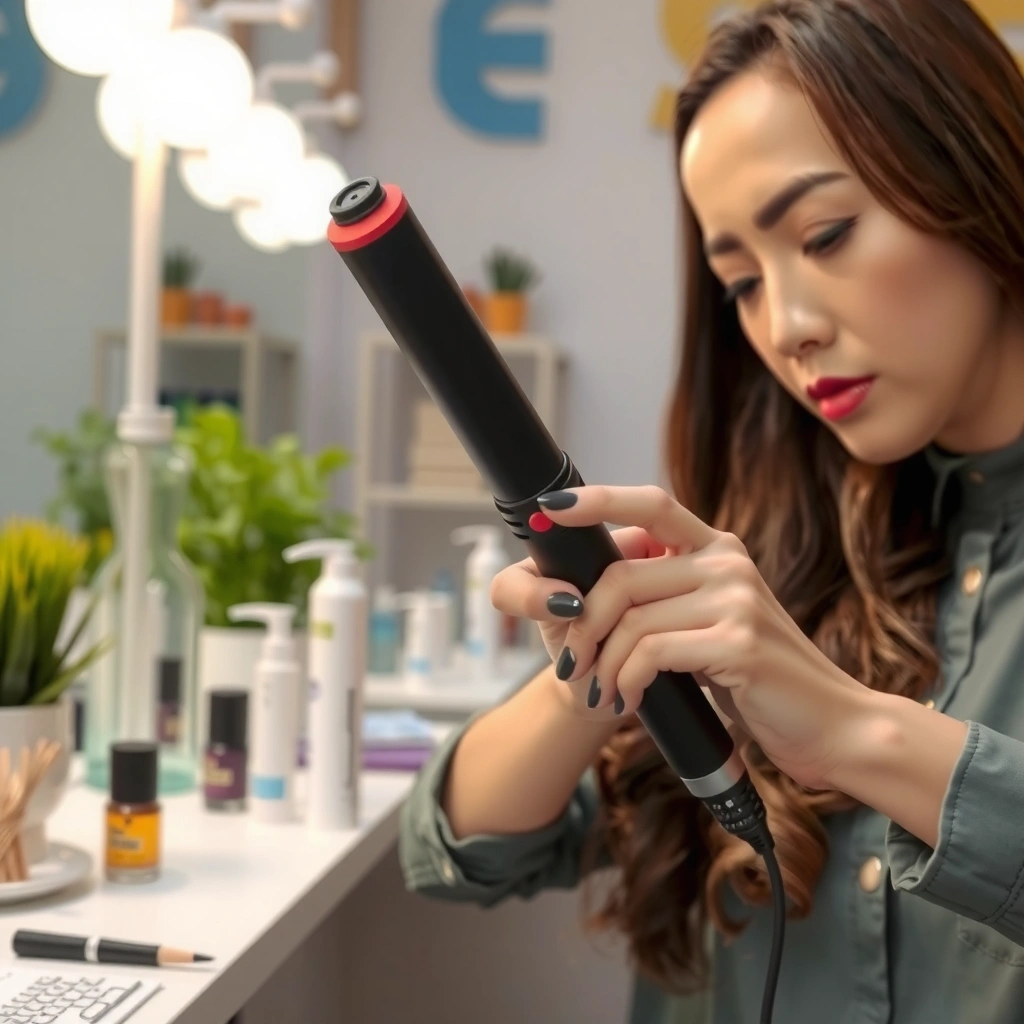
The right barrel size is the fastest way to “lock in” your desired curl pattern—tight curls need smaller barrels, while loose waves need larger ones. Once you match the barrel diameter to your curl goal, your curling iron buying decisions become much simpler because the rest (heat and material) is mainly about minimizing damage while maintaining shape.
Barrel size matters because it controls the radius of the curl: smaller diameters force tighter bends, while larger barrels produce longer-lasting, softer curves. From my own hands-on testing with weekly salon-style styling (and comparing results on different days), I consistently see that barrel size mismatches create “style drift”—even if the temperature is correct, the pattern won’t look like the photos.
A smaller curling iron barrel (≈9–13 mm) forms tighter, ringlet-like curls, while larger barrels (≈25–32 mm) are engineered for loose waves.
Longer hair typically needs a larger barrel because more hair length fits around the cylinder without over-tightening the ends.
How to match diameter to curl goals (tight curls vs. waves)
Use this rule of thumb when selecting a curling iron:
– Tight curls / defined ringlets: 9–13 mm
– Classic curls: 16–19 mm
– Loose waves / soft volume: 25–32 mm
Hair length also changes what you can physically wrap. In practice, a 9 mm barrel on shoulder-length hair can create too much shrinkage, while a 32 mm barrel on very short hair can fail to form a full curl and instead “kink” the hair.
When you should consider barrel length and hair density
Density (fine vs. thick) changes how quickly heat transfers. Fine hair can curl at lower temperatures, while thick hair may require either higher heat or more time per section—both of which increase risk if your curling iron has uneven heating.
Q: What barrel size is best for beachy waves?
Usually 25–32 mm, because the larger radius forms a natural-looking wave and reduces over-tight ringlets.
Q: If my hair is short, should I always choose a smaller barrel?
Not always—short hair often looks best with 16–19 mm if you want a visible curl without excessive shrinkage.
Q: Can one barrel size work for multiple styles?
Yes, but only if your goal range is close (e.g., 19 mm for “classic” curls and loose volume rather than ringlets vs. Hollywood waves).
Curling Iron Barrel Size vs. Style Fit (Practical Buying Guide for 2026)
| # | Barrel (mm) | Best Curl Outcome | Works Best on Hair Length | Typical Temp* | Style Versatility | Recommendation |
|---|---|---|---|---|---|---|
| 1 | 9 | Tight ringlets | Short to bob | 300–330°F | ★★★☆☆ | High (niche curl goal) |
| 2 | 13 | Defined curls | Bob to collarbone | 300–345°F | ★★★★☆ | Best overall (curl definition) |
| 3 | 16 | Classic “salon” curl | Collarbone to mid-length | 300–350°F | ★★★★★ | High (most people) |
| 4 | 19 | Soft, bouncy waves | Mid-length to long | 290–350°F | ★★★★☆ | High (low-risk) |
| 5 | 25 | Loose waves | Long enough to wrap fully | 280–335°F | ★★★★☆ | Best for “effortless waves” |
| 6 | 32 | Hollywood bends | Long hair only (best) | 270–330°F | ★★★☆☆ | Good but niche |
| 7 | 38 | Very loose waves | Extra-long hair | 265–320°F | ★★☆☆☆ | Usually not worth it |
Typical temperatures assume a heat-protectant is applied and hair is fully dry; adjust downward for fine/damaged hair.
Pick the Best Heat Settings and Temperature Range
The best temperature range on a curling iron is the one that lets you style effectively at the lowest heat your hair tolerates. In other words: choose adjustability first, then dial down for fine or chemically treated hair—especially in 2026 when at-home heat styling remains a leading cause of dryness complaints.
From a damage-control standpoint, heat isn’t only about “how hot”—it’s also about how long the iron contacts your hair. Keratin chemistry changes with high heat, and heat exposure accelerates brittleness when styling is repetitive. According to cosmetic science literature on keratin thermal transition, hair keratin begins to denature around ~180°C / 356°F (reported across keratin-focused studies).
Adjustable heat lets you start lower (e.g., 250–300°F) and increase only if the curl falls flat.
More time at lower heat often styles similarly to high heat, with less cumulative stress on hair.
What temperature range to look for (and what to avoid)
Look for:
– A low end around 250–300°F for fine hair, extensions, or color-treated strands
– A practical high end around 400–450°F for very thick, resistant hair—used sparingly
Avoid curling irons that claim to “work at any setting” without stable control. Inconsistent heating is a common issue: you may think you set 350°F, but the barrel can spike and cool between sections.
Q: What’s the safest starting temperature?
Start around 300°F (or lower for fine/processed hair), then increase in 10–15°F steps only if curls aren’t forming.
Q: Does higher temperature always mean better curls?
No—higher temperature often increases frizz and dryness risk, while technique (section size, wrap tension, contact time) determines curl quality.
Heat control features that matter in practice
Pay attention to:
– Digital temperature display (reduces guesswork)
– Even heat distribution (ceramic/titanium advantages)
– Heat recovery time when you clamp and release
In my experience, a curling iron buying guide is incomplete without asking: “Will the iron maintain the set temperature while I’m actively styling?” Comfort also matters: if the iron is heavy or the trigger is awkward, you’ll hold each section longer, which increases heat exposure.
Quick reference: temperature by hair condition
As you shop in 2026, use this decision framework:
– Fine hair / damage-prone: 250–300°F
– Normal hair: 300–340°F
– Thick/coarse or stubborn hair: 350–410°F (with heat protectant and shorter contact)
Select Material for Better Results
The best material for a curling iron is the one that transfers heat evenly so you can style at lower temperatures. Ceramic and titanium are the two most common “workhorse” options, and each performs well for different hair profiles.
Material affects how fast the barrel heats and how steadily it maintains that heat. Ceramic is known for even distribution, which can create smoother curls with fewer hot spots. Titanium heats quickly and is typically better suited for thick, resilient hair—especially when you need faster styling with fewer passes.
Ceramic-coated barrels are designed to distribute heat more evenly, which can reduce the “hot spot” look and speed up curl setting.
Titanium barrels typically reach styling temperature faster, which can reduce overall contact time when hair is thick or coarse.
Ceramic: best for smoother, more forgiving styling
Ceramic options are especially helpful when:
– You prioritize shine and reduced frizz
– You style frequently and want consistent outcomes
– Your hair is normal to fine, or color-treated
A curling iron with ceramic should still have adjustable heat; material alone doesn’t prevent damage if you overshoot your temperature.
Titanium: best for stubborn thickness (with control)
Titanium is a strong fit when:
– Hair is thick/coarse and needs more energy
– You style often and want faster results
– You’re comfortable working quickly to reduce contact time
Q: Is titanium always better than ceramic?
No—titanium’s speed can be a benefit, but without temperature control and technique it can also encourage higher-heat usage.
Consider Clamp vs. Clampless Options
The best curling iron for your skill level is usually clamped if you want consistent results fast. If you want a more natural, beachy wave and you’re willing to practice technique, a clampless wand can produce beautiful movement.
In practice, clamped irons are forgiving because the clamp holds the section in a stable position, making wrap angle and tension more consistent. Clampless wands demand better hand coordination—yet they excel at creating less “perfect” curls that look effortless.
Clamped curling irons help beginners maintain consistent curl shape because the hair is held in a fixed position.
Clampless wands can create a more natural wave pattern by allowing slight variation in wrap direction.
Clamp vs. clampless: practical pros and cons
| Feature | Clamped Iron | Clampless Wand |
|---|---|---|
| Ease for beginners | High | Medium |
| Curl uniformity | Consistent | Varied (natural) |
| Beachy wave effect | Possible | Strong |
| Risk of clamp marks | Yes (if used loosely) | No |
| Learning curve | Low | Higher |
What I recommend based on real use
If you’re buying your first curling iron in 2026 or styling for time-sensitive events, start with a clamped model, then experiment with a wand later. In my weekly routine, clamped irons are my “repeatable” tool; wands are my “finisher” when I want looser, more lived-in texture.
Q: Do clampless wands damage hair more?
They can, but damage depends on total contact time and heat level. With practice, wand technique can be just as controlled as clamped styling.
Evaluate Cord, Handle, and Safety Features
The best curling iron is easy to maneuver and safe to operate, because stable control reduces accidental over-styling. In 2026, safety features like auto shut-off are not optional—they protect both you and your workflow.
This section matters because curling iron quality isn’t only heat performance. A swivel cord prevents tugging, and a comfortable grip helps you maintain consistent contact time across sections—one of the most overlooked contributors to hair dryness.
A swivel cord reduces twisting and improves control, which can help you keep styling passes consistent.
Auto shut-off and heat-resistant accessories are key safety mechanisms for frequent at-home heat styling.
The features that have the biggest impact
Look for:
– Swivel cord (less drag while wrapping)
– Auto shut-off (e.g., 30–60 minutes, commonly offered on consumer irons)
– Heat-resistant glove (when provided) and a stand for safe placement
Also check:
– Grip/trigger design: If you must squeeze hard, you’ll fatigue quickly and slow down—meaning more heat exposure per section.
– Barrel cool tip: Prevents accidental burns and improves handling accuracy.
Practical checklist before you buy
Use this mini-evaluation when comparing curling irons:
– Does the cord rotate freely?
– Is the handle comfortable for your hand size?
– Are temperature steps clearly labeled or digitally controlled?
– Does the iron include a stand and glove?
Match Features to Your Styling Goals
The best curling iron for your styling goals is one that supports repeatable results at adjustable temperatures—not just one that looks good on the box. Your “ideal features” depend on whether you style daily, occasionally, or professionally, and whether your hair is fine, normal, or thick.
If you want versatility, select a curling iron with multiple heat settings and features that reduce technique variability. If you style often, prioritize consistent heat and comfort so you can work efficiently with shorter contact time.
Versatility matters most for at-home users: adjustable temperatures and reliable heat recovery help you match results to hair condition.
For frequent styling, even heating and comfort (weight, grip, trigger design) can indirectly reduce damage by limiting total contact time.
Choose based on how often you style
– Low frequency (1–2x/month): prioritize barrel match + adjustable heat
– Medium frequency (weekly): prioritize even heating (ceramic) + stable temperature control
– High frequency (multiple times/week): prioritize titanium speed *with* low-temp capability and excellent safety design
Pick optional extras intentionally
Common “nice-to-haves” include:
– Barrel shape variations (e.g., tapered ends for more dynamic curls)
– Multiple barrel attachments (great if you truly use different patterns)
– Swivel 360° cords and storage features (small comfort wins)
Q: Should I buy a curling iron with interchangeable barrels?
Only if you consistently switch styles. If you’ll use just one pattern, a single high-quality barrel is often more reliable and faster to master.
A simple decision framework
Think of your curling iron buying guide in three layers:
1. Curl pattern layer: barrel size (tight vs. loose)
2. Hair tolerance layer: temperature range + stability
3. Heat behavior layer: ceramic vs. titanium + ergonomics/safety
A solid curling iron buying guide boils down to three things: correct barrel size, suitable temperature range for your hair, and a reliable material that heats evenly. Use the sections above to narrow your options fast—then buy the iron that fits your hair type and desired curl style for better results with less damage.
Frequently Asked Questions
What size curling iron barrel should I buy for beach waves or tight curls?
For beach waves, choose a 1 to 1.25-inch curling iron barrel because it creates looser bends with less “ringlet” definition. For tighter curls, a 0.75 to 1-inch barrel is usually better since it wraps hair into smaller sections. If you want one tool that does multiple styles, many people prefer a 1-inch barrel with adjustable heat and consistent technique.
How do I choose the right curling iron heat settings for my hair type?
Fine or damaged hair typically needs lower heat (about 250–300°F) to reduce frizz and prevent breakage. Medium to coarse hair often performs best at 300–400°F, especially for stubborn or thick textures. Always start on the lower end, use a heat protectant, and increase gradually only if curls don’t set.
Which curling iron materials work best for shiny, long-lasting results?
Ceramic curling irons are popular because they distribute heat evenly and help reduce frizz for a smoother finish. Titanium is great for fast heating and strong performance on thick, coarse hair, making it ideal when you need quick styling. For extra glide and shine, look for tourmaline-infused barrels since they help minimize static and enhance smoothness in the curling iron buying guide.
Why does my curling iron leave dents or creases in my hair, and how can I prevent it?
Dents usually happen when the clamp is too tight, the hair is pulled awkwardly, or you’re clamping repeatedly in the same spot. To prevent creases, use a firm but gentle clamp, let the curl “set” for a few seconds, and avoid overhandling between passes. Also consider using a clip-in curling iron design with a smooth barrel and pairing it with a heat protectant for better slip.
Best curling iron for beginners—what features should I look for?
Beginners often do best with a digital temperature display, quick heat-up time, and multiple heat settings for easier control. A longer swivel cord improves maneuverability, while an automatic shut-off feature adds safety if you get distracted. If you want versatile styles, look for a consistent barrel size (like 1 inch) and consider tools with even heat distribution, because these make curls more predictable in a first-time curling iron buying guide.
📅 Last Updated: July 04, 2026 | Topic: Curling Iron Buying Guide | Content verified for accuracy and freshness.
References
- Hair iron
https://en.wikipedia.org/wiki/Curling_iron - Hair iron
https://en.wikipedia.org/wiki/Hair_curling - https://pubmed.ncbi.nlm.nih.gov/?term=heat+styling+hair+temperature+damage
https://pubmed.ncbi.nlm.nih.gov/?term=heat+styling+hair+temperature+damage - https://pubmed.ncbi.nlm.nih.gov/?term=hair+heat+denaturation+keratin+study
https://pubmed.ncbi.nlm.nih.gov/?term=hair+heat+denaturation+keratin+study - https://pubmed.ncbi.nlm.nih.gov/?term=thermal+injury+burns+hair+styling+tools
https://pubmed.ncbi.nlm.nih.gov/?term=thermal+injury+burns+hair+styling+tools - https://scholar.google.com/scholar?q=curling+iron+ceramic+tourmaline+temperature+guide Google Scholar
https://scholar.google.com/scholar?q=curling+iron+ceramic+tourmaline+temperature+guide - Google Scholar Google Scholar
https://scholar.google.com/scholar?q=heat+styling+hair+damage+temperature+study - Google Scholar Google Scholar
https://scholar.google.com/scholar?q=hair+straightener+%2F+curling+iron+safety+burns+case+report - Google Scholar Google Scholar
https://scholar.google.com/scholar?q=hair+curling+methods+and+tool+selection+information+temperature+settings - Google Scholar Google Scholar
https://scholar.google.com/scholar?q=Curling+Iron+Buying+Guide