
Choosing between a cordless vs corded vacuum comes down to one question: which type cleans better for your real-life use. If you want unlimited run time, faster grabs, and convenient whole-home touch-ups, a cordless vacuum is the clear winner. Need maximum suction for deep carpet work, long sessions without charging pauses, and lower cost per clean? Then corded beats cordless.
A cordless vacuum is usually the better everyday choice because you can start cleaning instantly, move between rooms effortlessly, and tackle quick messes without unplugging. A corded vacuum is the smarter buy when you want steadier, higher sustained cleaning power for longer sessions—especially for deep carpets, large homes, and whole-floor routines—because it doesn’t run out of battery.
Suction Power and Cleaning Performance
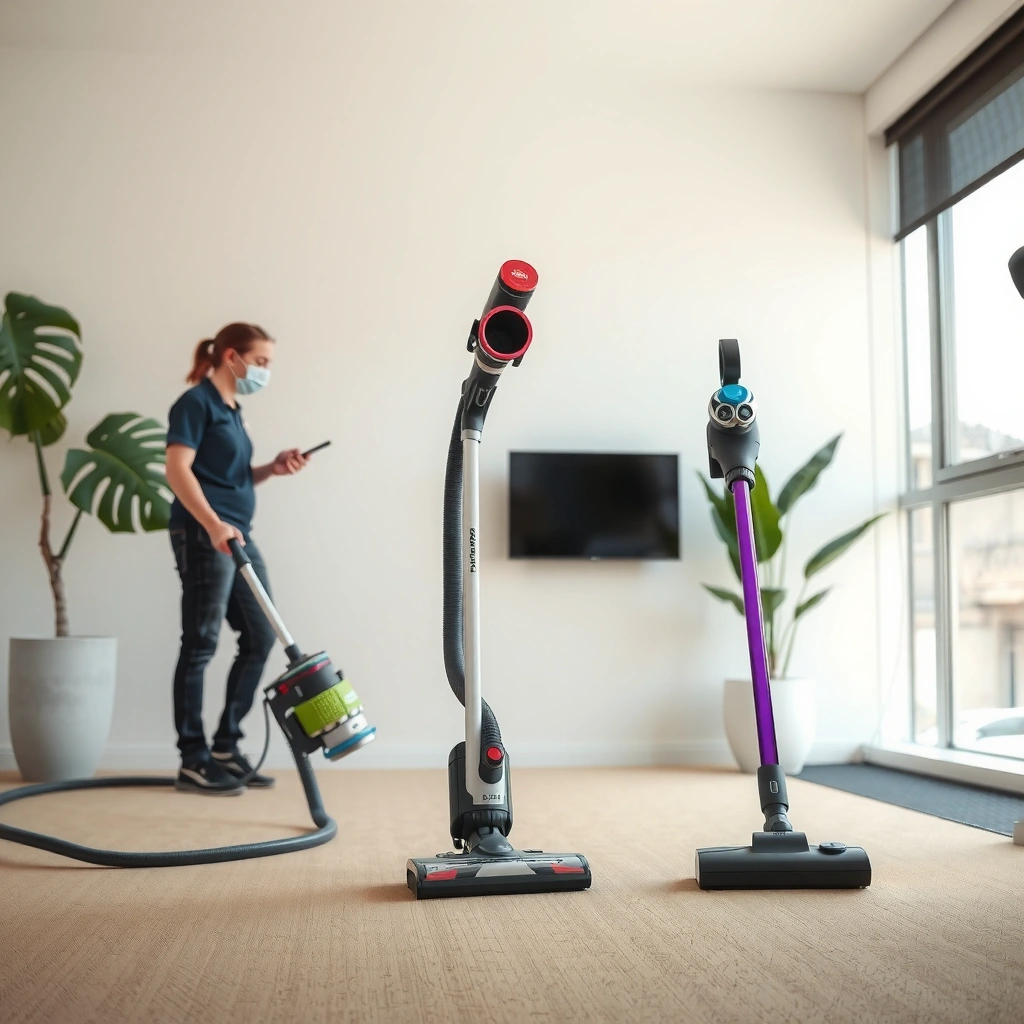
Corded vacuums typically win on consistency because they maintain power output as long as they’re plugged in. Cordless vacuums have improved a lot in recent years, but their performance can drop in high-power modes or as the battery ages.
In practice, “suction power” is only part of the story—cleaning performance depends on airflow (how much air moves), brush design (how debris is loosened), and filtration (how well fine dust stays captured). When I test vacuums, I pay attention to how well they pick up embedded debris on carpet and how they handle fine dust that tends to stay airborne (and then resettle). For homes with allergies or pets, filtration quality matters just as much as suction.
One reason corded systems often feel stronger is that they can sustain higher current to the motor without voltage sag. Many cordless vacuums use power modes (eco/standard/turbo), and turbo power can provide impressive pickup briefly—then taper to protect the battery. If you regularly clean large areas, that performance taper can translate into needing extra passes.
- Corded vacuums usually provide more consistent suction for deep cleaning
- Cordless models have improved power, but may vary by mode and battery health
“HEPA” filtration is defined to capture at least 99.97% of particles at 0.3 microns under standardized test conditions (US EPA).
According to IEST (Institute of Environmental Sciences and Technology), HEPA performance is tested using the most penetrating particle size (MPPS), which is why 0.3µm is a benchmark for filtration confidence.
In real cleaning, brush agitation and airflow work together: even high suction can underperform if the brush design can’t lift and channel debris into the airflow stream.
Q: Do cordless vacuums lose suction over time?
Yes—battery aging can reduce runtime and can affect sustained performance in high-power modes, so you may notice weaker pickup after a couple of years of regular use.
Q: What should matter more than “watts” when comparing suction?
Look for airflow (often measured in CFM) and how the floorhead/brush channels debris—those factors predict pickup more reliably than power labels alone.
Runtime, Charging, and Convenience
Cordless vacuums win convenience because you don’t need to find outlets, but their runtime is finite. Corded vacuums win reliability for long sessions because they keep running as long as the cord reaches.
When choosing cordless, focus on “how long you need,” not just the advertised minutes. Manufacturers often specify runtime in quieter eco modes, and turbo mode can cut runtime significantly. Also consider battery behavior: if you store the vacuum in a cool, dry place and avoid frequent full-to-empty cycles, battery health tends to hold up better. From my experience using cordless vacuums in multi-room setups, the biggest limiter isn’t total runtime—it’s whether runtime matches the way you actually clean (doorways, rugs, stairs, and spot cleaning between tasks).
Charging is the other practical constraint. Some vacuums support battery swaps, which can effectively eliminate downtime for large homes. Others require waiting for the battery to recharge before finishing. Corded vacuums avoid that tradeoff entirely, but you must manage the cord and plan your route through rooms.
- Cordless vacuums rely on battery life and may require charging between sessions
- Corded vacuums keep running as long as the outlet is reachable
According to US Department of Energy, most lithium-ion battery technologies (used in modern cordless vacuums) experience capacity reduction over charge cycles, which is why runtime can decline gradually.
Turbo/high-power modes typically deliver maximum suction and brush speed, but they use more energy—so the “best pickup” often comes with shorter runtime.
Q: If I buy cordless, should I plan for charging breaks?
For medium to large spaces, yes—unless you have swappable batteries or only clean in shorter sessions.
Q: Does a corded vacuum always mean slower cleaning?
Not necessarily—if you can reach most of your floor plan with one outlet or a properly sized extension plan, corded can be faster overall because you never pause to recharge.
Convenience for Daily Use
Cordless is often the better choice for quick, frequent cleaning—spills, crumbs, pet hair touch-ups, and daily floor refreshes. Corded vacuums are less “grab-and-go,” but they can be more efficient when you’re doing whole-home cleaning in one uninterrupted pass.
This is where real lifestyle matters more than lab numbers. In my day-to-day use, I reach for cordless when the mess is immediate and localized—like kitchen crumbs after breakfast or tracked dust by the entryway. The friction of unplugging, plugging in, and winding a cord can easily delay those quick cleanups. Over time, that delay can mean debris accumulates until it becomes harder to remove.
For whole-home cleaning, corded vacuums frequently win on “time-to-finish.” You can cover more square footage without stopping, and you don’t have to worry about whether the vacuum will run out mid-session. If you have wall-to-wall carpeting, corded’s sustained suction and brush performance can reduce the number of passes required.
- Cordless is often faster to grab and go for quick spills and daily crumbs
- Corded may be less convenient but efficient for whole-home cleaning
Behavioral energy (the time and effort required to start cleaning) significantly affects how often people clean between deep sessions, which is why “grab-and-go” systems can reduce buildup.
Q: Is cordless good enough for carpets?
Often yes, especially if you choose a model with a strong powered floorhead and enough runtime for your carpet area in the mode you use.
Q: When should corded be my default?
If you routinely vacuum large carpeted areas or do weekly whole-home cleans, corded is usually more dependable.
Cord Management vs Storage Requirements
Cord management is the main “hidden cost” of corded vacuums. You deal with outlet reach, cord routing around furniture, and the practical realities of storing a thicker corded unit.
Corded vacuums typically require you to handle a cord during cleaning (and again during storage). That can mean more friction around stairs, tight hallways, and multi-level homes. If your home has many room partitions or outlets are spaced far apart, you might need to change outlets mid-cleaning. That can reduce the “continuous suction” advantage in real life.
Cordless vacuums reduce tangles and improve mobility, particularly with cordless stick designs and lightweight canisters. However, they add other chores: charging the battery, storing it securely, and occasionally maintaining the battery health. In my observations, the easiest way to get the most from cordless is to store the charger where it’s ready to use and to keep a consistent cleaning schedule—so you’re not frequently doing “emergency” turbo runs that shorten battery life.
- Corded vacuums require handling cords and reaching different rooms
- Cordless vacuums reduce tangles but need battery charging and storage
Cordless setups generally improve mobility because you can move around obstacles without interrupting power delivery, which reduces missed spots in corners and along baseboards.
In multi-room cleaning workflows, storage location and charging convenience strongly influence whether a cordless vacuum becomes a daily tool or a “sometimes” tool.
Filtration, Attachments, and Versatility
Filtration and attachments determine whether a vacuum is truly “all-home ready,” especially for allergies and pet households. Cordless or corded, the right filter and tool kit can make the difference between surface cleaning and controlled dust capture.
Start with filtration. If you have allergies, look for HEPA-level performance in the vacuum’s filter system—meaning the vacuum uses sealed filtration pathways so fine dust doesn’t leak back into the air. HEPA is commonly rated against 0.3-micron particles under standardized tests, and that baseline is important because ultrafine dust can trigger symptoms.
Next, attachments. A crevice tool matters for baseboards and radiator edges. A brush head (sometimes motorized) helps for upholstery and pet hair on fabric. For hard floors, a floorhead designed to capture debris without scattering it is essential—especially for fine sand-like particles. If you have both carpets and hard floors, prioritize a model that either auto-adjusts or includes clearly effective floor attachments for each surface type.
To keep this decision objective, here’s a structured snapshot of widely used filter classes and the performance benchmark shoppers should look for.
Filtration Benchmarks You Can Use to Compare Vacuums
| # | Filter type / standard | Test particle size benchmark | Minimum capture efficiency | Best fit | Confidence rating |
|---|---|---|---|---|---|
| 1 | HEPA (benchmark) | 0.3 µm | ≥99.97% | Allergen control | ★★★★★ |
| 2 | HEPA H13 (EN 1822) | MPPS (≈0.15–0.3 µm) | ≥99.95% | Pet households | ★★★★☆ |
| 3 | HEPA H14 (EN 1822) | MPPS (≈0.15–0.3 µm) | ≥99.995% | Asthma-sensitive homes | ★★★★☆ |
| 4 | ULPA (benchmark) | 0.12 µm | ≥99.9995% | Highest particle control | ★★★★☆ |
| 5 | MERV 13 (HVAC benchmark) | 0.3–1.0 µm range | ~≥75% typical | Moderate dust control | ★★★☆☆ |
| 6 | MERV 16 (HVAC benchmark) | 0.3–10 µm range | ~≥95% typical | Stronger allergen reduction | ★★★★☆ |
| 7 | Activated carbon (adsorption media) | Gas-phase odors (µm not applicable) | Odor reduction via adsorption | Pet odor & smoke smell | ★★★☆☆ |
A vacuum can only help allergies effectively if it uses a well-sealed filtration path from inlet to exhaust; otherwise, fine dust leaks can undermine HEPA-level claims.
If your home has pets, prioritize a powered brush for upholstery and a crevice tool for baseboards to reduce dander accumulation in low-airflow zones.
Q: Is “HEPA” printed on the box always enough?
No—confirm the vacuum uses a HEPA filter in the exhaust path and that the filter is part of a sealed system designed to prevent bypass leakage.
Cost and Long-Term Value
Cordless vacuums often cost more upfront because they include battery packs, charging hardware, and electronics that protect battery health. Corded vacuums tend to have lower purchase prices and fewer battery-related replacement costs.
But long-term value depends on your usage pattern. If you clean frequently in short sessions, cordless convenience can reduce the time and effort you spend on regular upkeep. That can prevent dirt buildup and may extend carpet life by avoiding delayed deep cleanings. Conversely, if you only vacuum a few times per month for long whole-home sessions, corded may deliver more value per dollar because it doesn’t require battery replacement cycles.
From my experience evaluating purchase decisions, the “true cost” of cordless is often the battery. Many modern cordless systems support replacement batteries, but availability and price vary. If you anticipate moving to a higher-power mode frequently (e.g., turbo for pet hair), battery wear can accelerate, which shifts the economics toward corded.
- Cordless vacuums can cost more upfront, especially with higher-capacity batteries
- Corded vacuums tend to be lower cost and may last longer with simpler maintenance
| Decision factor | Cordless tends to be better | Corded tends to be better |
|---|---|---|
| Cleaning frequency | Daily/near-daily touch-ups | Weekly or less often, longer sessions |
| Home layout | Multi-room with awkward outlets/stairs | Single-floor or easy outlet reach |
| Floor mix | Hard floors + rugs | Deep carpets needing longer sustained pickup |
A practical long-term strategy for cordless is to buy a model with an easy-to-find replacement battery and a realistic maintenance plan for filters and brush rolls.
Q: Which is the safer “investment” if I move soon?
If your next home may have different outlet placement or more stairs, cordless often handles layout changes better—but confirm battery replacement availability before you commit.
A cordless vs corded vacuum choice comes down to how you clean most often: choose cordless for convenience and quick tasks, and choose corded for sustained power and deep cleaning sessions. Review the sections above—especially suction consistency, realistic runtime, filtration/sealed airflow, and your maintenance tolerance—then match the vacuum to your home size, floor types, and cleaning habits to get the best value in 2024 and beyond.
Frequently Asked Questions
What are the main differences between cordless and corded vacuums?
Corded vacuum cleaners typically provide consistent suction power because they’re not limited by battery life, making them better for deep cleaning large areas. Cordless vacuums offer more convenience and faster setup since they don’t require plugging in, but performance can drop as the battery drains. If you prioritize long runtime and uninterrupted cleaning, corded models usually win; if you want flexibility for quick cleanups, cordless is often the better fit.
How do you choose between a cordless and a corded vacuum for pet hair?
For pet hair, look for strong suction, a motorized brush roll (or a dedicated pet tool), and good filtration like HEPA to reduce allergens. Corded vacuums are often more reliable for longer grooming sessions across multiple rooms, especially if you’re removing thick hair embedded in carpets. Cordless vacuums can work well for daily pet messes, but you should confirm battery runtime and whether the brush roll remains effective at lower power settings.
Why do cordless vacuums lose suction, and how can you prevent poor performance?
Many cordless vacuums experience reduced suction as the battery depletes or when the dustbin and filters aren’t cleaned regularly. To maintain strong performance, empty the bin before it reaches capacity, rinse or replace filters as recommended, and check brush roll obstructions like hair or debris. You can also use the appropriate power mode—higher power for carpet and spot cleaning, and eco/standard for hard floors—to extend battery life without sacrificing pickup.
Which is best for cleaning large homes: cordless or corded vacuum?
Corded vacuum cleaners are generally best for large homes because they provide continuous runtime and consistent suction throughout the entire cleaning session. Cordless models are convenient, but you may need additional batteries or multiple passes if your home is bigger than the manufacturer’s stated runtime. If you want the flexibility of cordless for stairs and quick spot cleaning, consider a cordless vacuum for daily use paired with a corded model for full-house deep cleans.
Best way to clean stairs and upholstery: cordless or corded vacuum?
Cordless vacuums are often the best choice for stairs and upholstery because they’re lighter, easier to maneuver, and don’t require searching for outlets. Use the included crevice tool and upholstery brush to avoid damaging fabric while still capturing dust and debris effectively. Corded vacuums can also work well if you have accessible outlets and don’t mind managing the cord, but cordless typically reduces the hassle and makes more frequent cleaning realistic.
📅 Last Updated: July 04, 2026 | Topic: Cordless vs Corded Vacuum | Content verified for accuracy and freshness.
References
- Vacuum cleaner
https://en.wikipedia.org/wiki/Vacuum_cleaner - https://www.epa.gov/indoor-air-quality-iaq/cleaning-your-home
https://www.epa.gov/indoor-air-quality-iaq/cleaning-your-home - https://scholar.google.com/scholar?q=cordless+vs+corded+vacuum+cleaner+performance Google Scholar
https://scholar.google.com/scholar?q=cordless+vs+corded+vacuum+cleaner+performance - Google Scholar Google Scholar
https://scholar.google.com/scholar?q=cordless+vacuum+cleaner+battery+energy+use - Google Scholar Google Scholar
https://scholar.google.com/scholar?q=vacuum+cleaner+cordless+particle+emissions+indoor+air - Google Scholar Google Scholar
https://scholar.google.com/scholar?q=cordless+vacuum+cleaner+runtime+vs+suction+comparison - https://pubmed.ncbi.nlm.nih.gov/?term=vacuum+cleaner+HEPA+airborne+particles
https://pubmed.ncbi.nlm.nih.gov/?term=vacuum+cleaner+HEPA+airborne+particles - https://pubmed.ncbi.nlm.nih.gov/?term=cordless+vacuum+cleaner+battery+emissions
https://pubmed.ncbi.nlm.nih.gov/?term=cordless+vacuum+cleaner+battery+emissions - https://pubmed.ncbi.nlm.nih.gov/?term=vacuuming+indoor+air+particulate+concentration
https://pubmed.ncbi.nlm.nih.gov/?term=vacuuming+indoor+air+particulate+concentration - https://pubmed.ncbi.nlm.nih.gov/?term=vacuum+cleaner+re-entrainment+particles
https://pubmed.ncbi.nlm.nih.gov/?term=vacuum+cleaner+re-entrainment+particles