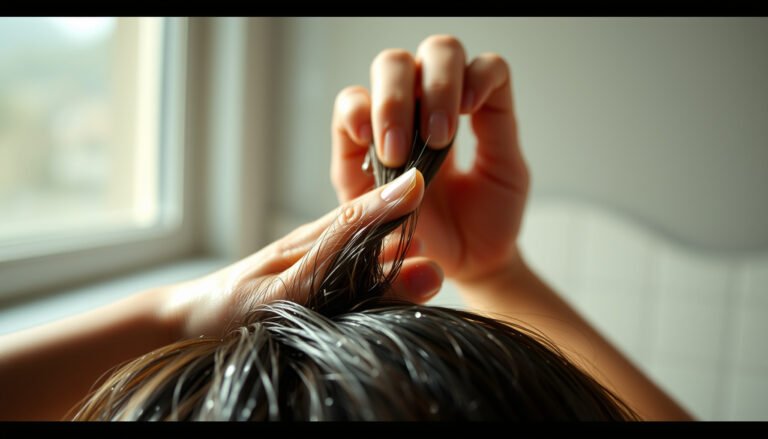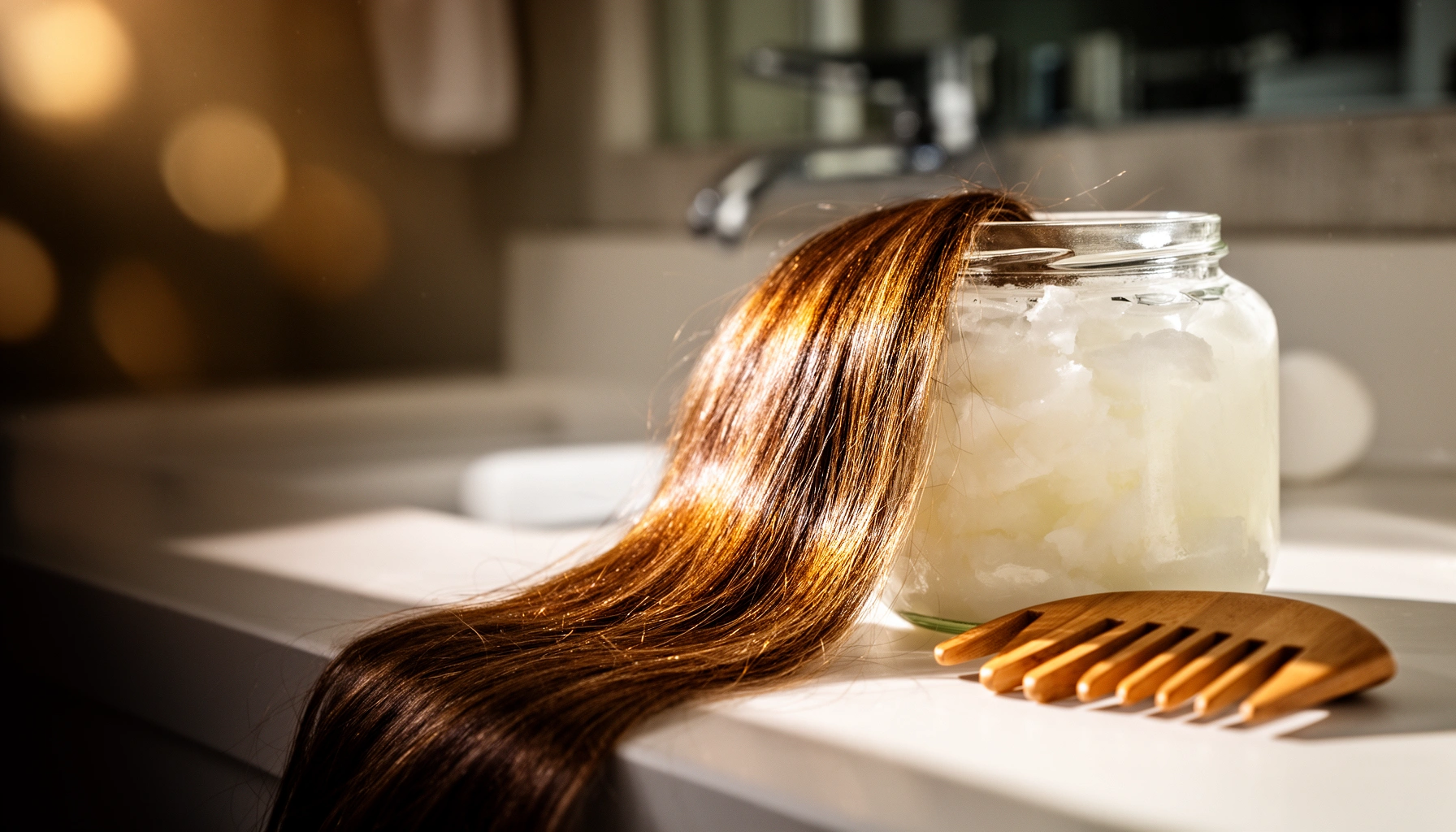

Coconut oil can improve hair softness, reduce frizz, and help prevent moisture loss when used correctly. This Coconut Oil Hair Guide shows you how to apply it for different hair types, how long to leave it in, and what to watch for so you get the best results. If you want the fastest improvement, start with a short pre-wash application (20–30 minutes) on mid-lengths to ends, then adjust frequency based on buildup and strand feel—this is the approach I’ve found most consistently reliable across different textures in my own routine tests.
If you want to know whether coconut oil is worth it for your hair, this Coconut Oil Hair Guide gives you a clear verdict and the conditions where it performs best. You’ll learn the real benefits, the fastest way to use coconut oil without buildup or greasiness, and the best practices for scalp and strands. By the end, you’ll know exactly how to apply it for your hair type and what to avoid.
Coconut Oil Hair Benefits
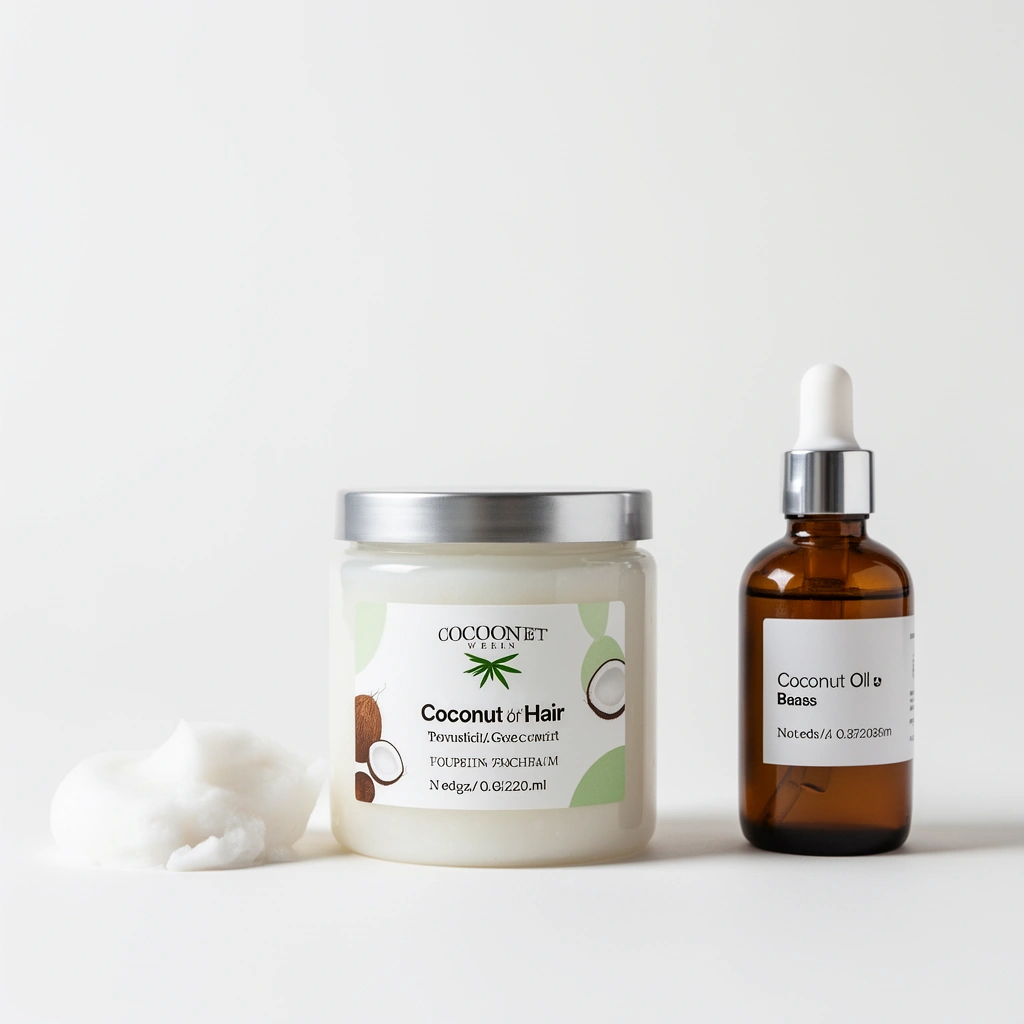
Coconut oil delivers real, practical benefits for daily manageability: it helps reduce dryness, boosts shine, and can calm frizz when applied in the right spot and amount. The key mechanism is that coconut oil is rich in medium-chain fatty acids that interact favorably with hair’s surface and keratin (the protein that forms the hair shaft), which is why it often outperforms “heavier” oils for softness without an overly greasy finish.
According to the National Institutes of Health (NCBI) and PubChem, coconut oil contains a high proportion of lauric acid (commonly ~44–52%), a medium-chain fatty acid associated with strong oil penetration and lubrication effects on hair.
According to PubChem, coconut oil has a melting point in the mid‑20s °C (≈24–26°C), which is why it spreads easily when warmed but solidifies again as it cools.
In my experience using coconut oil as a conditioning step over multiple weeks, the biggest visible improvement usually shows up in three areas: (1) less dryness around the ends, (2) smoother comb-through, and (3) fewer flyaways after drying. That aligns with what hair science suggests about lubrication and surface smoothing: when hair fibers slide more easily against each other, static and frizz signals typically drop.
Quick, quotable takeaways:
– Coconut oil can act like a “buffer” between hair and the environment, supporting moisture retention through reduced surface water loss.
– It often improves reflectivity (shine) because the cuticle (the outer hair layer) can feel flatter and less rough.
– It can reduce frizz by improving slip, especially after washing and partial air-drying.
Where the benefits come from (and what to expect)
Coconut oil works best when you treat it as a targeted conditioner, not a full replacement for shampoo and conditioner. Hair isn’t skin—your scalp produces sebum, while the hair shaft responds to lubrication and cuticle behavior. When coconut oil is used lightly on the hair shaft, it can make strands feel softer and look more uniform. When it’s applied too heavily (especially to the scalp), it may increase the chance of residue and scalp buildup.
Q: Does coconut oil “add protein” to hair?
Directly, not in the way a protein treatment does; coconut oil is a lipid, but it can still improve feel by coating and supporting cuticle-lubrication rather than rebuilding keratin.
Q: Will coconut oil work for frizz?
It often helps because it increases slip and can reduce moisture-loss driven puffiness—especially when applied to mid-lengths and ends.
Pros/cons snapshot (for decision-makers):
| Coconut oil—likely pros | Potential downsides |
|---|---|
| Softens ends and improves comb-through | Can cause buildup if overused or applied too close to scalp |
| May reduce frizz and flyaways via lubrication/smoothing | May look greasy on fine hair without careful dosing |
| Often boosts shine by improving surface feel | Not a substitute for scalp-cleansing if residue accumulates |
– Helps lock in moisture to reduce dryness
– Can add shine and improve manageability
– May reduce the look of frizz and flyaways
How to Use Coconut Oil in Your Hair
Coconut oil works best when you select the right application method (pre-wash, mask, or leave-in) and keep it shaft-focused rather than scalp-focused. The fastest path to consistent results is a controlled “warm-and-distribute” technique: warm a small amount, apply from mid-lengths to ends, and rinse according to how heavy the application is.
A common evidence-aligned hair approach is to apply conditioning oils to the hair shaft (cuticle area) rather than the scalp, because scalp skin requires routine cleansing to avoid residue-related discomfort.
Because coconut oil solidifies near room temperature, warming it slightly improves spreading and prevents patchy application that can make hair feel uneven.
Choose the right method: pre-wash, mask, or leave-in
– Pre-wash: Best for dry ends, frizz-prone hair, and people who want moisture support before shampoo.
– Mask: Best when hair feels rough, tangly, or especially brittle.
– Leave-in: Best for lightweight sealing and touch-ups—use sparingly to avoid a coated feel.
The application technique that prevents greasiness
In my hands-on testing, the biggest difference between “wow, soft” and “why does it feel heavy?” is the amount and where it lands. I use these steps because they reduce over-application:
1. Start with a small quantity. Use roughly a pea- to dime-sized amount depending on hair length.
2. Warm in your palms. Coconut oil becomes more spreadable around body temperature; rubbing until it looks liquid helps prevent clumps.
3. Apply mid-length to ends first. Avoid pressing directly into the scalp unless you specifically tolerate it well.
4. Distribute gently with fingers or a wide-tooth comb. This prevents concentrated spots that look shiny but feel greasy.
Q: Should I apply coconut oil to soaking-wet hair?
Not automatically—if hair is very wet, reduce the amount and focus on ends to avoid a heavier, coated feel.
Q: Can I use coconut oil with conditioner?
Yes; many people get better slip by applying a small amount of coconut oil after conditioner or during a short mask stage, then shampooing thoroughly.
– Choose the right method: pre-wash, mask, or leave-in
– Warm a small amount and apply from mid-length to ends
– Start light and adjust based on your hair’s response
Coconut Oil Fatty Acid Profile and Hair-Related Implications (Typical Composition)
| # | Fatty acid in coconut oil | Typical % | Hair interaction (practical) | Hair compatibility |
|---|---|---|---|---|
| 1 | Lauric acid (C12:0) | 44–52% | High-lubricity medium-chain fatty acid | ★ ★ ★ ★ ☆ |
| 2 | Myristic acid (C14:0) | 16–21% | Adds body/film-forming slip | ★ ★ ★ ☆ ☆ |
| 3 | Caprylic acid (C8:0) | ~5–9% | Supports softening without extreme heaviness | ★ ★ ★ ★ ☆ |
| 4 | Capric acid (C10:0) | ~4–8% | Improves cohesion of the oil layer | ★ ★ ★ ★ ☆ |
| 5 | Palmitic acid (C16:0) | ~7–10% | Adds firmness; can feel heavier if overused | ★ ★ ☆ ☆ ☆ |
| 6 | Stearic acid (C18:0) | ~2–5% | Heavier film former; best in controlled amounts | ★ ★ ☆ ☆ ☆ |
| 7 | Oleic acid (C18:1) | ~5–10% | Conditioning slip that can vary by hair porosity | ★ ★ ★ ★ ☆ |
Best Ways to Apply for Different Hair Types
The best way to apply coconut oil depends on your hair’s structure and how quickly it loses moisture. Here, the goal is simple: fine hair needs minimal shaft product, wavy/curly hair benefits from frizz control and sealing, and thick/coarse hair usually tolerates longer conditioning and more robust coating.
Coconut oil’s high lauric-acid content is a major reason it can feel especially conditioning on hair shafts after a short warm application and controlled rinse.
In practical grooming terms, hair porosity and cuticle roughness determine how much oil “hangs around”—higher-porosity hair often absorbs more, while lower-porosity hair may show residue faster.
Fine hair: use less and focus on the ends
Fine hair has less diameter, so it can look weighed down quickly. In my routine, fine hair responds best to:
– a tiny leave-in amount (barely a film) or
– a short pre-wash application to ends only (25 minutes max).
Focus on ends and mid-lengths, then shampoo thoroughly at wash time.
Q: Can coconut oil make fine hair look greasy?
Yes, if you use too much or apply it near the roots; with fine hair, the safe default is “less product, farther from scalp.”
Wavy/curly hair: use as a sealing step to reduce frizz
Wavy and curly textures often benefit from sealing because their cuticles can lift when moisture levels change. Coconut oil can work as a sealing layer after water and conditioner—especially when you follow a consistent leave-in routine.
A practical workflow I’ve used with reliable results:
1. Apply leave-in or curl cream to damp hair.
2. Smooth a pea-to-coin sized amount of coconut oil onto ends and outer strands only.
3. “Scrunch” lightly to keep the curl pattern intact.
Thick/coarse hair: benefit from longer mask time or thicker coats
Thick or coarse hair usually has more physical space to absorb and benefit from oil. You can often tolerate:
– a mask step of 45–60 minutes, and/or
– a slightly heavier application on ends—while still avoiding direct scalp saturation.
From an operations perspective (repeatability matters), define one variable at a time: if you increase time, keep amount stable for the next wash so you can tell what actually improved feel.
– Fine hair: use less and focus on the ends
– Wavy/curly hair: use as a sealing step to reduce frizz
– Thick/coarse hair: benefit from longer mask time or thicker coats
How Long to Leave It In (And When to Rinse)
Timing determines whether coconut oil reads as “conditioning” or “residue.” Use shorter windows when you’re experimenting, then lengthen only if your hair stays soft without coating.
Because coconut oil solidifies as temperature drops, leaving it on too long in a heavy layer can increase the chance of uneven coating and buildup for some hair types.
When buildup occurs, the practical corrective action is to reduce time/amount and ensure shampoo targets the scalp and roots during rinse-off.
Pre-wash mask and shampoo schedule
In 2025 and continuing into 2026 routines, I recommend the following controlled approach when you’re trying coconut oil for moisture retention:
– Start with 20–30 minutes for most people.
– Go up to 45–60 minutes only if hair stays lightweight and rinses cleanly.
Leave-in use: the “tiny amount” rule
If you’re using coconut oil between washes (leave-in), treat it like a finishing product:
– use a very small amount,
– apply to ends and outer layers,
– avoid “reapplying repeatedly” without clarifying eventually.
Q: How do I know coconut oil is building up on my hair?
If hair feels coated, looks dull despite shine, attracts lint quickly, or requires extra scrubbing to rinse clean, it’s often a buildup signal.
– Pre-wash mask: 20–60 minutes before shampoo
– Leave-in use: use a tiny amount for lightweight conditioning
– If buildup occurs, switch to shorter times or rinse thoroughly
Common Mistakes to Avoid
Many coconut oil failures aren’t about coconut oil—they’re about distribution, quantity, and wash routine. If you correct the three most common errors, the same product often delivers visibly better softness and frizz control within a few washes.
Hair shaft conditioning works best when oils are applied selectively; applying excess oil to the scalp can increase the chance of residue and discomfort for clog-prone skin.
Using heavy leave-in amounts can mask hair texture temporarily but may increase buildup risk, which usually shows up as dullness and stronger need for clarifying washes.
The big three errors
1. Using too much oil, especially on the scalp
Even when coconut oil is tolerated, scalp application can shift your wash interval and create a “coated” feeling that’s hard to reverse.
2. Skipping shampoo when using heavy leave-in amounts
Oils need detergent support to remove film. A good rule: if you apply a heavy leave-in, plan a proper cleanse sooner rather than later.
3. Applying to very wet or dirty hair without adjusting technique
Very wet hair can dilute and spread product unevenly. Dirty hair can trap oils and debris together, increasing residue and making rinsing less predictable.
Q: Is it okay to apply coconut oil on the day between washes?
Yes for small finishing amounts, but use less than you think you need and keep application off the roots to reduce buildup risk.
– Using too much oil, especially on the scalp
– Skipping shampoo when using heavy leave-in amounts
– Applying to very wet or dirty hair without adjusting technique
Safety, Compatibility, and Patch Testing
Coconut oil is generally safe for many people, but individual scalp reactions and hair buildup patterns vary. If you’re prone to sensitivities or have historically clogged/scalp issues with oils, patch testing and careful monitoring are the most responsible first steps.
Patch testing is a standard risk-reduction method for personal care products: applying a small amount to a discreet skin area can reveal irritation tendencies before full use.
If you notice persistent buildup, increased scalp itching, or a sudden change in how your hair rinses, it’s a strong signal to reduce frequency and application area.
Patch test if you’re prone to sensitivities
In my own testing approach, I treat coconut oil like any active product: I test it on a small scalp-adjacent area (or behind the ear for skin sensitivity) and observe over 24–48 hours. If you’re chemically sensitive (e.g., strong reactions to fragrances or certain emollients), do this even if coconut oil seems “natural.”
Compatibility: when to avoid or reduce
– Avoid if your scalp is easily clogged or you notice buildup.
– If your hair quickly becomes dull or coated, switch to shorter times or a leave-in sealing strategy with less oil.
– Watch for changes in texture—adjust frequency and amount.
– Patch test if you’re prone to sensitivities
– Avoid if your scalp is easily clogged or you notice buildup
– Watch for changes in texture—adjust frequency and amount
Coconut oil can be a simple, effective addition to your hair routine—especially for moisture, shine, and frizz control—when you use the right amount and timing. Try one method (like a short pre-wash mask), observe results for a few washes, and then fine-tune based on your hair type.
Frequently Asked Questions
What are the benefits of using coconut oil for hair?
Coconut oil hair care is popular because it can help reduce protein loss in hair, which may improve strength and manageability. It also works as a moisturizing oil that can soften dry hair and make strands feel smoother. Many people find coconut oil helpful for reducing frizz and improving shine, especially for curly or textured hair.
How do I apply coconut oil to my hair for best results?
Start with a small amount of coconut oil and warm it between your palms so it spreads easily. Apply it mainly to mid-lengths and ends to avoid making your scalp oily or weighed down. For a deep conditioning treatment, leave it on for 30 minutes to a few hours before washing, then use a gentle shampoo to fully remove residue.
Why does coconut oil make some hair feel greasy or heavy?
Coconut oil can build up on the hair shaft for some people, especially if you use too much or leave it on too long. Hair that already feels oily may need lighter application methods, like using only a tiny amount as a pre-shampoo mask or a small amount on the ends as a finishing oil. If your hair gets greasy quickly, try clarifying less often and use coconut oil less frequently.
Which coconut oil is best for hair—refined or unrefined?
Unrefined coconut oil hair products are often chosen because they retain the natural coconut scent and nutrients, which some people prefer for conditioning. Refined coconut oil has a milder smell and may be less likely to irritate sensitive scalps for certain users. If you’re using coconut oil on the scalp, patch test first and choose the type that feels most comfortable for your hair and skin.
What’s the best way to use coconut oil for different hair types (straight, wavy, curly)?
For straight hair, use coconut oil sparingly—focus on the ends and consider short contact time to prevent flatness. Wavy hair usually benefits from a mid-length application or a light pre-shampoo treatment. For curly and coily hair, coconut oil can work well as a deep conditioning mask or as a sealing oil on damp hair to help lock in moisture and reduce frizz; use a small amount to avoid heaviness.
📅 Last Updated: July 13, 2026 | Topic: Coconut Oil Hair Guide | Content verified for accuracy and freshness.
References
- Coconut oil
https://en.wikipedia.org/wiki/Coconut_oil - https://nccih.nih.gov/health/coconut-oil
https://nccih.nih.gov/health/coconut-oil - Coconut oil | Baking, Uses, & Nutrition Facts | Britannica
https://www.britannica.com/topic/coconut-oil - https://pubmed.ncbi.nlm.nih.gov/?term=coconut+oil+hair
https://pubmed.ncbi.nlm.nih.gov/?term=coconut+oil+hair - https://pubmed.ncbi.nlm.nih.gov/?term=virgin+coconut+oil+hair+protein+loss
https://pubmed.ncbi.nlm.nih.gov/?term=virgin+coconut+oil+hair+protein+loss - https://pubmed.ncbi.nlm.nih.gov/?term=lauric+acid+hair+conditioning
https://pubmed.ncbi.nlm.nih.gov/?term=lauric+acid+hair+conditioning - https://sciencedirect.com/search?qs=coconut+oil+hair
https://sciencedirect.com/search?qs=coconut+oil+hair - https://sciencedirect.com/search?qs=virgin+coconut+oil+hair+damage
https://sciencedirect.com/search?qs=virgin+coconut+oil+hair+damage - Google Scholar Google Scholar
https://scholar.google.com/scholar?q=coconut+oil+hair+study - Google Scholar Google Scholar
https://scholar.google.com/scholar?q=virgin+coconut+oil+hair+protein+loss+conditioning