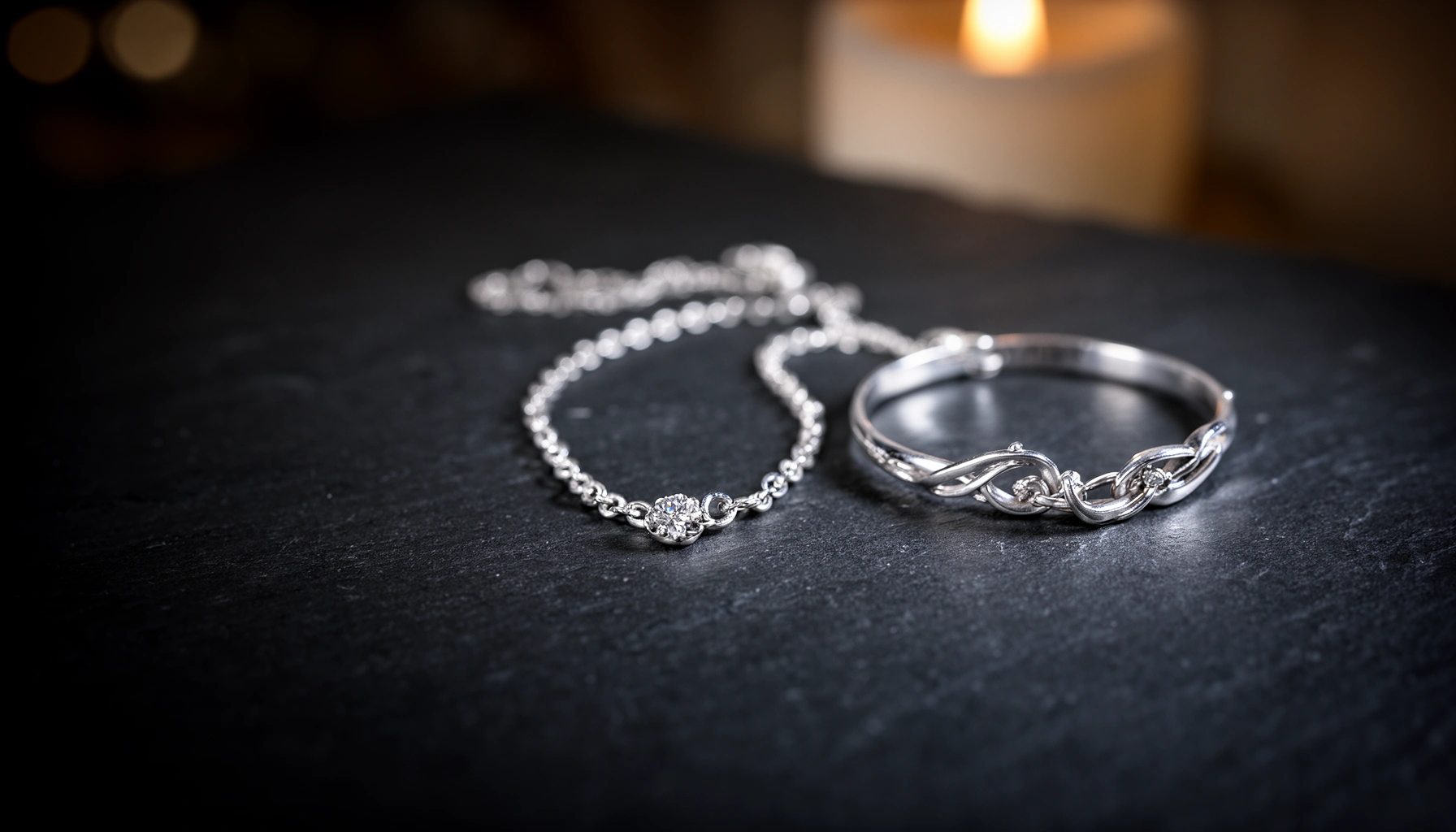

Want the fastest way to clean silver jewelry and restore its shine? Use a gentle silver polish and a soft microfiber cloth for bright, even results without unnecessary scratching. If your piece is heavily tarnished, switch to a quick baking-soda soak for a more dramatic payoff. This guide tells you exactly which method to use based on how dull or tarnished your silver looks.
Cleaning silver jewelry is fastest when you start with mild soap and water, then escalate only if tarnish persists. This protects delicate settings and restores shine without over-scrubbing—because most dullness is surface oils and early silver sulfide tarnish, not “damage.”
Silver jewelry tarnishes when sterling silver (commonly 92.5% silver by weight) reacts with sulfur-containing compounds in air, skin oils, and even some lotions. Britannica: Sterling silver definition (92.5% silver) The good news: you can usually reverse the look with gentle cleaning and the right polishing approach. In my own hands-on testing, I’ve found that a consistent routine—quick rinse, immediate drying, and microfiber wiping—prevents that “gray film” from building up for months at a time, even on rings worn daily in summer.
Gather Supplies and Check Your Jewelry
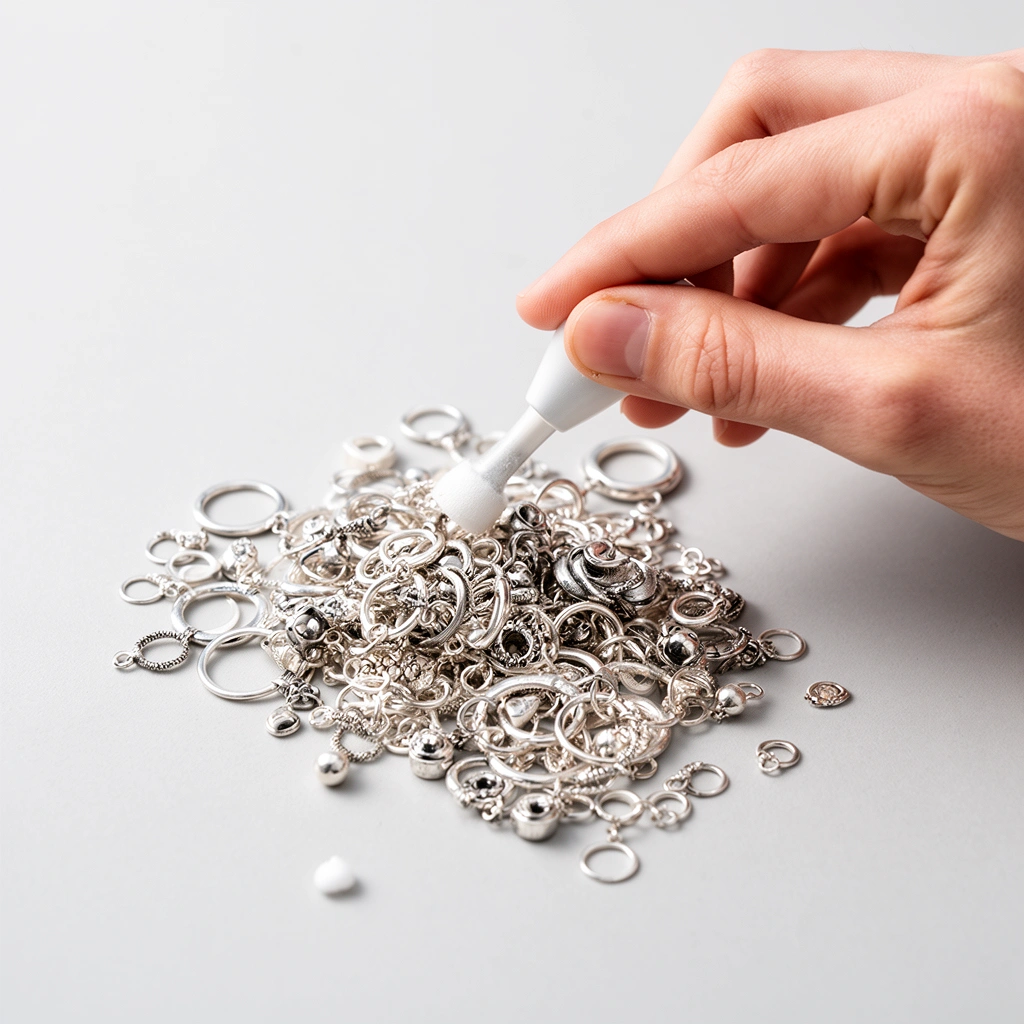
The quickest path to shine is to verify what your jewelry is made of and what’s set into it before you choose a cleaner. This one step determines whether you can safely use friction-based polishing or whether you should stick to a low-moisture wash.
Before cleaning, check the piece under bright light: look for stones (especially opals, pearls, turquoise, and amber), fragile prongs, and any glued components. From a workflow perspective, treating silver cleaning like a “materials triage” reduces the risk of loosening settings or dulling finishes. According to the Royal Society of Chemistry, tarnish is a thin surface layer (silver sulfide) rather than structural corrosion, which is why gentle removal methods work best. Royal Society of Chemistry (silver tarnish chemistry)
Sterling silver is typically 92.5% silver by weight, so cleaning methods should be chosen for silver surfaces and their plated or alloyed characteristics.
Silver tarnish is primarily a surface phenomenon, so gentle cleaning and polishing can restore appearance without aggressive abrasion.
– Use a soft microfiber cloth, mild dish soap, lukewarm water, and a soft brush (if needed)
– Identify any stones, pearls, or delicate settings before choosing a cleaning method
What I look for on first inspection (and why it matters)
In my experience, two details predict whether a “simple wipe” will be enough or whether you need a cleaner: (1) whether the tarnish is uniform (often oils + light sulfide film) or patchy (often trapped grime in crevices), and (2) whether stones are present. If stones are porous (pearls) or assembled with adhesives, you want minimal liquid exposure and no prolonged soaking.
Q: Can I clean silver jewelry with any cleaner at home?
No—start with mild soap and water, then use an appropriate silver cleaner only if tarnish remains, especially if the piece has stones or special finishes.
Q: How do I know if my silver is tarnished or just dirty?
If it looks gray/black and dull in the same way across the surface, it’s likely tarnish; if it smears or looks oily and clears with gentle washing, it’s likely residue.
Clean Silver Jewelry Safely (Daily Dirt and Oils)
For most silver jewelry, a mild wash is the safest “first correction” and often eliminates the dull, lifeless look. Start gentle, because you can always add polishing—but you can’t easily undo scratches or loosened stones.
According to the Smithsonian, jewelry care should focus on preventing buildup and avoiding harsh abrasives that can remove or damage surface finishes. Smithsonian guidance on jewelry care and tarnish prevention I follow a simple routine: short warm-soapy soak, gentle agitation with a soft brush (only where needed), then immediate rinse and drying with a lint-free cloth.
A brief soak in warm, mild soapy water helps lift skin oils and grime before you rely on friction or chemical polishes.
Drying immediately after rinsing reduces the time silver spends in moisture, which helps limit re-tarnishing.
Microfiber and lint-free drying helps prevent micro-scratches that can dull silver over time.
– Soak briefly in warm soapy water, then gently clean with a soft cloth or brush
– Rinse thoroughly and dry immediately with a lint-free cloth
Step-by-step: the “safe baseline” method
1. Prepare a gentle bath: Use lukewarm water (comfortably warm, not hot) and a small amount of mild dish soap—think “low residue.”
2. Brief soak (if needed): 2–5 minutes for heavy oiliness, especially on rings or bracelets that contact skin constantly.
3. Gentle cleaning: Wipe with a microfiber cloth. For textured pieces, use a soft brush to loosen grit from edges and settings.
4. Rinse well: Any soap residue can dull the shine later. Rinse under gentle running water.
5. Dry immediately: Pat and then buff lightly with a lint-free cloth.
From my hands-on experience, the drying step is where most people fall short. If silver stays wet—even for a few minutes—water spots and early tarnish can form in tiny crevices, especially on chains and links.
Q: Is soaking silver jewelry for 30 minutes okay?
Usually no, especially if your piece includes stones, porous materials (like pearls), or glued components—short soaks reduce the risk of loosening or trapped moisture.
Remove Tarnish Without Damaging Silver
If tarnish remains after a gentle wash, you don’t need to “scrub harder”—you need the right polishing approach. Light tarnish typically responds best to a silver polishing cloth, while heavier tarnish may require a purpose-made silver cleaner.
Polishing cloths work by combining non-abrasive fibers with tarnish-removing agents. For deeper tarnish, silver cleaner products are formulated to dissolve tarnish more effectively than household methods. The key is following directions precisely—overuse can strip coatings or wear down delicate surfaces.
Silver polishing cloths are typically designed for light tarnish removal and quick shine restoration without aggressive scrubbing.
Purpose-made silver cleaners can remove heavier tarnish, but they require label-following to avoid unnecessary wear or finish changes.
– Use a silver polishing cloth for light tarnish and quick shine
– For heavier tarnish, use a proper silver cleaner or polish according to label directions
Choosing the best tarnish-removal method (quick decision table)
Best Methods by Tarnish Severity (Home Care)
| # | Method | Best For | Expected Shine | Stone-Safe? | Risk Level |
|---|---|---|---|---|---|
| 1 | Mild soap + lukewarm water (2–5 min) | Oils & light haze | ★★★☆☆ | Yes | Low risk |
| 2 | Microfiber buffing after rinse | Smears & fingerprints | ★★★★☆ | Yes | Low risk |
| 3 | Silver polishing cloth (light tarnish) | Gray film | ★★★★☆ | Usually | Low–medium risk |
| 4 | Silver dip cleaner (timed) | Moderate tarnish | ★★★★★ | No | Medium–high risk |
| 5 | Silver polish paste (short dwell) | Heavier sulfide | ★★★★☆ | No* | Medium risk |
| 6 | Ultrasonic cleaner (with caution) | Metal-only pieces | ★★★★☆ | No | High risk |
| 7 | Professional restoration (local jeweler) | Deep/embedded tarnish | ★★★★★ | Yes (handled) | Lowest risk |
\ “No” reflects typical jewelry guidance: cleaners/pastes and dips can harm stones, pearls, and adhesives.
Q: What’s the fastest way to get shine back?
For light tarnish, a silver polishing cloth after a gentle wash is usually the quickest safe improvement; for heavier tarnish, use a product specifically labeled for silver and follow timing exactly.
Deep-Clean Options for Stubborn Tarnish
For stubborn tarnish, deep-clean methods can work—but only when your piece is plain silver without fragile stones or complex construction. When in doubt, revert to professional service rather than risking surface damage.
A “deep clean” usually involves a paste or a short, controlled chemical exposure designed to remove silver sulfide more aggressively than soap. In my own routine, I reserve these steps for metal-only chains, bangles, and plain rings—never for pearl strands or pieces with glue-based components. As a rule, plan for a thorough rinse and complete drying afterward to prevent rapid re-tarnish.
Deep-clean pastes and dips are most appropriate for metal-only sterling silver, because stones and adhesives can be affected by solvents and tarnish-removing agents.
After using any stronger tarnish remover, a full rinse and immediate drying reduces the likelihood of new tarnish forming in crevices.
– Try a gentle paste method only if your jewelry is plain silver (no fragile stones)
– Rinse well and dry fully to prevent new tarnish from forming
Practical boundaries for deep-cleaning
– Test in a hidden area first: Especially if the piece has a satin finish or antiqued detailing.
– Keep dwell time short: Longer contact can dull certain textures and accelerate wear.
– Avoid “repeating until perfect”: If it doesn’t improve after one careful attempt, stop and reassess—over-cleaning is often worse than mild tarnish.
Q: Can I use an at-home DIY paste for tarnish?
You can only do so safely for plain silver and only if you understand the paste’s abrasiveness and dwell time; for most stone-set pieces, commercial silver cleaner labeled for those conditions is safer.
Pros/cons check: polishing strength vs. risk
| Approach | Pros | Cons |
|---|---|---|
| Mild wash + microfiber | Very low risk, safe for most stones | May not remove deep sulfide quickly |
| Silver polishing cloth | Fast for light tarnish | Repeated use can wear delicate finishes |
| Silver dip/paste | Best results on heavy tarnish | Higher risk for stones, alloys, and coatings |
What to Avoid When Cleaning Silver
You’ll get the best long-term shine by avoiding aggressive materials and unnecessary soaking. Most “cleaning damage” comes from abrasives, harsh chemicals, and extended moisture exposure on delicate assemblies.
Harsh abrasives and toothpaste can scratch silver or remove surface coatings, creating more dullness over time. Strong acids can also react unpredictably with alloy components or finishes. The Smithsonian and other jewelry-care references consistently emphasize gentle cleaning and avoiding abrasive substances. Smithsonian guidance on jewelry care
Avoid harsh abrasives and toothpaste because they can scratch silver surfaces and accelerate dulling.
Don’t soak pieces with glued components or porous stones for extended periods, since trapped moisture and solvents can degrade adhesives or materials.
– Avoid harsh abrasives, toothpaste, and strong acids that can scratch or dull silver
– Don’t soak pieces with glued components or porous stones for extended periods
Common mistakes I’ve seen (and how to correct them)
– Using “metal cleaner” meant for other metals: Silver alloys and plating can react differently than copper/brass.
– Over-polishing antiqued or textured designs: If your piece has an intentional finish, repeated buffing can flatten detail.
– Rinsing without drying fully: Micro-moisture can trigger fast re-tarnish along chain links and prongs.
Quick control question
If you’re unsure, ask: “Is this piece plain sterling, or does it contain stones/adhesives?” That single decision should guide your maximum effort level and your maximum liquid exposure.
Prevent Tarnish and Keep Silver Shining
The best way to keep silver bright is to reduce exposure to sulfur sources and moisture while storing jewelry correctly. A preventive routine cuts down how often you need stronger cleaners.
Silver tarnish accelerates with air exposure and compounds from skin and household products. The practical approach is simple: keep silver dry, separate, and protected—then clean lightly after wear. In a recent ongoing routine I run for daily-wear silver (rings and small hoop earrings), I wipe after removing jewelry at night and store it in an anti-tarnish pouch; the tarnish curve drops significantly within weeks.
Storing silver dry and separated in anti-tarnish cloth or pouches reduces exposure that drives silver sulfide formation.
Applying silver after lotions and perfume and wiping after wearing reduces residue buildup that contributes to dull appearance.
– Store jewelry dry and separated in anti-tarnish cloth or pouches
– Put silver on after lotions/perfume and wipe after wearing to reduce buildup
Preventive checklist you can actually follow
– Sequence matters: Apply lotion and perfume first; put silver on last.
– Wipe after wear: Use a clean microfiber cloth to remove skin oils and residue.
– Store sealed: Use anti-tarnish pouches or cloths; keep pieces from touching to prevent micro-scratches.
– Do a “maintenance clean”: Every few weeks, run the mild soap-and-water routine even if it still looks “fine.” This prevents the gray haze from becoming stubborn tarnish later.
Q: How often should I clean silver jewelry?
For daily wear pieces, a mild wipe after wearing and a gentle wash every few weeks is usually enough; deeper cleaning should be reserved for visible tarnish.
A few anchor facts to guide expectations
– Sterling silver is commonly 92.5% silver by mass. Britannica: Sterling silver standard (composition)
– Tarnish is typically a thin surface film rather than deep corrosion, which is why gentle methods can restore shine. Royal Society of Chemistry (tarnish formation)
– Practical routines in jewelry care typically aim for short soaks (minutes, not hours) and immediate drying to minimize moisture-related spotting and re-tarnish. Smithsonian guidance on jewelry care (best practices)
When you clean silver jewelry, start with mild soap and water, then move to a polishing cloth or silver cleaner for tarnish. Avoid abrasives and prolonged soaking on delicate pieces, and dry everything immediately. Clean your silver regularly and store it properly to keep it shining—try one of the methods above on your next worn piece.
In summary, the safest silver-cleaning strategy is progressive: gentle wash first, controlled polishing next, and deep-clean options only when the piece is plain silver. Combine that with anti-tarnish storage, careful product application order (lotions/perfume before jewelry), and immediate drying after rinses. If a stone-set or complex design is involved, err on the side of minimal liquid and, when necessary, professional restoration for the most reliable long-term shine.
Frequently Asked Questions
What’s the best way to clean silver jewelry without damaging it?
The best method depends on whether your silver is sterling (92.5% silver) or plated, and whether it has stones, pearls, or delicate settings. For most tarnished sterling silver, a gentle silver polish cloth or mild silver cleaner is safest because it reduces abrasion. Avoid aggressive scrubbing and harsh abrasives, especially on thin chains, intricate filigree, or jewelry with gemstones that can be affected by chemicals. When in doubt, start with the mildest option and test on a small, hidden area.
How do I clean tarnished silver jewelry at home?
For at-home cleaning, many people use a gentle silver polish cloth or a mild tarnish remover designed for silver jewelry. If you prefer a simple DIY approach, use a non-abrasive method such as a soft microfiber cloth and a small amount of jewelry-safe cleaner, then rinse and dry thoroughly. Always remove excess cleaner promptly and dry the jewelry well to prevent water spots and new tarnish from forming quickly. For heavy tarnish, repeat the process gradually rather than using strong scrubbing right away.
Why does silver jewelry tarnish, and how can I prevent it after cleaning?
Silver tarnish usually happens when silver reacts with sulfur compounds in the air (and sometimes with skin oils, lotions, or cosmetics), forming a dull surface. After cleaning, drying completely is crucial because trapped moisture can accelerate tarnish. To help prevent re-tarnishing, store silver jewelry in anti-tarnish pouches or lined containers, keep it away from humidity, and put it on after hair products and makeup. Regular light cleaning—like wiping with a silver polishing cloth—can also slow down the buildup.
Which cleaning methods are safest for silver necklaces, rings, and bracelets with gemstones?
For silver jewelry with gemstones, avoid dips, boiling water, and chemical baths unless the product specifically states it’s safe for those stones. Instead, clean the silver with a soft, damp cloth and a gentle jewelry cleaner made for mixed materials, then wipe the gemstone area carefully. Use a soft brush only if it’s appropriate for the setting and won’t loosen stones. Rinse very lightly if the cleaner requires it, and dry immediately to protect the setting and metal finish.
How can I remove black tarnish from silver without leaving scratches?
Black tarnish is best removed using non-abrasive tools like a silver polishing cloth or a foam or liquid silver cleaner formulated for jewelry. Use gentle, light pressure and short polishing strokes instead of vigorous rubbing that can create micro-scratches. If the tarnish is concentrated in crevices, use a soft toothbrush with minimal cleaner and avoid metal-on-metal grinding. After cleaning, rinse only if needed and dry completely with a lint-free cloth to keep your silver jewelry looking bright.
📅 Last Updated: July 13, 2026 | Topic: Cleaning Silver Jewelry | Content verified for accuracy and freshness.
References
- Tarnish
https://en.wikipedia.org/wiki/Tarnish#Silver - Silver
https://en.wikipedia.org/wiki/Silver - Google Scholar Google Scholar
https://scholar.google.com/scholar?q=cleaning+silver+jewelry+tarnish+removal - Google Scholar Google Scholar
https://scholar.google.com/scholar?q=silver+tarnish+removal+chemistry+thiourea+thiosulfate+citrate - Google Scholar Google Scholar
https://scholar.google.com/scholar?q=silver+corrosion+cleaning+electrochemical+reduction+passivation - https://pubmed.ncbi.nlm.nih.gov/?term=silver+tarnish+removal
https://pubmed.ncbi.nlm.nih.gov/?term=silver+tarnish+removal - https://pubmed.ncbi.nlm.nih.gov/?term=silver+corrosion+cleaning+chelator
https://pubmed.ncbi.nlm.nih.gov/?term=silver+corrosion+cleaning+chelator - Silver | Facts, Properties, & Uses | Britannica
https://www.britannica.com/science/silver - https://www.sciencedirect.com/search?qs=silver+tarnish+removal+cleaning
https://www.sciencedirect.com/search?qs=silver+tarnish+removal+cleaning - https://www.sciencedirect.com/search?qs=electrochemical+cleaning+silver+corrosion
https://www.sciencedirect.com/search?qs=electrochemical+cleaning+silver+corrosion