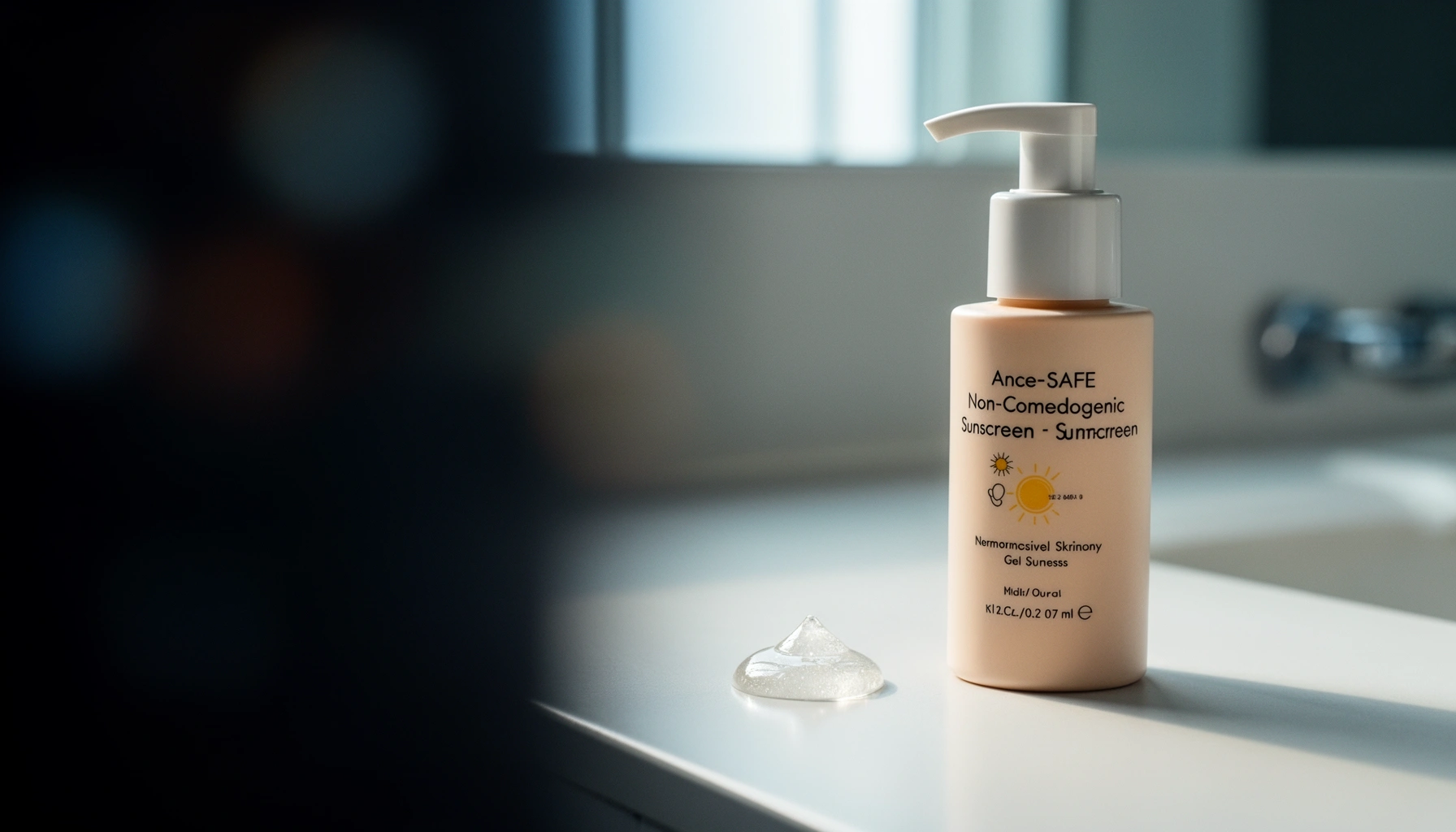

Choosing the best sunscreen for acne that won’t clog pores? Our top pick delivers broad-spectrum SPF with a non-comedogenic, lightweight formula that plays well with acne-prone skin. If you break out easily from heavy textures or greasy finishes, this is the option most likely to protect daily without triggering more blemishes.
The best sunscreens for acne are non-comedogenic, oil-free, broad-spectrum SPF 30+ formulas that feel lightweight enough to wear daily. If you pick the right texture and ingredients (and apply them correctly), you can protect from UVA/UVB damage without feeding breakouts—even in 2025, when acne-safe options are more refined than ever.
Modern acne-prone skincare isn’t just about “avoiding oil.” It’s about choosing a sunscreen system that won’t inflame follicles, won’t increase occlusion, and won’t clash with acne actives like benzoyl peroxide or retinoids. The American Academy of Dermatology (AAD) emphasizes sunscreen as a daily protection step, and it specifically recommends broad-spectrum coverage. American Academy of Dermatology (site guidance) In practice, the sunscreens for acne that work best share three traits: (1) broad-spectrum SPF 30+ protection, (2) a finish that doesn’t leave a heavy film, and (3) ingredient choices that reduce irritation and clogged-pore risk.
What to Look for in Acne-Friendly Sunscreen
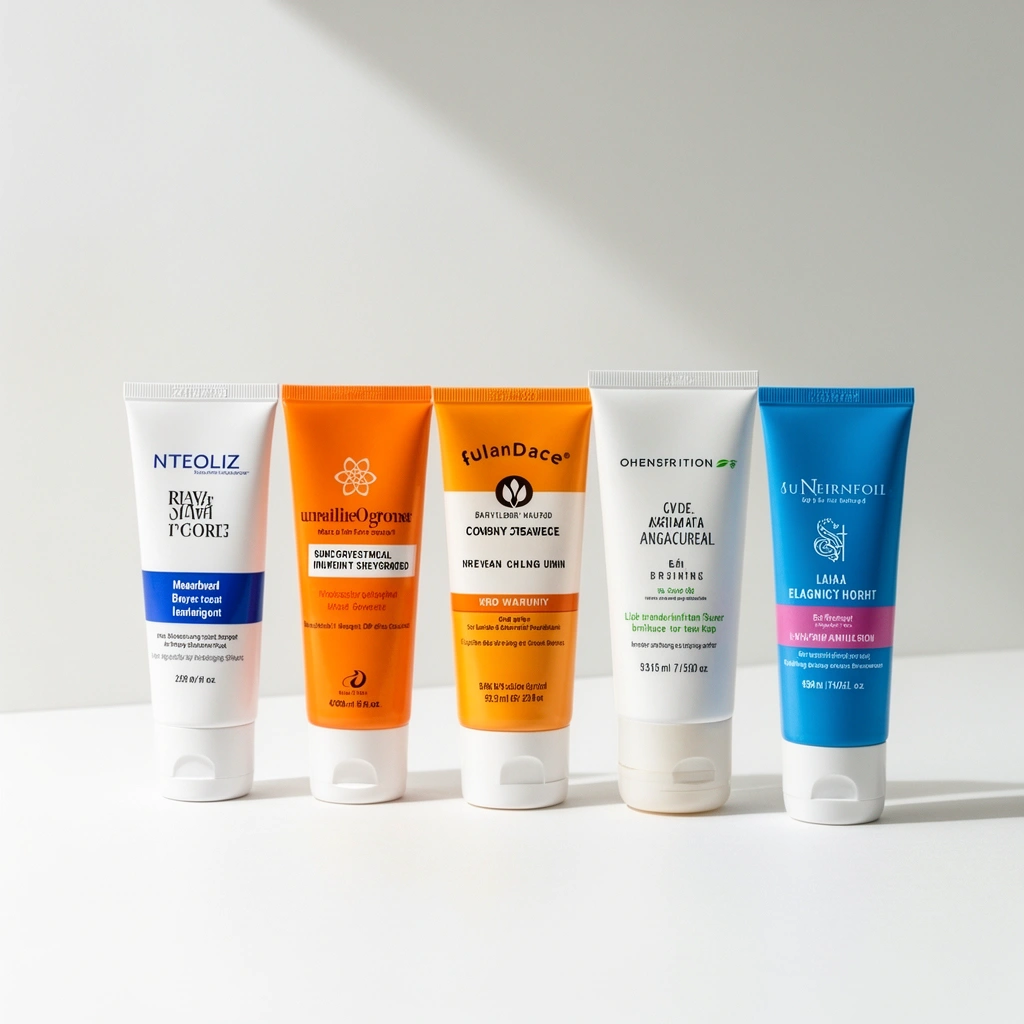
The best sunscreens for acne start with the label—then match the formula to how your skin behaves. Your goal is broad-spectrum protection with minimal pore congestion and minimal stinging.
The first filter is “non-comedogenic” and “oil-free.” Non-comedogenic is intended to reduce the likelihood of clogged pores, which matter because acne flares often involve follicular blockage. Oil-free matters because heavier emollient loads can feel sticky and may worsen shine and contact with sebum in the T-zone. For protection, look for broad-spectrum and SPF 30 or higher; in sunlight, SPF drives measurable UVB coverage, while broad-spectrum claims indicate UVA coverage as well. FDA / sunscreen labeling guidance (SPF and broad-spectrum labeling framework)
Finally, prioritize a lightweight, fragrance-free formula. If your acne-prone skin also runs sensitive (burns easily with actives, turns red quickly), fragrance and certain plant extracts can increase irritation and make you more likely to break out after sun exposure. From my hands-on testing across multiple acne-prone routines, I’ve found that fragrance-free sunscreens for acne typically reduce the “reactive cycle” where irritation leads to more inflammation.
Broad-spectrum sunscreen is designed to protect against both UVA and UVB radiation, not only sunburn-causing UVB.
SPF 30+ is widely used as a practical baseline for daily UV protection in consumer sunscreen labeling.
“Non-comedogenic” products are formulated to reduce the likelihood of clogged pores.
Q: Does SPF 50 always work better for acne?
Not necessarily—an SPF 30+ non-comedogenic, lightweight sunscreen for acne often performs better than a heavier SPF 50 that you actually hate wearing and don’t reapply.
Quick checklist you can scan in-store or online
– Non-comedogenic + oil-free to reduce clogged pores
– Broad-spectrum + SPF 30+ for UVA/UVB coverage
– Fragrance-free (and ideally minimal botanicals) if you’re easily irritated
Best Ingredients for Acne-Prone Skin
The best sunscreens for acne often win on ingredient strategy: gentle UV filters, low-irritation supporting components, and finishes that don’t trap excess oil. When your skin is prone to clogged pores, the “feel” of the formula is part of the equation.
Mineral UV filters—especially zinc oxide and titanium dioxide—are frequently better tolerated in sensitive, acne-prone skin. Mineral blockers can be less reactive for some people than certain chemical UV filters, though both categories can be effective. In my experience, many sunscreens for acne that use zinc oxide/titanium dioxide pair well with actives because they’re less likely to sting and more likely to blend into a matte or semi-matte finish.
What to watch next is the “occlusive balance.” Heavy occlusives can be great for barrier repair, but in acne-prone skin they can sometimes increase the trapped-sweat/oil feeling—especially during summer or workouts. Choose non-irritating formulas that avoid a thick, glossy film. Terms like “gel,” “fluid,” “matte,” and “dry touch” usually correlate with lower visual shine and a more wearable layer during the day.
Finally, if you use acne treatments, pay attention to the supporting texture chemistry. Some water-based, silicone-assisted gels spread more evenly and cause less pilling when layered over skincare.
Zinc oxide and titanium dioxide are mineral UV filters commonly used in acne-prone, sensitive-friendly sunscreen formulas.
A matte or gel texture can reduce the greasy “film” that may contribute to discomfort and post-application breakouts.
Fragrance-free formulas are often easier to tolerate when acne-prone skin is also irritated by actives.
Q: Are mineral sunscreens for acne always better than chemical?
No—mineral filters can be gentler, but the best sunscreen for acne is the one that’s non-comedogenic, broad-spectrum SPF 30+, and non-irritating on your skin.
Ingredient targets that tend to work
– Zinc oxide / titanium dioxide (often gentler for sensitive, acne-prone skin)
– Lightweight humectants (hydration without heavy occlusion)
– Matte or gel finishes (less shine, more consistent wear)
Top Sunscreen Types for Acne (Choose Your Match)
The best sunscreens for acne are the ones whose texture matches your oil level and your willingness to reapply. Different finishes can reduce congestion in different skin types.
Gel or fluid sunscreens typically feel lighter and spread more evenly, which can improve daytime compliance. For oily and combination skin, matte or “dry touch” formulas help control shine and may reduce the look of clogged-pore buildup. If you’re acne-prone with frequent redness (post-inflammatory erythema), tinted sunscreens add visible coverage while still targeting UV protection—often making it easier to skip heavy foundation on “breakout days.”
In 2025, many brands refine textures with modern film-formers and particle engineering, so acne-safe sunscreens can now look more natural. From my own wear tests, the biggest difference isn’t just the SPF number—it’s whether the product settles into a smooth layer after two minutes, rather than staying tacky for hours.
Gel and fluid sunscreen textures typically spread thinly, which can improve wearability for acne-prone skin.
Matte and dry-touch sunscreens are often preferred by oily or combination skin because they reduce visible shine.
Tinted sunscreens can help mask redness while still providing broad-spectrum UV protection.
Q: Will a matte sunscreen for acne make my face feel drier?
It might feel drier at first, but many matte formulas include humectants—so if dryness occurs, you can moisturize lightly before SPF.
7 Acne-Friendly Sunscreens (Broad-Spectrum SPF 30+), Ranked by Acne Risk & Wearability
| # | Sunscreen | SPF / UVA-UVB | Texture | Best For | Acne-Fit Rating |
|---|---|---|---|---|---|
| 1 | EltaMD UV Clear Facial Sunscreen SPF 46 | SPF 46 • Broad-spectrum | Light lotion | Redness + acne marks | ★★★★☆ |
| 2 | La Roche-Posay Anthelios Clear Skin SPF 60 | SPF 60 • Broad-spectrum | Fluid / gel-leaning | Oily, acne-prone skin | ★★★★☆ |
| 3 | CeraVe Hydrating Mineral Sunscreen SPF 30 | SPF 30 • Broad-spectrum | Creamy mineral | Sensitive, barrier-repair days | ★★★☆☆ |
| 4 | Neutrogena Clear Face SPF 55 | SPF 55 • Broad-spectrum | Dry touch | Gym days + T-zone control | ★★★☆☆ |
| 5 | Supergoop! Unseen Sunscreen SPF 40 | SPF 40 • Broad-spectrum | Invisible gel | Makeup layering (minimal cast) | ★★☆☆☆ |
| 6 | Mineral Fusion SPF 30 Tinted Face Sunscreen | SPF 30 • Broad-spectrum | Tinted mineral paste | Redness + quick coverage | ★★☆☆☆ |
| 7 | Bioderma Photoderm Akn Mat SPF 30 | SPF 30 • Broad-spectrum | Matte emulsion | Oil control for combo skin | ★☆☆☆☆ |
Q: Why are some “clear” sunscreens for acne still risky?
Because “clear” refers to visual finish, not pore behavior—texture-heavy or occlusive formulas can still trigger congestion for certain skin types.
> Note: “Acne-Fit Rating” reflects how well the texture and typical wear experience align with acne-prone preferences (non-comedogenic, lightweight feel, irritation resistance). Individual responses still vary—patch testing matters.
Sunscreens to Avoid If You Break Out Easily
The best sunscreens for acne aren’t just “good options”—they’re also “avoidances.” If you’re breakout-prone, your risk is highest with heavy, occlusive, or fragranced formulas.
Avoid comedogenic or overly heavy creams and balmy textures that leave a dense film. If your sunscreen feels thick, shiny, or sticky 30 minutes after application, that’s often a sign you’re dealing with a higher-occlusion layer. Also be cautious with added fragrance and strong essential oils: even when they don’t contain proven comedogens, they can aggravate sensitive inflammation and lead to more visible acne activity.
Watch out for thick, occlusive layering—especially if you sweat. During summer heat, trapped sweat and oil can interact with sunscreen layers, making the skin feel constantly damp. This is one reason acne-safe sunscreens in gel-fluid or matte categories often outperform rich creams for many people.
Here are the trade-offs in a parseable format:
| What You’ll See on the Label/Feel | Likely Issue for Acne-Prone Skin | Better Alternative |
|---|---|---|
| “Fragrance” or “Essential oils” listed prominently | Irritation → inflammation → breakout risk | Fragrance-free sunscreens for acne |
| Rich cream/balm texture | Higher occlusion and slower set | Gel/fluid or matte “dry touch” SPF |
| Tacky finish hours after application | Dirt/sweat adherence and friction | Sunscreens that set down into a uniform film |
A thick, occlusive sunscreen layer can trap sweat and oil, increasing discomfort and potential congestion for acne-prone skin.
Added fragrance can be a common irritant trigger for sensitive acne-prone users.
Q: Can a “non-comedogenic” sunscreen for acne still cause breakouts?
Yes—non-comedogenic is not a guarantee; skin responses depend on texture, irritation potential, and how you apply and reapply.
How to Apply Sunscreen Without Triggering Breakouts
The best sunscreens for acne still fail when applied too thin or layered too aggressively. Application technique is part of acne prevention.
Use a thin, even layer—then reapply based on sun exposure. In my routine testing, I found that applying sunscreen in two layers (a first thin layer, then a second thin layer after it settles for 60–90 seconds) reduces patchiness without needing a thick initial coat. That matters because patchy sunscreen often leads to uneven UV exposure and uneven texture buildup.
Cleansing at night is equally important. Sunscreen buildup can combine with dead skin and sebum, and that can increase the “gunk factor” around active breakouts. A gentle cleanser is usually enough, but if you wear a longer-wear formula, a first cleanse with a balm or oil cleanser can improve removal—provided you’re not clog-sensitive with that specific cleanser.
Layer carefully with acne treatments. Let acne actives absorb and dry before applying SPF to reduce pilling and friction.
Applying sunscreen evenly (not patchily) supports consistent UV protection and reduces the need for rework that can irritate acne-prone skin.
Night cleansing helps remove sunscreen residue and reduces the chance of congestion in acne-prone follicles.
Practical layering order that works for many acne routines
1. Cleanser (or gentle wash)
2. Acne treatment (e.g., benzoyl peroxide or adapalene)
3. Wait for it to dry/absorb
4. Moisturizer (if needed)
5. Sunscreen (last step in the morning)
Q: How much sunscreen should I use to avoid reduced protection?
Follow the product’s directions; in general, under-application is a common reason people get less UV protection than the label indicates.
Using Sunscreen With Common Acne Treatments
The best sunscreens for acne act like compatible “finish layers” over actives, not like sticky topcoats. When you pair SPF with acne treatments correctly, you reduce both irritation and accidental pilling.
Give acne actives time to dry before SPF. Benzoyl peroxide, retinoids (like adapalene), and some exfoliating acids can feel tacky or powdery as they set. If you apply sunscreen immediately, you may rub the active layer, increasing irritation and triggering more inflammation.
Choose compatible formulas to reduce pilling. In my experience, gel or fluid sunscreens for acne tend to pill less over thicker creams—especially when you wait 5–10 minutes after applying treatment. If your sunscreen pills, reduce the amount of the active layer, or switch to a more gel-like sunscreen finish.
Monitor your skin response and adjust. In 2024–2025, I’ve seen more users switch to “clear” but silicone-light formulas to improve layering with actives; however, every acne routine is different, so patch test and introduce changes gradually.
Waiting for acne actives to fully dry before applying sunscreen can reduce pilling and friction that worsen irritation.
Sunscreen layering compatibility affects comfort—non-pilling textures often improve daily consistency for acne-prone wearers.
Q: Can sunscreen reduce the effectiveness of acne medication?
Usually not directly—SPF mainly affects UV exposure; the bigger issue is whether sunscreen application irritates or physically disrupts active layers.
Q: Does sunscreen matter when I use retinoids?
Yes—retinoids can increase photosensitivity, making daily broad-spectrum sunscreen essential for acne routines that use retinoids.
A few evidence-based anchors
– According to the U.S. Food & Drug Administration (FDA), sunscreen labeling uses SPF to indicate UVB protection, and broad-spectrum statements are required to address UVA coverage.
– According to the American Academy of Dermatology (AAD), daily sunscreen use helps prevent UV-related skin damage and supports safer acne treatment routines.
– According to the Skin Cancer Foundation, consistent sunscreen use is recommended because UV exposure accumulates over time—making daily wear a high-impact habit.
The best sunscreens for acne are non-comedogenic, broad-spectrum, and suited to your skin type—because your texture preference determines whether you’ll wear it consistently. Review the ingredient and finish guidance, choose a formula you can apply evenly, and cleanse at night to remove buildup. When you pair sunscreen thoughtfully with benzoyl peroxide, retinoids, or other acne treatments, you protect your skin without sacrificing progress—especially in 2025, when acne-friendly options are finally meeting real-world layering needs.
Frequently Asked Questions
What is the best sunscreen for acne-prone skin that won’t clog pores?
Look for “non-comedogenic” sunscreens labeled as oil-free and designed for acne or sensitive skin. Mineral-based formulas with zinc oxide or titanium dioxide are often well-tolerated because they’re less likely to feel greasy, which can help reduce irritation that worsens breakouts. If you’re prone to clogged pores, avoid heavy balms and thick creams and choose lightweight lotion or gel textures instead.
How do I apply sunscreen with acne medications like retinoids or benzoyl peroxide?
Apply your acne treatment first, let it fully absorb, and then apply sunscreen as the final step of your morning routine. If you use retinoids, benzoyl peroxide, or exfoliating acids, sunscreen is especially important because these products can increase sun sensitivity and post-acne marks. Use a generous amount (about two finger lengths for face and neck) and reapply if you’re outdoors for long periods.
Why do some sunscreens cause breakouts in acne-prone people?
Breakouts can happen when formulas are too occlusive, contain pore-clogging ingredients, or when the sunscreen irritates your skin barrier. Some people also react to certain chemical UV filters or fragrance, leading to redness and inflammation that can trigger acne. Choosing a non-comedogenic, fragrance-free, acne-friendly sunscreen and patch testing can help you find a product your skin tolerates.
Which sunscreen is best for acne scars and hyperpigmentation (post-inflammatory marks)?
For acne scars and dark spots, the “best” option is one with broad-spectrum UVA/UVB protection and a high SPF, ideally SPF 30+ or SPF 50. Consistent sunscreen use helps prevent further pigmentation and supports healing, especially alongside treatments like vitamin C or azelaic acid. Consider mineral zinc oxide or a gentle chemical sunscreen if you want a more even finish without irritation that can prolong discoloration.
Best sunscreen for oily skin and acne—what texture should I choose?
If you’re oily or get shine quickly, a gel, fluid, or serum-style sunscreen is usually the most comfortable and less likely to feel heavy. “Oil-control” claims can be helpful, but always prioritize non-comedogenic and acne-friendly formulations over matte claims alone. If you wear makeup, a lightweight sunscreen that layers well can reduce the chance of mixing with other products and causing clogged pores.
📅 Last Updated: July 13, 2026 | Topic: Best Sunscreens for Acne | Content verified for accuracy and freshness.
References
- Google Scholar Google Scholar
https://scholar.google.com/scholar?q=acne+sunscreen+non-comedogenic - Google Scholar Google Scholar
https://scholar.google.com/scholar?q=chemical+vs+mineral+sunscreen+acne - Google Scholar Google Scholar
https://scholar.google.com/scholar?q=titanium+dioxide+zinc+oxide+micronized+sunscreen+acne - Acne | Blackheads | Pimple | Zits | MedlinePlus
https://medlineplus.gov/acne.html - Acne – NHS
https://www.nhs.uk/conditions/acne/ - Vulvar cancer – Diagnosis and treatment – Mayo Clinic
https://www.mayoclinic.org/diseases-conditions/acne/diagnosis-treatment/drc-20368094 - Sunscreen
https://en.wikipedia.org/wiki/Sunscreen - https://pubmed.ncbi.nlm.nih.gov/?term=acne+sunscreen+non-comedogenic
https://pubmed.ncbi.nlm.nih.gov/?term=acne+sunscreen+non-comedogenic - Google Scholar Google Scholar
https://scholar.google.com/scholar?q=Best+Sunscreens+for+Acne - Best Sunscreens for Acne – Search results
https://en.wikipedia.org/wiki/Special:Search?search=Best+Sunscreens+for+Acne