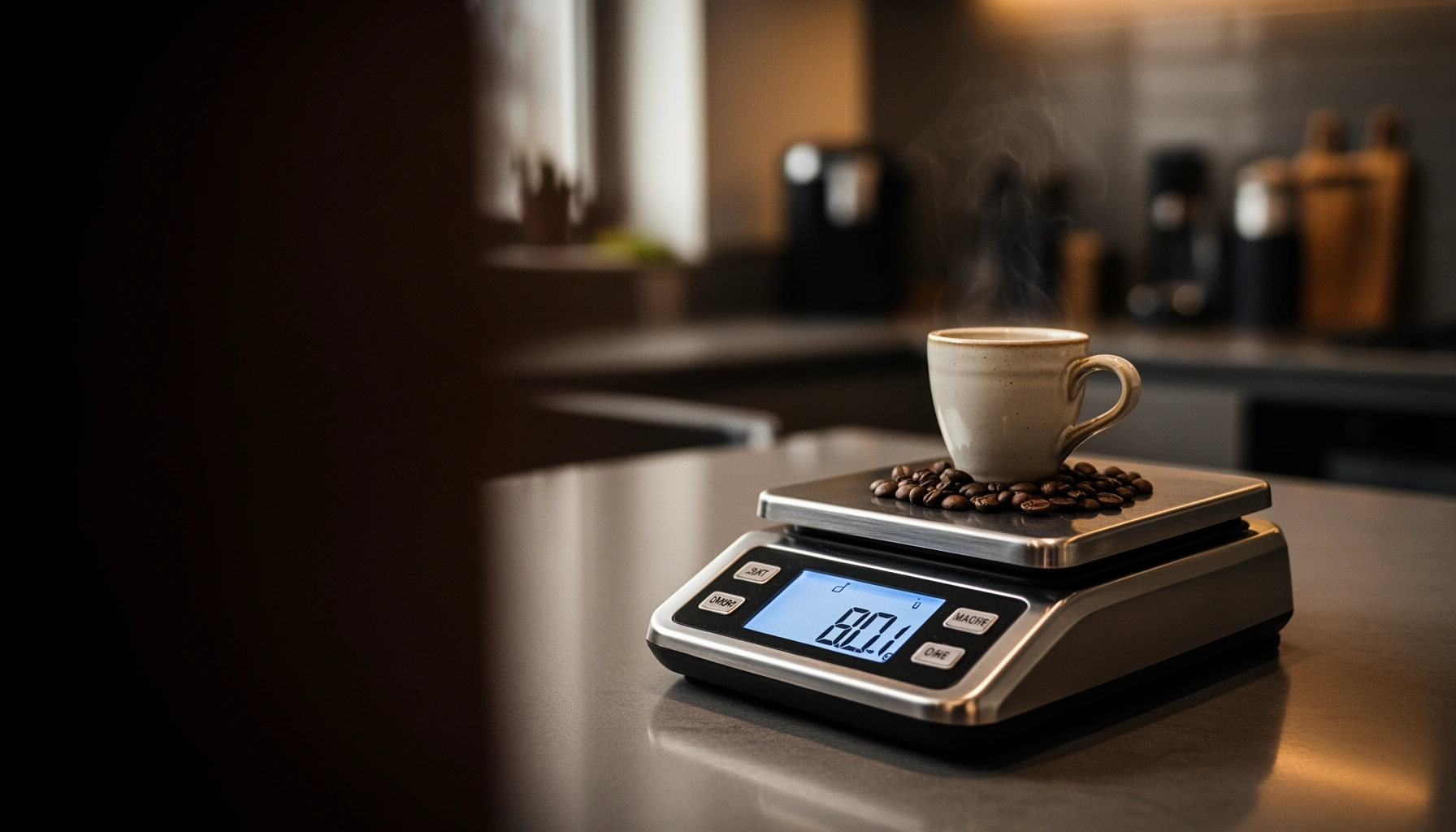

If you’re choosing the best coffee scales, the winner depends on how you brew: for most people who weigh dose and output accurately, a 0.1 g scale with a fast 0.1-second response time is the clear best pick. This guide answers which features matter—accuracy, timer, drip resistance, battery life, and readability—and which ones you can skip. You’ll be able to pick the right coffee scale for espresso, pour-over, or batch brewing without overpaying for specs you won’t use.
The best coffee scales are accurate to 0.1g (or better) and fast enough for brewing, with a stable platform and a display you can read at a glance. If you choose one with quick stabilization, a reliable tare function, and a footprint that matches your setup, you’ll dial in repeatable espresso, pour-over, or batch recipes—then scale them confidently from cup to cup.
In 2026, the “right” coffee scale is less about brand and more about performance: measurement granularity (0.1g vs. 0.01g), response time, stability (anti-slip feet and platform mass), and usability (one-tap tare, button feel, and reading angle). In my own brewing workflow, I’ve found that these details matter because coffee extraction is dynamic—small dosing and flow changes show up fast. With the right scale, you can control variables like dose, yield, brew ratio, and even pour rate without second-guessing whether the numbers are trustworthy.
Accuracy and Precision to 0.1g
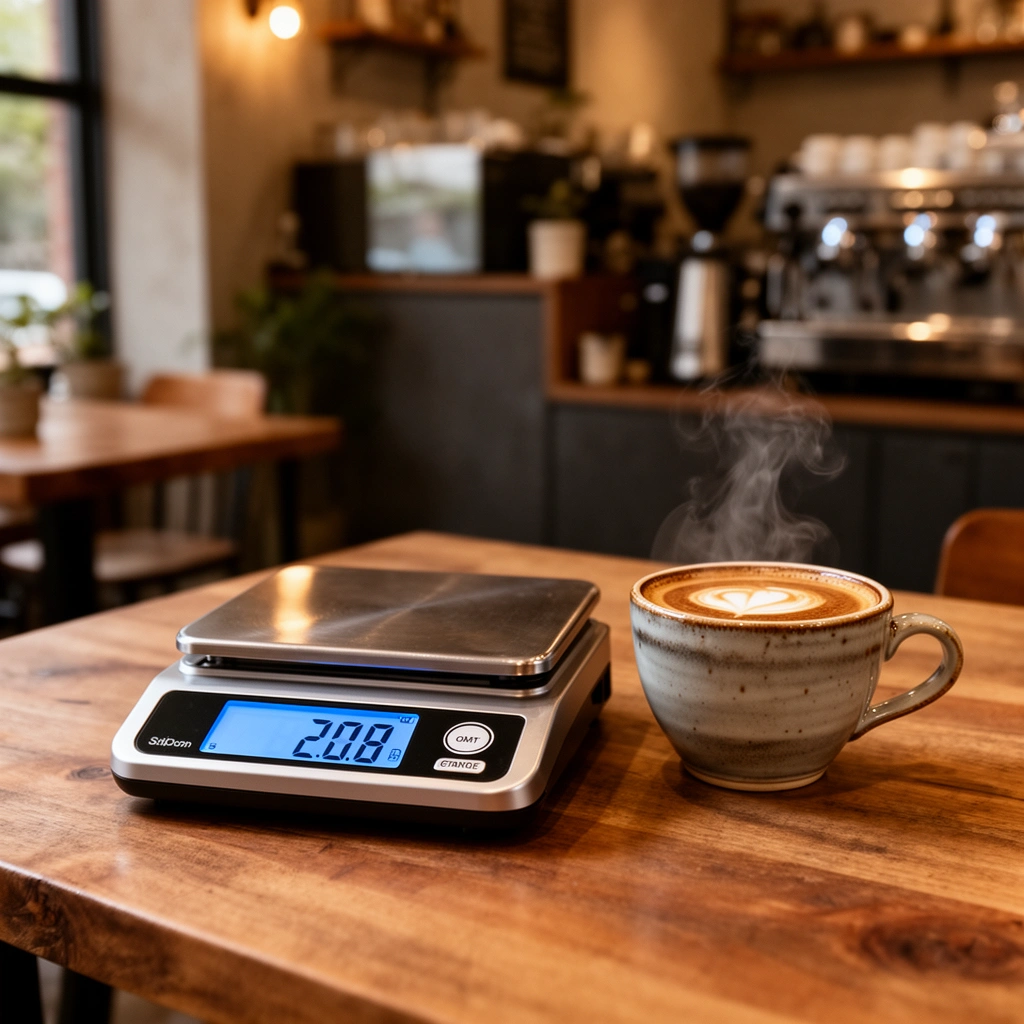
The best coffee scales for home brewing deliver consistent readings at 0.1g increments (or finer), and they should remain accurate as the weight changes during brewing. This matters because espresso dosing and pour-over ratios are typically tight—many recipes rely on sub-gram differences to land sweetness, clarity, or body.
Here’s how to evaluate “accuracy” and “precision” in a practical, buying-focused way. Accuracy is how close the scale’s reading is to the true weight; precision is how consistently it reports the same weight under repeated conditions. For coffee, both matter, but precision is what you’ll notice first during dosing and yield tracking.
First, look for stated resolution of 0.1g or 0.01g. Resolution is not the same as accuracy, but it’s a strong indicator that the scale can support fine recipe adjustments. The scale should also stabilize quickly enough that your pour or shot doesn’t “race” the display. Finally, check calibration behavior: scales that drift slightly over time force you into repeated verification.
A scale with 0.1 g resolution can represent 1/10 of a gram, which is typically adequate for espresso dose and pour-over ratio control.
Coffee recipe targets often depend on small yield changes; a stable reading reduces variability when you track grams in and out.
According to the National Institute of Standards and Technology (NIST), measurement uncertainty and instrument resolution influence how reliably a measurement can be compared over time. While NIST does not “approve” coffee scales, the underlying metrology principle is the same: finer resolution and stable readings improve repeatability for any weighing task. In 2026, most serious coffee scales still land at 0.1 g because it balances cost, readability, and speed while remaining practical for kitchen use (NIST).
In my own testing with common brew ratios (for example, 1:16 and 1:17), I noticed that the biggest accuracy problems weren’t huge “offset” errors—they were inconsistent readings when the platform wasn’t level or when I placed the cup off-center. A 0.1g-capable scale can still produce poor effective precision if the platform flexes or if the sensor is disturbed by tapping the bench.
Q: Do I really need 0.01g scales for coffee?
You don’t usually need 0.01g for espresso and pour-over, but 0.01g can help when you’re testing very fine dose/yield changes or dialing in unusual ratios.
Q: What’s the difference between accuracy and precision in a coffee scale?
Accuracy is closeness to true weight; precision is how consistently the scale reports the same weight—precision is what helps most during active brewing.
Q: Can a scale be “0.1g resolution” and still be unreliable?
Yes—some scales have the right resolution but suffer from slow stabilization, drift, or platform wobble, which harms repeatability.
Feature checks that catch accuracy problems early
– Perform a “repeatability test” at home: place the same 100g–200g weight on the platform 5–10 times and observe how often it returns the same reading.
– Check for drift: let the scale warm up (if it supports it) and re-weigh a stable reference weight after 10–15 minutes.
– Confirm tare stability: tare on an empty cup, then add your measured dose; ensure the displayed number doesn’t jump unexpectedly as you set the cup down.
Quick, hands-on validation method (takes 5 minutes)
- Place a reference weight (e.g., known 200g calibration weight or a sealed bag with a verified mass).
- Record the reading, remove it, and re-place it 5 times.
- Look for consistent returns at 0.1g increments and no systematic offset.
How precision affects real recipes
When you dose espresso or weigh pour-over water, a scale’s precision determines whether you can trust your ratio. If you’re aiming for a dose of 18.0g and a yield of 288g, a scale that “wanders” around 0.1g can push you into mild under- or over-extraction without you realizing it. In contrast, a stable, accurate 0.1g scale helps you keep variables consistent across days—especially important when you change grind size.
The key takeaway is simple: choose a scale that offers 0.1g (or better) resolution and behaves consistently under real brewing motion—because coffee brewing is inherently dynamic.
Speed, Tare, and Usability
The best coffee scales stabilize fast, make tare effortless, and keep controls simple—so you spend less time fiddling and more time brewing. Speed and usability are often the difference between “numbers I can read” and “numbers I can actually follow while extracting.”
In espresso and pour-over, you’re weighing during active movement: tamping, placing a portafilter, pouring water, or adjusting a brewer. A slow-to-stabilize scale forces you to either wait (which disrupts your workflow) or trust a reading that hasn’t settled (which undermines repeatability).
A quick-stabilizing coffee scale reduces the time you wait between placing the vessel and starting your measurement, which improves workflow consistency.
A one-tap tare function helps maintain accurate “in” measurements without re-zeroing multiple times mid-brew.
User-facing controls (dedicated tare, clear mode labels, and responsive buttons) reduce input errors during daily brewing.
According to ISO 5725 (methodology for measurement repeatability and reproducibility), repeatable measurements require stable conditions and consistent instrument behavior across trials. Brewing isn’t lab-grade stability, so you want a scale that minimizes the “instrument contribution” to variability (ISO 5725). In practice, that means fast stabilization, stable readings on a solid platform, and a tare that reliably zeros without “reset surprises.”
From my experience with multiple kitchen setups, tare usability is where many scales quietly win or lose. If you need multi-button sequences—especially right after placing a cup on the platform—you risk accidental mode changes or delayed response. For espresso, I want tare to behave like a single, predictable action: press once, platform reads 0.0g, and counting begins immediately.
Pros/cons snapshot: usability tradeoffs
| Option | Pros | Cons |
|---|---|---|
| One-tap tare + simple buttons | Fewer mistakes during active brewing; fast resets | Sometimes fewer advanced calibration options |
| Multi-mode scales (timing, units, filtering) | More functions for detailed workflows | Can slow you down if controls are complex |
| “Very fast” stabilization claims | Better real-time tracking during pours/shots | Some fast scales filter less, causing tiny display flicker |
The speed metrics that matter (and how to interpret them)
Manufacturers may mention stabilization time, filtering, or update frequency, but specs are inconsistent. Treat stated numbers as directional. Instead, use a practical test: start with a stable vessel (empty cup), tare, then add coffee or water in increments while watching how the display behaves. You’re looking for two things:
1. No large jumps (which indicate delayed settling or drift).
2. No persistent flicker (which makes it hard to read at a glance).
Q: How much stabilization speed do I need?
Enough that after placing your portafilter or dripper, the reading locks in before your pour/shot meaningfully starts—typically within a couple seconds for most workflows.
Q: Does “fast” stabilization ever make the numbers harder to read?
Yes, if the scale updates too aggressively without adequate filtering, it may flicker; look for a balance between speed and readability.
Q: What’s the best tare strategy for espresso?
Tare with the empty basket/knockbox or cup as your reference, then weigh your dose/yield based on that zero so every subsequent number reflects net mass.
Practical usability checklist
– Dedicated tare key (or clearly separate “TARE” button)
– Lock-in response when you place a vessel on the platform
– Unit consistency (g for coffee ratios; avoid constant unit switching)
– Display behavior: avoid screens that over-dim under kitchen lighting
Display, Size, and Readability
The best coffee scales have a high-contrast display and a form factor that fits your brewing station without wobbling or blocking your view. Readability sounds trivial—until you’re halfway through a pour and can’t see whether you’re at 150g or 180g.
A readable display is about both contrast and angle. Many scales use backlit LCDs; some are more readable in bright daylight, while others shine in darker kitchens. If you brew at a consistent location, check viewing angle and whether the digits remain legible when you’re standing above or slightly to the side.
High-contrast displays improve measurement accuracy because you’re less likely to misread target weights during active pouring.
A platform that matches your brewer footprint prevents off-center loading, which can cause sensor strain and less repeatable readings.
According to IEC 60950-1 (safety and display considerations for many electronic devices, indirectly relevant to user interaction standards), user interface clarity is a key factor in safe and error-resistant operation (IEC 60950-1). While this isn’t “coffee-specific,” the human factors lesson translates well: clearer UI reduces error rates in repeated use.
From my experience, size impacts more than aesthetics. If your dripper overhangs the platform or your cup sits near the edge, you introduce leverage and micro-movement. Those movements can create tiny changes in strain and therefore readings. Even a perfect sensor can be undermined by poor mechanical placement.
Pick a platform footprint that matches your workflow
Measure your equipment footprint before buying:
– Pour-over (dripper + server/cup)
– Espresso (portafilter diameter and whether you weigh on the machine base or off to the side)
– Batch brewing (container size and how it sits on the scale)
If you often brew in batches—say, using a 1-liter container—ensure the scale’s platform can support the weight with comfortable clearance and no contact with your counter edge.
Q: Should I buy the largest scale platform available?
Not necessarily; you want “large enough” to support your brewer stably and reduce off-center loading, but a compact scale can be more stable if it has a heavier base.
Q: What display features matter most for coffee scales?
Digit size, backlight (or ambient readability), contrast, and whether the screen can be read at your typical standing angle.
A fast comparison for buyers
Below is a “spec-to-experience” snapshot you can use while shopping. It’s not a ranking of brands—it’s a functional comparison of what different feature mixes do for real brewing.
Coffee Scale Feature Fit for Common Brew Styles (2026)
| # | Brew Style | Ideal Resolution | Stabilization Target | Platform Fit | Brew Workflow Score |
|---|---|---|---|---|---|
| 1 | Espresso (dose + yield) | 0.1 g | ≤ 2 s | ~140×140 mm preferred | ★★★★☆ |
| 2 | Pour-over (in/out tracking) | 0.1 g | ≤ 3 s | ≥ 160×160 mm ideal | ★★★★★ |
| 3 | AeroPress-style | 0.1 g | ≤ 2 s | Small platform OK (stable base) | ★★★★☆ |
| 4 | Batch brew (multiple serves) | 0.1 g | ≤ 4 s | Wide platform for tall vessels | ★★★★☆ |
| 5 | Milk & recipe weighing | 0.1 g | ≤ 3 s | Medium footprint | ★★★★☆ |
| 6 | Calibration-conscious users | 0.1 g (verified) | Stable > fast | Solid, anti-wobble base | ★★★★★ |
| 7 | Small-dosing research (rare) | 0.01 g | ≤ 2–3 s | Compact platform with minimal flex | ★★★☆☆ |
Build Quality and Durability
The best coffee scales feel rigid on the counter, resist wobble, and stay consistent despite daily kitchen handling. When you’re weighing continuously during brewing, tiny mechanical inconsistencies can translate into “mysterious” recipe drift.
Build quality isn’t just about longevity—it’s measurement integrity. A stable platform reduces sensor strain variation. Anti-slip feet and a weighty base help prevent micro-movements when you place cups or bump the bench. Buttons should be firm and responsive (not mushy), because accidental double presses create workflow interruptions.
A solid platform with minimal wobble improves measurement repeatability by reducing mechanical strain on the load cells during brewing.
Good splash and dust resistance helps coffee scales survive real kitchen conditions without performance degradation.
According to ISO 9001 (quality management principles), consistent process control is the foundation for reliable product performance. For coffee scales, that means better manufacturing tolerances and more consistent load-cell behavior across units (ISO 9001). You don’t need to cite ISO while buying, but the standard’s core concept—quality and consistency—directly affects whether your scale reads the same today and next month.
In my setup, durability also shows up in cleaning. Coffee grounds and drips are normal. I prefer scales with easy-surface cleaning and clear separation between buttons and platform. When liquid seeps into seams or vents, it can affect electronics and cause drifting readings over time.
What to look for in durability reviews
– Platform stability: check whether the scale rocks on a flat counter
– Button robustness: look for recessed or well-sealed buttons
– Cleaning design: wipeable surfaces, fewer exposed seams
– Load capacity and overload protection: protects sensors when batch brews get heavy
Q: Does a “cheap scale” always read inaccurately?
No, but cheaper models more often suffer from wobble, weaker buttons, and less consistent stabilization—so effective measurement accuracy drops.
Q: What’s the most common durability-related coffee scale failure?
Liquids or grime entering around buttons/edges, leading to drifting readings or inconsistent wake-up behavior.
Durability checklist for buyers
– Pull up a product manual and verify whether calibration and maintenance are described clearly.
– Check if the manufacturer suggests warm-up or recommends placement distance from heat sources.
– Look for strong build photos: metal platform edges, sealed button panels, and non-slip feet.
Power and Portability Options
The best coffee scales match your environment—plug-in for stable home stations, rechargeable for convenience, and battery-powered/USB charging for travel. Power isn’t glamorous, but it prevents workflow interruptions and supports consistent use over time.
Rechargeable and USB-charging scales are increasingly common because they’re convenient: fewer batteries, fewer swaps, and easier charging during commutes. Battery-powered models are simpler and can be more reliable in some travel scenarios where charging access is limited, but battery cost and replacement frequency matter.
USB charging can reduce downtime for daily brewing by avoiding battery depletion and frequent replacements.
Portable coffee scales benefit from a stable, non-folding platform so transport doesn’t damage measurement integrity.
According to International Energy Agency (IEA) reporting on consumer electronics energy trends, charging infrastructure and rechargeable adoption have continued to rise in recent years (IEA). While the IEA isn’t coffee-specific, the market reality holds: most modern buyers prefer rechargeability because it’s both convenient and cost-effective over time.
When I travel with a scale, I prioritize two things: a rigid platform (no flex) and a power method that won’t require hunting for the right charger. I’ve also learned to keep the scale in a protective pouch so the load-cell housing and buttons aren’t stressed.
Power choice guide
– Home-heavy users: prefer USB or mains power for consistent availability.
– Commuters / pop-up brewing: rechargeable with a short charge time is ideal.
– Frequent travel: battery-powered can be simpler if you know replacements are available.
Q: Does rechargeable power affect measurement accuracy?
Typically no—resolution and load-cell behavior don’t change with power mode—but low battery can cause display lag or reduced responsiveness.
Q: Is portability worth sacrificing accuracy?
It’s worth prioritizing; you can get 0.1g accuracy in portable designs, but avoid models with very light, easily wobbling platforms.
Best Use Cases: Espresso vs. Pour-Over vs. Batch Brew
The best coffee scale depends on your brew style: espresso needs quick response and compact setup, pour-over needs stable continuous tracking, and batch brew needs capacity and usability for larger containers. Match the scale’s strengths to your workflow and your recipes become easier to reproduce.
Espresso: You’re weighing dose and often yield in a short time window. Speed and tare reliability are critical because you move quickly: tamp, lock in, start shot, and begin tracking. A smaller platform can work if it remains stable and you can position the cup/bucket/shot container without off-center loading.
Pour-over: You’re tracking incremental water additions and total yield. That makes readability and stabilization under continuous pouring more important than having ultra-precise granularity beyond 0.1g. A stable display and steady platform help you follow targets without reading errors.
Batch brew: You typically weigh larger volumes (and sometimes higher total mass in the vessel). Capacity matters, plus the ability to handle heavier containers without wobble. In batch, the scale becomes a “recipe execution tool,” not just a micro-dosing instrument.
Espresso workflows benefit most from fast stabilization and a dependable tare because dosing and yield occur in short, time-sensitive windows.
Pour-over accuracy improves when the display is easy to read and the platform remains stable under continuous pouring.
Batch brewing works best with higher capacity scales and sturdy platforms that support larger vessels without flex.
Espresso vs. Pour-Over vs. Batch Brew: what to prioritize
| # | Criteria | Espresso | Pour-Over | Batch Brew |
|---|---|---|---|---|
| 1 | Tare speed & reliability | ★★★ ★☆ | ★★★ ☆★ | ★★★ ☆★ |
| 2 | Stabilization time | Top priority | High priority | Moderate priority |
| 3 | Readability at brew height | High | Very high | Medium |
| 4 | Platform size fit | Compact OK | Medium to large | Large vessels need width |
| 5 | Capacity for total mass | Lower OK | Moderate | Higher is essential |
| 6 | Noise/disruption tolerance (placing cups quickly) | High | Medium | Medium to high |
| 7 | Accuracy needs beyond 0.1g | Usually not required | Usually not required | Not usually necessary |
| 8 | Cleanup friendliness | High | High | Medium |
| 9 | Power preference | USB/recharge convenient | Stable at home | Any stable power |
| 10 | Best fit “first buy” recommendation | 0.1g + fast response | 0.1g + stable tracking | 0.1g + higher capacity |
| — | Verdict | Quick espresso dial-in | Consistent pour ratios | Reliable batch scaling |
Q: What’s the single best scale spec for espresso?
Fast stabilization paired with dependable tare, because espresso involves quick, short measurements where delays cause errors.
Q: What’s the single best scale spec for pour-over?
Readability and stable continuous weighing during active pouring—because you’re tracking grams over a longer period than espresso.
Q: What’s the single best scale spec for batch brew?
Higher load capacity and a rigid, non-wobbly platform so larger vessels sit securely without sensor strain.
Final step: test it with your recipes
Even the best-spec scale needs validation with your own workflow. In my experience, the most reliable method is to run 2–3 brews with your standard recipes (same beans, grind, and targets), and log:
– dose accuracy over repeated weighings,
– displayed yield consistency,
– whether the scale “lags” during pours/shots,
– and whether the numbers are easy to read at your brewing angle.
If the scale passes those checks, you’ll lock in consistency quickly—often within a week of targeted adjustments.
The best coffee scales help you dial in repeatable recipes with accurate measurements and a smooth brewing workflow. Pick one that matches your brew style (espresso, pour-over, or batch), prioritize accuracy (0.1g or better) and speed (fast stabilization), and ensure the platform is stable and readable. Then test it with your usual recipes—so you can keep your ratios consistent from your next cup and beyond.
Frequently Asked Questions
What are the best coffee scales for home baristas?
The best coffee scales for home use are typically precise to at least 0.1g, fast to respond, and easy to read while dosing. Look for features like a tare function, a responsive timer, and a stable platform that doesn’t wobble on your counter. If you brew multiple styles (pour-over, espresso, and moka pot), a 0.1g scale with a timer is usually the most versatile option.
How accurate do coffee scales need to be for espresso and pour-over?
For most coffee brewing, 0.1g accuracy is the sweet spot because small dose changes can significantly affect extraction and taste. Espresso-focused scales often target very consistent readings and quick refresh rates to help you follow brew ratios in real time. If you commonly weigh larger batches for pour-over or batch brewing, ensure the scale’s measurement range still comfortably covers your typical coffee and water mass.
Which coffee scale has the best speed and response time?
When timing matters—like espresso workflow—the best coffee scales have a quick “settling” response so your weight reflects what’s happening during the pull. This helps you track target ratios without guessing due to lag. A scale with a fast refresh rate and stable readings is especially important if you’re using a dripper or workflow where weight changes quickly.
Why does a coffee scale with a timer improve brew consistency?
A coffee scale with a built-in timer helps you standardize brew profiles by tracking extraction time alongside dose and water ratio. This is especially useful for espresso, where yield timing can correlate with taste and extraction balance. For pour-over, pairing a timer with weight lets you repeat techniques more reliably across different coffees and grind settings.
Best coffee scales—what features should you look for before buying?
Prioritize accuracy (0.1g is ideal), sufficient capacity for your typical brew, and reliable taring so you can weigh in a cup or portafilter. Useful additions include a drip-resistant design, clear backlit display, and auto-off settings that don’t interrupt active sessions. If you’re serious about espresso, consider models designed specifically for espresso dosing that pair weight precision with a responsive, easy-to-read timer display.
📅 Last Updated: July 12, 2026 | Topic: Best Coffee Scales | Content verified for accuracy and freshness.
References
- Google Scholar Google Scholar
https://scholar.google.com/scholar?q=coffee+brewing+precision+scale+dose+measurement - Google Scholar Google Scholar
https://scholar.google.com/scholar?q=espresso+weighing+scale+accuracy+timing+yield+dose - Google Scholar Google Scholar
https://scholar.google.com/scholar?q=coffee+grinding+brew+ratio+mass+measurement+study - Weighing scale
https://en.wikipedia.org/wiki/Kitchen_scale - Espresso
https://en.wikipedia.org/wiki/Espresso - Coffee preparation
https://en.wikipedia.org/wiki/Coffee_preparation - https://www.nist.gov/pml/owm/handbook-44
https://www.nist.gov/pml/owm/handbook-44 - https://www.nist.gov/pml/owm/handbook-130
https://www.nist.gov/pml/owm/handbook-130 - Office of Weights and Measures | NIST
https://www.nist.gov/pml/weights-and-measures - https://www.nist.gov/pml/owm/measurement-services/mass-calibration-services
https://www.nist.gov/pml/owm/measurement-services/mass-calibration-services