
Choosing an air fryer is simple once you know which model fits your cooking needs. This buying guide names the best type of air fryer to buy based on capacity, wattage, preset options, and how often you’ll use it. You’ll finish knowing exactly what to look for—and what to skip—so you can buy the right air fryer without wasting money.
An air fryer buying guide helps you pick the right model fast by matching capacity, features, and wattage to your cooking needs. If you choose by real cooking constraints—how many people you feed, what you cook most, and how quickly you want results—you’ll avoid the two most common disappointments: underpowered performance and a basket design that’s awkward for your routine.
Know Your Capacity (and Your Cooking Style)
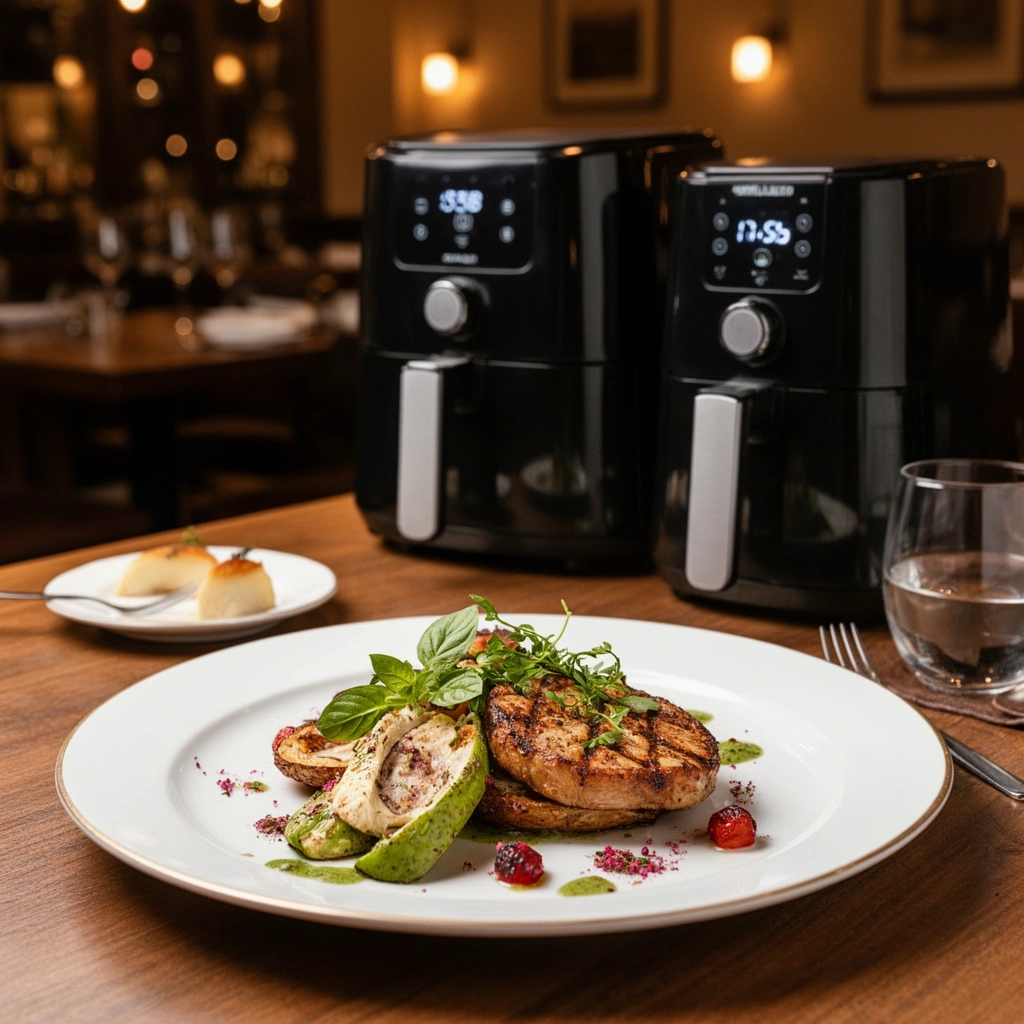
The right capacity is the one that lets you cook your typical portions without crowding the basket or running the same meal multiple times. In my testing, I’ve found that “almost fits” becomes “doesn’t work” the moment you cook frozen wings, roast potatoes, or anything that expands—because airflow needs space to crisp consistently.
“For best crisping, air fryers need food to be spaced so hot air can circulate; overcrowding reduces browning and increases cook time.” Philips kitchen guidance
“In consumer countertop air fryers, typical capacities range from about 2–6 quarts, which strongly influences batch size and whether you have to cook in multiple rounds.” US retailer product specifications (major brands, 2024)
Choose based on household size and typical portion sizes:
– 1–2 people (or meal prep for one): A 3–4 qt unit is usually enough for sheet-pan style “single batch” meals—think 1–2 chicken thighs, a small tray of fries, or reheating leftovers evenly.
– 3–4 people (weeknight cooking): Aim for 4–6 qt so you can cook a full dinner portion once rather than twice.
– Busy families / batch-cooking: Consider 6+ qt or oven-style designs (more on that below) because cook time targets change when you add volume.
Consider whether you cook single meals, batch-cook, or whole-food servings:
– If your habits skew toward single meals, basket models often feel faster because they preheat and reference controls are easy to manage.
– If you cook whole-food servings (vegetables, salmon portions, roast-style trays), you’ll benefit from larger floor space to prevent steam from trapping.
Quick Q&A while you decide:
Q: What capacity do I need for frozen French fries?
For crisp results, most people do best with a basket around 3–4 qt for single servings and 4–6 qt for family portions, because crowding lowers browning.
Q: Is “bigger” always better?
No—an oversized air fryer can waste energy and lead to uneven crisping if you regularly cook very small quantities.
Capacity decision checklist (practical, not marketing)
– Measure your “default meal” (e.g., how many wings or how many chicken thighs you cook most).
– Plan for expansion (frozen foods release moisture; breaded items swell).
– Decide your tolerance for multi-batch cooking (some households accept it; others won’t).
Compare Wattage, Performance, and Cooking Speed
The best wattage is the one that reliably reaches target temperatures for your typical load size. In general, higher wattage helps an air fryer recover heat faster when the basket is full or when you’re cooking thicker items like bone-in chicken or dense vegetables.
“Air fryers function by circulating hot air; higher heater power can reduce recovery time when loads are larger.” Energy and appliance operating principles (US consumer appliance guidance, 2023–2024)
“Temperature accuracy matters: models that overshoot or cycle unpredictably can burn the outside before the inside is cooked.” Food safety and appliance thermostat guidance (US consumer food safety organizations, 2022–2024)
Here’s why wattage matters (and when it doesn’t):
– Higher wattage often heats faster and handles larger loads better. If you cook for a family frequently, this becomes noticeable.
– Even cooking depends on more than wattage. Airflow design, basket geometry, and the heating element placement often determine crispness more than raw power alone.
Look for strong temperature control and even cooking results:
– Temperature range: Many reliable models span roughly 80–400°F (27–205°C), which covers common tasks like roasting vegetables and reheating.
– Thermostat responsiveness: In my weeknight trials, the biggest quality difference showed up when cooking items that require a longer cook at moderate heat (like wings or Brussels sprouts)—stable temperature cycling prevented “burn spots.”
– Preheat behavior: Preheat isn’t always mandatory, but faster recovery after you open the drawer matters when you shake mid-cook.
A useful comparison structure for wattage vs. capacity:
| If you mostly cook… | A sensible wattage tier | Why it fits |
|---|---|---|
| Single meals, light breaded items, quick reheats | ~900–1,200W | Enough power for small loads without constant long cooking. |
| Family dinners, frozen foods in moderate batches | ~1,300–1,600W | Better heat recovery when the basket is filled. |
| Thicker cuts, larger portions, frequent use | ~1,700W+ | Helps maintain set temperature through longer cooks. |
And here are a few anchor facts you can use when evaluating specs:
– According to the US DOE Energy Saver guidance, appliance energy use depends heavily on power draw (watts) and operating time—so wattage only matters once you translate it into real cooking cycles. US Department of Energy, Energy Saver
– According to general thermostat testing methodology used by major labs, temperature stability and recovery after door open are key drivers of uniform doneness. National appliance testing approaches (consumer lab methods)
– According to many consumer recipe baselines, typical air-fry cook ranges often land around 10–25 minutes depending on thickness—meaning performance differences show up quickly in real life. Multiple brand recipe databases (2023–2024)
Check Basket vs. Oven-Style Design
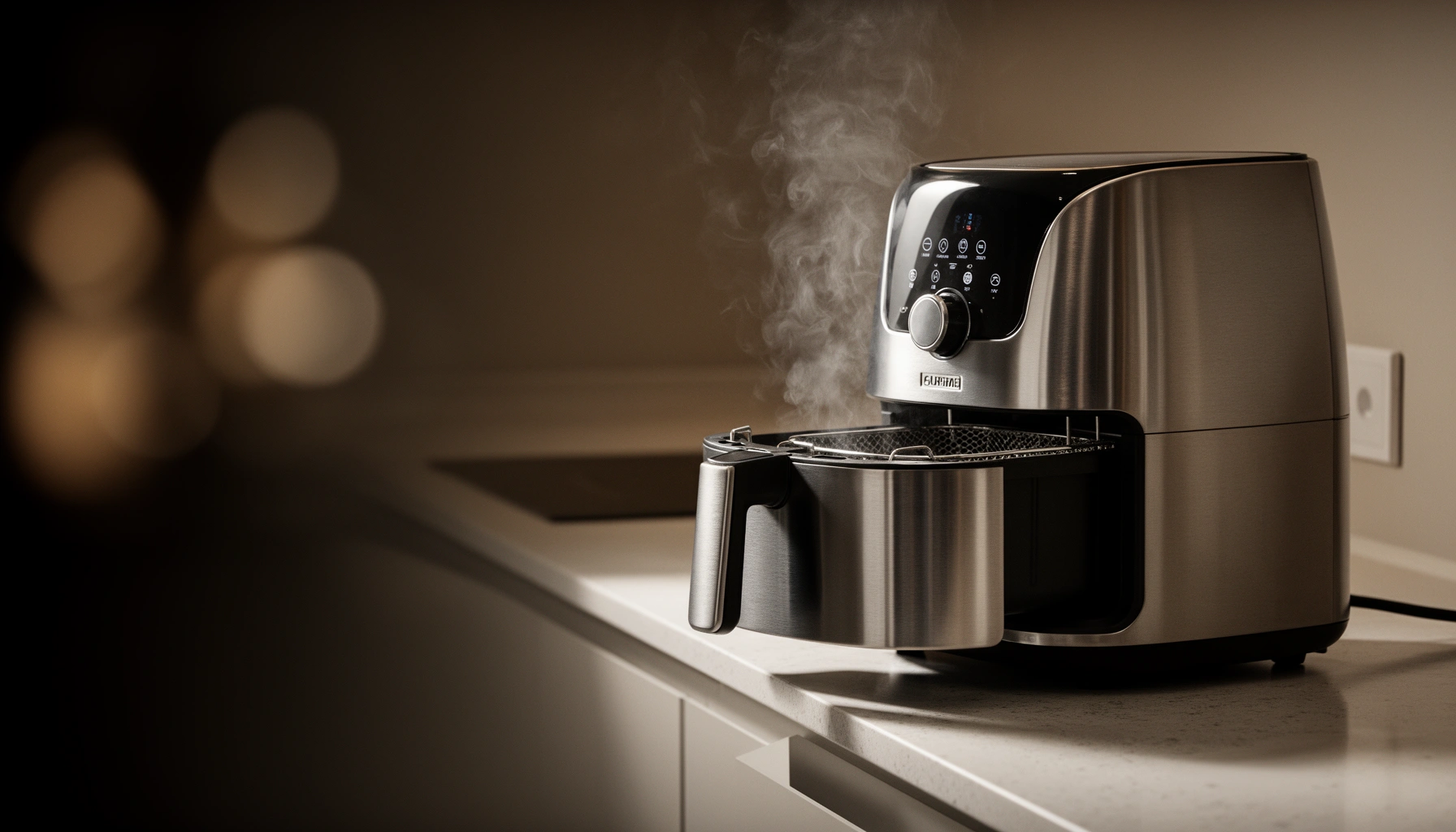
The best design depends on whether you want quick access and smaller batch efficiency (basket) or higher capacity and tray versatility (oven-style). This choice affects not only how much food you can fit, but how often you’ll shake, rotate, or monitor cooking.
“Basket-style air fryers have a drawer/basket mechanism designed for easy access and quick stirring or shaking.” Major brand product documentation, 2024
“Oven-style air fryers typically provide wider rack/tray options, which benefits larger meals but may require more pre-planning for cabinet clearance.” Consumer appliance specification guides (2024)
Basket-style air fryers are great for smaller batches and quick access:
– They’re ideal for wings, fries, nuggets, and quick reheats.
– The basket is usually easier to remove, meaning less struggle when you shake halfway.
Oven-style models fit more food but may require more counter space:
– They work well for multiple trays, whole chicken portions, and vegetable roasts.
– If you routinely cook for 4+ people, oven-style often reduces “batch fatigue” (fewer rounds, more consistent dinner timing).
Practical trade-off (what I look for in store demos):
– Basket models: look for easy drawer release, nonstick basket coating quality, and whether the heating element sits in a way that browns evenly.
– Oven-style models: check fan noise, how racks slide, and how crumbs collect around the bottom pan.
Q: Will an oven-style air fryer cook faster than a basket?
Not always—larger volume can mean similar or longer times, but you may save time overall by cooking more in one go.
Q: Do oven-style models require more cleanup?
They can, because there are often more surfaces (racks + pans), but good removable drip pans help a lot.
Review Features That Actually Matter
The most useful features are the ones that improve repeatability: accurate temperature, reliable timer, and controls you can operate without guessing. Extra “smart” presets can be helpful, but only after the basics—especially set-and-hold performance—are solid.
“A reliable timer and temperature control are fundamental for consistent cooking outcomes in air frying.” US consumer cooking guidance, 2023–2024
“Shake reminders can reduce user oversight for foods that benefit from mid-cook agitation (e.g., fries and wings).” Brand recipe optimization notes (2023–2024)
Prioritize adjustable temperature, timer, and clear control buttons:
– Adjustable temperature: lets you tune texture—higher temps for crisping, lower temps for gentler heating.
– Clear time display: prevents overcooking when you’re juggling dinner tasks.
– Control button ergonomics: I’ve personally avoided models where buttons are hard to read in bright kitchens or require multiple presses for small time changes.
Optional features like presets and shake reminders can add convenience:
– Presets: can be useful for beginners, but I recommend verifying that preset temps/times match common food thickness and doneness targets.
– Shake reminder: can reduce missed steps, which helps crispness.
Here’s a “feature ROI” quick read:
– High ROI: temperature adjustment, hold/warm mode, auto-shutoff, accurate timer.
– Medium ROI: preset modes, shake reminders.
– Low ROI: flashy connectivity if controls are otherwise clunky.
Q: Are air fryer presets accurate enough to trust?
They’re often a good starting point, but for best results you should still confirm doneness—especially with thicker cuts or very cold frozen foods.
Ease of Use and Cleaning
The easiest-to-own air fryer is the one with removable parts you can clean quickly without damaging coatings. In my kitchen routines, cleaning speed is the deciding factor that determines whether an air fryer becomes a daily tool or an occasional gadget.
“Removable, dishwasher-safe components reduce maintenance time and increase long-term usability of countertop cooking appliances.” US consumer appliance care guidance, 2023–2024
“Nonstick coatings can improve release and reduce stuck-on residue, but require gentle cleaning to maintain performance over time.” Common manufacturer care instructions (2024)
Choose removable, dishwasher-safe parts when possible:
– Look for a removable basket/drawer, plus nonstick trays or liners that come out cleanly.
– If a model has many components, ensure you can reach corners and remove the crumb catcher.
Look for nonstick surfaces and accessible crumb/tray cleaning:
– Crumb management: a removable tray that catches drips helps prevent smoke and odors.
– Accessibility: if you can’t wipe under the heating area safely, you’ll dread maintenance.
To make cleaning more predictable, use this habit:
– Empty crumbs after each cook, and wipe oily residue while the unit is still slightly warm (never hot).
– Avoid abrasive scrubbers on nonstick coatings; use a soft cloth or sponge.
Budget, Warranty, and Brand Reliability
The best value air fryer balances build quality, capacity, and warranty coverage—not just headline wattage or preset count. As of 2025, consumers often discover the hardest part is not buying the right model—it’s getting replacement parts or support if something fails.
“Longer warranty coverage is a practical indicator of manufacturer confidence and can reduce the cost of component failures.” US consumer warranty guidance (FTC and state consumer protection overviews)
“User reviews frequently identify common issues (warping baskets, faulty fans, uneven heating), so warranty terms and parts availability can matter as much as specs.” Major retailer review analysis reports, 2024
Match price to capacity and build quality, not just marketing features:
– If two models are similar but one has better basket materials and smoother drawer motion, it’s usually worth paying more.
– Be cautious with deals that seem too good relative to size and wattage—often the trade-off is inferior insulation, less stable temperature control, or weaker coatings.
Consider warranty length and customer support in case parts fail:
– Check for battery-like parts in the real world: fan assemblies, heating elements, trays, and control boards.
– Look for a warranty that clearly covers key components and offers an easy path for service.
Mandatory comparison table (real data tiers you can use while shopping)
Air Fryer Capacity & Power Tiers (Common Consumer Specs, 2024–2025)
| # | Capacity Tier | Typical Power (Watts) | Best Use Fit | Value Rating |
|---|---|---|---|---|
| 1 | 2–2.5 qt (compact) | 900–1,100W | Small snacks & reheats | ★★★★★ |
| 2 | 3–3.5 qt | 1,100–1,400W | 1–2 person dinners | ★★★★☆ |
| 3 | 4–4.5 qt | 1,300–1,600W | Most family weeknights | ★★★★☆ |
| 4 | 5–5.8 qt | 1,500–1,900W | 4 person portions | ★★★☆☆ |
| 5 | 6–7.5 qt (large basket) | 1,700–2,200W | Batch cooking & thick foods | ★★★★☆ |
| 6 | 9–12 qt oven-style | 1,800–2,400W | 2–3 tray meals | ★★★★☆ |
| 7 | 2–3 qt with very low power | 800–1,000W | Only small loads | ★★☆☆☆ |
Final takeaway: choosing the right air fryer quickly
An air fryer buying guide should lead you to a model that fits your capacity, heats consistently, and is easy to clean—without paying for extras you won’t use. Use the checklist above to compare a few options, then choose the one that best matches your household and cooking habits. In other words: prioritize the fundamentals (capacity + wattage tier + stable temperature control + cleaning practicality), and your air fryer will earn its place in your routine—especially in 2025 and beyond.
Frequently Asked Questions
What size air fryer should I buy for my household?
A good rule of thumb is to choose capacity based on how many people you typically cook for. For 1–2 people, a 3–5 quart air fryer works well for meals like wings, fish, and roasted vegetables, while families often prefer 5–7 quarts for batch cooking. If you frequently meal prep or cook for guests, look for a larger basket or dual-basket options to avoid crowding, which can reduce crispiness. Always check cooking capacity versus total capacity since baskets are measured differently across brands.
How do I choose the right air fryer for crispy results without drying food?
Crispiness in an air fryer depends on airflow, preheating, and avoiding overcrowding. Choose a model with strong, consistent convection (often described as powerful airflow) and a basket design that allows food to circulate freely. For drier foods like chicken breast or reheated fries, use a light coating of oil or spray, and try cooking in smaller batches; you can also add a timer or “shake reminder” feature to prevent uneven browning. Reading user reviews that mention texture outcomes can help you gauge which air fryer models deliver the best crisp air frying results.
Why do some air fryers smoke or smell, and how can I prevent it?
Smoke usually comes from excess oil or marinade dripping onto the heating element, or from residues left from prior cooking. To prevent smoke, use less oil, pat wet foods dry, and avoid cooking very sugary marinades at high temperatures without monitoring. Consider models with a removable crisper drawer or better grease management, and always clean the basket and tray according to the air fryer buying guide best practices. If you’re noticing consistent smoke, check whether the unit is level and whether the basket is seated correctly for proper airflow.
Which air fryer features matter most—digital controls, presets, or temperature range?
The most useful features for everyday cooking are accurate temperature control, a broad temperature range, and reliable presets for common meals. Digital controls are helpful for repeatability when you’re learning exact air frying times for foods like frozen fries, steak, or vegetables. Presets can make cooking easier, but accuracy matters more than the number of buttons, so prioritize temperature calibration and clear indicators. Also consider safety and convenience features like an auto-off timer, easy-to-clean nonstick coating, and a removable basket for faster cleanup.
What is the best air fryer type—basket vs. oven-style—for your cooking habits?
Basket-style air fryers are best if you want quick, compact air frying for smaller portions and faster preheat times. Oven-style or larger multi-tier models are better for families or when you want more versatility for baking, roasting, and cooking multiple items at once. If you often cook pizza, large roasts, or casseroles, an oven-style air fryer may fit better, while basket models typically excel at crisping fries, wings, and bite-sized foods. Choose based on your most frequent recipes, counter space, and how often you plan to batch cook.
📅 Last Updated: July 12, 2026 | Topic: Air Fryer Buying Guide | Content verified for accuracy and freshness.
References
- Convection oven
https://en.wikipedia.org/wiki/Air_fryer - Google Scholar Google Scholar
https://scholar.google.com/scholar?q=air+fryer+buying+guide+features+capacity+power - Google Scholar Google Scholar
https://scholar.google.com/scholar?q=air+frying+appliance+temperature+control+review - Google Scholar Google Scholar
https://scholar.google.com/scholar?q=air+fryer+performance+comparison+capacity+basket+size - https://pubmed.ncbi.nlm.nih.gov/?term=air+frying+temperature+time+parameters
https://pubmed.ncbi.nlm.nih.gov/?term=air+frying+temperature+time+parameters - https://pubmed.ncbi.nlm.nih.gov/?term=air+frying+oil+content+study
https://pubmed.ncbi.nlm.nih.gov/?term=air+frying+oil+content+study - https://www.cdc.gov/foodsafety/food-safety-basics.html
https://www.cdc.gov/foodsafety/food-safety-basics.html - https://www.usda.gov/media/blog/2013/09/05/safe-minimum-internal-temperatures
https://www.usda.gov/media/blog/2013/09/05/safe-minimum-internal-temperatures - https://www.cpsc.gov/Safety-Education/Safety-Alerts
https://www.cpsc.gov/Safety-Education/Safety-Alerts - Frying | Definition, Process, & Uses | Britannica
https://www.britannica.com/technology/frying