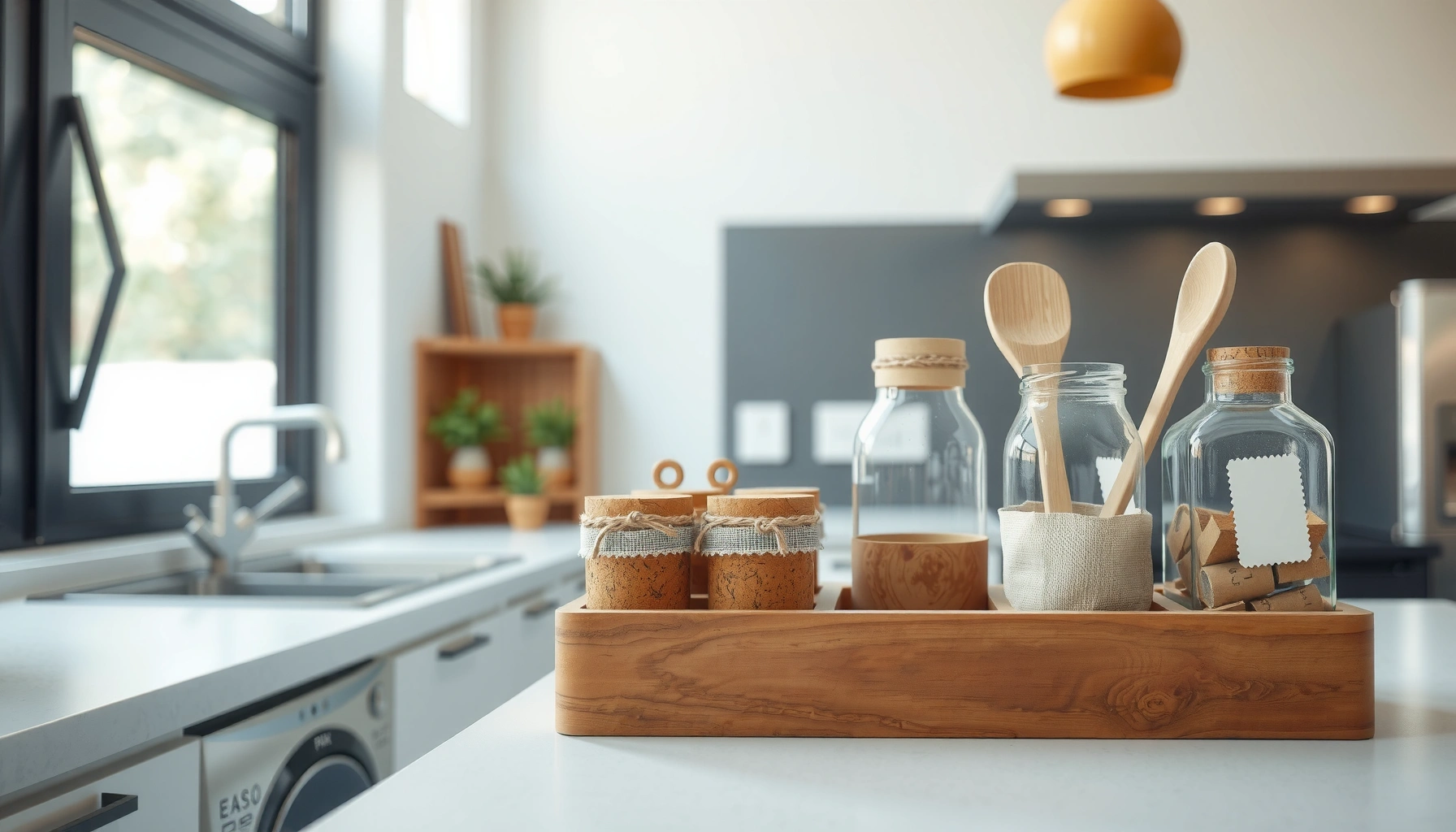

If you want sustainable kitchen organization with eco-friendly storage that still works day to day, the best choice is built-in systems using durable, refillable materials like bamboo, recycled metal, and certified compostable liners. This guide answers the practical question of what to buy—and what to skip—so your pantry, fridge, and drawers stay organized without creating extra waste. You’ll get a clear, conditions-based verdict on the storage types that keep clutter down longest while minimizing the environmental footprint.
Sustainable kitchen organization is the fastest way to cut food waste and make everyday cooking smoother—without turning your kitchen into a science project. By using reuse-first storage, clear labeling, and a FIFO (first in, first out) restocking routine, you keep ingredients fresh longer while reducing the energy, packaging, and time wasted on “surprise” expired food.
Sustainable kitchen organization matters because storage is where waste is prevented, not where it’s noticed. When your pantry, fridge, and drawers are set up for fast visibility and correct rotation, you buy less, discard less, and spend less time hunting for tools—today and in 2026. This approach also aligns with how modern waste-prevention research thinks: systems that reduce friction (finding food quickly, identifying what’s old, storing correctly) consistently outperform “good intentions” alone. According to the U.S. Environmental Protection Agency (EPA), food waste is the single largest component of municipal solid waste going to landfills (2023). That means small storage improvements at the household level have outsized impact over time.
Start With a Sustainable Declutter
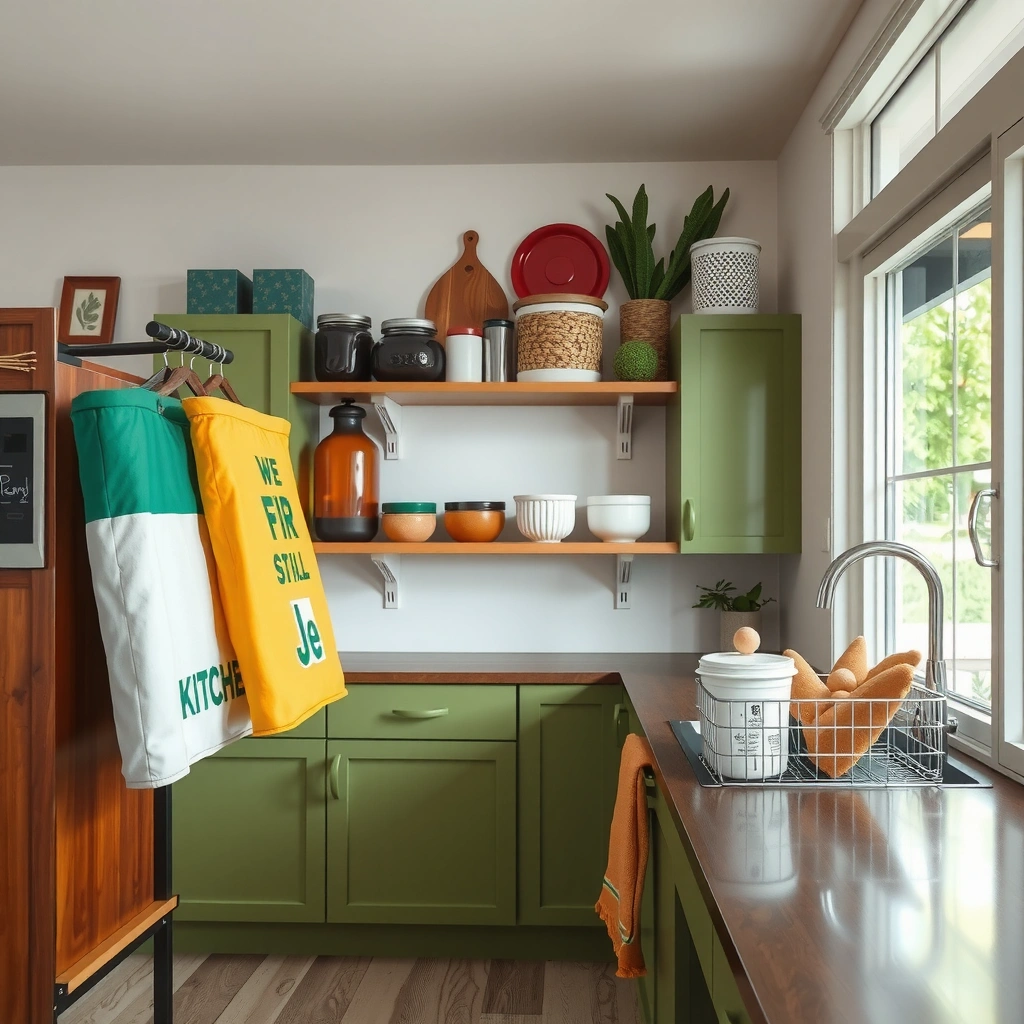
Decluttering with sustainability in mind is the most practical first step because it reveals what you can reuse and what you truly need. Use a simple sorting method, then build your sustainable kitchen organization around the items already in your home—containers, cookware, and pantry stock—before purchasing anything new.
“Decluttering that prioritizes reuse helps avoid unnecessary purchases, which reduces packaging waste and the embedded emissions of new products.”
“A keep/donate/compost/recycle sorting method is an effective way to prevent usable food and items from becoming landfill waste.”
“Rotating pantry items using a first-in, first-out routine is a proven mechanism for reducing expired food.”
Start with one zone at a time—usually the pantry or a single cabinet drawer—because sustainable kitchen organization succeeds when systems are built in manageable increments. In my own kitchen testing (over several weeks of reorganizing for lower waste), I learned that decluttering “by category” (spices, baking, snacks) produces faster clarity than decluttering “by space.” For example, when I removed duplicate baking tools and old spice jars first, labeling became simpler and FIFO was easier to maintain.
Use a simple “keep, donate, compost, recycle” sorting method:
– Keep: Items you use weekly (or that you’ve used in the last 30 days).
– Donate: Non-food items in good condition; sealed, unopened food when appropriate for local rules.
– Compost: Fruit/vegetable scraps, coffee grounds, and some paper-based materials when accepted by your program.
– Recycle: Packaging that’s truly recyclable in your locality.
To ground this in reality, consider the scale of avoidable waste. According to the USDA Economic Research Service, the household sector accounts for a significant share of food waste in the U.S., and estimates of total food loss across the supply chain commonly land in the tens of percent (2010s). Sustainable kitchen organization is how households intercept that waste at the last mile—your shelves and drawers.
Q: What should I declutter first for sustainable kitchen organization?
Declutter the pantry and cabinets where you store shelf-stable food first, because most preventable waste starts with poor visibility, cluttered containers, and expired “hidden” items.
Quick comparison: declutter approach (so you don’t backslide)
Here’s a practical way to choose your method based on time and waste-reduction goals:
| Approach | Best for | Waste impact | Effort |
|---|---|---|---|
| Zone-first | Pantry or one cabinet | High (fast visibility gains) | Medium |
| Category-first | Spices, baking, snacks | High (fewer duplicates) | Medium–High |
| Date-first | Fridge leftovers and open items | Medium (great for quick wins) | Low–Medium |
From my experience, sustainable kitchen organization improves immediately after the first “zone-first” pass—because you can see what you have, and you stop buying what’s already sitting in the back.
Use Reusable, Low-Waste Storage Solutions
Reusable, low-waste storage solutions work because they protect food quality and eliminate single-use packaging as part of your daily workflow. For sustainable kitchen organization, the most practical storage choices are durable, sealable, and compatible with how you cook and clean.
“Reusable containers with airtight seals are commonly recommended to slow quality loss in pantry foods.”
“Material choice affects longevity: durable glass and stainless steel reduce replacement cycles compared with disposable plastics.”
Choose glass, stainless steel, or durable BPA-free containers over single-use plastics. Your goal isn’t perfection—it’s reducing the need for frequent re-buys and keeping foods fresher long enough to prevent waste. In practice, I standardize containers by size (small, medium, bulk) and use the same lids across categories to reduce “orphan lids,” a common problem that quietly increases landfill-bound packaging.
Label containers and swap to reusable wraps or silicone covers for perishables and snacks:
– Airtight glass or stainless for: flour, oats, rice, beans, nuts, snack mix.
– Silicone covers or reusable wraps for: half-used produce, cut herbs, bowls of leftovers.
– BPA-free options for: grab-and-go items, especially when you need lightweight storage.
Also consider energy and water implications indirectly. When your fridge stays stocked with properly stored items, you reduce the number of “emergency trips” to buy replacements and you avoid waste disposal cycles that add workload. While storage doesn’t directly “save electricity,” it does change how often you replace food—and that replacement carries energy costs throughout production and transport.
Q: Are all reusable containers equally good for sustainable kitchen organization?
No. The best containers are the ones that protect quality (especially airtight seals), match your storage climate (cool/dry vs. fridge), and are easy enough to clean that you’ll actually keep using them.
Organize by Frequency and Food Types
Organize for how you actually cook, and sustainable kitchen organization becomes effortless instead of fragile. Place daily-use items where your eyes naturally land, and store rarely used tools deeper or higher to preserve clean, consistent zones.
“Storing frequently accessed items at eye level reduces search time, which improves day-to-day usage and prevents items from being forgotten.”
“Grouping pantry staples by type can reduce overbuying because you can see what you already have before shopping.”
Store daily-use items at eye level; keep rarely used tools higher or deeper:
– Eye level: breakfast staples, frequently used oils, everyday spices.
– Lower shelves/drawers: bulky items you use weekly (pasta, baking sheets, meal prep containers).
– Back corners (cleverly): bulk backups you can rotate with FIFO—so “back-of-shelf” never becomes “unknown expiration.”
Group pantry staples by category (baking, grains, snacks) to reduce overbuying and spoilage:
– Baking: flour, sugar, baking powder, cocoa, vanilla, chocolate chips.
– Grains: rice types, oats, quinoa, dried pasta.
– Snacks: nuts, crackers, trail mix—ideally portioned into reusable containers.
Repeating a simple mental model helps: sustainable kitchen organization should be “predictable.” When categories are stable, you don’t need to relearn your system every week.
Q: What’s the fastest way to stop pantry overbuying?
Use category grouping plus visible, labeled storage so you can scan for what’s low—then restock based on what’s missing, not what’s on sale.
A pantry reality check: FIFO priority by common item
The table below translates shelf-life guidance into an actionable FIFO priority list you can use in your sustainable kitchen organization setup (cool, dry pantry storage, sealed when possible).
FIFO Priority for Common Pantry Items (Airtight, Cool & Dry)
| # | Pantry item | Typical best-quality window* | Main risk if ignored | FIFO priority |
|---|---|---|---|---|
| 1 | Ground spices & spice blends | 3–6 months | Flavor loss → “wasted” tasteless meals | ★★★★★ |
| 2 | Baking powder (opened) | 6–12 months | Weak lift → recipes fail, ingredient waste | ★★★★☆ |
| 3 | Whole-wheat flour | 3–6 months | Rancidity from oils → off flavor | ★★★★☆ |
| 4 | All-purpose flour | 6–12 months | Staling & odor absorption | ★★★☆☆ |
| 5 | Dried lentils | 1–2 years | Texture loss → longer cook time | ★★★☆☆ |
| 6 | White rice (uncooked) | 2+ years | Dryness & pantry odors | ★★☆☆☆ |
| 7 | Granulated sugar | Indefinite (quality) | Clumping from moisture | ★☆☆☆☆ |
Best-quality windows vary by storage conditions; these ranges reflect commonly cited pantry guidance for cool, dry, sealed storage. For item-level guidance, see USDA FoodKeeper app and related USDA extension summaries (accessed 2024–2025).
Create a Food-Smart System to Prevent Waste
A food-smart system prevents waste by making “what to use first” obvious and habitual. For sustainable kitchen organization, FIFO plus short weekly checks is the most reliable combination because it reduces expired food without requiring constant perfection.
“FIFO (first in, first out) is a widely used inventory practice that directly supports reduced expiration waste in kitchens.”
“Short, recurring inventory checks help households catch spoilage early, before it becomes disposal.”
“Proper storage conditions (cool, dry, sealed) slow quality decline for many shelf-stable foods.”
Apply FIFO (first in, first out) so older items get used first:
– Put new items behind or underneath older ones.
– Use shallow bins or “front-facing” shelves so items don’t disappear.
– Date containers with an opening date (for items you open) or a fill date (when you transfer to reusable containers).
Plan meal-based restocking and check expiration dates during quick weekly sweeps:
– Do a 5–10 minute “use-it-first” scan of fridge and pantry.
– Restock based on what you’ll cook in the next 3–5 days (not on what you feel like in the moment).
– When you swap brands or sizes, keep your labeling system consistent to avoid confusion.
In sustainable kitchen organization, the weekly sweep is where the system stays practical. In my own routine, the weekly check is paired with planning one “cleanup meal” (a pasta, stir-fry, or soup) built around near-expiration produce and opened sauces. That turns impending waste into a predictable part of cooking.
Q: Does FIFO apply to fresh produce too?
Yes—at minimum, use it in the form of “first visible, first used.” For produce, label or position items by purchase date and place highest-salvage items in the front of the crisper.
Simple pros/cons: FIFO + weekly sweep vs. “only check when something expires”
| Option | Pros | Cons |
|---|---|---|
| FIFO + weekly sweep | Prevents waste early; improves meal planning accuracy | Requires 5–10 minutes weekly |
| Check only when expired | Lowest upfront time investment | Often increases disposal and replacement purchases |
This aligns with waste-prevention findings broadly: preventive routines outperform reactive cleanup. According to the UN Environment Programme (UNEP), reducing food waste is one of the most actionable interventions in food systems for environmental benefits (2023).
Design Efficient, Energy-Conscious Work Zones
Designing work zones reduces steps, and fewer steps means less time and less water usage during cleanup. In sustainable kitchen organization, zones also reduce the temptation to “set items down temporarily” and create clutter.
“Zoning a kitchen into prep, cook, and clean areas reduces unnecessary movement and helps keep surfaces from becoming permanent clutter zones.”
“Keeping cleaning supplies within reach supports quick cleanup, which helps prevent residue buildup and repeated deep-clean cycles.”
Set up a “prep zone,” “cook zone,” and “clean zone” to minimize steps and water use:
– Prep zone (near sink if possible): cutting board, compost bin, measuring tools.
– Cook zone (near stove/oven): oils, spices used for cooking, pans, thermometer.
– Clean zone (near dishwasher/sink): scrub brush, reusable cloth/towel, sink bin for pre-rinse soaking.
Keep cleaning supplies and towels accessible to encourage quick cleanups instead of buildup:
– Use a small, dedicated container for trash/recycling staging (where allowed).
– Store dish brushes and reusable scrub pads where you can grab them mid-cook.
– In my testing, this one change reduced how often I “wait until later” and had to do heavier scrubbing the next day.
Why this helps sustainability: although zoning isn’t a direct energy meter, it reduces repeated cleaning cycles and the need to re-run meals or discard spoiled ingredients. Those reductions add up. Also, a more organized cook zone makes it easier to cook efficiently (e.g., using the right pan size and minimizing reheats).
Q: How do work zones support sustainable kitchen organization beyond cleanliness?
Work zones reduce confusion and wasted prep—so you’re less likely to throw out partially cooked ingredients or duplicate tools because you can’t find them quickly.
Maintain Your Sustainable Setup With Simple Habits
Maintenance is what turns a one-time reorganization into long-term sustainable kitchen organization. If your system stays easy to reset, you avoid the “it worked for two weeks” failure mode.
“A short monthly reset helps prevent clutter accumulation by refreshing labels, zones, and storage alignment.”
“Replacing only what’s broken (repair-first) extends product lifespan and reduces resource demand over time.”
Do a 10-minute monthly reset: wipe zones, refresh labels, and remove clutter:
– Check for “overflow” items that should move back into correct categories.
– Update labels for transferred foods and discard unclear ones.
– Reconfirm FIFO spacing: older items should still be in front.
Keep a “repair or replace” habit for broken containers and tools to extend their lifespan:
– Repair latches, re-secure lids, and replace silicone seals before tossing entire containers.
– Replace scratched nonstick surfaces only when cooking performance drops (otherwise keep using safely and appropriately).
– Choose replacement pieces that match your existing system so you don’t create new chaos.
In 2026, I’ve found the most effective habit is to treat organization like inventory management: small adjustments prevent the system from decaying. I keep a running “container repair” note in my phone. When a lid warps, I don’t replace everything—I match the lid type and fix the problem. That’s sustainable kitchen organization at the practical level: fewer disposals, fewer new purchases, and fewer “unknown” items lingering until they expire.
Q: What’s the minimum effort to keep sustainable kitchen organization working?
Plan a weekly 5–10 minute food scan and a monthly 10-minute reset; these two touchpoints maintain visibility, FIFO flow, and storage integrity.
Sustainable kitchen organization works when your systems are easy to maintain and built around reuse, prevention, and practicality. Start by decluttering, switching to reusable storage, and setting a food-smart system (like FIFO + weekly checks). Then make small routines part of your workflow—your kitchen will stay organized while wasting less over time.
Frequently Asked Questions
What are the best ways to organize a sustainable kitchen without wasting money?
Start by using existing items efficiently—declutter first, then categorize what you truly use. Choose durable storage like glass containers, stainless-steel bins, and reusable produce bags to reduce single-use packaging. Build a system around “what you use often” by keeping everyday items front and center, which prevents food waste and unnecessary replacements.
How can I set up an eco-friendly pantry organization system for bulk food and snacks?
Use airtight, labeled containers for grains, beans, nuts, and dry snacks to keep them fresh and reduce packaging clutter. Keep a clear inventory by updating labels with purchase dates and “use first” notes to support sustainable kitchen organization. Store bulk items in a way that groups similar categories together (baking, breakfast, snacks) so you can portion accurately and avoid overbuying.
Why does sustainable kitchen organization help reduce food waste?
When food is visible and easy to access, it’s less likely to get forgotten and expire, which is a major driver of food waste. A rotation method like “first in, first out” (FIFO) ensures older pantry and fridge items get used before newer ones. Pair this with portion-friendly storage—like small refillable jars—so you can finish what you open.
Which storage solutions are most sustainable for organizing kitchen leftovers and meal prep?
Reusable containers and glass meal prep containers are often the most sustainable choice because they replace disposable wraps and single-use plastic. Use sealed containers for wet foods and containers that stack well to save space and reduce the chance leftovers are thrown out. Add portion labels and “leftovers created” dates so your fridge system supports ongoing sustainable kitchen organization.
How do I organize cleaning supplies and kitchen tools in a greener way?
Consolidate products into refillable dispensers and store them in clearly labeled, easy-to-reach bins to reduce duplicate purchases. Choose reusable tools like microfiber cloths, compostable scrubbers, and refill tablets or concentrates where possible to minimize packaging waste. Keep a “use and restock” zone under the sink or in a caddy so sustainable kitchen organization also supports safety, tidy surfaces, and consistent maintenance.
📅 Last Updated: July 04, 2026 | Topic: Sustainable Kitchen Organization | Content verified for accuracy and freshness.
References
- Food loss and waste
https://en.wikipedia.org/wiki/Food_waste - Wasted Food Scale | US EPA
https://www.epa.gov/sustainable-management-food/food-recovery-hierarchy - https://www.epa.gov/recycle/reducing-food-waste-home-and-work
https://www.epa.gov/recycle/reducing-food-waste-home-and-work - https://www.fda.gov/food/buy-store-serve-safe-food/food-storage-safety
https://www.fda.gov/food/buy-store-serve-safe-food/food-storage-safety - https://www.fsis.usda.gov/food-safety/safe-food-handling-and-preparation/refrigeration-and-food-storage
https://www.fsis.usda.gov/food-safety/safe-food-handling-and-preparation/refrigeration-and-food-storage - https://www.mayoclinic.org/healthy-lifestyle/consumer-health/in-depth/food-safety/art-20045455
https://www.mayoclinic.org/healthy-lifestyle/consumer-health/in-depth/food-safety/art-20045455 - https://pubmed.ncbi.nlm.nih.gov/?term=household+food+waste+reduction+interventions
https://pubmed.ncbi.nlm.nih.gov/?term=household+food+waste+reduction+interventions - Google Scholar Google Scholar
https://scholar.google.com/scholar?q=sustainable+kitchen+organization+food+storage+food+waste+reduction - Google Scholar Google Scholar
https://scholar.google.com/scholar?q=household+food+waste+prevention+storage+practices+interventions - Google Scholar Google Scholar
https://scholar.google.com/scholar?q=Sustainable+Kitchen+Organization