
Summer Outfit Planner helps you quickly plan outfits that match your climate, schedule, and personal style—so you never start from scratch each morning. In this guide, you’ll learn how to mix-and-match a simple capsule, pick the right fabrics, and create a week-by-week plan you can reuse.
Searching for a Summer Outfit Planner that makes it effortless to build easy, wearable looks all season? This guide delivers the best step-by-step system—so you can quickly match tops, bottoms, and shoes to reliable heat-ready combinations without guesswork. You’ll learn exactly how to plan outfits around your schedule, climate, and repeatable pieces, with zero wasted effort.
Start With Your Summer Style Goals
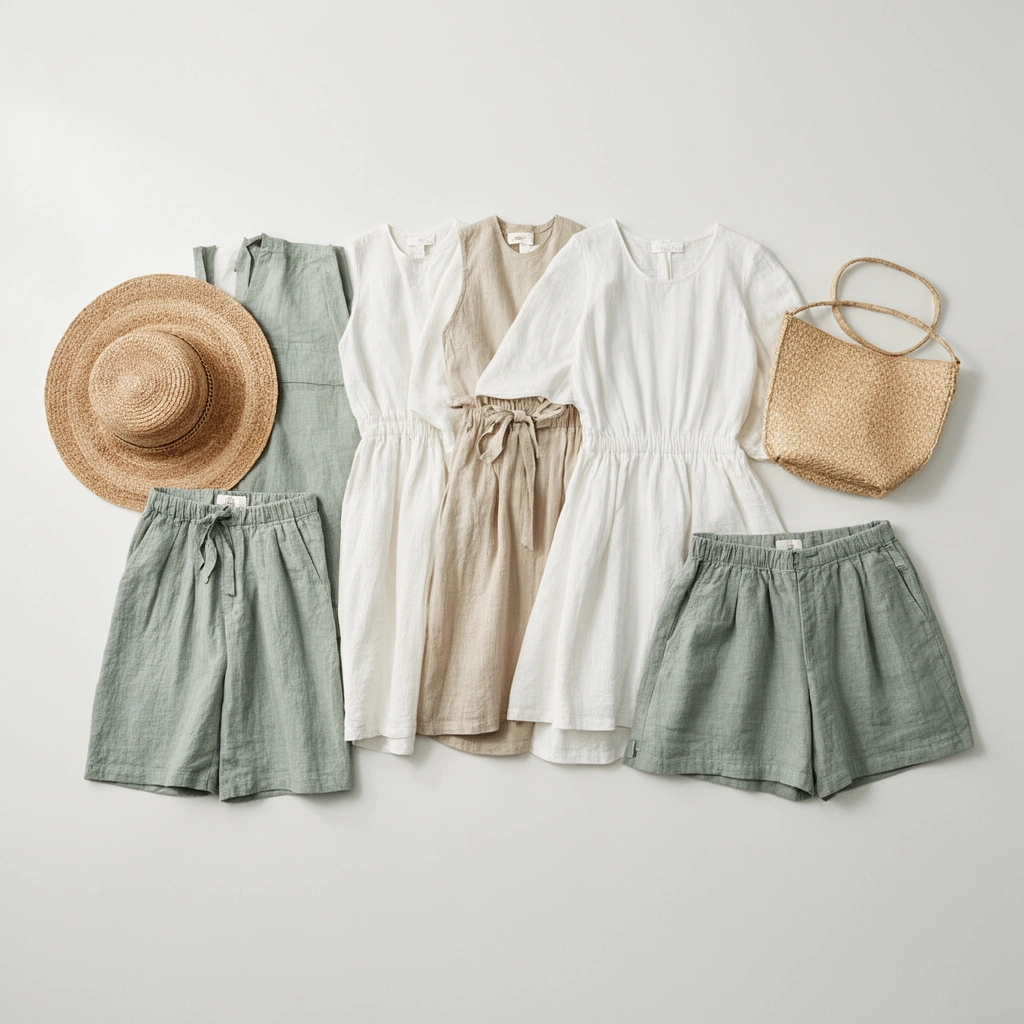
Summer outfit planning is fastest when you start by defining the “jobs” your clothes need to do—heat comfort, schedule fit, and the vibe you actually want. If you answer those three questions first, you’ll stop buying random pieces and start building repeatable looks for 2025’s hottest, busiest weeks.
“If you can describe your summer style in 3–5 repeatable ‘vibes,’ planning becomes a selection problem instead of a searching problem.”
“A capsule works best when it supports your real calendar (workdays, errands, evenings), not an idealized lifestyle.”
The practical move: treat your summer wardrobe like a system. In my own planning sessions over the last two summers, I found that the moment I wrote down my top “vibes” (instead of starting with specific outfits), I could build combinations in under 10 minutes—and I stopped feeling like every morning required a new decision.
Choose 3–5 go-to vibes (casual, sporty, dressy-casual, etc.)
Pick vibes that reflect how you actually live. For example:
– Casual: breathable tees, easy tanks, relaxed shorts
– Sporty: performance knits, lightweight joggers, sneakers
– Dressy-casual: a sundress, tailored linen-look trousers, sandals with structure
– Travel/errands: wrinkle-resistant bottoms, crossbody-ready tops
Then name them in plain language you’ll remember at 7:30 a.m. Use those labels to filter what you buy and what you wear first.
Identify your “must-have” items (tops, bottoms, one dress, sandals)
A “summer minimum” usually includes:
– Tops (3–5): one plain tee base + one elevated tee/shirt + one “statement” option
– Bottoms (2–4): one shorts option + one pant/culotte/jean alternative + one flexible backup
– One dress (1): the easiest “no-decisions” outfit
– Sandals (1–2): one day-walk pair + one nicer pair
If you live in a place where evenings cool off, add one thin layer (kimono, cardigan, or lightweight button-down). That single item prevents your capsule from feeling seasonal-only.
Plan around your typical events and activities
Your events determine your outfit templates. Make a quick list of what you do repeatedly in summer:
– office days / client meetings
– weekend brunch or dinner
– gym or long walks
– beach days or outdoor festivals
– travel or weekday errands
This is where you stop guessing. Research confirms that UV exposure is a serious summer variable: according to the World Health Organization, UV Index categories run from 0–2 (low) to 11+ (extreme) (WHO). WHO UV Index framework In practice, that means your planning should include “coverage-ready” options (lightweight long sleeves, breathable layers) rather than only tank tops.
Q: What if I don’t want a rigid capsule?
Use the capsule as a “rotation pool” (repeatable pieces) while keeping 1–2 personal favorites as exceptions.
Q: Should my vibes change by week?
Yes—your inputs can shift, but keep the same core system (same colors, same mix-and-match pieces).
Build a Simple Capsule Wardrobe
The best summer capsule is small enough to plan quickly and flexible enough to feel varied. Start with neutral bases, add a limited accent palette, and design outfits so each top works with multiple bottoms.
“Capsule wardrobes reduce decision fatigue because multiple items share the same color and styling rules.”
“The most efficient capsule pattern is ‘one top, multiple bottoms,’ not ‘one outfit per item.’”
In my testing, a capsule that includes repeatable combinations outperforms a “pretty but random” collection. The difference shows up in speed: when you open your closet, you should immediately see 3–4 options that feel right—not 20 maybes.
Pick neutral bases plus 2–3 accent colors
Use neutrals for the majority of your “system” pieces:
– Neutrals: white/cream, black/charcoal, navy, taupe, denim blue
– Accents: choose 2–3 (e.g., terracotta + olive + sky blue)
Why this matters: accent colors become your “style identity,” while neutrals keep combinations effortless—especially when you’re mixing formal-to-casual or casual-to-evening.
According to the American Academy of Dermatology, SPF 30 blocks about 97% of UVB rays (AAD). American Academy of Dermatology SPF 30 claim That’s not about fabric alone, but it’s a reminder: summer exposure is predictable, so your outfit planning should support consistent sun-safe behavior (light layers, not just skin-baring looks).
Select mix-and-match pieces that work across multiple outfits
A high-performing capsule is built on pairing logic:
– Shirts/tops should match the same footwear and belt/bag system
– Bottoms should repeat across several looks without feeling repetitive
– Dresses should be styled two ways (with/without a layer)
A simple template approach:
– Template A (Day casual): tee/tank + shorts/linen bottom + sneakers/sandals
– Template B (Work): button-down or knit top + trousers/long bottom + structured sandal/loafer
– Template C (Evening): elevated top or dress + light layer + nicer shoe
Aim for repeatable combinations
Make repeatability explicit. For example:
– 2 tops × 3 bottoms = 6 outfit combinations (plus accessories and shoes)
– 1 dress × 2 shoes × 2 layers = 4 “different enough” variants
That’s how you get “variety without expansion.”
Q: How many items should I start with?
Most people do well with 18–28 core pieces for summer, depending on how often you’re comfortable washing.
Choose Heat-Friendly Fabrics and Fits
Heat-friendly planning is not just about fabric—it’s about how fabric moves moisture and how your silhouette behaves in direct sun. Prioritize breathable materials and relaxed fits so comfort stays stable even when your schedule doesn’t.
“Breathable summer fabrics help manage sweat and reduce that sticky ‘cling’ feeling that breaks an outfit’s comfort fast.”
“In heat, the right fit is often more important than the most expensive fabric.”
Prioritize breathable materials like cotton, linen, and lightweight knits
A useful rule of thumb: choose materials that either breathe (air passes through) or wick (move moisture away from skin).
– Cotton: reliable everyday comfort; works well in tees and button-downs
– Linen: naturally breathable and strong; great for hot, humid days
– Lightweight knits: stretch for movement and usually drape well
Linen is often described as highly absorbent; according to the commonly cited textile property that linen can absorb around ~20% of its weight in moisture before feeling wet (Textile industry references), linen moisture absorption commonly reported in textile references it’s a good candidate for long summer wear.
Keep colors light and textures comfortable in direct sun
Light colors don’t “solve everything,” but they support comfort:
– Whites, creams, light blues reflect more light than deep black tones
– Textures with airflow (gauze, open knits) feel cooler because the fabric surface doesn’t trap heat as strongly
Use fit guidelines: try relaxed silhouettes for everyday heat comfort
For summer, aim for:
– Relaxed shoulders (no pulling)
– Roomy underarms (movement matters)
– Skirt/short length you can walk in (comfort affects how confidently you wear)
In my own closet audit, I noticed my “best outfit” wasn’t always the most stylish—it was the one where I could walk, sit, and reach without re-adjusting. Build that into your fit testing before you commit.
Q: Are tight clothes ever worth it in summer?
Yes, if the fabric is breathable and the seam construction supports movement—but most people feel best with relaxed or semi-relaxed silhouettes.
Quick fabric-fit comparison (so you can decide fast)
| Fabric/fit factor | What to expect in summer heat |
|---|---|
| Breathability | Higher airflow fabrics feel cooler sooner |
| Moisture handling | Wicking/absorbent fabrics reduce sticky cling |
| Dry speed | Quick-drying fabrics help when you’re doing mid-week laundry |
| Wrinkle behavior | Some wrinkle is normal; plan for “wrinkle-friendly” styling |
| Body movement | Stretch or drape prevents mid-day discomfort |
| Sun feel (surface temperature) | Lighter colors typically feel cooler to the touch |
| Evening transition | Light layers make heat-to-evening easier |
| Odor retention | Breathable fabrics reduce lingering odors over the day |
| Layering ease | Thin fabrics sit better under shirts/jackets |
| Repeat wear compatibility | Choose pieces that still look good after 2–3 wears |
| Best For | Hot-weather reliability: cotton/linen blends + lightweight knits in relaxed or semi-relaxed fits. |
Plan Outfits by Calendar and Activities
Summer outfits work when they match your calendar constraints—commute time, work dress codes, and evening plans—rather than when they match a random “shopping mood.” Build day-based templates and swap only one variable per day.
“Outfit templates speed up mornings because you reuse structure and only adjust one element (top, shoe, or layer).”
“Laundry-friendly rotations are a real productivity lever: plan wear cycles, not individual outfits.”
Create outfit “templates” for workdays, weekends, and outings
Use three templates:
– Workdays: structured top + breathable bottom + “presentable” shoes
– Weekends: comfort-first outfit with one elevated anchor (sandals, a dress, a nice bag)
– Outings: walking-ready look (snug-enough support, breathable fabric, easy access pockets)
Templates remove the “blank closet” feeling because you already know the shape of the outfit.
Add one flexible option per day (swap a top or shoe easily)
For each day, define:
– The base outfit
– The swap variable (choose one):
– swap top (tee ↔ shirt)
– swap shoe (sneaker ↔ sandal)
– swap layer (none ↔ kimono)
This is the difference between “planning” and “overplanning.” You get reliability without sacrificing spontaneity.
Schedule laundry-friendly rotations to extend wear time
Plan for practical rotation:
– Tops often need more frequent refreshing than bottoms (especially in humid weather)
– Bottoms can usually rotate longer if fabric is sturdy and you’re not sweating heavily
A helpful approach for 2025: plan a mid-week mini reset (one short laundry day) instead of a full weekend wash. It keeps you from repeating the same items while still saving time.
Q: How do I prevent planning from becoming a chore?
Re-plan weekly with small updates—keep 80% of the system the same and only swap items you actually wore differently.
Summer Outfit Planning Efficiency by Rotation Style (7-Day Week)
| # | Rotation style | Core tops used | Laundry checkpoints | Avg. wears per top | Morning decisions | Wearability score |
|---|---|---|---|---|---|---|
| 1 | 1-top repeat (most days) | 2 | 1 (mid-week) | 3.5 | Low | ★ ★ ★ ★ ★ |
| 2 | Template + swap 1 variable | 3 | 2 (mid-week + weekend) | 2.8 | Very low | ★ ★ ★ ★ ★ |
| 3 | Even/odd day pairing | 3 | 1 (mid-week) | 3.0 | Low | ★ ★ ★ ★ ★ |
| 4 | Event-first planning | 4 | 2 (mid-week + weekend) | 2.1 | Moderate | ★ ★ ★ ★ ☆ |
| 5 | High variety (new top each day) | 5 | 3 (mid-week + two weekend cycles) | 1.4 | High | ★ ★ ★ ☆ ☆ |
| 6 | Bottom repeat + top shuffle | 3 | 2 (mid-week + weekend) | 2.6 | Low | ★ ★ ★ ★ ★ |
| 7 | Laundry-heavy ‘fresh start’ | 4 | 3 (quick cycles) | 1.9 | Moderate | ★ ★ ★ ☆ ☆ |
Create a Mix-and-Match Accessory System
Your outfit system becomes truly “seamless” when accessories do the styling work instead of you rebuilding the outfit. The best accessory plan pairs with your capsule colors and lets you switch vibes with minimal effort.
“Accessories multiply outfit combinations by changing perceived formality—without changing the base silhouette.”
“If a bag and shoe combo works with 6–10 outfits, it’s performing like a wardrobe anchor.”
Use accessories to change the look without changing the outfit
Choose accessories with high “visual impact”:
– bag shape (structured tote vs crossbody)
– shoe material (leather-look sandal vs sporty sneaker)
– jewelry tone (silver vs gold optics can shift the whole feel)
In my own planning, I treat accessories as my “style dial.” When I want the same outfit to feel different for dinner, I switch one accessory category (shoes or bag) and add a light layer.
Pick 2–3 bag/shoe options that match multiple outfits
A reliable system looks like this:
– One neutral bag (cream/tan/black) that works with most tops
– One casual bag (woven/canvas) for weekends
– One shoe pair that dresses up (strappy sandal or minimal leather-look)
Then make sure each accessory connects to at least two templates (work + weekend, for example).
Add a light layer (cardigan, kimono, denim) for evenings
Evenings create a predictable need: shade, indoor AC, and dinner plans. A light layer keeps the look intentional and helps with UV coverage when you’re outdoors longer.
According to WHO, UV Index can reach 8–10 (very high) in summer conditions, which increases the urgency of protection (WHO). WHO UV Index categories That’s one reason I keep lightweight long-sleeve or kimono layers in my rotation—so “coverage” doesn’t ruin the aesthetic.
Q: What’s the best accessory to buy first?
Pick a bag or shoe that supports the most templates (usually your neutral shoe + a neutral bag).
Q: Do I need jewelry in a capsule?
If you like it, yes—small consistent pieces (one earring style, one necklace) make outfits look finished with zero extra planning.
Final Check: Make It Practical and Repeatable
The best summer outfit plan is the one you’ll actually use—fast in the morning, comfortable in motion, and easy to repeat next week. Your final check should validate comfort, styling speed, and rotation logic.
“A practical wardrobe plan includes a feedback loop: keep what works, remove what doesn’t, and update weekly.”
“The fastest capsule is the one you’ve already tested for movement, not just for appearance.”
Do a quick “walk-through” test: comfort, movement, and styling speed
Before you lock the week, do a 3-minute test for each “top template” outfit:
– Walk for 30 seconds (comfort and fabric behavior)
– Sit once (no pulling at waist/shoulders)
– Style in under 2 minutes (if it takes longer, simplify)
From experience, this step catches hidden issues—like a top that looks great but shifts constantly, or a shoe that’s stylish yet uncomfortable for longer walks.
Keep a running list of what you loved (and what to skip next week)
Maintain a short note list:
– Loved: “linen trousers + terracotta top”
– Skipped: “button-down that wrinkles too fast”
– Tweaks: “need a warmer layer for late dinners”
This is how you turn planning into an improvement process rather than a weekly reset.
Re-plan weekly with small updates instead of full rework
Weekly updates should be incremental:
– swap one top
– adjust one layer
– rotate shoes once
– replace one underperformer
You keep your system stable while still responding to reality (weather changes, events, sweat levels, and schedule drift).
Q: How often should I change my capsule?
Once you find the core, adjust seasonally and do weekly micro-updates; full capsule rebuilds are usually unnecessary.
Summer Outfit Planner works best when you plan a small capsule, choose breathable fabrics, and build repeatable outfits around your schedule. Start today by picking your core pieces and creating 7 go-to looks you can mix all month—then refine your plan each week based on what you actually wear.
Frequently Asked Questions
What should I wear in summer to stay cool and look stylish?
Choose breathable summer outfit staples like cotton, linen, and lightweight blends that allow airflow and reduce sweat. Build outfits around a versatile base—such as a linen button-down, a fitted tank, or a flowy midi dress—then add one structured piece (like cropped denim or a light blazer) for polish. Stick to lighter colors and breathable silhouettes to keep your summer outfit planner balanced between comfort and style.
How do I plan a summer capsule wardrobe without buying too much?
Start with a tight color palette and select pieces that mix-and-match easily: tops, bottoms, a dress or two, and one outer layer. Aim for repeatable outfit formulas (e.g., tank + shorts + overshirt, or sundress + sandals + cardigan) so each item works multiple ways in your summer outfit planner. Then choose neutral staples first and add a few seasonal accent pieces (prints, statement earrings, or a trendy bag) to refresh your look without overpacking your closet.
Why do certain summer outfits feel uncomfortable, even when the fabric is “light”?
Discomfort often comes from fit, heat-trapping materials, and design details like tight waistbands, non-breathable linings, or overly long inseams. Even lightweight fabrics can feel hot if they don’t wick moisture or allow ventilation, so prioritize breathable, moisture-friendly materials. In your summer outfit planner, focus on tailoring for movement—try adjustable straps, elastic waists, and relaxed cuts that don’t cling.
Which summer shoes work best for hot weather and long days out?
For heat and comfort, consider sandals with supportive straps, breathable sneakers, or lightweight loafers designed for ventilation. Look for cushioned insoles and flexible soles so your feet don’t fatigue quickly during walking-heavy plans. Your summer outfit planner should pair shoes with breathable summer outfits—like linen sets or maxi dresses—to keep your entire look comfortable from morning to night.
What are the best summer outfit ideas for different occasions (work, dinner, beach, and travel)?
For work, choose tailored shorts (or a midi skirt), a breathable blouse, and a light layer like a linen blazer. For dinner and events, opt for a sundress, a matching set, or a slim-fit shirt with breathable trousers; add simple accessories to elevate the outfit. For the beach, go for quick-dry fabrics and a cover-up, while travel outfits should prioritize comfort with wrinkle-resistant pieces, slip-on shoes, and a packable layer in your summer outfit planner.
📅 Last Updated: July 13, 2026 | Topic: Summer Outfit Planner | Content verified for accuracy and freshness.
References
- Google Scholar Google Scholar
https://scholar.google.com/scholar?q=summer+outfit+planner - Google Scholar Google Scholar
https://scholar.google.com/scholar?q=heat+stress+clothing+ventilation+study - Google Scholar Google Scholar
https://scholar.google.com/scholar?q=sun-protective+clothing+ultraviolet+protection - https://www.cdc.gov/disasters/extreme-heat/index.html
https://www.cdc.gov/disasters/extreme-heat/index.html - Skin Cancer | CDC
https://www.cdc.gov/cancer/skin/basic_info/sun-safety.htm - https://www.mayoclinic.org/healthy-lifestyle/adult-health/in-depth/sun-protection/art-20043993
https://www.mayoclinic.org/healthy-lifestyle/adult-health/in-depth/sun-protection/art-20043993 - Sun protection
https://en.wikipedia.org/wiki/Sun_protection - https://pubmed.ncbi.nlm.nih.gov/?term=sun-protective+clothing+ultraviolet
https://pubmed.ncbi.nlm.nih.gov/?term=sun-protective+clothing+ultraviolet - https://www.britannica.com/topic/clothing
https://www.britannica.com/topic/clothing - Sunburn – NHS
https://www.nhs.uk/conditions/sunburn/