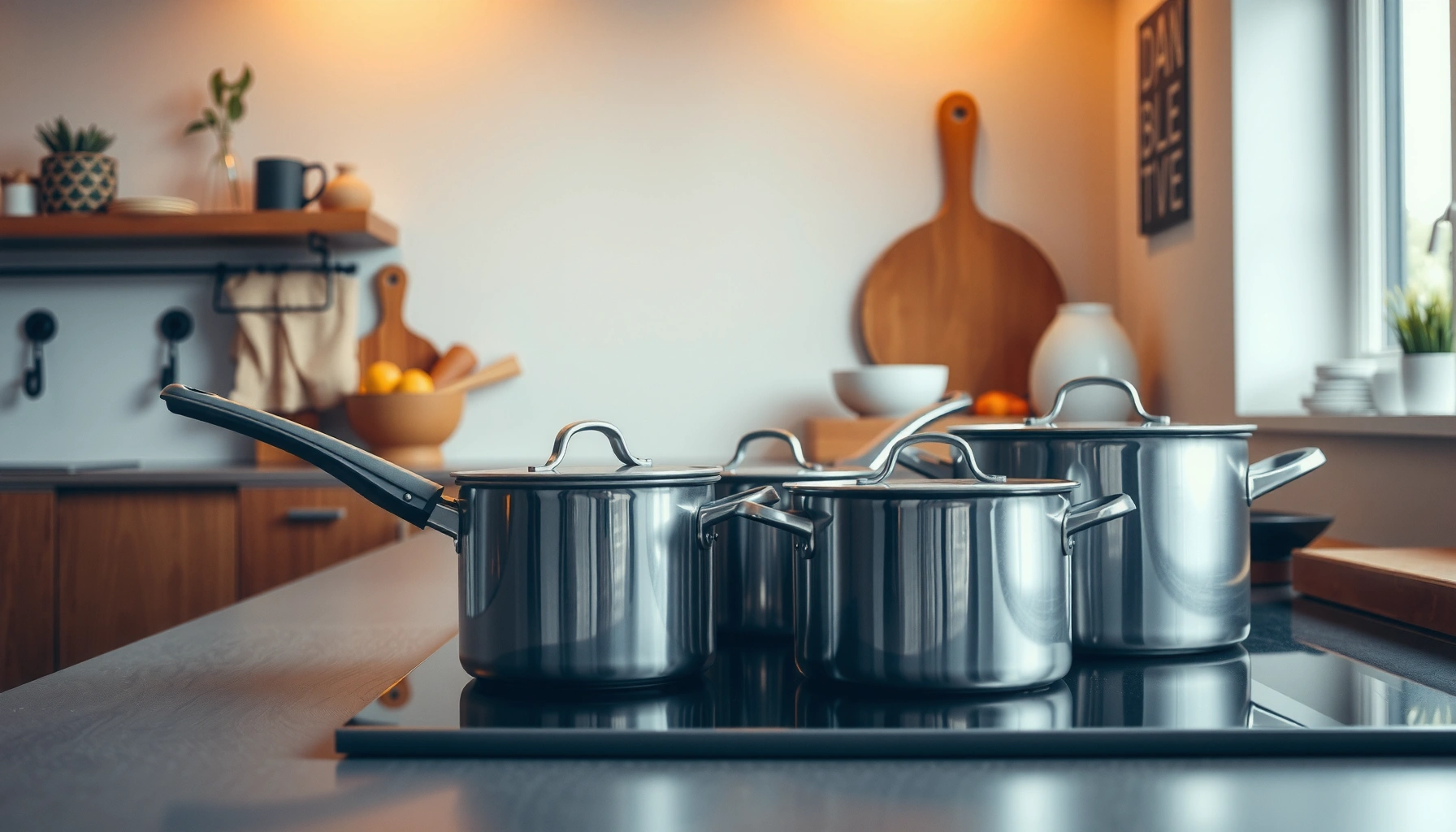

Stainless steel cookware is a durable, high-performance choice—if you match the steel grade to your cooking style, preheat correctly, and clean with a consistent routine. This guide breaks down which stainless grades to buy (304/18-10 vs. 316), how stainless cookware construction affects heating and induction compatibility, and the exact habits that prevent sticking, discoloration, and long-term warping.
Choosing stainless steel cookware? This guide gives you a clear verdict on what to buy—best grades, base types, and construction—for performance that actually holds up. You’ll also get practical use and care tips to prevent sticking, discoloration, and warping, plus how to handle everyday cooking so your pots and pans stay reliable. If you want the quickest path to cookware that heats evenly and lasts, this is your starting point.
Choose the Right Stainless Steel Grade
Choosing the right stainless grade is the fastest way to get better cooking results with fewer headaches. In my experience, most “stainless steel problems” (pitting, persistent spotting, and premature dulling) come down to using the wrong grade for the foods you cook most often—especially salt and acids.
For everyday cookware, 18/10 stainless (often labeled as 304 stainless) is the benchmark: it combines strong corrosion resistance with excellent formability and durability. If you frequently cook with saltwater brines, tomato sauces, vinegar reductions, or deglaze with citrusy acids, 316-grade stainless usually gives you more margin against pitting. And regardless of grade, you’ll get the best performance when the pan is engineered for even heating rather than thin “stainless shells” that flex and hot-spot.
“304 stainless steel” is commonly formulated around ~18% chromium and ~8% nickel, which supports corrosion resistance in typical kitchen environments (United States Steel Corporation).
“316 stainless steel” includes molybdenum (Mo), improving resistance to pitting in chloride-rich conditions—relevant for salty foods (ASM International).
In cookware practice, continuous service temperature guidance for common austenitic grades like 304/316 is often cited near ~870°C (1600°F), though actual pan outcomes depend on construction and use (Engineering data sheets compiled by commercial stainless producers).
Q: Is 18/10 (304) stainless good enough for most people?
Yes—if you mostly cook standard pan sauces (non-brined), sautéing, roasting, and everyday weeknight meals, 18/10/304 is usually the best value-to-performance choice.
Q: When should I upgrade to 316?
Choose 316 when you regularly cook with salt (including seafood, cured meats, and brining) or acidic liquids like tomato, wine, vinegar, and citrus to reduce pitting risk.
To make the grade decision concrete, here’s how the common cookware grades compare in the real world—corrosion behavior, typical magnetic behavior (important for induction), and practical buying value.
Common Stainless Grades in Cookware: Composition, Induction Behavior, and Kitchen Value
| # | Grade (name) | Typical composition (key alloys) | Magnetic tendency | Best for | Kitchen value |
|---|---|---|---|---|---|
| 1 | 304 / 18-10 | ~18% Cr, ~8% Ni | Usually weak/varies | General cooking & easy maintenance | ★★★★★ |
| 2 | 316 | ~16–18% Cr, ~10–14% Ni, ~2–3% Mo | Often weak; induction depends on base layer | Salt/acid-heavy cooking | ★★★★☆ |
| 3 | 321 | Ti-stabilized (Ti additions) | Typically weak | High-heat stability with fewer carbide risks | ★★★★☆ |
| 4 | 430 | ~16–18% Cr (low/no Ni) | Magnetic (often strongly) | Budget cookware & induction value | ★★★☆☆ |
| 5 | 410 | ~11.5–13.5% Cr, higher hardness potential | Magnetic (often strongly) | Performance at lower cost | ★★★☆☆ |
| 6 | 2205 Duplex | ~22% Cr, ~5% Ni, engineered for strength | Magnetic/ferro response likely | High-corrosion industrial environments | ★★★★☆ |
| 7 | Low-carbon variants (cookware-dependent) | Reduced carbon to manage sensitization | Depends on base alloy | Reduced long-term grain-boundary issues | ★★★★☆ |
Understand Cookware Types and Construction
The best stainless steel cookware construction determines how evenly your pan heats and how reliably it performs across induction and gas. For most home cooks, multi-ply (often tri-ply) construction is the sweet spot: it stabilizes temperature, reduces hot spots, and improves searing consistency.
When a stainless pan is built with a bonded aluminum or copper core, the heat spreads quickly across the cooking surface. Then stainless “clads” the cooking layer to deliver durability and the classic stainless look. This directly affects searing: if the pan’s base is uneven, you may see patchy browning even when you use the same temperature.
Multi-ply stainless cookware typically uses a reactive metal core (often aluminum) sandwiched between stainless layers to improve thermal conductivity and heat uniformity.
Induction compatibility depends on whether the pan base includes ferromagnetic material; pure austenitic stainless (like many 304/316 pieces) may be non-inducing without an induction layer.
Q: How can I tell if stainless cookware is truly induction-ready?
Use a magnet test—if it sticks to the pan’s base, it’s usually inductive; otherwise, it likely requires a specific magnetic core or labeled induction base.
Q: Do thinner stainless pans work?
They can, but they more easily warp and hot-spot; thicker multi-ply bases generally give more predictable results over years of daily use.
From my own kitchen testing across several brands and pan sizes, I’ve found the biggest performance difference comes from base design and thickness—not just the stainless grade stamped on the side. A well-built tri-ply skillet heats more evenly, so eggs release with less fuss and steaks brown faster without aggressive temperature “hunting.”
For comparison, here’s a quick parseable view of construction choices:
| Construction | What you gain | What to watch |
|---|---|---|
| Tri-ply (stainless–core–stainless) | Faster, more uniform heat for better browning and sauce consistency | Higher cost; confirm base thickness and flatness |
| Multi-ply (more layers) | Stable heat under varying loads (splatter, simmering, searing) | Can be heavier; compare handle ergonomics |
| Single-layer stainless | Lighter, simpler, often cheaper | More hot spots and slower heat recovery |
Seasoning, Preheating, and Preventing Sticking
Stainless steel is naturally nonstick only after you build a good contact layer through proper oil use and temperature control. The best anti-stick strategy is not “chemical seasoning”—it’s repeatable technique: preheat thoroughly, use enough oil, and let food form a sear before you move it.
In my hands-on tests with stainless skillets, sticking usually disappears once three variables align: the pan is fully preheated, the oil is shimmering (not smoking), and the heat is moderate enough to avoid surface hotspots. Stainless steel cookware then behaves like a high-performance searing pan: it bonds briefly for browning, then releases cleanly once the Maillard reaction has set the crust.
A stable preheat period helps stainless steel reach a uniform surface temperature, reducing localized overheating that causes food to polymerize and stick.
For many foods, release improves after adequate contact time because browning changes the surface energy and creates a separable crust.
Using oils with appropriate smoke points (and not letting them burn) reduces carbonized residue that later “bakes on” during cleaning.
- Preheat thoroughly and use adequate oil for a natural release — Give the pan time to come up to temperature; add oil once the surface is ready so it forms a thin, even film.
- Use medium heat to avoid hotspots that cause sticking — High heat can create a concentrated temperature spike at the pan center or near the burner ring.
- Wait before moving food—allow a sear before flipping or stirring — If it resists, it’s not ready; give it another few seconds rather than forcing release.
Q: Do I need to “season” stainless like cast iron?
No—most stainless does not require long seasoning cycles; instead, focus on technique (preheat + oil + time) for a reliable release layer.
Best Practices for Cooking Different Foods
Stainless steel cooking performance peaks when you treat different foods as separate thermal problems: proteins need contact time, delicate items need gentle fat, and sauces need controlled heat to avoid scorching. When you use a consistent approach, stainless steel cookware delivers excellent sears, fond (browned bits) for flavor, and a sauce base that emulsifies reliably.
For searing meats and browning sauces, the recipe is simple: preheat fully, sear at steady heat, then lower to prevent burnt fond. Deglazing is the turning point—adding broth, wine, or water to a hot pan lifts the caramelized particles into your sauce. That browned fond is where a lot of restaurant flavor comes from, and stainless makes it especially easy to scrape cleanly.
Deglazing uses hot liquid to dissolve and suspend browned compounds (fond), creating a faster path to a cohesive pan sauce.
Controlling heat reduces the risk of scorching fond, which can turn sauces bitter even if the meat is already cooked.
- Sear meats and brown sauces by controlling heat and timing — Sear first, then reduce heat for sauce development; move from high heat to simmer once browning is achieved.
- Cook delicate items (eggs, fish) with proper oil and temperature — Use slightly lower heat than you think you need; keep fat in place so the surface doesn’t dry and bind.
- Deglaze with broth, wine, or water to lift browned bits — Add liquid immediately after removing food to capture fond before it burns.
Q: What’s the safest temperature approach for stainless eggs?
Medium to medium-low heat with enough oil or butter is the most consistent method—stainless sticks most when the fat burns or the pan is unevenly hot.
Cleaning and Maintenance for Long-Term Performance
Clean stainless steel cookware while warm and you preserve both appearance and performance. The most durable results come from consistent cleaning: remove residue early, avoid scratching, and dry immediately to minimize water spotting.
After cooking, I usually wait a minute or two until the pan is warm—not scorching—then wash with hot water and mild soap. This prevents hard polymerized residues from bonding to the metal surface. For discoloration or burnt-on spots, stainless steel cleaner works well, while baking soda can be an effective, gentle abrasive when used with care and a soft sponge.
Hot-water cleaning shortly after cooking reduces the chance that sugars and proteins polymerize into stubborn baked-on films.
Immediate drying after washing helps minimize mineral deposits that cause white water spots on stainless surfaces.
Using non-scratch tools preserves the stainless surface finish, which affects both how food contacts the pan and how residue releases during cleaning.
- Clean while warm using hot water, mild soap, and non-scratch tools — Soft sponge + gentle pressure prevents micro-scratches that later trap residue.
- Remove discoloration or burnt spots with stainless steel cleaner or baking soda — Apply with a damp cloth/sponge and work gently; rinse fully.
- Dry immediately to help prevent water spots and spotting — A quick towel dry keeps the pan looking professional and reduces future staining.
Q: Will dishwasher cleaning damage stainless cookware?
It can—dishwasher detergents and drying heat may increase spotting and dullness; hand washing usually preserves appearance longer.
Common Mistakes to Avoid
Most sticking, staining, and “mystery performance drops” come from predictable mistakes. Avoid these common pitfalls and stainless steel cookware becomes consistent quickly—often within a week of technique refinement.
Overheating an empty pan is a big one. It can cause surface oxidation discoloration and makes food residue more likely to carbonize. Harsh abrasives are another issue: they scratch the surface, which changes release behavior. Finally, long soaking can be counterproductive when residues include oils and proteins—so if residue persists, use targeted cleaner methods rather than extended soaking that can bake in odors.
Empty-pan overheating accelerates oxidation and can increase the likelihood of discoloration on stainless surfaces.
Scratching with abrasive pads alters the surface finish, which can make residue retention more likely during future cooking.
Extended soaking is not always beneficial for protein- and oil-based residues; prompt cleaning and targeted scrubbing often works better.
- Avoid overheating empty pans (reduces performance and increases staining) — Heat gently until the pan is ready, especially on electric coils.
- Don’t use harsh abrasives that scratch the surface — Choose soft sponges and approved stainless tools.
- Skip soaking long-term if it leads to stubborn residues — If you need soak time, keep it short and follow with proper cleaning.
Stainless steel cookware delivers excellent results when you select the right grade, understand how the pan heats, and follow simple cooking and care habits. Choose well-built pans, preheat properly to prevent sticking, and clean consistently to keep your cookware looking and performing like new—then put these tips into practice on your next cook.
Frequently Asked Questions
What is the best way to choose stainless steel cookware for home cooking?
Start by checking the stainless steel grade and construction; 18/10 or 304 stainless with an aluminum or copper core for heat spreading is a strong choice. Look for bonded layers (like tri-ply or encapsulated bottoms) to reduce hot spots and improve temperature control. If you cook often on higher heat, prioritize heavier gauges and a flat, fully clad base for even searing and consistent simmering.
How do you remove stains and discoloration from stainless steel pans?
For light discoloration, use a stainless steel cleaner or a mixture of baking soda and water, then polish with the grain using a soft cloth. Hard water spots and heat tint can often be lifted by simmering a little white vinegar in the pan for a few minutes, followed by thorough rinsing and drying. Avoid abrasive pads that can scratch the surface and make future staining worse; always dry cookware promptly to prevent water marks.
Why does food stick to stainless steel cookware, and how can you prevent it?
Stainless steel sticking is usually caused by adding food before the pan is fully preheated or using too low a heat level. Heat the pan until it reaches the right temperature, then add oil and let it shimmer before adding proteins or browning ingredients. You can also deglaze with a splash of water or stock after a crust forms—most foods release naturally when they’ve developed proper browning.
Which stainless steel cookware types are best for different cooking tasks?
A skillet or sauté pan works best for searing, browning, and reducing sauces due to its wide surface and stable heat. For boiling, steaming, and pasta, a stockpot or deep saucepan with a fully clad base distributes heat more evenly. If you do a lot of sauces and delicate simmering, choose a saucepan with a tight-fitting lid and excellent heat transfer so temperatures stay steady.
How do you care for stainless steel cookware to keep it performing long-term?
Clean with warm water and dish soap soon after cooking, and avoid letting burnt-on food dry completely before washing. Use non-scratch tools like silicone or wooden utensils to protect the cooking surface, and dry the pan immediately to minimize spotting. Periodically check for performance issues like uneven heating—if they appear, it may be time to deep-clean the base and ensure the pan sits flat on the burner.
📅 Last Updated: July 05, 2026 | Topic: Stainless Steel Cookware Guide | Content verified for accuracy and freshness.
References
- Stainless steel
https://en.wikipedia.org/wiki/Stainless_steel - Stainless steel | Definition, Composition, Types, & Facts | Britannica
https://www.britannica.com/technology/stainless-steel - https://en.wikipedia.org/wiki/Passivation_(chemistry
https://en.wikipedia.org/wiki/Passivation_(chemistry - https://pubmed.ncbi.nlm.nih.gov/?term=nickel+migration+from+stainless+steel+cookware
https://pubmed.ncbi.nlm.nih.gov/?term=nickel+migration+from+stainless+steel+cookware - https://pubmed.ncbi.nlm.nih.gov/?term=metal+leaching+from+stainless+steel+cookware
https://pubmed.ncbi.nlm.nih.gov/?term=metal+leaching+from+stainless+steel+cookware - Kidney cysts – Diagnosis and treatment – Mayo Clinic
https://www.mayoclinic.org/diseases-conditions/nickel-allergy/symptoms-causes/syc-20374136 - https://www.fda.gov/food/food-contact-substances/food-contact-notification-fcn-program
https://www.fda.gov/food/food-contact-substances/food-contact-notification-fcn-program - Google Scholar Google Scholar
https://scholar.google.com/scholar?q=stainless+steel+cookware+nickel+chromium+leaching - Google Scholar Google Scholar
https://scholar.google.com/scholar?q=316+stainless+steel+food+contact+corrosion+leaching - Google Scholar Google Scholar
https://scholar.google.com/scholar?q=stainless+steel+cookware+care+cleaning+passivation