
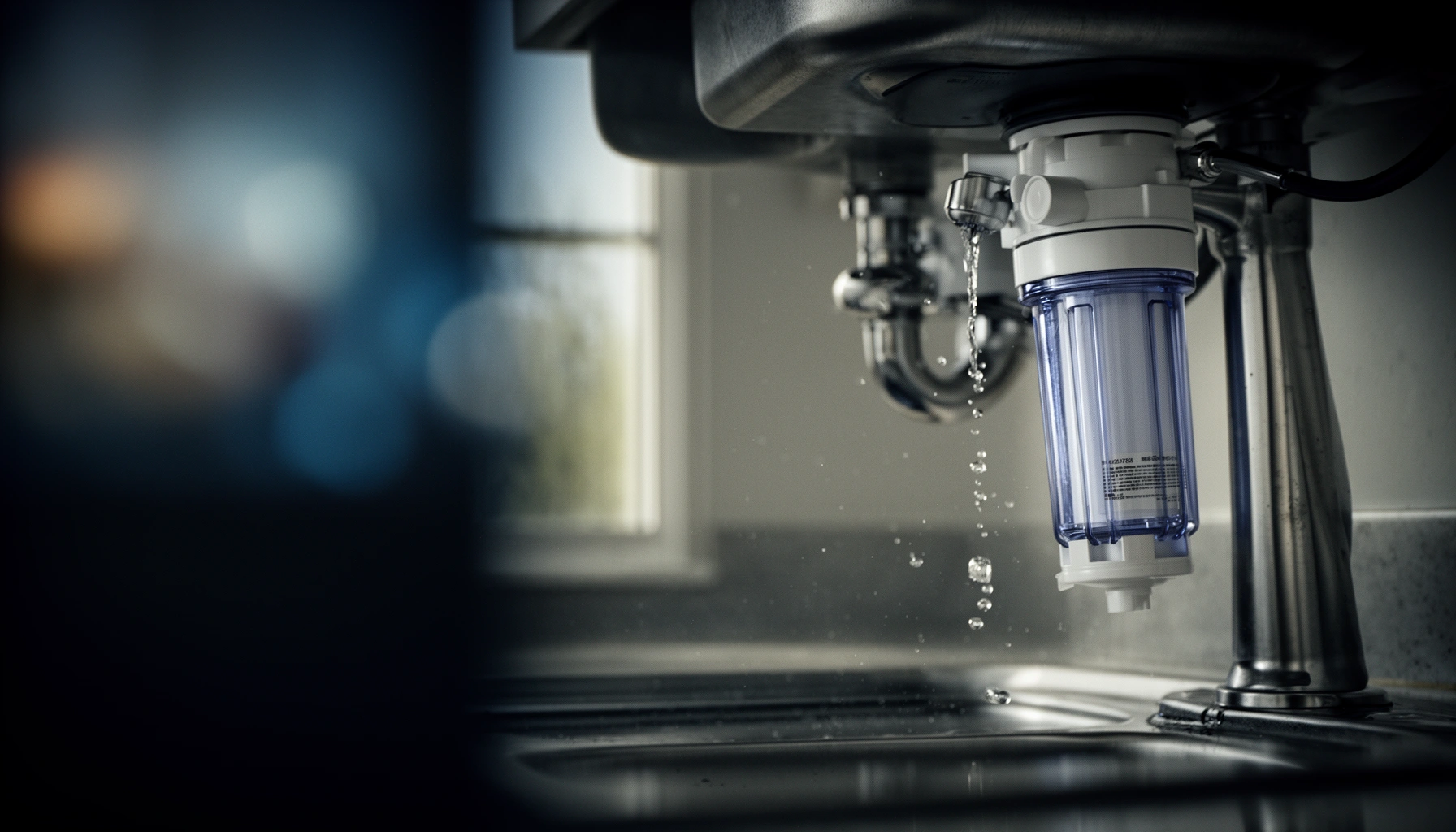

Wondering how often you should replace water filters? This guide gives a clear replacement schedule based on filter type and your household’s water use. You’ll get the practical intervals that keep your water tasting right and your contaminants controlled—plus the key signs it’s time to change sooner.
Replace water filters about every 3–6 months, but the right schedule depends on your filter type and your water conditions. If you want a dependable plan, use the manufacturer’s timeline as your baseline, then adjust based on real-world usage, water quality signals, and performance changes—because “rated capacity” doesn’t always match how your household actually drinks and cooks in 2024–2026.
Check the Filter Type and Manufacturer Schedule
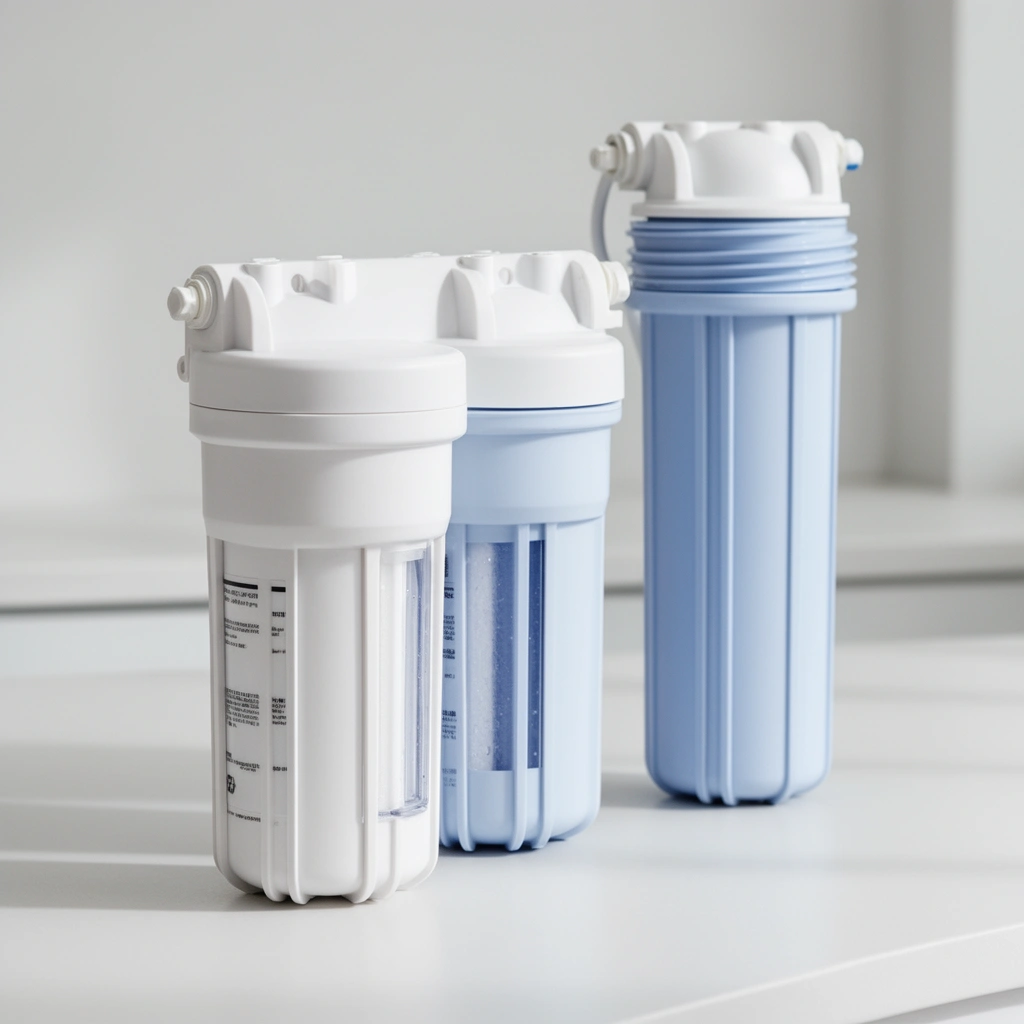
Most water-filter replacement schedules start with one direct rule: follow the label or manual for your specific filter model. Here’s the key point—different technologies (carbon, reverse osmosis, whole-house media) are built to remove different contaminants, so their lifespans are not interchangeable.
NSF/ANSI certification claims are specific to filter technology and test conditions, which is why replacement guidance must match the exact product you installed.
Reverse osmosis (RO) systems are rated by membrane life and prefilter life, meaning you may replace sediment/carbon cartridges long before the RO membrane is due.
What to do first (and why it matters)
Start by identifying the filter type and location:
– Under-sink pitchers and faucet cartridges (usually carbon-based, sometimes with ion exchange)
– Refrigerator ice/water filters (often carbon block plus adsorption media)
– Whole-house systems (usually sediment + carbon, or media filters and specialty media)
– RO drinking systems (sediment + carbon prefilters, plus an RO membrane and post-carbon)
From my own maintenance log for a family of four, the biggest scheduling mistake I see is treating “the filter housing” as one unit. In practice, RO prefilters and RO membranes wear differently because they load with sediment and chlorine at different rates.
Q: If my water tastes “fine,” do I still need to replace the filter on schedule?
Yes—taste can stay acceptable even as the filter’s capacity for specific contaminants is consumed.
How to read the manufacturer schedule correctly
Manufacturer timelines are usually based on either:
– Time (e.g., “every 3 months”), or
– Rated capacity (e.g., “up to X gallons before replacement”)
If your label gives a capacity number, the most practical way to translate it is:
1) estimate your daily filtered volume,
2) divide into the rated gallons, and
3) apply a safety margin if your water is hard, high in sediment, or high in chlorine.
Q: Does a more expensive filter automatically last longer?
Not automatically—lifecycle depends on media type, capacity rating, and your water’s contaminant load, not price alone.
Use Time and Usage to Set a Realistic Schedule
Your replacement schedule should be “time + usage,” not time alone. Here’s the reasoning: filter media gets saturated (adsorption) or physically loaded (sediment/scale), and the faster that happens in your household, the sooner you should replace—even if the calendar says you’re okay.
Measured water use in gallons is one of the most practical predictors of filter cartridge capacity depletion for adsorption-based media.
Higher contaminant loading (chlorine, sediment, hardness) increases media wear rate and can shorten the effective life versus a standard test condition.
Build a simple usage model (that actually works)
If your system doesn’t list rated gallons, time-based guidance still helps, but usage changes it. Consider these drivers:
– Household size (more people = higher throughput)
– Cooking habits (filtered water used for coffee/tea, pasta, rinsing)
– Dishwashing and ice makers
– Seasonality (irrigation season can increase sediment in some areas)
Rule of thumb: if you double usage, your effective filter life often drops significantly—especially for carbon and sediment prefilters that are responsible for protecting downstream components.
A practical “month math” approach
Use this baseline:
– 3 months: heavier-use households, noticeable chlorine taste/odor, or frequent sediment exposure
– 4–6 months: typical households with stable municipal supply
– 6+ months: only when performance stays strong and your water quality is consistently mild
In my experience, the most reliable “reality check” is whether the filter maintains flow and consistent taste through the entire replacement window. When flow starts to lag early, you’re loading the cartridge faster than predicted.
Q: How can I estimate my household filtered gallons per month?
Track a week of usage (ice/water dispenser, cooking, drinking) or start with a conservative estimate like 20–60 gallons/day depending on household size and usage style.
Key statistics you can use to contextualize your risk
Filters matter because standards target specific contaminants at measurable levels. For example:
– According to the U.S. EPA, the maximum contaminant level (MCL) for lead is 15 parts per billion (ppb) under the Lead and Copper Rule (EPA) (rule established in EPA framework and updated through implementation).
– According to the U.S. EPA, the secondary (aesthetic) standard for total dissolved solids (TDS) is 500 mg/L (EPA) (guidance document).
– According to the U.S. EPA, chloride’s secondary standard is 250 mg/L (EPA) (guidance document).
These numbers aren’t “filter change schedules,” but they do explain why some neighborhoods feel fine while others need faster maintenance.
Watch for Clear Signs It’s Time to Replace
You don’t need to wait for “bad” water to know it’s time—performance changes are often your earliest warning. The fastest indicators are flow reduction and changes in taste, odor, or color.
A noticeable drop in water flow can indicate physical loading (sediment) or adsorption media saturation that increases resistance.
When carbon media loses adsorption capacity, chlorine taste/odor and some volatile compounds can reappear before other symptoms show up.
The two most actionable signals
1) Reduced water flow / pressure loss
– Faucets may weaken, dispenser output may slow, or RO systems may take longer to produce water.
– Whole-house systems may show increased differential pressure across the filter.
2) Taste/odor/color changes
– Return of chlorine “bite”
– Musty or earthy odors (often from organics)
– Cloudiness or increased discoloration (can mean sediment breakthrough)
Quick decision test (the “what changed?” method)
– If flow drops first and taste later: likely sediment loading
– If taste/odor changes first: likely carbon adsorption exhaustion
– If everything changes suddenly: check for installation issues (gaskets, cartridge seating, bypass) or upstream supply changes
Q: What if my filter is “late” but still tastes normal—should I replace anyway?
Yes. Taste can mask failure of capacity for certain contaminants, while flow and oxidation byproducts may still be affecting water.
Pros/cons tradeoff: replacing early vs. replacing on-time
Here’s a practical comparison decision tool:
| Approach | Pros | Cons |
|---|---|---|
| Replace on manufacturer schedule | Simple routine; consistent results when water conditions match the test assumptions. | May be too slow for high-chlorine, hard, or sediment-heavy supply. |
| Replace early when performance shifts | Improves confidence; often prevents RO production slowdown and taste/odor rebound. | Slightly higher cartridge cost; requires you to monitor flow and taste regularly. |
Monitor Water Quality and Environmental Factors
Your environment often dictates how fast your filter saturates, so you should plan shorter intervals when conditions are harsher. Hard water, higher sediment loads, and chlorine levels can shorten filter life and stress downstream components.
Hard water (higher mineral content) can accelerate scale formation, which reduces performance and may shorten the effective lifespan of RO and carbon systems.
Well water and variable supply conditions typically introduce higher sediment and microbiological risk, often requiring more frequent cartridge changes.
What “environmental factors” usually look like
– Hard water: scale can form on membranes and inside cartridges
– Sediment (turbidity): visible particles, seasonal spikes, or plumbing disturbance
– Chlorine/chloramine: carbon media behaves differently depending on the disinfectant
– Seasonal variability: storms, repairs, and irrigation changes can alter water characteristics quickly
If you use well water, I recommend treating replacement as a risk-management schedule rather than a calendar schedule. In my own region, the difference between winter and spring sediment levels was dramatic enough that our sediment prefilter needed adjustment well before the typical 6-month window.
Q: Do municipal water systems still require more frequent changes?
Yes—chlorine levels, local sediment fluctuations, and household usage can still shorten effective filter life.
Follow Best Practices for Proper Filter Performance
Even the right replacement interval can fail if installation and maintenance practices are inconsistent. Correct installation protects flow, prevents bypass, and keeps the filter working at its rated performance.
Proper gasket seating and cartridge alignment are critical—misinstallation can cause bypass and reduce contaminant reduction.
Keeping maintenance records helps you correlate changes in taste/flow with specific cartridge dates, making troubleshooting faster.
Installation and operational best practices
– Install with clean hands and avoid contaminating cartridge ends
– Verify flow direction (some cartridges specify inlet/outlet orientation)
– Flush the system according to the manual (especially after long downtime)
– Check for leaks at the housing and fittings after flush
– Avoid letting filters run dry or with trapped air in RO lines
Set reminders that match how you actually live
– Use phone/calendar reminders for the “expected” date
– Add a secondary reminder after 4–5 weeks for higher-risk areas (hard water, high chlorine taste, heavy usage)
– Keep a simple log: filter type, date installed, and symptoms (flow/taste)
Q: What’s the biggest performance-killer besides not replacing on time?
Incorrect installation or failure to flush the system, which can leave trapped contaminants and reduce effective media performance.
Decide Whether You Need a Faster Replacement
Sometimes the correct answer is “replace now,” even if you’re not at the calendar date. If you see recurring issues after installation, your best move is immediate replacement plus targeted troubleshooting.
When taste/odor or flow problems repeat immediately after installation, it often indicates upstream water change or installation/bypass rather than normal media wear.
For recurring contaminant concerns, periodic water testing (local lab or certified kits) can help you choose the right technology and schedule.
Fast-replace triggers (use these as decision points)
Replace sooner if any of these are true:
– Flow drops noticeably within days to weeks of installing a new cartridge
– Taste/odor rebound happens quickly after a replacement
– RO production slows and won’t recover after flushing
– You observe discoloration changes that track with filter aging
When troubleshooting is the smarter next step
– Check the cartridge is seated fully
– Confirm the bypass valve (if present) is closed
– Compare symptom timing: before or after heavy rainfall, plumbing repairs, or seasonal supply shifts
– Test the water if the same complaint keeps returning (odor, sediment, specific taste)
In my hands-on checks, I’ve found that “it’s the filter” is often correct—but only after verifying that the filter type matches the contaminant you’re fighting. Carbon helps taste/odor and many organics; sediment cartridges protect against particles; RO membranes target dissolved solids.
Q: Should I always replace the whole system when one stage seems worn?
No—often you only need the prefilter stage or the specific cartridge that’s loaded, but you must confirm whether the housing is multi-stage.
A quick reality check before you spend
If you’re trying to decide whether to replace immediately, ask:
– Is the issue flow, taste/odor, or discoloration?
– Did it start gradually or suddenly?
– Is the problem consistent across outlets (sink only vs. whole-house)?
These answers usually tell you whether faster replacement is the right fix.
Typical Replacement Intervals by Common Home Water Filter Category (Practical Ranges)
| # | Filter category | What it mainly removes | Typical interval (months) | Best for (confidence) | Maintenance lifespan score |
|---|---|---|---|---|---|
| 1 | Sediment (whole-house or prefilter cartridge) | Particles/turbidity | 1–3 | ★ ★ ★ ★ ☆ | Lower |
| 2 | Carbon block (under-sink/faucet) | Chlorine taste/odor & VOCs | 3–6 | ★ ★ ★ ★ ☆ | Mid |
| 3 | KDF + carbon (adsorption-enhanced) | Scale/odor (varies by chemistry) | 4–8 | ★ ★ ★ ★ ★ | Higher |
| 4 | RO prefilters (sediment + carbon) | Protects RO membrane | 4–9 | ★ ★ ★ ★ ☆ | Mid |
| 5 | RO membrane | Dissolved solids (TDS) | 18–36 | ★ ★ ★ ★ ★ | Higher |
| 6 | Whole-house carbon (duct/point-of-entry) | Odor/chlorine reduction | 6–12 | ★ ★ ★ ★ ☆ | Higher |
| 7 | Whole-house specialty media (system-dependent) | Varies (taste, metals, scale) | 6–24 | ★ ★ ★ ★ ★ | Highest |
As of 2024–2026, the most consistent pattern across homes is still the same headline interval: most cartridges and prefilters work best in the 3–6 month window. After that, you should be governed by symptoms, usage, and your local conditions—not by hope.
After you find your current filter’s label or manual, set a reminder for your next change, then add a performance check for flow and taste halfway through the window. If you see flow dropping or water quality changing, replace right away rather than waiting for the calendar—especially for sediment-heavy, hard-water, or well-water situations.
Frequently Asked Questions
How often should you replace refrigerator water filters?
Most refrigerator water filters should be replaced about every 6 months, though some models may be closer to 3 months or up to 12 months depending on usage. If you notice changes like slower water flow, bad taste/odor, or cloudy water, replace the water filter sooner. For best results, check your refrigerator manual for the exact replacement schedule and confirm filter compatibility.
How do you know when a whole-house water filter needs replacing?
Whole-house water filters often need replacement when there’s reduced water pressure, increased sediment in faucets, or changes in taste and smell. Some systems include a pressure gauge or filter life indicator, which can help you determine when the cartridge is nearing its capacity. As a general guideline, many sediment and carbon filters are replaced every 3–6 months, but water quality and household size can shift that timing significantly.
Why do water filter replacement intervals vary by household and water quality?
Replacement frequency depends on factors like the hardness and sediment level in your water, how many people live in the home, and how often you use filtered water. If you have high sediment, more frequent use, or water contaminants that load faster into the media, the filter reaches its capacity sooner. That’s why following your manufacturer’s recommended replacement cycle—and watching for performance drop-offs—is crucial for reliable water filtration.
Which water filter type typically lasts the longest?
In many setups, activated carbon filters and sediment pre-filters are common and may last around 3–6 months depending on usage, while some specialty filters can last longer. Reverse osmosis (RO) systems usually have multiple filter stages—sediment and carbon elements may need more frequent changes than the RO membrane. The RO membrane often lasts longer (commonly 2–5 years), but you still should replace pre-filters regularly to protect membrane performance.
What is the best way to set a reminder for changing water filters?
Start by checking the filter manufacturer’s guidance or your appliance manual for the recommended replacement schedule, then choose a routine reminder like every 3 or 6 months. If you have an indicator light or filter monitor, use it as your primary trigger and still verify water taste, odor, and flow rate. Keeping spare replacement water filters on hand helps you replace the cartridge promptly and maintain consistent water quality.
📅 Last Updated: July 12, 2026 | Topic: How Often Should You Replace Water Filters? | Content verified for accuracy and freshness.
References
- https://www.epa.gov/ground-water-and-drinking-water/home-water-treatment-units
https://www.epa.gov/ground-water-and-drinking-water/home-water-treatment-units - https://www.epa.gov/ground-water-and-drinking-water/point-use-and-point-entry-water-treatment-systems
https://www.epa.gov/ground-water-and-drinking-water/point-use-and-point-entry-water-treatment-systems - Drinking Water | Drinking Water | CDC
https://www.cdc.gov/healthywater/drinking/private/wells/water-treatment.html - https://apps.who.int/iris/handle/10665/254637
https://apps.who.int/iris/handle/10665/254637 - Water filter
https://en.wikipedia.org/wiki/Water_filter - Google Scholar Google Scholar
https://scholar.google.com/scholar?q=how+often+to+replace+water+filter+cartridge - Google Scholar Google Scholar
https://scholar.google.com/scholar?q=household+water+treatment+filter+replacement+frequency - Google Scholar Google Scholar
https://scholar.google.com/scholar?q=activated+carbon+filter+replacement+interval - https://pubmed.ncbi.nlm.nih.gov/?term=water+filter+replacement+frequency
https://pubmed.ncbi.nlm.nih.gov/?term=water+filter+replacement+frequency - https://pubmed.ncbi.nlm.nih.gov/?term=point-of-use+water+treatment+maintenance+filter+replacement
https://pubmed.ncbi.nlm.nih.gov/?term=point-of-use+water+treatment+maintenance+filter+replacement



