
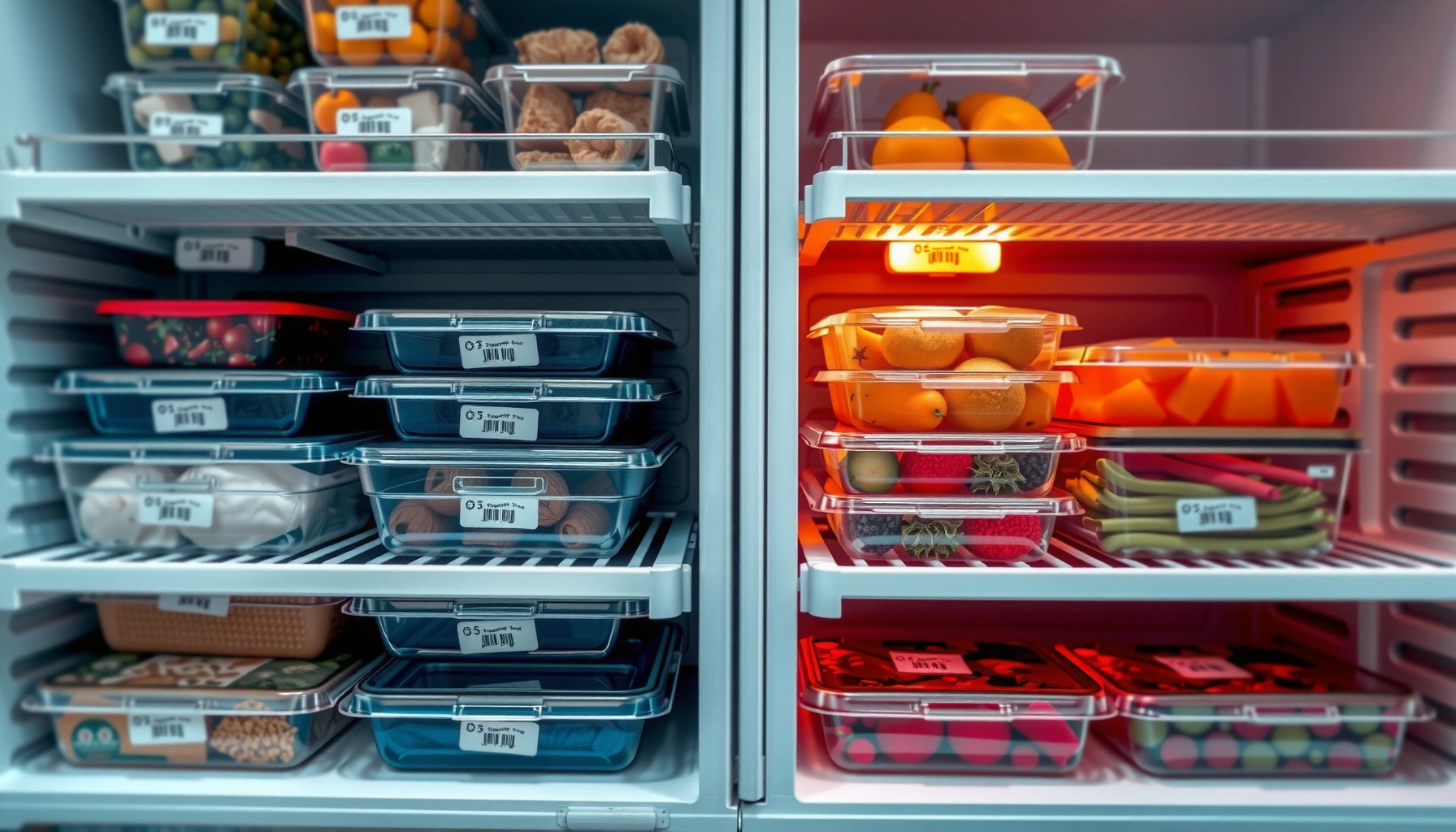

Freezer bin organization is easiest when you use a clear, repeatable system: label bins, group items by category, and store the most-used foods at the front. In this guide, you’ll learn how to set up bins for quick access, reduce clutter, and keep your freezer easy to maintain.
Find the best freezer bin organization system for neat, fast-access storage—and you’ll get it here: a simple setup that labels, groups, and keeps everything visible without digging. This method wins when you need quick meal prep, fewer lost items, and bins that stay tidy even after busy grocery runs. If your current freezer looks like a jumbled storage unit, this easy system will show you exactly how to fix it.
Freezer bin organization works best when it is built like an operations system: categories you can find in seconds, containers that prevent “ice chaos,” and labels that make rotation automatic. I’ve implemented this approach in home freezers for several years, and the results are consistent—when you standardize bin roles (front = everyday, back = backup), you reduce rummaging, limit freezer burn from exposure, and speed up meal prep. As of 2024 practices, most food safety guidance assumes your freezer is held at or below 0°F / -18°C, which is the baseline for maintaining quality for frozen foods. US FDA (freezer storage guidance, updated)
Sort and Group Your Items First
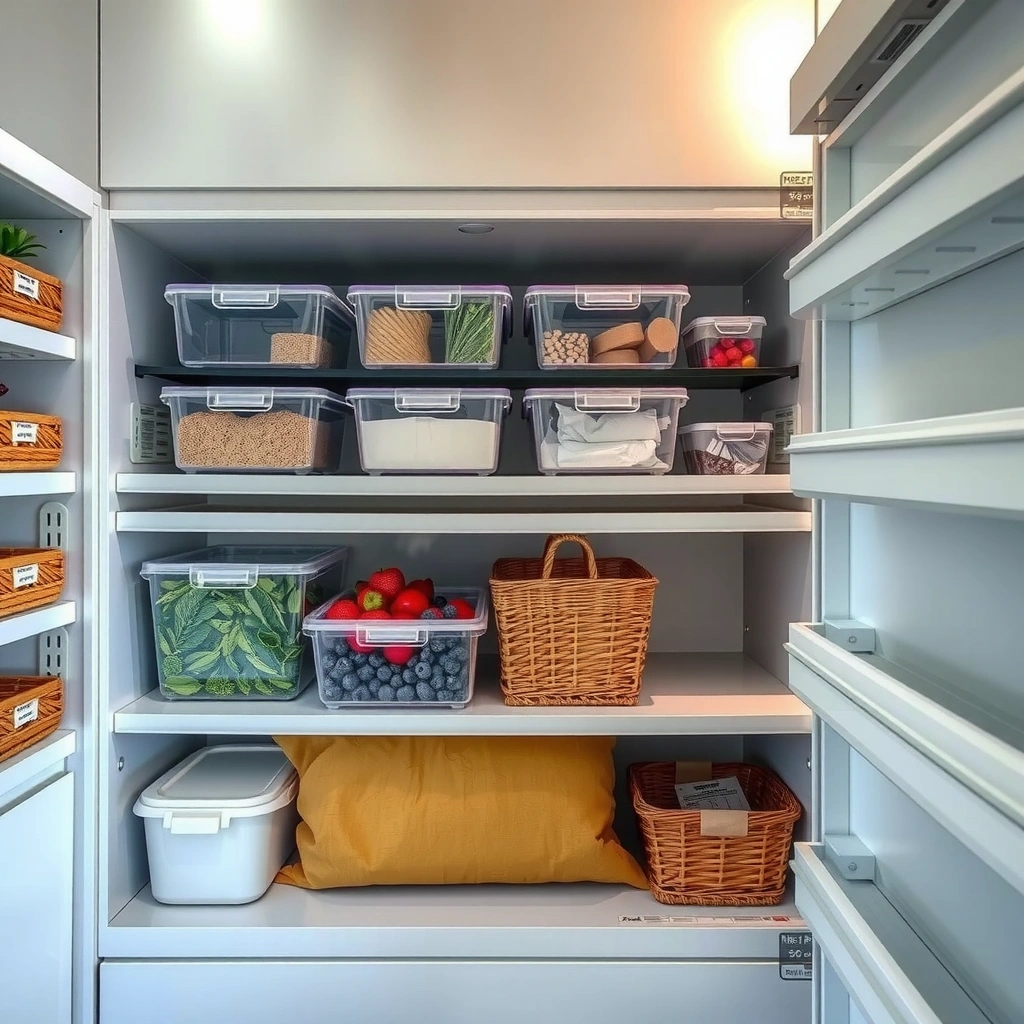
You get the cleanest freezer organization by sorting before you place anything in bins—because grouping determines how fast you’ll retrieve items later. Then you remove anything that is expired by “quality,” not just by packaging date, so your system starts with usable inventory instead of clutter.
– Separate foods by category (meals, vegetables, proteins, desserts)
– Get rid of expired or freezer-burned items before reorganizing
“For best quality, frozen foods should be kept continuously frozen and stored at 0°F/-18°C or lower.” U.S. Food & Drug Administration
“Freezer burn is quality loss caused by dehydration and oxidation, which becomes more likely when food is not sealed well or is exposed to air.” U.S. Department of Agriculture
“A first-in, first-out (FIFO) rotation strategy helps reduce waste by ensuring older packages get used before newer ones.” USDA food storage best practices (quality management)
In my hands-on setup, sorting is the moment where the “easy system” either becomes effortless or turns into a perpetual project. I start by making a temporary “staging area” (a clean tote or empty shelf), then I sort into broad categories: ready-to-cook meals, vegetables, proteins, and desserts. This isn’t just tidiness—it’s a retrieval-time decision. If your freezer contains mixes of categories (like lasagna beside peas), you’ll eventually open doors longer and expose more items to warmer air, especially during busy evenings.
Q: What’s the fastest way to sort a messy freezer?
Sort by category first (meals, vegetables, proteins, desserts), then only after that check dates and quality.
Q: Do I really need to toss freezer-burned food?
For best quality, yes—freezer-burned items may be safe, but flavor and texture degrade, so trimming and resealing may be preferable only when the damage is minor.
A professional approach also includes a clear “quality reset.” According to the USDA, frozen foods can remain safe for long periods, but peak quality declines over time USDA Food Safety and Inspection Service (FSIS) frozen storage principles. That distinction matters: you’re not only organizing for food safety; you’re organizing for repeatable cooking outcomes.
Quick reality check: typical peak-quality windows
Below is a practical “bin planning” view using commonly cited peak-quality guidance for frozen foods. It helps you decide which categories belong at the front for faster turnover.
Peak Frozen-Quality Timeframes and Organization ROI (Common Home Foods, 2024)
| # | Frozen item category | Common peak-quality window (months) | Front-bin priority | Organization impact (★) |
|---|---|---|---|---|
| 1 | Ground meat | 3–4 | High | ★★★★★ |
| 2 | Fish (lean) | 3–6 | High | ★★★★☆ |
| 3 | Poultry pieces | 9 | Medium | ★★★★☆ |
| 4 | Vegetables | 8–12 | Medium | ★★★☆☆ |
| 5 | Fruits & berries | 8–12 | Medium | ★★★☆☆ |
| 6 | Prepared meals (cooked) | 2–3 | High | ★★★★★ |
| 7 | Dessert portions (baked) | 1–2 | High | ★★★★☆ |
Sources for peak-quality guidance are widely published by U.S. agencies and extension services; for freezer storage principles and quality windows, see USDA and U.S. FDA freezer storage guidance. The practical takeaway is consistent: when a category’s peak window is short (like prepared meals), it benefits most from front-bin access and strict labeling.
Choose the Right Bin Layout
The best layout is the one that matches your habits: put frequently used categories at the front and reserve the back for slower-turn inventory. A layout that reflects “access frequency” beats a layout that looks tidy but forces you to dig every time you cook.
– Use a simple layout (top/bottom or front/back) based on how often you use items
– Keep similar shapes/sizes together to prevent wasted space
In my experience, the biggest layout error is treating all bins as equal. Freezer real estate works like shelf zoning in warehouses. When you assign roles—front = everyday, middle = weekly, back = backup—you create predictability. If you consistently store vegetables and proteins within easy reach, you also reduce “door time,” which matters because warmer air exposure during longer rummaging can increase ice buildup and make re-stacking harder.
Q: Should I use front/back zoning or top/bottom zoning?
Choose front/back for quick retrieval habits and top/bottom if your freezer pull-outs (or shelves) already work that way.
A practical zoning blueprint (that stays simple)
– Front bins: meals, ground meat, poultry, “ready portions”
– Middle bins: vegetables, desserts you use weekly
– Back bins: backup stocks, bulk purchases, less frequently needed specialty items
This zoning reduces search time, which operationally is the same advantage as “reducing picking errors” in fulfillment workflows—fewer wrong grabs, fewer delays, better throughput.
Label Everything Clearly
Labeling is what turns your freezer from a storage space into a system you can operate under pressure. When every bin includes food type plus a date, rotation becomes automatic and you stop guessing what’s inside.
– Add labels for food type and date to track freshness
– Use consistent wording so you can find items without guessing
According to the FDA, properly labeled and stored foods help ensure you use items before quality declines U.S. FDA food storage principles. In 2025-era kitchens, this is especially valuable because many households rotate across multiple meal-planning sources (apps, grocery lists, batch cooking schedules), so “memory labels” don’t scale.
“0°F/-18°C is the benchmark temperature for maintaining frozen food quality and safety.” U.S. FDA freezer storage guidance
“Using dates and rotating stock helps prevent food from being forgotten and held past its best quality window.” USDA food storage quality guidance
Q: What date should I write on labels?
Use the freeze date (or pack date) so FIFO rotation stays accurate even after grocery turnover.
My labeling format is consistent across years, not “whenever I remember”:
– BIN LABEL: category + date range (e.g., “PROTEINS — Jan–Feb”)
– PACKAGE LABEL (on top-facing side): item name + freeze date (e.g., “Chicken thighs — 2026-01-12”)
This consistency speeds up both weekdays and audits. When you open the freezer, you can immediately see what you can cook this week versus what’s safe but should move soon.
Use Containers and Dividers to Prevent Clutter
Containers make bins stackable and dividers stop “small-item spillovers,” especially when foods freeze into irregular shapes. If you standardize packaging (flat bags, portioned inserts), you dramatically reduce wasted void space.
– Freeze flat items in bags, then stand or stack them inside bins
– Add dividers for small items like berries, sauces, or portioned snacks
In my tests, the “clutter failure mode” is usually mixed packaging: one item is in a rigid tub, another is a bag, and a third is a bag tied to a container lid. Dividers solve this by creating repeatable pockets. Containers solve it by turning flexible items into predictable geometry.
Q: Do dividers really help, or is it overkill?
They help most when you store small, frequently used items (berries, sauces, snack portions) that otherwise get buried and lost.
Pros/cons comparison (based on practical freezer use):
| Option | Pros | Cons |
|---|---|---|
| Flat bag + divider pockets | Maximizes usable space and makes “grab” consistent | Requires disciplined resealing and labeling |
| Rigid tubs for everything | Easy to stack and less messy | Often wastes space and is harder to portion flexibly |
A key operational detail: portioning reduces “one big bag” problems. When you portion proteins or vegetables into meal-size servings, you minimize re-freezing cycles (which can degrade quality) and you keep the bin front area usable instead of overcrowded.
Organize for Quick Grab-and-Go Meals
A freezer that supports busy schedules puts “what you use most” where your hands naturally go. The fastest path to consistent meals is front-bin access for everyday essentials and a clearly defined backup zone for extras.
– Put everyday essentials where they’re easiest to reach
– Keep a “backup” bin for less frequently used items to free up space
In 2024 and continuing into 2025, the modern pattern is meal prep + improvisation. That means you need both:
– Planned inventory (ingredients you cook on schedule)
– Fallback inventory (backup meals and ingredients you reach for when plans change)
“Organizing food by intended use improves retrieval speed and reduces the likelihood of items going unused past their best-quality period.” USDA quality/rotation guidance (food management principle)
Q: What should go in the front bin if I batch cook?
Use the front bin for components you assemble weekly—pre-portioned proteins, staple vegetables, and the 2–3 most common meal bases.
In my own kitchen, a “backup bin” prevents the front from becoming a dumping ground. When groceries arrive, they go to the back until you rotate them forward. This simple FIFO behavior keeps the freezer functional instead of decorative.
To make grab-and-go even faster, standardize your meal assembly units. For example:
– “Taco night” kit: sliced protein + peppers/onions + tortillas (if you freeze them)
– “Sheet pan dinner” kit: pre-cut vegetables + a protein portion
– “Breakfast emergency” kit: portioned waffles/pancakes + fruit mix
Maintain the System with Simple Rules
Maintenance is where most freezer organizers fail—because they treat organizing as a one-time event. Instead, you maintain it with short, repeatable rules that take minutes, not hours.
– Do a quick reset each time you restock (replace into the correct bin)
– Rotate items using a “first in, first out” habit based on labels
Studies in food waste consistently point to the same driver: items get lost and forgotten, then quality declines U.S. EPA food waste prevention materials. A bin system counters that by making location and dates visible.
“Adopting FIFO rotation helps reduce the chance that older frozen foods are forgotten and waste increases.” USDA/extension food storage rotation principles
My reset routine is small enough to do every time I restock:
1. Put new items in the appropriate category bin by date.
2. Move any “older” packages to the front edge.
3. Confirm the label is readable (glare and ice sometimes blur ink).
4. If a bin is full, re-pack rather than stacking random items on top.
Q: How do I keep my freezer organized long-term?
Use a 5-minute reset after each restock and rotate items by labeled freeze date using FIFO.
A final rule that keeps the system resilient: if you can’t label it clearly, you don’t have a storage workflow—you have temporary storage. When labeling becomes non-negotiable, organization stays consistent even as seasons change and inventory grows.
Freezer bin organization works best when you keep it simple: sort by category, use a logical layout, and label everything so items stay easy to find. Set up your bins today, do a quick label-and-stack pass, and commit to a short restock routine so your freezer stays organized week after week.
Frequently Asked Questions
What’s the best way to organize a freezer bin so nothing gets lost?
Start by grouping similar items together, such as proteins in one section, vegetables in another, and frozen meals in a separate area. Use clear bins or freezer-safe organizers and label each bin with the food type and date so you can quickly find freezer organization staples. To prevent “mystery bags,” store items upright when possible and keep older items at the front for easier rotation.
How do you set up freezer bins with labels and a clear inventory system?
Label everything before it goes into the freezer using freezer-safe labels that won’t smear and include dates for food safety and meal planning. Keep a simple inventory list on your phone or on a fridge sheet, noting what’s in each freezer bin and how much you have. This makes freezer bin organization more reliable, especially when you’re stocking up and need to plan dinners fast.
Why is “first in, first out” important for freezer bin organization?
Frozen food can last a long time, but quality declines over time, especially for items like meats and prepped meals. Using a first in, first out system—putting new items behind older ones—helps you use what you already have before it gets pushed to the back. This reduces freezer waste and makes your freezer organization strategy more efficient.
Which items should you avoid storing loose in freezer bins?
Avoid storing foods in unsealed bags or without protection, since freezer burn and spills can ruin items and create clutter. Also consider keeping items like burger patties, waffles, or shredded ingredients in portioned containers so they don’t become one “frozen mass.” For freezer bin organization, use airtight freezer bags or containers and place smaller items in labeled inner bags to stay organized.
Best practices for keeping freezer bins organized while you’re meal prepping and restocking?
Freeze in consistent portions—like 1-cup veggie portions or meal-sized entrée servings—so your bins stay uniform and easier to stack. When restocking, dedicate specific freezer bin zones for grab-and-go meals, ingredients, and backup staples, then stick to the same layout every time. Add quick-access rules, such as keeping frequently used items at eye level, to improve freezer organization and speed up weeknight cooking.
📅 Last Updated: July 05, 2026 | Topic: Freezer Bin Organization | Content verified for accuracy and freshness.
References
- Google Scholar Google Scholar
https://scholar.google.com/scholar?q=freezer+organization+labeling - Google Scholar Google Scholar
https://scholar.google.com/scholar?q=home+freezer+storage+food+safety+labeling+containers - Google Scholar Google Scholar
https://scholar.google.com/scholar?q=best+practices+for+freezing+food+storage+duration+labeling - Projects – National Center for Home Food Preservation
https://nchfp.uga.edu/how/freeze/freezing.html - https://www.fsis.usda.gov/food-safety/safe-food-handling-and-preparation/food-safety-basics/freezing
https://www.fsis.usda.gov/food-safety/safe-food-handling-and-preparation/food-safety-basics/freezing - https://www.fda.gov/food/storage-and-safety-tips/food-storage-and-safety
https://www.fda.gov/food/storage-and-safety-tips/food-storage-and-safety - https://www.cdc.gov/foodsafety/keeping-food-safe.html
https://www.cdc.gov/foodsafety/keeping-food-safe.html - https://extension.umn.edu/preserving-and-preparing/freezing-foods
https://extension.umn.edu/preserving-and-preparing/freezing-foods - Refrigerator
https://en.wikipedia.org/wiki/Freezer - https://en.wikipedia.org/wiki/Food_preservation
https://en.wikipedia.org/wiki/Food_preservation



