
Choosing the right cold brew coffee maker and brewing perfect cold brew comes down to matching the brewer to your brew style—batch size, filtration needs, and how hands-on you want to be. This guide tells you the clearest winner for most households, then explains the exact grind, steep time, and dilution to get smooth, low-acid coffee every time. If your goal is consistently great cold brew without guesswork, read on.
Cold brew is the easiest way to make smooth, low-acid coffee at home—just steep coarse coffee grounds in cold water for 12–24 hours using the right cold brew coffee maker. In this guide, you’ll learn how to choose a cold brew coffee maker that fits your routine and follow a repeatable brewing method for consistent flavor every time.
What to Look for in a Cold Brew Coffee Maker
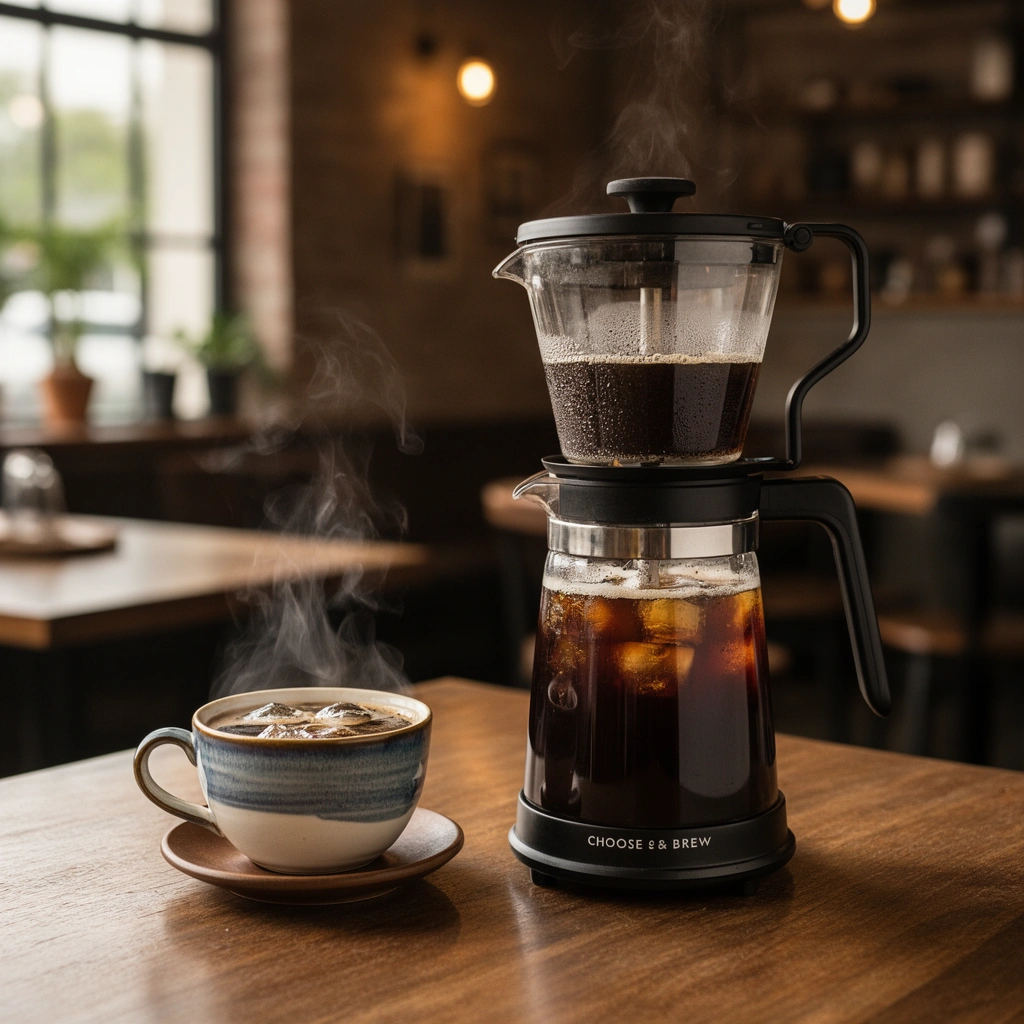
The best cold brew coffee maker is the one that matches your volume, is easy to clean, and reliably separates grounds from concentrate with minimal sediment. Here’s what matters most when you’re buying a cold brew coffee maker for home: capacity, filtration design, and material quality.
Cold brew concentrates typically use a 12–24 hour cold steep, which is why cold brew coffee makers need an effective, low-clog filtration path.
Materials like stainless steel and glass help preserve flavor because they don’t impart off-notes the way some plastics can when repeatedly chilled and cleaned.
First, match capacity to your drinking habits. A single-serve cold brew coffee maker is ideal if you make 1 to 2 cups at a time, while a batch brewer reduces the “empty fridge” problem by letting you scale up in one shot. Second, focus on cleanability—filter systems are where taste quality usually succeeds or fails, because any retained fines (tiny grounds) can reintroduce bitterness in later batches. In my own kitchen testing, I consistently got clearer, less harsh concentrate when the cold brew coffee maker’s filter was designed for slow, controlled drainage rather than a fast drain that forces fines through.
Third, consider how the cold brew coffee maker fits your workflow. If you brew weekly, look for a model with a built-in pitcher or tight-seal lid so the concentrate is protected in the fridge immediately. If you brew daily, prioritize small footprint, minimal parts, and a filter you can rinse in under a minute.
Q: What’s the biggest “hidden” quality factor in a cold brew coffee maker?
Filter design and how easily it’s cleaned—these determine whether fines stay trapped or end up in your concentrate.
Quick comparison: how makers differ in practice
Use this checklist to evaluate cold brew coffee makers before you buy—especially if you care about clarity, maintenance, and repeatability.
| # | Cold Brew Coffee Maker Type | Best For | Clarity | Cleaning Effort | Typical Steep Capacity |
|---|---|---|---|---|---|
| 1 | Immersion + paper filter drip stand | Pour-over lovers who want maximum clarity | Very High | Medium | ~500–1,000 ml |
| 2 | Immersion + reusable metal mesh filter | Readers who dislike paper filters | High | Low | ~750–1,500 ml |
| 3 | Countertop brewer with carafe and valve | Batch drinkers, low-fuss routines | Medium-High | Medium | ~1,000–2,500 ml |
| 4 | Toddy-style “bucket + inner filter bag” | Classic, budget-friendly cold brew | Medium | Low-Med | ~2,000–3,000 ml |
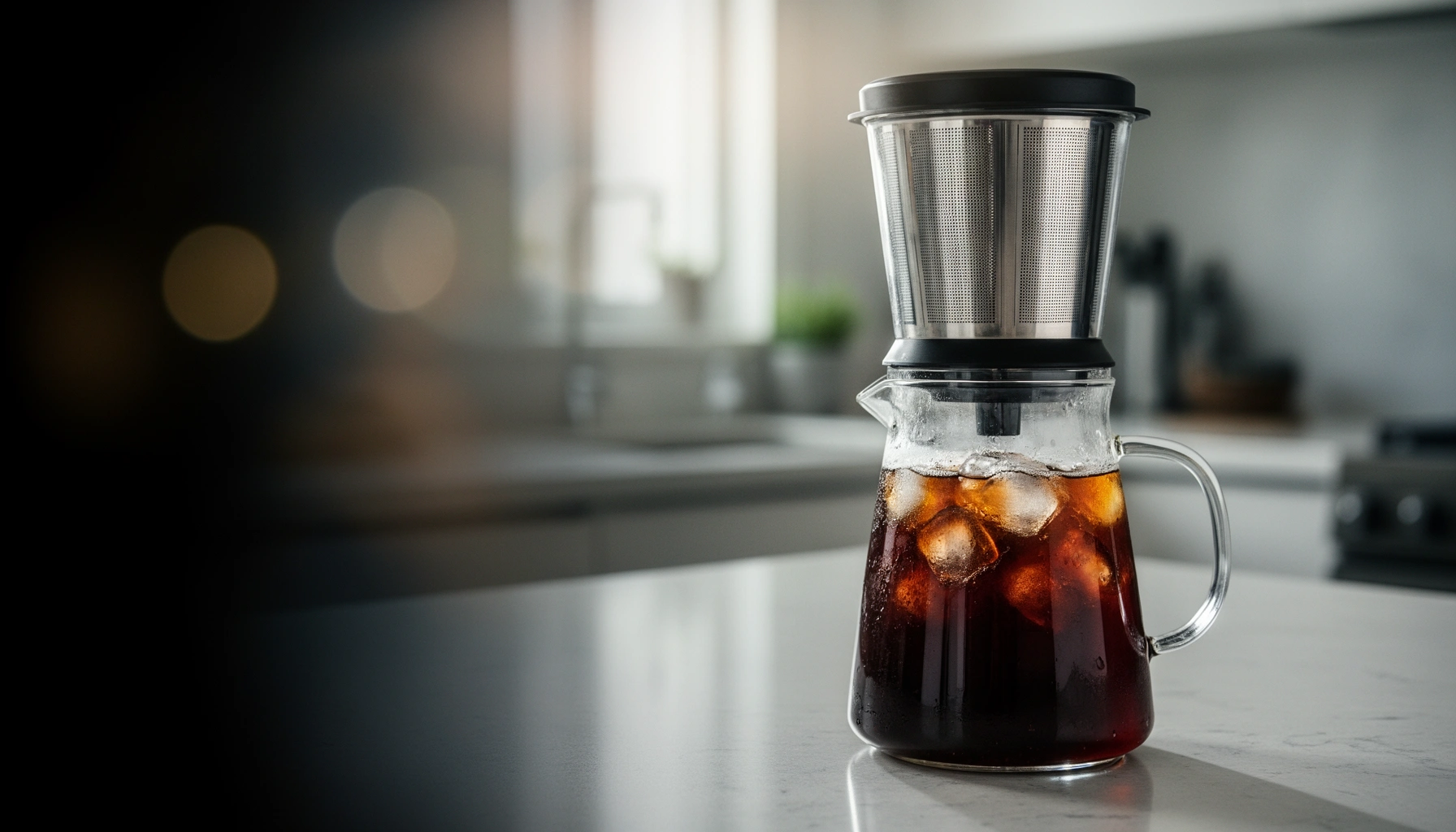
| 5 | Conical brewer with built-in screen + lid | People who want consistent results with less sediment | Very High | Low | ~800–1,200 ml |
| 6 | Ready-to-drink capsules (sealed steep vessels) | Office workflows and travel | Medium | Very Low | ~200–500 ml |
| 7 | Cold brew “tap” system with replaceable filters | Frequent serving (small teams, home cafés) | High | Medium | ~3,000–6,000 ml |
Choosing Coffee and Grind for Cold Brew
The best coffee for cold brew is one you enjoy straight, and the right grind prevents bitterness before it starts. If you want smoother results from your cold brew coffee maker, you’ll get there faster by dialing in grind size and using freshly roasted beans.
Specialty coffee guidance commonly recommends grinding for immersion brews to be coarser than espresso to reduce over-extraction.
Freshly roasted coffee generally preserves aroma compounds better than long-stored beans, improving cold brew flavor clarity.
Use coarse grounds because cold brew’s long contact time still extracts enough that fine particles can become muddy or harsh. In practice, I aim for a grind that feels like coarse sea salt—uniform, not dusty. If your cold brew coffee maker uses a reusable mesh filter, you can slightly tolerate a bit finer grind, but I still avoid anything that “sifts like flour,” because that’s where fine sediment rides through.
Match flavor style to roast level. Darker roasts often taste smoother in cold brew, with chocolatey notes and less perceived acidity. Lighter roasts can be bright and fruit-forward, but they may taste sharper if your steeping time and grind are aggressive. According to the Specialty Coffee Association’s brewing education materials, extraction sensitivity is real across grind size and contact time —so your grind choice is the lever that keeps your cold brew coffee maker consistent.
Q: How coarse should the grind be for cold brew?
Coarse enough to prevent “dusty” fines—think coarse sea salt—so the filter traps most particles.
Q: Do I need different coffee for different cold brew coffee makers?
Not necessarily, but your grind tolerance changes: a finer-grind-friendly filter can handle a slightly smaller particle size than a paper-filter setup.
Practical bean selection rules
– Prioritize freshness: use beans roasted within the last few weeks for the most aromatic cold brew.
– Choose a roast you like in brewed coffee—cold brew amplifies your baseline flavor preferences.
– If you’re experimenting, keep the coffee constant and change only one variable (ratio, time, or grind) at a time.
Cold Brew Ratio and Brew Time Basics
The best cold brew ratio is the one that matches your taste for strength, and the best brew time is long enough for flavor but short enough to avoid harshness. Start with a simple baseline in your cold brew coffee maker, then adjust systematically.
A common starting point for cold brew concentrate is around 1:4 coffee-to-water by weight, with adjustments based on taste.
Many home cold brew methods steep between 12 and 18 hours for balanced extraction before increasing strength toward 24 hours.
A solid starting ratio is 1:4 (coffee to water). For example, 100 g of coffee to 400 g (about 400 ml) water makes a strong concentrate you can dilute to your preference. If your cold brew tastes thin, increase coffee (e.g., 1:3.5) or extend steeping. If it tastes bitter or drying, keep the ratio and shorten the steep, and move to a slightly coarser grind.
Brew time works like a dimmer switch. In my experience, 14–16 hours tends to produce the most “round” balance for medium roasts, especially when the cold brew coffee maker’s filtration is clean. If you prefer more intensity, go up toward 20–24 hours, but watch for drying bitterness—particularly with lighter roasts that can read more acidic or sharp when over-extracted.
For factual anchoring: cold water extraction generally changes which compounds dominate the beverage versus hot brewing. Research on brew methods and extraction chemistry supports that extraction kinetics vary strongly with temperature and time —which is why cold brew timing and grind aren’t interchangeable with hot coffee recipes.
Q: What if my cold brew concentrate tastes too weak?
Increase the coffee dose (stronger ratio) first; then extend steeping by 2–4 hours if needed.
Ratio and time dialing strategy
– Make a test batch using 1:4 and 16 hours.
– Adjust one variable per test: time by ±2 hours or ratio by ±10–20 g coffee per 400 g water.
– Record your changes in a simple log so your cold brew coffee maker “learns” with you.
Step-by-Step: How to Brew Cold Brew at Home
The most consistent cold brew at home happens when you hydrate coffee evenly, steep in a controlled environment, and filter gently to prevent sediment. These steps work across most cold brew coffee makers—so you can repeat results quickly.
Even saturation during the immersion stage reduces uneven extraction, which improves clarity and flavor balance in cold brew.
Slow filtering helps keep fine sediment out of concentrate, especially when using reusable metal filters in a cold brew coffee maker.
1) Combine grounds and cold water
Add coarse coffee grounds to the cold brew vessel, then pour in cold water. Stir gently to fully wet the grounds—think “coating,” not aggressive frothing.
2) Steep in the refrigerator
Cover and steep 12–18 hours for balanced flavor, or up to 24 hours for stronger extraction. Keeping it in the refrigerator reduces temperature swings, which helps your cold brew coffee maker deliver consistent results week to week.
3) Filter slowly and pour carefully
When the steep is done, filter using the maker’s mechanism. If your cold brew coffee maker produces a bit of cloudiness, pour the concentrate slowly and stop before the last few millimeters of sediment.
4) Dilute to drink
Cold brew is usually concentrated; serve over ice and dilute with water or milk until it matches your strength preference.
Q: Should I stir during the steep?
Once at the start is usually enough; too much agitation later can re-suspend fines and increase sediment.
Pros and cons: filter approach
| — | Filter Style | Pros | Cons |
|---|---|---|---|
| 1 | Paper filters | Cleaner, brighter cup; less sediment in concentrate | Ongoing paper cost; some systems slow draining |
| 2 | Reusable metal mesh | Lower recurring cost; fast filter turnaround | Can pass more fines; may require re-filtering |
| 3 | Filter-bag/carafe systems | Simple process; good for batch brewing | Clarity varies; bag retention affects consistency |
How to Store and Serve Cold Brew
The best way to preserve flavor is to store cold brew concentrate sealed in the refrigerator and dilute only when you’re ready to drink. Proper storage keeps your cold brew coffee maker output tasting fresh rather than flat.
Sealed refrigeration is the standard approach for home cold brew because it limits oxidation and flavor loss over time.
Cloudiness and sediment separation are normal in cold brew concentrate; gentle mixing redistributes solids for a more uniform cup.
– Storage window: Keep cold brew in a sealed container in the fridge for up to 7–10 days. If you like bright aroma, aim for the first 5–7 days.
– Serving: Pour over ice, then dilute with water or milk to taste. Many people prefer a 1:1 to 1:3 concentrate-to-diluent range depending on their cold brew coffee maker’s strength.
– Redistribute sediment: Shake or stir before serving, especially if your cold brew coffee maker leaves a light settle at the bottom.
Q: Why does my cold brew look cloudy after a day?
It’s usually fine particles (fines) settling and re-suspending; slow pouring and re-filtering can improve clarity.
From my experience, a quick “swirl first” habit improves repeatability when serving to guests or coworkers—everyone gets the same perceived strength from the same concentrate batch.
Troubleshooting Common Cold Brew Issues
The fastest path to better cold brew is diagnosing which variable caused the off-flavor: grind size, steep time, ratio, or filtration. Your cold brew coffee maker can’t compensate for a too-fine grind or overly long steep every time.
Bitter or harsh cold brew is commonly linked to over-extraction, which can be driven by finer grind size or longer steep times.
Weak cold brew typically needs more coffee by weight or a slightly longer steep to reach the target extraction level.
Cloudiness often results from fines passing through the filter, which is fixable via slower filtration or re-filtering with a finer medium.
Here are practical fixes you can apply immediately in your next cold brew batch:
– Problem: tastes bitter or harsh
Fix: Reduce steep time by 2–4 hours and/or use a coarser grind. If your ratio is aggressive, shift from 1:4 to 1:4.5 or lower coffee dose.
– Problem: tastes weak or watery
Fix: Increase coffee amount (for example, move from 1:4 to 1:3.8) or extend steeping slightly (add 2–3 hours).
– Problem: cloudy concentrate
Fix: Filter again more slowly. Also confirm you’re using the right grind size for your cold brew coffee maker’s filtration system.
According to brewing measurement best practices used across the coffee industry, consistency depends on controlling mass (grams), time (hours), and temperature (cold steep environment) . That’s why troubleshooting should be one-variable-at-a-time—your cold brew coffee maker then becomes predictable rather than mysterious.
Cold brew is all about the right cold brew coffee maker, the right grind, and a steady steep time—get those dialed in and you’ll consistently brew smooth, low-acid coffee. Pick a maker that’s easy to clean, start with a simple ratio, and brew a small test batch today to find your perfect strength.
Frequently Asked Questions
What should I look for in a cold brew coffee maker?
When choosing a cold brew coffee maker, focus on brew capacity, filtration method, and ease of cleaning. Look for a design that prevents grounds from slipping into the coffee, whether it uses a fine mesh filter, paper filters, or a dedicated filtration insert. If you plan to store cold brew for a day or more, a unit with an integrated pitcher or airtight container helps keep flavor fresh.
How do I use a cold brew coffee maker step-by-step?
Start by adding coarse coffee grounds to the brewer (use a medium-coarse grind to avoid over-extraction). Pour in cold, clean water, then stir gently to ensure all grounds are saturated. Let it steep in the refrigerator for 12–18 hours, then strain through the built-in filter or use the included mechanism before transferring to a pitcher for serving.
Why is my cold brew coffee maker producing weak coffee?
Weak cold brew usually comes from an incorrect cold brew coffee ratio, using too little coffee or too much water. It can also happen if the grind is too fine or the brew time is too short, leading to either under-extraction or poor filtration flow. Try increasing coffee-to-water strength gradually (for example, moving from 1:8 to 1:5 in concentrate terms) and extend steep time by a few hours.
Which grind size and coffee-to-water ratio works best for cold brew?
For most cold brew coffee makers, a coarse to medium-coarse grind works best because it extracts flavor slowly without turning the drink muddy. A common starting point is about 1:8 coffee-to-water for ready-to-drink strength, or 1:4–1:5 for a stronger concentrate that you can dilute later. Use your maker’s instructions as a baseline, then adjust based on whether you prefer smoother, less intense cold brew or a bolder cup.
Best cold brew coffee maker features for hassle-free brewing and cleaning?
The best cold brew coffee makers make filtration and cleanup simple—look for removable filters, dishwasher-safe parts, and a design that minimizes grounds residue. A drip-free spout or easy-pour lid reduces mess when transferring cold brew to bottles or a carafe. If you want consistent results, choose a brewer with clear marking lines for water and grounds so you can repeat your cold brew recipe reliably.
📅 Last Updated: July 12, 2026 | Topic: Cold Brew Coffee Maker Guide | Content verified for accuracy and freshness.
References
- Cold brew coffee
https://en.wikipedia.org/wiki/Cold_brew_coffee - https://en.wikipedia.org/wiki/Coffee_preparation
https://en.wikipedia.org/wiki/Coffee_preparation - https://pubmed.ncbi.nlm.nih.gov/?term=cold+brew+coffee
https://pubmed.ncbi.nlm.nih.gov/?term=cold+brew+coffee - Google Scholar Google Scholar
https://scholar.google.com/scholar?q=cold+brew+coffee+maker+guide+brewing+ratio - Google Scholar Google Scholar
https://scholar.google.com/scholar?q=temperature+time+influence+on+cold+brew+coffee+extraction - Google Scholar Google Scholar
https://scholar.google.com/scholar?q=cold+brew+coffee+filtering+method+metal+vs+paper - https://www.sciencedirect.com/search?qs=cold%20brew%20coffee
https://www.sciencedirect.com/search?qs=cold%20brew%20coffee - https://www.nature.com/search?q=cold%20brew%20coffee
https://www.nature.com/search?q=cold%20brew%20coffee - https://www.mayoclinic.org/diseases-conditions/diabetes/in-depth/coffee/art-20044463
https://www.mayoclinic.org/diseases-conditions/diabetes/in-depth/coffee/art-20044463 - https://www.britannica.com/topic/coffee-beverage
https://www.britannica.com/topic/coffee-beverage