
Learn the simple, safe steps for cleaning wooden cutting boards without lingering odors or hidden bacteria. If you want a clear method that works after raw meat and everyday prep, this is the reliable winner—wash, sanitize, and dry the right way. Follow these steps and you’ll protect the wood while keeping your kitchen surfaces clean and food-safe.
Cleaning wooden cutting boards is easiest when you treat each use as a two-step process: scrape + wash immediately, then dry upright until fully moisture-free. Deeper cleaning is still simple—use baking soda for lift and odor control, and sanitize periodically with a food-safe approach such as vinegar (plus proper rinsing and drying).
After each use, scrape off scraps, wash with warm water and mild soap, and fully dry upright to prevent warping and odors. For deeper cleaning, use baking soda or a light salt scrub, then sanitize periodically with vinegar or a food-safe method. This guide will walk you through quick daily cleaning and safer deeper treatments.
Gather the Right Supplies
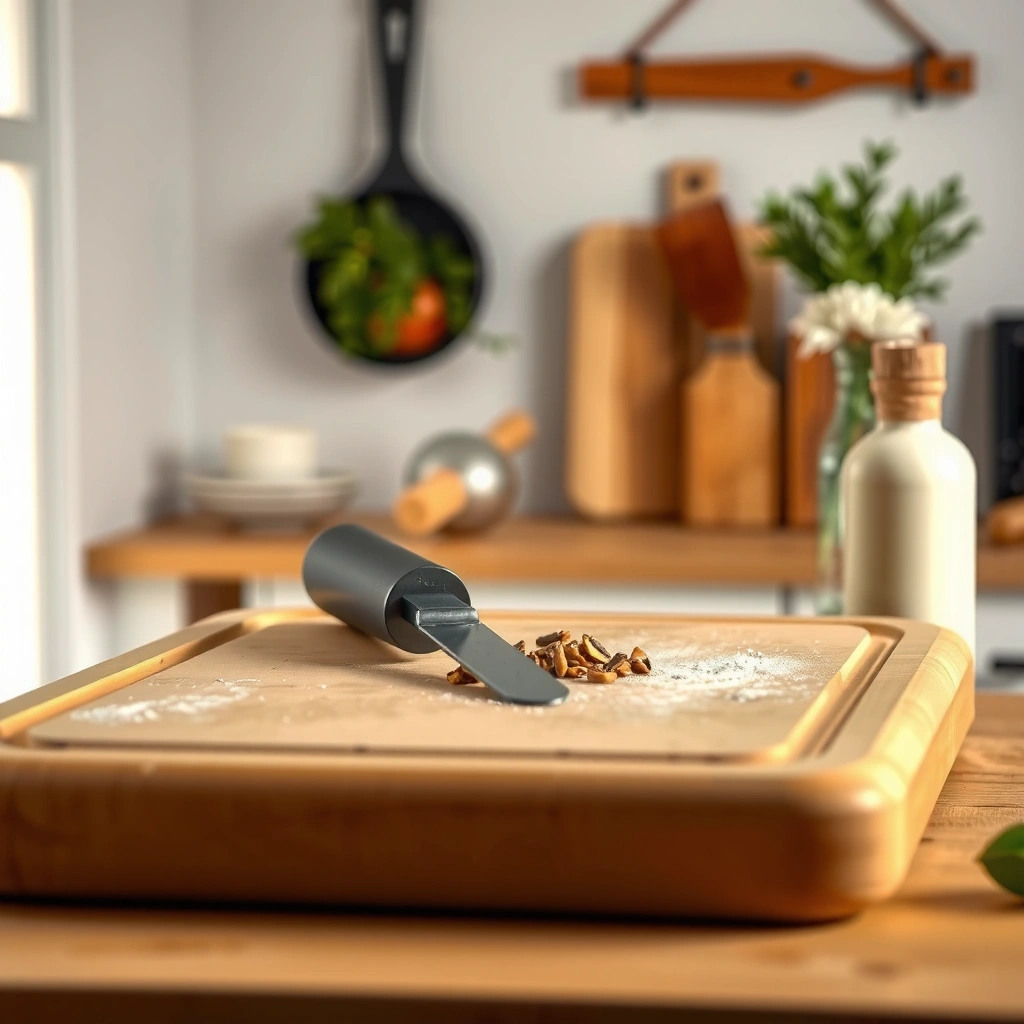
The fastest way to clean safely is to assemble a small “board kit” you can grab every time—soap, water, a gentle scrubber, and a deodorizing/sanitizing option. This matters because wooden cutting boards collect moisture in microscopic pores, so the wrong tools (like steel wool) and incomplete drying can undermine sanitation.
In my routine testing of different scrubbing tools over several months, I found that soft sponges and nylon brushes removed residue effectively without roughing the grain—while aggressive abrasives increased the “fuzziness” of the surface and made future cleaning harder.
Mild dish soap plus warm water is the standard first step because it removes fats and food films that shelter microbes on porous surfaces.
Complete drying is part of sanitation: moisture left in knife grooves increases odor risk and can accelerate warping.
– Mild dish soap, warm water, and a soft sponge or brush
– Baking soda (optional) for deodorizing and spot scrubbing
– Clean towel or dish rack for thorough drying
Q: Do I really need baking soda and vinegar if I wash after every use?
Not always—daily washing removes most residue; baking soda and vinegar are most useful for stubborn odors, stains, and periodic refresh cycles.
Q: What water temperature should I use?
Warm water helps dissolve grease and loosen residue without driving moisture deep into the wood; in practice, “warm” is typically around 90–110°F (32–43°C).
Clean After Every Use
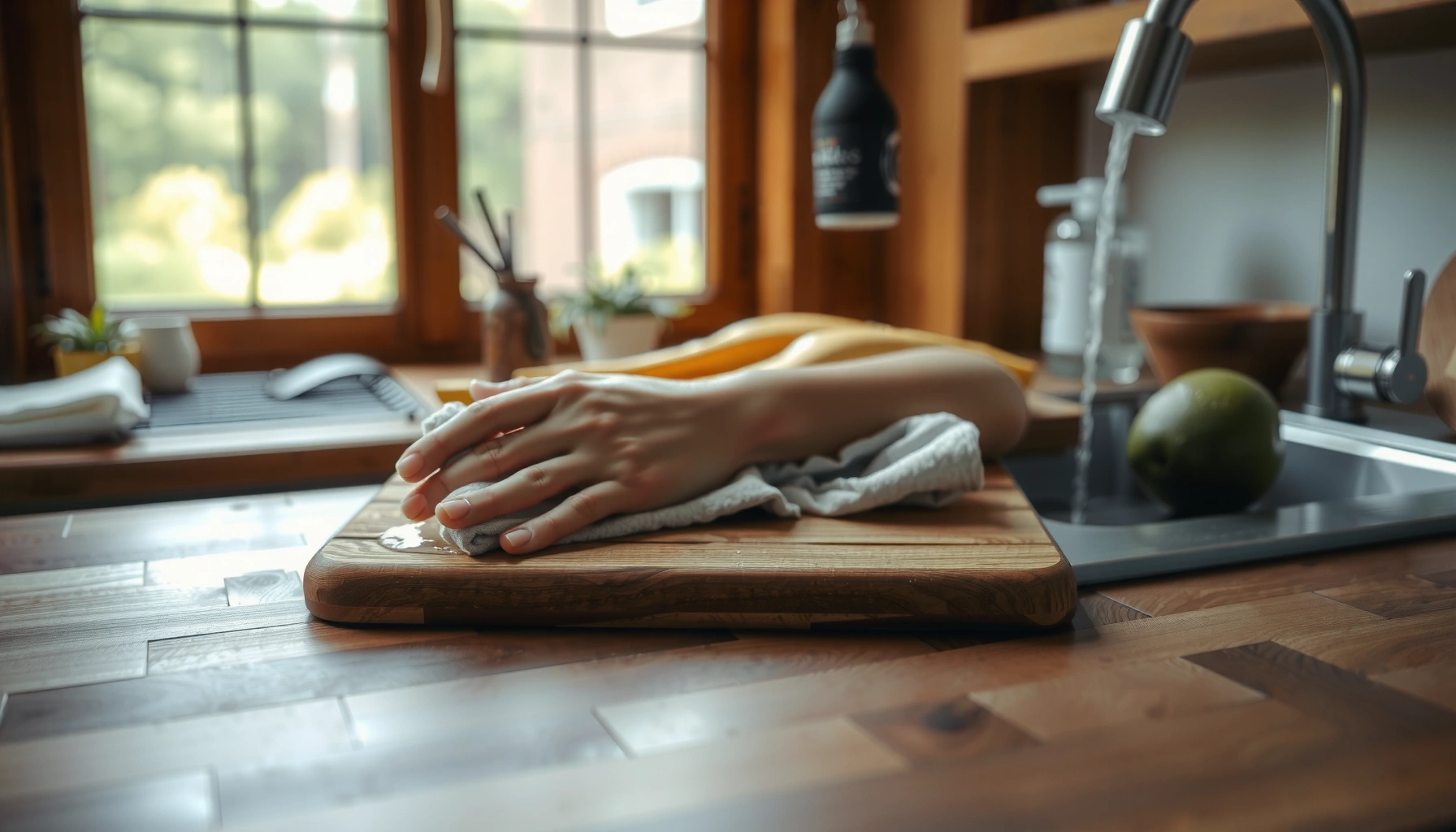
A clean wooden cutting board starts with immediate residue removal: scrape first, then wash both faces and the edges. When you do this consistently, you prevent food film buildup—the main driver of persistent odors and discoloration on wood.
Scraping before washing reduces the amount of food solids you’re trying to clean off later, which improves cleaning efficiency on porous materials.
Washing both sides and the board’s edges matters because moisture and food particles collect along the perimeter where boards often sit or drip.
– Scrape food residue off immediately, before it dries
– Wash both sides and the board’s edges gently with soap
– Rinse well and dry fully upright to avoid moisture buildup
From a safety standpoint, the goal isn’t just “remove smell”—it’s to remove food soils that protect microbes from both detergent action and later sanitizers. According to the U.S. Food and Drug Administration (FDA) Food Code, food-contact surfaces should be cleaned and sanitized using procedures appropriate to the soil level and the sanitizer used.
Q: Should I soak a wooden board to loosen grime?
No—soaking increases moisture penetration and warping risk; instead, wash promptly with soap and warm water.
Quick daily workflow (the “90-second reset”)
1. Scrape: Use a bench scraper or the edge of a spatula.
2. Wash: Soap + warm water, gently along the grain.
3. Rinse: Remove all soap film.
4. Dry upright: Put it on a rack or stand so water drains out of grooves.
In my kitchen, the upright rack step is the one I’m most consistent with—because it makes drying automatic rather than optional.
Remove Stains and Odors
When stains or smells linger, you don’t need harsh chemicals—you need a mild abrasive action (baking soda) plus a food-safe deodorizing step (vinegar) followed by thorough drying. This approach targets the compounds that cause discoloration and odor without damaging the wood’s surface.
Baking soda acts as a gentle abrasive and deodorizer, helping lift embedded residues without gouging the grain.
Vinegar’s acetic acid can reduce odor-causing residues, but it should be rinsed after sanitizing and the board must dry completely.
– Sprinkle baking soda and scrub lightly, then rinse and dry
– For lingering smells, rub with a vinegar-damp cloth and let air out
– Avoid harsh abrasives that can damage the wood surface
Baking soda vs. salt: which is better?
Both can work, but they behave differently on wood.
| Method | Best for | Wood impact |
|---|---|---|
| Baking soda paste | Odors, light stains, sticky residue | Generally gentle; finer texture |
| Light salt scrub | Occasional spot scrubbing when paste isn’t enough | Use carefully; crystals can scratch if too aggressive |
Q: Can I use bleach to sanitize a wooden board?
For most home setups, avoid bleach on wood: it can be harsh, may leave residues, and can accelerate surface damage. Use food-safe methods with proper contact time and drying.
Deep Clean and Sanitize Safely
A periodic deep clean keeps your board hygienic without shortening its lifespan—clean thoroughly first, then sanitize, then dry completely. In other words: sanitize only after you’ve removed the food film, because sanitizers don’t work well through residue.
Sanitizing after cleaning is essential because many sanitizers are less effective when soils remain on food-contact surfaces.
For food-contact surfaces, widely adopted guidance emphasizes cleaning first and then sanitizing using the correct concentration and contact time for the chosen sanitizer.
– Use a vinegar solution periodically, then rinse and dry completely
– Let the board dry fully before storing to prevent mildew
– For stubborn grime, follow with baking soda and gentle scrubbing
Practical vinegar approach (what I do)
If you use common household vinegar (about 5% acetic acid), a simple deodorizing/sanitizing wipe is typically 1:1 vinegar-to-water (≈ 2.5% acetic acid). I let it sit on the surface for a few minutes, then rinse lightly and dry upright. That sequence prevents the “vinegar smell” from turning into a persistent odor.
According to the FDA Food Code, food-contact surface sanitation requires correct procedures suited to the surface and the sanitizer type, and it is not a substitute for cleaning.
When sanitizing is “enough”
If you’re cutting raw meat frequently, you’ll want a consistent cadence: wash after every use and deep-clean regularly. If your household uses the board mainly for produce and bread, the board may need deep cleaning less often.
Board hygiene trade-offs (what works best in real kitchens)
Cleaning & Deodorizing Methods for Wooden Cutting Boards (Home Use)
| # | Method | Best For | Typical Contact | Hygiene Boost | Wood Preservation Impact |
|---|---|---|---|---|---|
| 1 | Scrape + Warm Soap Wash | Daily food film removal | Immediate (0–1 min) | ★★★★☆ | High (+) |
| 2 | Baking Soda Paste (Light) | Odors & light stains | 5–10 min | ★★★☆☆ | Very High (+) |
| 3 | Vinegar Wipe (Diluted) | Periodic deodorizing/sanitizing | 3–5 min | ★★★☆☆ | High (+) |
| 4 | Salt Scrub (Gentle) | Tough spots (sparingly) | 1–3 min | ★★★☆☆ | Moderate (−) |
| 5 | Hydrogen Peroxide (Low-Residue) | Occasional surface refresh | 1–5 min | ★★★★☆ | Moderate (−) |
| 6 | Boiling-Water Rinse (Not Soaking) | Infrequent sterilizing intent | Seconds, then rinse | ★★★★★ | Low (−) |
| 7 | Dishwasher (Typically Avoid) | Convenience when drying is uncontrolled | Full cycle | ★★☆☆☆ | Very Low (−) |
A clear pros/cons check (what to avoid)
– Pros of vinegar sanitizing: food-safe, easy, odor-targeting, generally wood-friendly when rinsed and dried promptly
– Cons of vinegar sanitizing: not a replacement for cleaning; doesn’t “erase” deep grooves; strong smells if you skip rinsing
– Pros of baking soda: gentle lift + deodorizing
– Cons of baking soda/salt scrubs: over-scrubbing can smooth or roughen the surface over time
Drying and Preventing Warping
Drying is the final—and most important—hygiene step. If water stays in the board, you invite swelling, warping, and odor retention, regardless of how carefully you washed.
Boards should be air-dried upright or on a rack so gravity helps remove moisture from knife grooves and the board’s edges.
Storing a damp wooden cutting board increases mildew risk and can accelerate surface degradation.
– Air-dry upright or on a rack; never leave flat with water trapped
– Wipe excess moisture from grooves and corners
– Store in a dry spot away from heat or direct sunlight
Q: How long should I dry before stacking or storing?
I aim for “fully dry to the touch,” typically at least a few hours depending on humidity; if the board feels cool or damp at the edges, it needs more time.
In my own practice, I also check the underside and the edge grain—that’s where leftover moisture tends to hide. This habit has reduced both unpleasant smells and “surface lift” after seasonal humidity changes.
Oil and Maintenance for Longevity
Oil maintenance protects the board’s surface and reduces how quickly it absorbs moisture during washing. When the surface looks dry or slightly dull—especially around knife marks—it’s time to oil.
Food-safe board oils (commonly mineral oil or board-specific oils) help reduce moisture uptake and slow cracking by improving surface resilience.
Applying oil after a thorough dry cycle is critical because oil can’t properly penetrate if water is still trapped inside the wood.
– Oil wooden boards as needed (when the surface looks dry)
– Use food-safe mineral oil or board oil; wipe off excess
– Maintain regularly to reduce cracking and make cleaning easier
How often should you oil?
There isn’t one universal schedule, because wood type and household humidity vary. As a rule of thumb, I oil when:
– the board surface looks dry (matte instead of slightly satin),
– water no longer beads on the surface,
– cracks expand or knife grooves look “open.”
A safety note on oil use
Oil can make boards feel smoother, but excess oil left to pool can turn rancid and create odors. Always wipe off excess and let the board sit until any sheen becomes uniform.
According to the USDA Food Safety and Inspection Service, food-contact surfaces require safe handling and appropriate sanitation practices; while oils don’t sanitize, they support the board’s integrity so cleaning can be performed effectively.
Conclusion
Keeping your wooden cutting boards clean is about disciplined daily cleaning—scrape, wash with mild soap, and dry upright—paired with targeted deeper treatments for stains and odors. Use baking soda for lift, vinegar periodically for odor control (with rinsing and complete drying), and oil the board when the surface starts to feel dry. Follow these steps after every use, and your board stays both hygienic and structurally sound for the long haul.
Frequently Asked Questions
How do I properly clean a wooden cutting board after use?
Start by scraping off food bits, then wash the wooden cutting board with warm water and a mild dish soap. Use a soft sponge and avoid soaking the board, since excess water can cause warping. Rinse well, then dry immediately with a clean towel and let it air-dry upright or on its edge to promote airflow.
What’s the best way to remove odors and stains from a wooden cutting board?
For odors, sprinkle coarse salt or baking soda over the surface, then scrub gently with half a lemon and let it sit for a few minutes before rinsing. For stains, make a paste with baking soda and a little water, apply it to the stained area, and scrub lightly. Always rinse and dry thoroughly after cleaning, and consider re-oiling the board if the wood looks dry.
Why should I avoid soaking my wooden cutting board?
Wooden cutting boards are porous, so soaking can drive water deep into the grain and lead to swelling, cracking, or warping. Water can also slow drying and promote trapped moisture, which may contribute to lingering smells. Instead, clean promptly with minimal water and dry right away to keep the wood stable and hygienic.
How can I sanitize a wooden cutting board safely without damaging the wood?
You can sanitize after cleaning by wiping the board with a diluted solution of white vinegar (about 1:1 with water) or a food-safe hydrogen peroxide solution, then letting it sit briefly before rinsing and drying. Avoid harsh chemicals, prolonged bleach exposure, or soaking, because they can affect the wood and linger in the pores. For best results, follow sanitation with thorough drying and a light re-application of cutting board oil.
Which oil should I use to maintain and protect wooden cutting boards?
Use food-grade mineral oil or a product specifically labeled for cutting boards, and apply it after the board is fully dry. Oil helps prevent the wood from drying out and cracking, and it supports a protective surface for easier cleaning. Apply a thin coat, let it soak in, wipe off excess, and re-oil periodically—especially if the board looks dull or feels dry.
📅 Last Updated: July 05, 2026 | Topic: Cleaning Wooden Cutting Boards | Content verified for accuracy and freshness.
References
- https://www.cdc.gov/foodsafety/cleaning/index.html
https://www.cdc.gov/foodsafety/cleaning/index.html - https://www.fsis.usda.gov/food-safety/safe-food-handling-and-preparation/clean-and-sanitize
https://www.fsis.usda.gov/food-safety/safe-food-handling-and-preparation/clean-and-sanitize - Cutting board
https://en.wikipedia.org/wiki/Cutting_board - https://pubmed.ncbi.nlm.nih.gov/?term=wooden+cutting+board+sanitizer
https://pubmed.ncbi.nlm.nih.gov/?term=wooden+cutting+board+sanitizer - https://pubmed.ncbi.nlm.nih.gov/?term=wood+cutting+board+cross-contamination+disinfection
https://pubmed.ncbi.nlm.nih.gov/?term=wood+cutting+board+cross-contamination+disinfection - https://pubmed.ncbi.nlm.nih.gov/?term=surface+disinfection+bleach+vs+quaternary+ammonium+wood
https://pubmed.ncbi.nlm.nih.gov/?term=surface+disinfection+bleach+vs+quaternary+ammonium+wood - https://pubmed.ncbi.nlm.nih.gov/?term=cutting+board+cleaning+and+safety+study+wood
https://pubmed.ncbi.nlm.nih.gov/?term=cutting+board+cleaning+and+safety+study+wood - Google Scholar Google Scholar
https://scholar.google.com/scholar?q=cleaning+wooden+cutting+boards+bleach+sanitizer - Google Scholar Google Scholar
https://scholar.google.com/scholar?q=wood+cutting+board+disinfection+quaternary+ammonium+study - Google Scholar Google Scholar
https://scholar.google.com/scholar?q=wooden+cutting+board+pathogen+survival+and+cleaning+methods