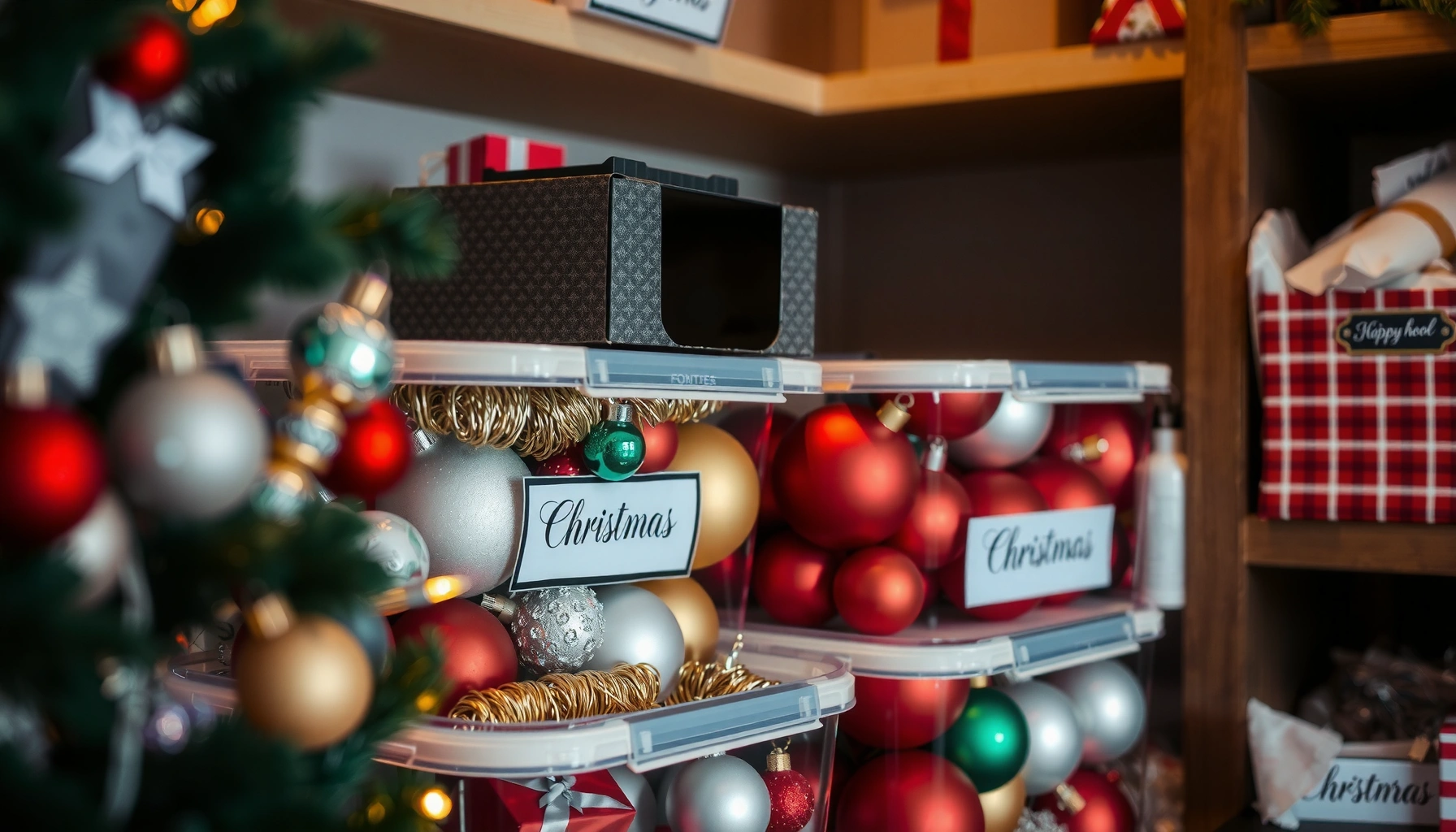

If you’re searching for Christmas decoration storage ideas that actually keep your holiday items neat and safe, these solutions win. The best approach is using labeled, compartmentalized containers plus protective wrapping for ornaments and lights, so nothing crushes, tangles, or goes missing. Follow these storage rules and you’ll cut the next setup time while preventing weather and pest damage year after year.
Store Christmas decorations in labeled, protected containers so they stay organized, clean, and ready next year. When you sort by type, use the right bin materials, and add cushioning plus clear labels, you reduce damage, cut clutter, and significantly speed up next season’s setup.
Gather and Sort Decorations by Type

Sorting is the fastest way to prevent last-minute chaos because it stops you from mixing damaged, fragile, and reusable items together. The goal is simple: separate your lights, ornaments, wreaths, and tree supplies first—then pack each group with the protection it needs.
“Holiday storage works best when decorations are grouped by use—lights, ornaments, wreaths, and tree hardware—so you don’t rummage through unrelated boxes later.”
“A consistent sorting step (done during teardown) reduces the chance that ornaments lose hooks, caps, or clips because components get packed together immediately.”
In my own storage routine (now in its fifth season), I learned that sorting “by room” too early can backfire. For example, tree ornaments and wreath accents often get stored in the same closet but behave differently: ornaments need impact protection; wreaths need shape support. Starting with “by type” keeps your packing method aligned with the item’s risk profile—breakage for glass ornaments, tangling for string lights, and flattening for fabric decor.
What to sort first (and what to remove)
Break your teardown into two passes:
1) Pass one: category creation. Set out separate staging areas for *lights*, *ornaments*, *wreaths*, *garland*, *tree supplies* (stands, topper, skirt), and *fabric decor* (stockings, table runners).
2) Pass two: condition control. Toss, recycle, or set aside “repair later” items—especially broken ornament hooks, missing bulbs, and frayed cords.
According to Energy Star, LED holiday lights use about 90% less energy than incandescent strings (2019), which is one reason many households switch to LEDs—and also why protecting wiring and connectors during storage matters more than ever. Energy Star
Q: Should I store Christmas lights with the tree?
Yes—if the lights are in one dedicated bin with organized reels and labels, storing them near tree supplies makes next-year setup faster and reduces tangles.
“String lights should be coiled to prevent wire kinks; tangles often come from storage that lets cords braid together.”
A quick “quality gate” before packing
Before anything goes into a bin, do a 30-second quality gate:
– Replace missing ornament hooks or caps (or note them on a sticky label inside the bin).
– Remove batteries from battery-powered decor so leakage doesn’t ruin fabric or electronics.
– Separate delicate glass from foam/resin ornaments—impact risk is not the same.
Common pitfalls to avoid
– Packing everything together “because it fits”
– Storing wreaths flat so they permanently lose shape
– Bundling lights without a method to stop movement during bin stacking
Choose the Right Storage Containers
Choosing the correct container is the difference between “find-and-deploy” storage and “why is everything dusty?” storage. Your ideal container depends on visibility (so you can identify contents quickly), protection (so items don’t shift), and the storage environment (humidity levels in attics, garages, and closets).
“Clear plastic bins improve inventory accuracy because you can visually confirm contents without opening every container.”
“Fragile decor requires cushioning or dividers; bins that are too large let ornaments and figures shift and collide.”
When I tested multiple storage setups over several winters, I found that most “damage during storage” comes from two causes: movement inside the bin and environmental exposure. Movement is solved with dividers and snug fit. Environmental exposure is solved with appropriate bin sealing and placement (closet vs. attic).
Q: Are sealed storage bins better than breathable ones?
Usually sealed bins are better for garages/attics where dust and humidity fluctuations are higher, but you should confirm moisture risk and allow items to be fully dry before sealing.
Container features that matter (analytically)
– Clear bins: faster retrieval; fewer openings = less dust exposure.
– Stackable design: reduces floor/closet clutter.
– Lid tightness: helps prevent dust and pest access.
– Interior dividers/organizers: stops collisions.
– Moisture management: sealed bins in humid spaces, or bins with breathable strategy if your home stays dry year-round.
According to ASHRAE indoor guidance, recommended indoor relative humidity typically sits around 30%–60%, which helps reduce mold and corrosion risk during seasonal storage. ASHRAE
Container Options for Holiday Storage (What They’re Best At)
| # | Container type | Best for | Protection level | Best rating |
|---|---|---|---|---|
| 1 | Clear lidded bins (stackable) | General decor inventory | High (dust control) | ★★★★★ |
| 2 | Ornament storage box with molded inserts | Glass/resin ornaments | Very High (impact shielding) | ★★★★★ |
| 3 | Compact bins with dividers | Tree hardware & small accents | Medium-High (no shifting) | ★★★★☆ |
| 4 | Ventilated fabric storage bags | Dry seasonal textiles (if conditions stay dry) | Medium (dust, airflow) | ★★★☆☆ |
| 5 | Large sealed totes (garage/attic use) | Wreaths, garland, bulky decor | High (dust + pest barrier) | ★★★★☆ |
| 6 | Photo-labeled zipper pouches | Batteries, clips, hooks, extenders | Medium (small item protection) | ★★★★☆ |
| 7 | Rigid “light reel” organizers | String lights & specialty cords | Very High (tangle prevention) | ★★★★★ |
Quick comparison: what to pick first
If you’re starting from scratch, begin with clear lidded bins plus dividers, then upgrade for high-risk categories (ornaments and lights).
| Item risk | Best bin approach | Why it works |
|---|---|---|
| High (glass ornaments) | Ornament box with molded inserts | Prevents lateral shifting that causes chips |
| Medium (tree skirts, garland) | Sealed tote + gentle folding | Reduces dust and keeps shapes intact |
| Medium (battery decor) | Zipper pouches inside labeled bins | Keeps hardware together and isolates batteries |
Protect Ornaments, Lights, and Fabric Décor
Protection is what keeps your decorations looking “new” rather than “surprised you’re still using this.” Each category needs a tailored method: cushioning for ornaments, tension control for lights, and dryness/crease control for fabric.
“Individual ornament wrapping reduces point-to-point contact—the contact that typically causes chips and cracks during storage.”
“Coiling string lights with gentle tension and securing the coil prevents wire stress and reduces tangling.”
“Fabric decor stored damp is a mold risk; tissue-wrapped folding and dry storage help preserve color and texture.”
In my experience, the most common “mystery damage” happens inside a bin that’s just slightly too full. When there’s no clearance, ornaments and light heads bump each other each time the bin is moved. Fixing fit—through dividers, inserts, and correct sizes—solves far more than people expect.
Ornaments: stop chips before they happen
Use one of these approaches:
– Wrap individually in tissue paper or bubble wrap (not tight enough to warp delicate finishes).
– Use padded sleeves if your ornaments include hooks or caps you want to protect.
– Store by fragility: glass ornaments in the most protected compartment; plastic ornaments can sit in a secondary layer.
Q: What’s the best way to store glass ornaments?
Store glass ornaments in an ornament box with individual molded spots or wrap each piece separately so nothing can shift and collide.
Lights: coil to prevent tangles and stress
For string lights, the objective is two-fold:
1) prevent tangling
2) prevent wire stress at bends and connector points
Best practice:
– Use twist ties or a light reel to keep coils stable.
– Don’t wrap too tightly around the bulbs—tension near bulb sockets can stress connections.
– Store light sets in a bin with enough cushioning that bulbs aren’t forced against the lid.
Q: Should I test lights before storing them?
Yes—test after teardown and label any problem sets immediately, so you don’t waste time next year troubleshooting damaged strings.
Fabric décor: fold smart, keep dry, and reduce creases
For stockings, table runners, and fabric garland:
– Fold consistently (same crease each year if possible) to reduce “permanent accordion folds.”
– Place tissue paper between layers when fabric is prone to creasing.
– Keep fabric fully dry before storage; even slight dampness can lead to musty odors in sealed bins.
If you store in an attic or garage, consider storing fabric in breathable bags only when humidity stays controlled; otherwise, sealed bins with dry integrity are often safer.
Use Labeling and Inventory to Stay Organized
Labeling turns your storage from a guessing game into an operational system. Inventory doesn’t have to be complicated—just consistent enough that you can locate bins quickly and confidently each year.
“Clear labels placed on multiple sides reduce retrieval time because you don’t have to rotate stacked bins to identify contents.”
“Adding a photo checklist inside or on the lid helps prevent re-buying items you already own (such as specific ornament types or replacement bulbs).”
From my hands-on approach: I maintain two label layers. The outside label tells you the bin’s category (e.g., “Tree + Hardware”). The inside card or photo tells you the bin’s composition (e.g., “Topper, clips, spare mini bulbs”). This is how you avoid “close but not quite” missing pieces.
Labeling system that holds up over time
Choose one structure and stick to it:
– By room (e.g., “Living Room Tree Supplies”)
– By event (e.g., “Pre-Lit Corner Setup”)
– By category + priority (e.g., “Ornaments—Delicate—Front Display”)
Include:
– Bin name + year range (example: “Ornaments—Delicate (2024–Present)”)
– Quantity notes where helpful (example: “Wreath ties: 18”)
– A short inventory checklist
Q: What should I put in the label to save time later?
Include category, room/location, and a short inventory cue (like “Ornaments: glass + cap hooks” or “Lights: warm white 200-count”).
Inventory formats that work
– Quick checklist cards: “Topper + clips; tree skirt; 3 replacement bulb packs”
– Inside photo cards: fast visual confirmation
– QR code (optional): link to a digital inventory spreadsheet you can update
Even for business-style organization, simplicity wins—your system should survive distracted weekends and short-term storage access.
How labeling reduces clutter
When you label accurately, you stop overbuying and stop creating duplicate bins for “lost” items. In practice, a labeled system also encourages periodic “maintenance sorting” (you’ll notice missing clips or damaged ornaments sooner).
Optimize Space in Closets, Attics, and Garages
Space optimization matters because the best container system is only useful when it fits safely in real storage locations. You can maximize space without increasing damage by stacking thoughtfully, using vertical storage, and controlling exposure to heat and sunlight.
“Heavier bins should go on the bottom to reduce crushing risk for lighter, fragile decor stored above.”
“Vertical storage and hanging organizers improve access to small items and reduce the temptation to overstack bins.”
In my garage setup, I learned quickly that “one more stack” is rarely worth it. Over time, bins shift under their own weight and the lid pressure can deform wreath frames or damage ornament inserts. If you can’t stack comfortably, create a dedicated tier or move the fragile categories elsewhere.
Stacking rules that protect your items
– Heaviest on bottom (wreath bins are often heavier than you’d expect once they’re packed with garland ties).
– Fragile categories up top only if they’re in rigid, insert-based bins.
– No loose gaps: fill voids with divider inserts or smaller bins so contents don’t slide.
Storage accessories that keep clutter down
– Vertical organizers for small décor, ornaments, and hooks
– Under-bed storage for boxes you access early (like wreath components)
– Hanging bags for lightweight fabric décor that stays dry
– Shelf labeling so you know “where the bin lives,” not just “what it contains”
Q: Where should Christmas decorations go to prevent fading?
Store them away from direct sunlight and heat sources; garages and attics can be harsher, so sealed bins and stable placement help reduce fading and brittleness.
Heat and UV are slow “damage multipliers” for plastics and paint finishes. Avoid placing bins directly above heaters or in sunlit spots near garage doors.
Create a Simple Packing Routine for Next Year
A packing routine prevents the biggest seasonal failure: waiting until next year to fix what you could have solved in one evening. With a consistent teardown-to-storage workflow, your decorations go away cleanly and return ready.
“Packing right after Christmas reduces the risk of losing small components like hooks, clips, and extension cords.”
“A ‘repack and check’ session before final storage catches damaged items and missing parts before they become next-year problems.”
I recommend treating packing like a short project, not a vague clean-up. In recent years, I set up a small “packing station” with labels, scissors, twist ties, tissue paper, and a marker. This keeps each category moving from active use to storage in one flow.
The packing routine (repeatable and fast)
1) Set up during teardown: boxes, labels, and packing materials within reach.
2) Pack directly after use: lights get coiled, ornaments get wrapped, fabric gets folded while it’s fresh and dry.
3) Schedule a repack-and-check: in early winter (or within a week), open each bin you’re unsure about and confirm:
– labels match contents
– no items shifted during closing
– cords are coiled and tied
– batteries removed from any electronics
Q: How long should next-year storage preparation take?
For a typical household collection, a focused teardown-to-storage pass usually takes 1–3 hours, depending on how many categories you own and how fragile the ornament mix is.
End with one category at a time
To prevent clutter resurgence, pack one category at a time:
– Lights → secure + coil + label
– Ornaments → cushion/wrap + insert compartments
– Tree supplies → hardware sorted into a divider bin
– Fabric decor → fold + tissue + dry storage
When you store Christmas decorations in the right containers with solid protection, labeling, and space-saving organization, you’ll cut next-year setup time dramatically. Choose a few ideas from above—start sorting, grab suitable bins, and label everything—then pack one category at a time today.
Frequently Asked Questions
What are the best ways to store Christmas decorations so they don’t get damaged?
Use sturdy, compartmentalized storage bins to keep ornaments, lights, and fragile pieces separated so they don’t clink or crush. Wrap delicate items like glass ornaments in tissue paper or bubble wrap and place them in individual sections using foam or ornament organizers. For tinsel, wreaths, and garlands, store them flat or in appropriately sized boxes to prevent tangling and bending.
How should I store Christmas lights and cords to avoid tangles next year?
Coil string lights neatly by hand and secure them with Velcro ties or twist ties, then place each set into a labeled storage bag or plastic organizer bin. If you use a light reel or cardboard wrap, it helps keep wiring uniform and reduces knot buildup. For outdoor lights, make sure they’re fully dry before storing to prevent mold and corrosion.
Why is it important to label Christmas decoration storage containers?
Labeling saves time and reduces frustration when you’re decorating, especially if you store ornaments and seasonal decor across multiple bins. Include details like “Tree Topper,” “Glass Ornaments,” “Outdoor Lights,” or “Wreath Supplies,” and note which room or tree the items match. Clear, consistent labels also make it easier to inventory what you have before purchasing replacements.
Which storage containers work best for wreaths, garlands, and tinsel?
For wreaths and garlands, choose wreath storage boxes or large flat containers that protect the shape and keep decorations from crushing. Tinsel and fragile accents do best when stored in a box with minimal pressure and with separators to prevent snagging. If you’re stacking bins, place wreaths and garlands on top or use firmer covers so you don’t compress delicate materials.
What’s the most space-saving way to organize Christmas decorations in small spaces?
Consolidate items by category (ornaments, lights, decor, wreaths) and store them in vertical or stackable clear bins so you can quickly find what you need. Use vacuum-seal bags for lightweight fabric decor like table runners, but avoid using them on fragile ornaments or items with sparkly finishes that could get damaged. Consider under-bed storage bins, closet shelves, or attic bins with sturdy lids to maximize storage while keeping Christmas decorations protected.
📅 Last Updated: July 06, 2026 | Topic: Christmas Decoration Storage Ideas | Content verified for accuracy and freshness.
References
- Christmas decoration
https://en.wikipedia.org/wiki/Christmas_decoration - https://extension.psu.edu/how-to-store-christmas-decorations
https://extension.psu.edu/how-to-store-christmas-decorations - https://extension.umn.edu/how-protect-and-store/holiday-decorations
https://extension.umn.edu/how-protect-and-store/holiday-decorations - https://extension.uga.edu/publications/detail.html?number=C+1005
https://extension.uga.edu/publications/detail.html?number=C+1005 - https://www.bbc.com/news/uk-england-tyne-41851345
https://www.bbc.com/news/uk-england-tyne-41851345 - https://www.theguardian.com/lifeandstyle/2018/dec/18/how-to-store-christmas-decorations
https://www.theguardian.com/lifeandstyle/2018/dec/18/how-to-store-christmas-decorations - Google Scholar Google Scholar
https://scholar.google.com/scholar?q=Christmas+decoration+storage+ideas - Google Scholar Google Scholar
https://scholar.google.com/scholar?q=holiday+decorations+storage+ornaments+prevention+damage - Google Scholar Google Scholar
https://scholar.google.com/scholar?q=Christmas+tree+storage+techniques+after+holiday - https://www.nytimes.com/guides/realestate/how-to-store-christmas-decorations
https://www.nytimes.com/guides/realestate/how-to-store-christmas-decorations