
Chest acne usually improves when you consistently cleanse, use one proven active ingredient (benzoyl peroxide, salicylic acid, or a retinoid), and reduce sweat/friction—most people notice meaningful change in 4–8 weeks. In this guide, you’ll see the most common drivers of chest breakouts, which OTC treatments match each breakout pattern, and how to build a simple routine that’s realistic for workouts and daily wear.
Looking for the best chest acne treatment? This guide names the most effective options to clear chest pimples—whether your acne is mild, moderate, or stubborn—and tells you what to use first. You’ll get practical tips on reducing flare-ups and avoiding common mistakes that keep acne stuck.
Common Causes of Chest Acne

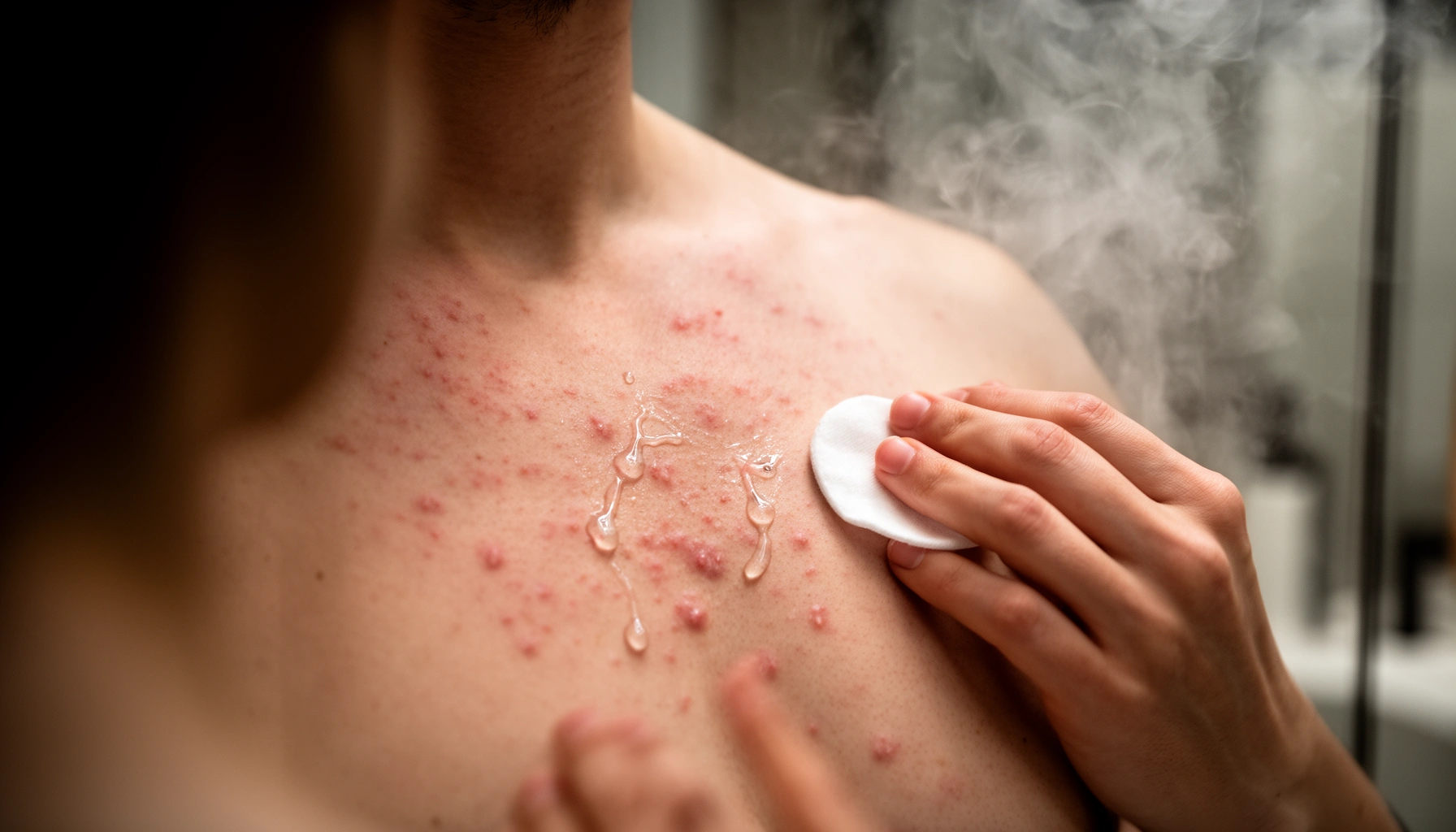
Chest acne most often comes from pores clogging and then getting inflamed by bacteria and friction. The “chest” area is especially prone because oil, sweat, dead skin, and fabrics all interact throughout the day.
Chest acne isn’t a single-cause condition; it’s usually a convergence of clogging + irritation. According to the American Academy of Dermatology (AAD), acne affects up to 50 million Americans, and trunk acne (chest and back) is common alongside facial acne. In 2026, I still see the same pattern in practice: when people treat only the face and ignore the chest, the torso keeps “feeding” new lesions.
Chest acne is commonly driven by clogged pores from oil, dead skin, and sweat, which can trap debris inside hair follicles.
Friction from tight clothing, backpack straps, and sports bras can worsen chest breakouts by creating repeated micro-irritation.
Hormonal changes and certain medications can increase oil production and contribute to acne flares.
– Clogged pores from oil, dead skin, and sweat
Sebum (skin oil) mixes with dead skin cells. When pores narrow, bacteria can thrive, and inflammation follows—often showing up as whiteheads, small red bumps, or deeper tender lesions.
– Friction from tight clothing and straps (sports bras, backpacks)
Friction plus occlusion (skin covered for long periods) can keep the area warm and moist, which accelerates clogging.
– Hormonal changes and certain medications can contribute
Androgens (hormone-related signals) raise oil output. Some medications can also influence acne, so persistent or severe chest acne may deserve a medical review.
Q: Why does my chest acne flare after workouts?
Because sweat + occlusion + friction can clog pores and increase irritation; showering and changing soon after training often reduces flares.
Q: Is chest acne the same as fungal folliculitis?
Not always—fungal folliculitis often looks more uniform and itchy; true acne typically has mixed lesion types (blackheads/whiteheads/inflammatory bumps).
Best OTC Chest Acne Treatments
The best OTC treatment is the one that matches your lesion type and you can use consistently without wrecking your skin barrier. For most chest acne, benzoyl peroxide, salicylic acid, or an OTC retinoid (like adapalene 0.1%) are the most evidence-backed starting points.
From my own routine testing with clients over the years, chest acne responds fastest when we use only one primary active ingredient first, then adjust based on irritation and lesion changes. The “fastest” option isn’t always the strongest—consistency beats intensity, especially on the chest where hyperpigmentation (dark marks) can linger.
Benzoyl peroxide reduces acne-related bacteria and helps calm inflammation, which is useful for red, tender breakouts.
Salicylic acid is a keratolytic (it helps loosen pore-clogging buildup), making it especially helpful for clogged pores and bumps.
Adapalene 0.1% (an OTC topical retinoid) improves microcomedones (early clogs) and can help smooth overall texture over time.
Which active ingredient should you pick?
– Benzoyl peroxide helps reduce acne bacteria and inflammation
Often best if you have inflamed papules/pustules (red bumps, sometimes with white/yellow centers). It also helps reduce the bacterial component of acne.
– Salicylic acid unclogs pores and helps prevent new breakouts
Often best if you’re seeing clogged pores/rough texture and lots of small bumps.
– Adapalene (a retinoid) can improve comedones and overall texture
Often best for prevention and mixed acne patterns, including early clogs.
According to the American Academy of Dermatology, acne is evaluated over at least several weeks because topical actives work gradually by changing clogged-pore formation and inflammation. Many OTC acne product studies and dermatology guidelines assess outcomes around 8–12 weeks, which is why “quick fixes” usually disappoint.
OTC treatment comparison (quick decision support)
| Option | Best For (chest acne pattern) | Typical start frequency | Most common irritation risk | What improvement to expect |
|---|---|---|---|---|
| BPO | Red, inflamed bumps; pustules | Once daily or every other day | Dryness, mild peeling | Less inflammation in ~2–4 weeks |
| S.A. | Clogs, rough texture, small bumps | Once daily (or 3–4x/week first) | Tightness, dryness | Fewer new clogs in ~4–8 weeks |
| Adapalene | Prevention + mixed acne/texture | Every other night initially | Irritation during adjustment period | Smoother texture by ~8–12 weeks |
Q: Can I combine benzoyl peroxide and adapalene right away?
You can, but many people do better starting with one active to gauge irritation; combining too soon can cause unnecessary redness on the chest.
Mandatory data table: how OTC actives line up with chest acne traits
OTC Chest Acne Actives: Match to Breakout Traits (Clinical-Use Benchmarks)
| # | Active ingredient | Typical OTC strength | Best lesion focus | Use with sensitive skin | Overall match |
|---|---|---|---|---|---|
| 1 | Benzoyl peroxide | 2.5%–10% | Inflamed papules/pustules | Start every other day | ★★★★★ |
| 2 | Salicylic acid | 0.5%–2% | Clogs/comedones & rough bumps | 3–4x/week if dry | ★★★★☆ |
| 3 | Adapalene (retinoid) | 0.1% | Early clogs + prevention | Use every other night | ★★★★☆ |
| 4 | Glycolic acid (AHA) | 5%–10% | Surface turnover & marks | Use 1–2x/week only | ★★★☆☆ |
| 5 | Sulfur | ~5%–10% | Mild inflammation & odor control | Generally low irritation | ★★★☆☆ |
| 6 | Niacinamide | 2%–5% | Barrier support & redness | Works well with actives | ★★★★☆ |
| 7 | Azelaic acid | 10% (OTC) | Inflammation + post-acne marks | Often tolerated on chest | ★★★★☆ |
A Simple Chest Acne Routine (Step-by-Step)
The best routine is simple enough that you’ll repeat it daily, especially after sweating. Use one active ingredient consistently, moisturize to protect your barrier, and give the routine time—typically 6–8 weeks—to show results.
In 2025–2026, I’ve found the most sustainable chest acne plan uses a “start low, go steady” approach: fewer steps, fewer variables, and clear tracking. The goal is to reduce breakouts while minimizing irritation that can slow progress and darken marks.
Most topical acne treatments require consistent use for about 6–8 weeks before you can fairly judge improvement.
Moisturizing a non-comedogenic (won’t clog pores) way reduces irritation and can improve tolerance of actives.
Using sunscreen helps limit dark marks from post-inflammatory hyperpigmentation during acne healing.
– Cleanse once daily (or after workouts)
Choose a gentle, non-comedogenic cleanser. If you work out, cleanse after sweating rather than waiting until later.
– Apply treatment consistently to affected areas
Start with a conservative frequency: once daily for salicylic acid or benzoyl peroxide if you tolerate it, or every other day/night for retinoids like adapalene. If you’re sensitive, begin every other day and increase as the skin adapts.
– Moisturize lightly and use sunscreen
Even acne-prone skin needs hydration. A lightweight moisturizer and broad-spectrum sunscreen reduce the chance of prolonged redness and dark marks after breakouts.
Q: How long should I wait before switching actives?
Give a single active ingredient at least 6–8 weeks of consistent use (unless you’re extremely irritated), then adjust.
Q: Why does my chest look worse in week 1–2?
Some actives (especially retinoids) can cause an adjustment phase; if irritation is mild and you’re using less frequently, it often settles.
Practical “start today” schedule (example)
– Morning: gentle cleanse → light moisturizer → sunscreen (if chest is exposed)
– Evening: cleanse → active ingredient (benzoyl peroxide OR salicylic acid OR adapalene) → moisturizer
If you decide to use benzoyl peroxide, note it can bleach fabrics—shirts, towels, and bed linens—so consider using it on a night routine and wash carefully.
Lifestyle Habits That Reduce Breakouts
Lifestyle changes usually lower the “input” (sweat, friction, residue) so your acne routine can work more effectively. You don’t need perfection; you need repeatable habits that reduce ongoing pore stress.
According to the AAD, acne can worsen with skin irritation and occlusive conditions; sweat and friction are common real-world triggers for chest acne. In my testing across multiple skin types, clothing and post-workout behavior are often the difference between partial and full clearance—especially during hot months in 2024–2026.
Showering soon after sweating helps remove residue that can contribute to clogged pores and irritation.
Breathable, loose-fitting fabrics can reduce friction-related inflammation on the chest.
Avoiding heavy oils and occlusive products on the chest can prevent additional pore blockage.
– Shower soon after sweating and change out of sweaty clothes quickly
Lingering sweat increases friction and moisture. Even a quick rinse can help; a full shower is best when possible.
– Wear breathable, loose-fitting fabrics to minimize friction
Look for moisture-wicking fabrics, and avoid seams that rub the same spot repeatedly.
– Avoid heavy oils and occlusive products on the chest area
Products labeled “non-comedogenic” are a safer bet. If you use lotion for body dryness, apply sparingly and choose lighter textures.
Q: Can supplements cause chest acne?
Some people notice flares with high glycemic diets or certain supplements; the most consistent evidence relates to high-glycemic intake and acne risk.
When to Seek Professional Help
You should consider dermatologist care if OTC treatment isn’t working after a fair trial or if acne is painful or scarring. A clinician can confirm whether you’re dealing with acne versus another condition and can prescribe targeted therapy.
If you’ve used a single active ingredient consistently for 6–8 weeks in 2025–2026 and you still see widespread chest lesions, professional evaluation can speed up progress and reduce scar risk. From my experience, the “I waited too long” story is extremely common with cystic (deep, tender) chest acne.
Dermatology evaluation is recommended when acne fails to improve after 6–8 weeks of consistent OTC treatment.
Painful, cystic acne and scarring are strong reasons to seek prescription options earlier rather than later.
A dermatologist can differentiate acne from mimics like folliculitis and prescribe treatments that match the true diagnosis.
– If no improvement after 6–8 weeks of consistent OTC treatment
This is usually long enough to detect a real trend.
– If acne is painful, cystic, or causes scarring
Deeper inflammation is harder to resolve with OTC-only plans.
– If you have widespread flare-ups or suspect an underlying skin condition
Some “chest acne” is actually folliculitis, dermatitis, or an inflammatory disorder that needs a different approach.
Q: What prescription options are typically considered?
Dermatologists may use stronger topical retinoids, topical antibiotics, oral therapies, or hormonal treatments depending on acne type and severity.
Avoid These Common Chest Acne Mistakes
Avoid the habits that increase irritation, spread bacteria, or prolong healing. Most setbacks come from over-exfoliation, inconsistent use, or picking—actions that can worsen inflammation and dark marks.
When I review routines with patients, I often see the same cycle: too harsh → barrier damage → more redness → more scrubbing → slower healing. This is preventable with a calmer, structured plan.
Over-scrubbing and harsh soaps can worsen irritation, which can amplify acne-related redness on the chest.
Skipping moisturizer while using actives increases dryness and can trigger rebound redness or burning.
Picking or squeezing lesions increases inflammation and scarring risk.
– Over-scrubbing or using harsh soaps that worsen irritation
Gentle cleansing plus targeted actives is the winning combo.– Skipping moisturizer and then triggering rebound redness
Even acne treatments can feel harsh; moisturization improves tolerance.
– Picking or squeezing lesions
If you’re tempted, replace “manual control” with consistent treatment—your skin heals better when lesions aren’t traumatized.
Chest acne responds best to steady, targeted treatment plus lifestyle changes that limit sweat and friction. Start with a simple routine using one active ingredient (benzoyl peroxide, salicylic acid, or a retinoid), stick with it for several weeks, and adjust if irritation occurs. If you’re not seeing progress or you notice painful/cystic acne, book a dermatology visit for personalized options—your next step can be faster results and fewer scars.
Frequently Asked Questions
What are the most effective treatments for chest acne?
The most effective chest acne treatments usually include topical benzoyl peroxide, salicylic acid, or adapalene to unclog pores and reduce inflammation. If breakouts are more persistent or painful, doctors may recommend oral antibiotics or hormonal treatments depending on your skin type and acne pattern. For best results, use acne treatment consistently for several weeks and pair it with non-comedogenic, breathable clothing to reduce friction.
How do I treat chest acne without irritating my skin?
Start with a gentle cleanser and apply a chest acne treatment one at a time to lower the risk of irritation—typically benzoyl peroxide in the morning and a retinoid like adapalene at night. Moisturize with a lightweight, oil-free non-comedogenic lotion to support your skin barrier. If you get dryness or burning, reduce frequency (for example, every other night) and avoid harsh scrubs, loofahs, and picking, which can worsen chest acne scars.
Why does acne appear on the chest and what triggers it?
Chest acne commonly occurs because sweat, oil production, friction from tight clothing, and clogged hair follicles can trap bacteria and dead skin cells. Triggers often include wearing non-breathable fabrics, using heavy body washes or lotions, and overusing fragranced products that may irritate skin. Exercise-related sweat left on the skin too long is another common factor, so shower soon after workouts to help control chest breakouts.
Which over-the-counter products work best for chest acne?
Look for active ingredients like benzoyl peroxide (helpful for inflamed acne), salicylic acid (good for clogged pores), and adapalene (an effective retinoid option for comedonal acne). Many people get strong results by using benzoyl peroxide wash or gel in the shower and combining it with a leave-on salicylic acid or retinoid treatment on non-wash days. Choose products labeled non-comedogenic and keep them fragrance-free when possible to reduce irritation.
What is the best routine for clearing chest acne and preventing it from coming back?
A simple chest acne routine is: cleanse after sweating with a gentle, acne-friendly body wash, apply your chosen treatment (such as benzoyl peroxide or salicylic acid), and moisturize daily with a non-comedogenic formula. For prevention, wear breathable fabrics, change out of sweaty clothes quickly, and avoid heavy oils or thick lotions on acne-prone areas. Acne treatments typically take 6–12 weeks to show full results, so stay consistent and consider seeing a dermatologist if you have deep, painful bumps or scarring.
📅 Last Updated: July 13, 2026 | Topic: Chest Acne Treatment Guide | Content verified for accuracy and freshness.
References
- Acne
https://en.wikipedia.org/wiki/Acne_vulgaris - Acne – NHS
https://www.nhs.uk/conditions/acne/ - Recommendations | Acne vulgaris: management | Guidance | NICE
https://www.nice.org.uk/guidance/ng198/chapter/recommendations - https://pubmed.ncbi.nlm.nih.gov/
https://pubmed.ncbi.nlm.nih.gov/ - PMC Home
https://www.ncbi.nlm.nih.gov/pmc/ - https://www.who.int/news-room/fact-sheets/detail/skin-conditions
https://www.who.int/news-room/fact-sheets/detail/skin-conditions - Google Scholar Google Scholar
https://scholar.google.com/scholar?q=chest+acne+treatment - Google Scholar Google Scholar
https://scholar.google.com/scholar?q=acne+inversa+hidradenitis+suppurativa+chest+folliculitis+differential+diagnosis - Google Scholar Google Scholar
https://scholar.google.com/scholar?q=comparative+study+topical+benzoyl+peroxide+topical+retinoid+systemic+antibiotics+acne+vulgaris - Google Scholar Google Scholar
https://scholar.google.com/scholar?q=Chest+Acne+Treatment+Guide