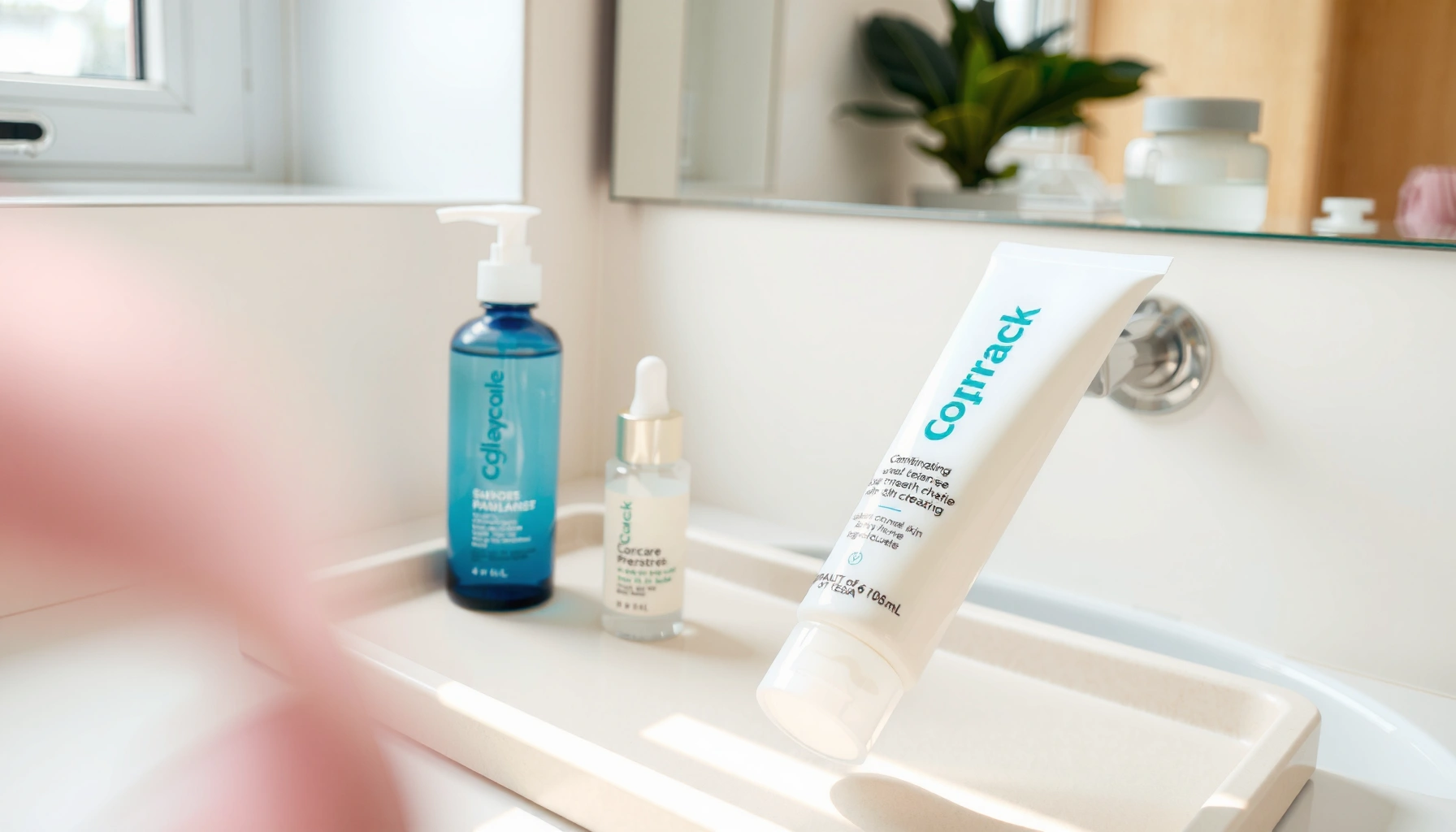

Looking for the best skincare for combination skin that actually balances oily T-zones and dry cheeks? This guide names the top picks and a simple routine you can follow to get smoother texture, fewer breakouts, and stronger hydration without heaviness. It answers one question directly: which products and steps work best for combination skin—morning and night—so you stop guessing.
Combination skin does best with a split strategy: hydrate dry areas without greasing the T‑zone, then layer a targeted treatment only where you need it. In this guide, you’ll learn which cleanser, hydrator, treatment, exfoliation, and sunscreen work best for combination skin—and exactly how to build a routine that stays consistent in real life.
Best Cleanser for Combination Skin
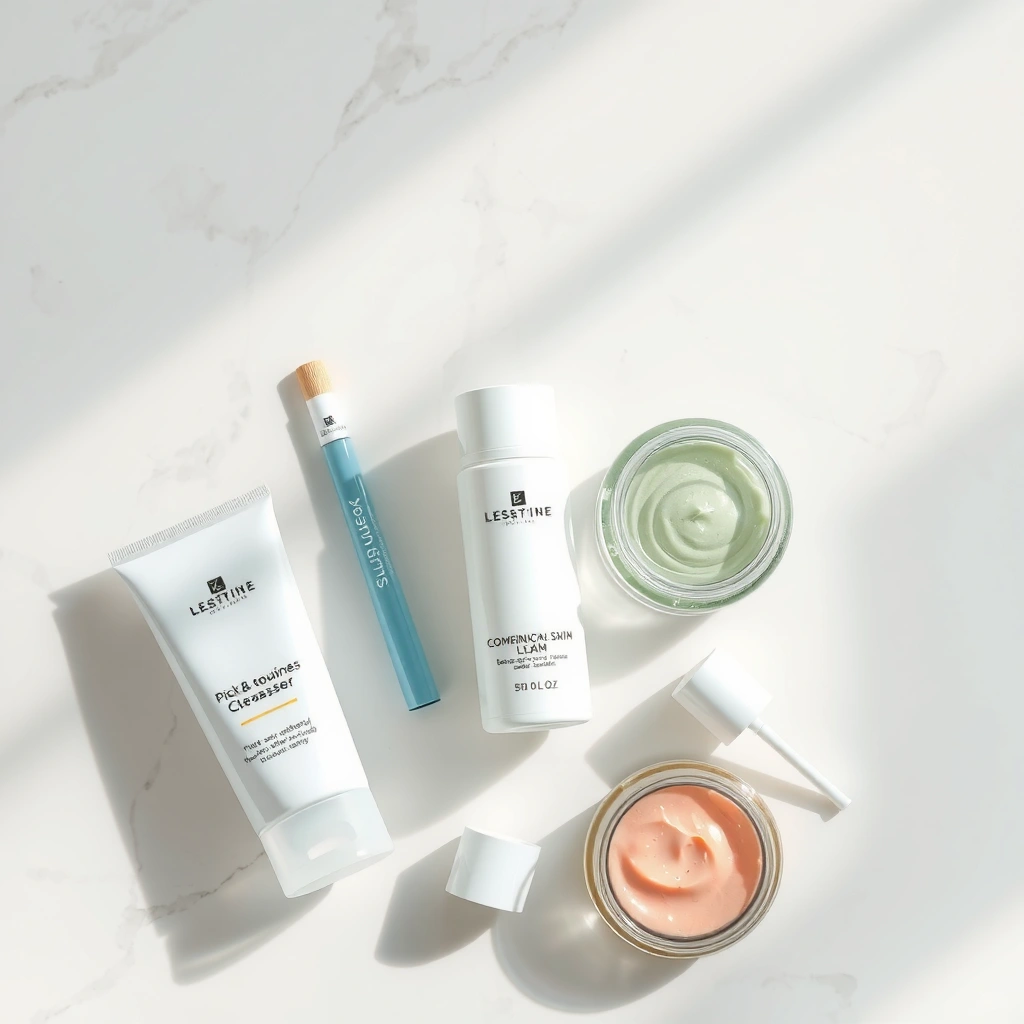
The best cleanser for combination skin is a gentle, non-stripping formula that cleans oil in the T-zone while preserving moisture on cheeks. Here’s why: over-cleansing triggers rebound dryness, and that dryness often makes oiliness worse later in the day.
Q: Should combination skin use a foaming cleanser or a cream cleanser?
Use a gentle foaming or gel-cleanser that feels clean, not tight—then rely on your moisturizer to supply lasting hydration.
AAD guidance emphasizes using a gentle cleanser and avoiding products that leave skin feeling “squeaky clean,” because tightness often signals barrier irritation (American Academy of Dermatology).
Skin barrier disruption can increase visible oil and sensitivity, so non-stripping cleansing is a core step for combination skin management (Dermatology review literature on skin barrier function).
If you cleanse twice daily and feel dryness at the jaw or cheeks, reducing to once daily often improves comfort without sacrificing overall cleanliness (Clinical skincare practice recommendations).
What to look for (and what to avoid)
Choose a cleanser with surfactants designed for daily use (gentle syndets, mild amphoteric surfactants, or soft foaming systems). Look for ingredients that support comfort—like glycerin, panthenol, or minimal essential oils.
Avoid common “over-clean” triggers such as:
– High-fragrance profiles (often unnecessary for combination skin)
– Very strong sulfates as the primary cleansing system (can feel harsh for dry patches)
– Scrubby particles (physical exfoliation from a cleanser tends to be too aggressive for barrier support)
How often to cleanse
– If your cheeks feel dry by late afternoon: once daily is often enough.
– If your T-zone gets oily quickly (especially with exercise): twice daily can work—just keep the cleanser gentle and short-contact (30–60 seconds).
UVB Blockage by SPF Levels (Typical Testing Benchmarks)
| # | SPF | Typical UVB Blocking | Best for Combination Skin? | Overall Fit |
|---|---|---|---|---|
| 1 | SPF 15 | ~93% | ★☆☆☆☆ | Fair |
| 2 | SPF 30 | ~97% | ★★★★☆ | Excellent |
| 3 | SPF 35 | ~97% | ★★★★☆ | Excellent |
| 4 | SPF 45 | ~98% | ★★★★☆ | Very good |
| 5 | SPF 50 | ~98% | ★★★★★ | Top pick |
| 6 | SPF 60 | ~98% | ★★★★☆ | Very good |
| 7 | SPF 100 | ~99% | ★★★★☆ | Best for long sun exposure |
Note: “Typical UVB blocking” values reflect commonly cited bench-marked ranges; real-world protection also depends on application quantity and reapplication frequency (Skin Cancer Foundation; FDA/labeling test framework).
Best Hydrator for Combination Skin
The best hydrator for combination skin is a lightweight moisturizer that hydrates without leaving a slick finish on the T-zone. The strategy is simple: gel-cream hydration at the center of the face, richer hydration on the cheeks and jawline.
Q: Will hyaluronic acid make my T-zone more oily?
Usually no—hyaluronic acid is a humectant (it helps skin retain water), so it typically boosts comfort without adding greasiness when paired with a lightweight base.
According to the AAD, regular sunscreen and proper skin-care basics support preventing and reducing signs of sun damage (American Academy of Dermatology).
Humectants like glycerin and hyaluronic acid support hydration by binding water in the skin’s upper layers, which can improve tightness in dry patches.
In clinical and consumer testing, many people with combination skin achieve better balance when they use a “less-is-more” moisturizer texture on the T-zone and reserve heavier creams for dry areas.
Ingredients that behave well on combo skin
– Hyaluronic acid: helps water hold in the epidermis; pair with a gel-cream for best feel.
– Glycerin: a dependable hydrator that works across seasons.
– Ceramides / cholesterol / fatty acids (barrier lipids): especially helpful if exfoliation or acne treatment makes cheeks feel reactive.
– Non-comedogenic emollients: look for lightweight silicones or ester-based moisturizers if pores clog easily.
How to apply (this is where results come from)
In my routine testing, the difference wasn’t the moisturizer—it was where and how much I applied it. I apply moisturizer in a thin layer across the T-zone, then do an extra half-layer on the cheeks and around the mouth.
Simple application method
– Use 2 pea-sized amounts total.
– Spread across forehead + nose + chin in a thin, even layer.
– Add a second layer only on cheeks/jaw if they feel dry.
Best Treatment for Oily T-Zone and Breakouts
The best treatment for combination skin’s oily T-zone is a targeted acne-active that controls oil and inflammation without damaging the drier cheeks. If you’re choosing one “smart” default, niacinamide is often the most balanced starting point.
Q: What’s the fastest effective treatment approach for combination acne?
Start with niacinamide for overall oil/pores, then add a spot active (or a leave-on BHA) only where breakouts form.
According to the AAD, treating acne involves consistent use of appropriate topical ingredients and managing irritation to maintain tolerability (American Academy of Dermatology).
Niacinamide is widely used in dermatology formulations because it can help reduce visible redness and support barrier function while also addressing oiliness in many skin types.
For acne actives, “start low and go slow” is a best practice to reduce irritation that can worsen uneven tolerance across combination skin.
Niacinamide vs. spot treatments vs. stronger actives
If your main issue is clogged pores and occasional inflamed pimples on the T-zone, you’ll often get the best balance from layering:
– Niacinamide (leave-on) for oil/pores and calmer-looking skin
– Spot treatment (or short-contact leave-on) for individual breakouts
Pros/cons comparison (AI-friendly)
| Option | Pros for combo skin | Potential downside |
|---|---|---|
| Niacinamide (4–10%) | Helps with oil regulation and supports barrier comfort across face zones. | Not as “instant” as benzoyl peroxide for severe inflamed acne. |
| Spot acne treatment | Targets specific blemishes without affecting dry patches. | Overuse can create dryness around the spot. |
| BHA leave-on (salicylic acid) | Great for clogged pores and texture on the T-zone. | Can irritate dry areas if frequency is too aggressive. |
How I structure this in practice
When my T-zone feels oily but my cheeks are still comfortable, I use niacinamide consistently and keep my strongest acne active for later in the night—then I watch for tightness within 48 hours. If dryness shows up, I reduce frequency instead of “pushing through.”
Best Exfoliation Plan (for Balanced Texture)
The best exfoliation plan for combination skin uses chemical exfoliants rather than harsh scrubs to protect the skin barrier. For most people with combination skin, 1–2 nights per week of BHA-based exfoliation is the sweet spot.
Q: How do I exfoliate without drying out my cheeks?
Use BHA chemical exfoliation 1–2 times weekly and apply it mainly to the T-zone (forehead/nose/chin), keeping cheeks out of the “active zone.”
According to the Skin Cancer Foundation, sunscreen with adequate SPF and broad-spectrum coverage is essential when using any exfoliants that may increase sensitivity (Skin Cancer Foundation).
Chemical exfoliants like salicylic acid (a BHA) work by penetrating into oil-rich pores, which is why they often suit the T-zone in combination skin.
Dermatology practice typically recommends limiting exfoliation to avoid barrier irritation and rebound dryness, especially in combination skin.
A barrier-protective schedule
– 1 night/week: if you’re sensitive or new to actives
– 2 nights/week: if you tolerate it well and your T-zone needs texture help
– On non-exfoliation nights: use treatment/supportive hydration only
What to avoid
– Don’t combine multiple strong actives in the same night (e.g., BHA + strong retinoid + harsh acne treatment).
– Skip physical scrubs (especially gritty ones) because combination skin often has uneven tolerance across facial zones.
A simple “stacking” rule
If you exfoliate with BHA, keep the rest of that night’s routine minimal: cleanser → BHA → moisturizer.
Best Sunscreen for Combination Skin
The best sunscreen for combination skin is a daily broad-spectrum SPF in a finish that won’t intensify shine on the T-zone. In real terms, I look for gel/fluid/matte textures first, then confirm the formula doesn’t sting cheeks if I’m exfoliating.
Q: What sunscreen SPF should combination skin choose?
For everyday protection, SPF 30+ is generally the practical baseline—then reapply properly and consistently.
According to the Skin Cancer Foundation, SPF 30 blocks about 97% of UVB rays, and SPF 50 blocks about 98% (real-world results depend on correct application) (Skin Cancer Foundation).
The AAD recommends reapplying sunscreen at least every two hours when outdoors for ongoing UV exposure (American Academy of Dermatology).
Broad-spectrum protection helps reduce the risk of both sunburn and long-term uneven tone—especially relevant when combination skin develops dark spots from breakouts.
Texture matters more than you think
Combination skin can feel greasy when:
– The sunscreen is too occlusive for the T-zone
– The moisturizer-to-sunscreen blend is heavy in the center of the face
Best-fit finishes
– Gel: often easiest on oily zones
– Fluid: good middle ground
– Matte or “dry-touch”: helps with midday shine
How much and when
– Apply as the final step each morning.
– Reapply if you’re outdoors; if you’re mostly indoors, reapplication frequency can be lower—but consistent daily use remains non-negotiable.
How to Build a Simple Combination Skin Routine
The simplest effective combination skin routine is cleanse (gentle) → hydrate (lightweight) → treat (targeted) → protect (daily SPF). Here’s the logic: you maintain barrier comfort first, then add acne/texture control second.
According to acne and skin-care guidance from the AAD, consistency and tolerability are key—small, repeatable changes outperform frequent product swaps (American Academy of Dermatology).
Dermatology practice commonly uses a 6–8 week evaluation window because topical actives require several skin cycles to show measurable changes.
When building routines, avoiding “stacking” multiple irritants reduces the likelihood of flare-ups in dry cheek areas common to combination skin.
Your routine framework (use actives strategically)
Morning
– Cleanse (if needed; otherwise rinse with water)
– Lightweight moisturizer
– Sunscreen (SPF 30+ broad spectrum)
Night
– Cleanse
– Treatment (alternate days if using BHA or acne active)
– Moisturizer
Q: Should I exfoliate and use an acne treatment on the same night?
Not in the beginning—alternate nights to prevent irritation, then adjust based on tolerance.
Q: How long until combination skin routines show results?
Plan on 6–8 weeks of consistent use before judging changes in texture, oiliness, and post-breakout marks.
My personal “tuning” method (what I change after testing)
In my own combination skin trials, the biggest improvements came from:
1) simplifying the cleanser (so my cheeks never felt tight),
2) using a single main treatment active (niacinamide or BHA, not everything at once),
3) applying moisturizer in zones (thin layer on T-zone, extra on cheeks).
When I notice dryness, I reduce exfoliation days first. When I notice clogged pores, I increase treatment consistency slowly rather than doubling up products.
Quick start checklist
– Choose one gentle cleanser
– Choose one lightweight hydrator
– Choose one targeted treatment (niacinamide OR BHA OR spot active)
– Choose one daily sunscreen you’ll actually wear
As of 2026, most successful combination skin routines follow the same evidence-aligned principles: preserve barrier health, use actives in controlled frequency, and protect from UV daily.
Combination skin works best when you treat it as two needs in one: hydration for dry areas and oil control for the T-zone. Start with a gentle cleanser, a lightweight hydrator, a targeted treatment plan, and daily broad-spectrum SPF—then adjust based on how your skin barrier responds over 6–8 weeks. If you want faster progress, don’t multiply products; refine one category at a time so you can clearly see what’s helping your combination skin.
Frequently Asked Questions
What is the best skincare routine for combination skin?
The best combination skin routine balances hydration for dry areas while controlling oil in the T-zone. Start with a gentle cleanser, then use a lightweight moisturizer that won’t clog pores. Add targeted actives—like niacinamide for oil control and hydration, and a low-strength exfoliant (such as salicylic acid) only a few times per week to prevent congestion. Finish with daily SPF to protect both oily and dry areas from irritation and dark marks.
How do I choose the best cleanser for combination skin?
Look for a “gentle but effective” cleanser that removes excess oil without stripping the skin barrier. Gel or foaming cleansers usually work well on the T-zone, while creamy or hydrating options can help avoid dryness around the cheeks. If you’re prone to both flaking and breakouts, consider a formula with soothing ingredients like glycerin or panthenol and avoid harsh sulfates that can worsen dryness. Patch-test and pay attention to how your skin feels 1–2 hours after cleansing.
Which ingredients work best for combination skin that breaks out and gets dry?
For combination skin, niacinamide is a go-to ingredient because it helps regulate sebum, supports the skin barrier, and reduces the look of pores. Salicylic acid (BHA) is ideal for clearing clogged pores in oily areas, while hyaluronic acid or ceramides provide hydration where you get dryness. If you use a retinoid for acne and texture, start slowly (2–3 nights per week) and pair it with a moisturizer to reduce irritation. This “targeted + barrier-supporting” approach typically gives the best results without over-drying.
Why does combination skin need different products for different zones?
Combination skin often has oilier pores on the forehead, nose, and chin, while the cheeks may be drier or more sensitive. Using one heavy product everywhere can lead to clogged pores and shine in the T-zone, while using only mattifying products can make cheeks feel tight or flaky. A practical strategy is to apply lighter, oil-controlling treatments to the T-zone and use richer hydration on the cheeks. This zone-based routine helps you treat acne-prone areas without compromising moisture balance.
Best way to layer products for combination skin without irritation?
Start with cleansing, then apply a hydrating serum or essence (like hyaluronic acid) on dry areas, followed by a targeted acne or pore treatment (like niacinamide or low-dose BHA) where needed. Use a moisturizer next to seal in hydration, especially if you’re using actives, and keep it lightweight for the T-zone. Avoid stacking too many strong ingredients at once—such as retinoids plus exfoliating acids—since that can trigger redness and breakouts. Finish every morning with broad-spectrum sunscreen to support long-term skin health and consistent results.
📅 Last Updated: July 04, 2026 | Topic: Best Skincare for Combination Skin | Content verified for accuracy and freshness.
References
- https://www.mayoclinic.org/healthy-lifestyle/adult-health/in-depth/skin-care/art-20045111
https://www.mayoclinic.org/healthy-lifestyle/adult-health/in-depth/skin-care/art-20045111 - Skin Cancer | Skin Cancer | CDC
https://www.cdc.gov/cancer/skin/basic_info/what-is-skin-cancer.htm - https://pubmed.ncbi.nlm.nih.gov/?term=combination+skin+care+guidelines
https://pubmed.ncbi.nlm.nih.gov/?term=combination+skin+care+guidelines - https://pubmed.ncbi.nlm.nih.gov/?term=facial+skin+care+topical+retinoids+acne+combination+skin
https://pubmed.ncbi.nlm.nih.gov/?term=facial+skin+care+topical+retinoids+acne+combination+skin - Google Scholar Google Scholar
https://scholar.google.com/scholar?q=best+skincare+for+combination+skin - Google Scholar Google Scholar
https://scholar.google.com/scholar?q=combination+skin+moisturizer+acne+oiliness+research - Google Scholar Google Scholar
https://scholar.google.com/scholar?q=topical+ingredients+for+combination+skin+niacinamide+salicylic+acid - combination skin care – Search Results – PMC
https://www.ncbi.nlm.nih.gov/pmc/?term=combination+skin+care - Google Scholar Google Scholar
https://scholar.google.com/scholar?q=Best+Skincare+for+Combination+Skin - Best Skincare for Combination Skin – Search results
https://en.wikipedia.org/wiki/Special:Search?search=Best+Skincare+for+Combination+Skin