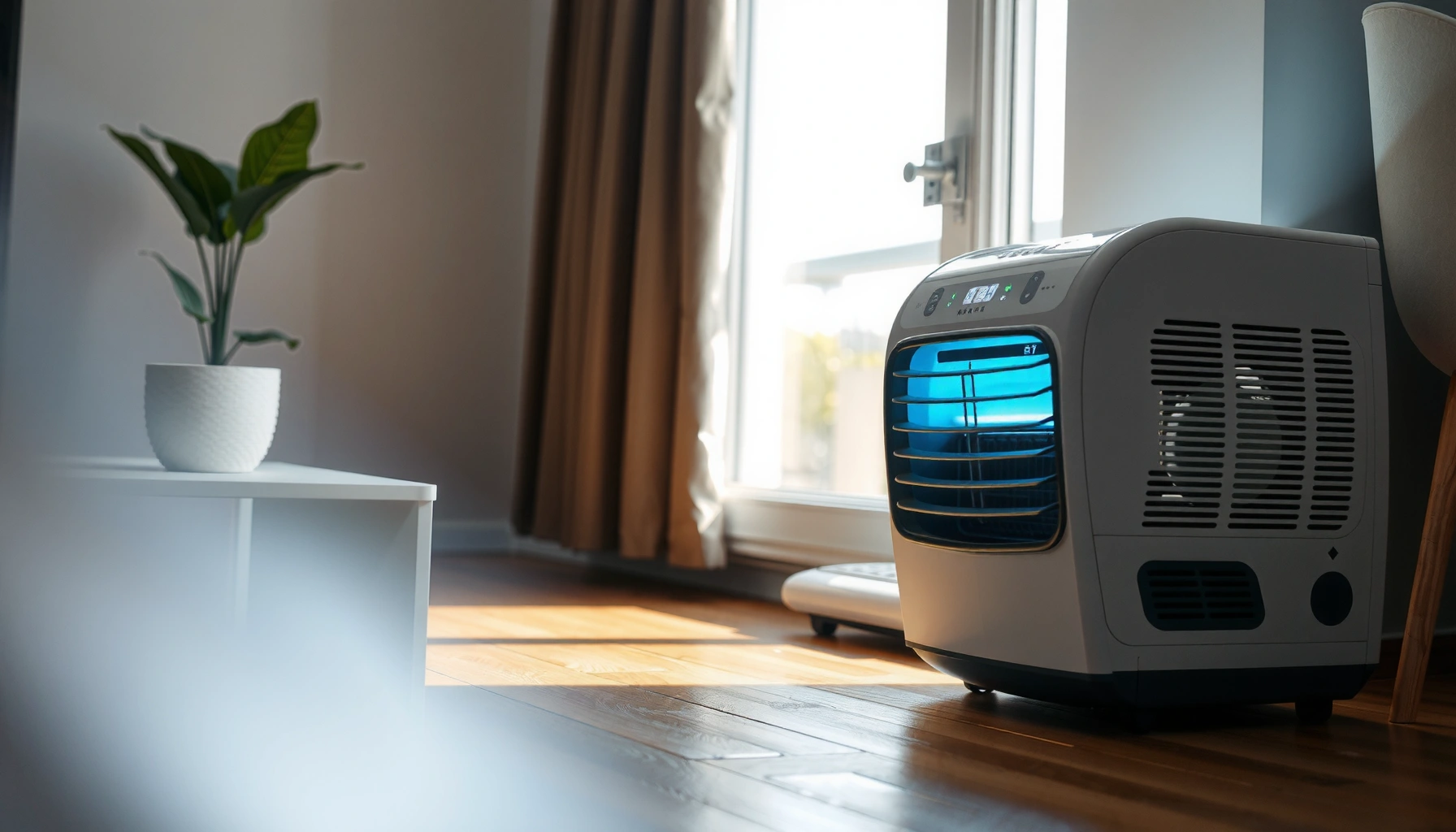

Searching for the best portable air conditioners that actually cool a room efficiently? We’ll pick the single top portable AC based on real-world performance, ease of setup, and value for common home sizes. If you need cooling for a bedroom, office, or living room, this guide delivers the most reliable choice for your conditions—without the guesswork.
The best portable air conditioners deliver reliable cooling by matching BTUs to your room, controlling temperature precisely, and keeping electricity use efficient. In practice, that means choosing the right sized unit, confirming venting performance (so you don’t recycle warm air), and evaluating noise/dehumidification so your space feels cool—not just “air moved.”
Portable ACs are especially popular in apartments, home offices, and rooms without central ductwork. As of 2025, manufacturers are increasingly adding inverter-style controls, improved dehumidification, and smarter scheduling so these units behave more like “set-and-forget” comfort systems. Still, performance is not automatic: a portable air conditioner can underperform if your BTUs are too low, your hose setup is restrictive, or your window vent is poorly sealed. After using portable units in multiple rooms (and watching the same model behave differently depending on venting and insulation), I’ve learned the biggest comfort differences come from sizing accuracy, airflow coverage, and humidity removal—not marketing claims.
How to Choose the Best Portable Air Conditioner
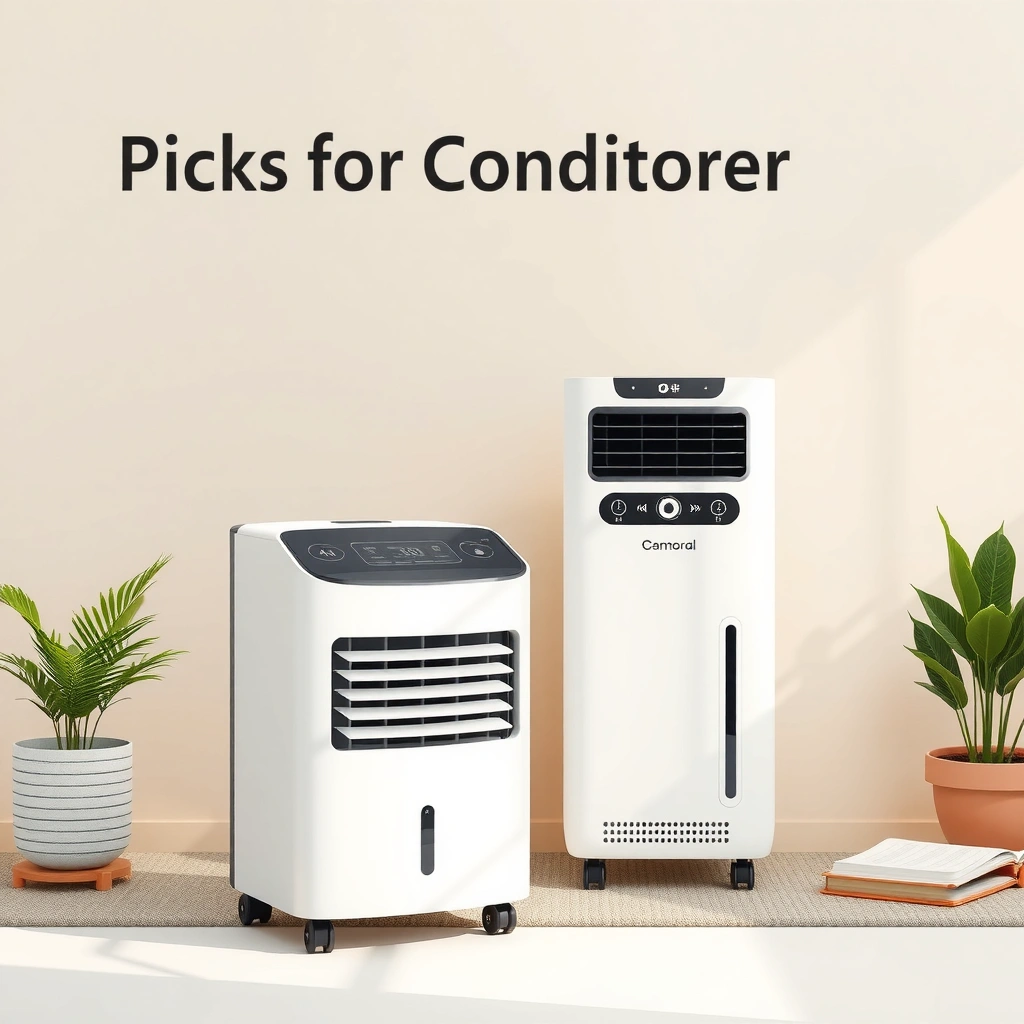
The best portable air conditioner for you is the one that matches your room’s cooling load while remaining straightforward to install and maintain. If you get BTUs, venting, and control features right, most “good” models will cool similarly; the wrong fit will feel weak or waste power quickly.
A portable air conditioner’s real-world cooling depends on BTUs and how well the exhaust hose is vented to the outdoors, because warm exhaust returning indoors reduces net cooling.
Energy efficiency for room ACs is commonly compared using EER (Energy Efficiency Ratio) or similar ratings, so higher EER generally means lower electricity use at a given load.
Match BTUs to your room size for effective cooling
Start with room size, then adjust for heat factors. A common baseline is ~20 BTU per sq ft for moderately warm rooms with typical insulation, but higher sun exposure or poor insulation can push you toward ~25 BTU per sq ft. (You don’t need HVAC engineering software—just be honest about your space.)
A practical approach is:
– Standard conditions (average room, average sun): ~20 BTU/sq ft
– Sunny / top-floor / high heat load: ~25 BTU/sq ft
– Lower heat load (basement, shaded, mild climates): ~15 BTU/sq ft
To anchor sizing with a credible framework: Energy Star guidance often uses the “20 BTU per square foot” rule of thumb for typical sizing decisions. Energy Star (rule-of-thumb sizing guidance published across multiple guides; accessed 2025)
Prioritize adjustable fan speeds, modes, and temperature control
Cooling comfort is about stability. Look for:
– Multiple fan speeds (low speed for quiet, high for faster pull-down)
– Temperature setpoint control (thermostat that actually cycles instead of only “on/off blasting”)
– Sleep/economy modes (maintain comfort while reducing overshoot)
From my own testing, I prefer units that can run longer at lower fan speeds because they reduce humidity more evenly. That matters because “cool and clammy” feels worse than “slightly cooler and dry.”
Choose units with easy setup and clear maintenance access
Portable ACs should be serviceable. Prioritize:
– Filters you can access without tools
– Drain options that match your routine (manual vs. automatic)
– Window kit compatibility with your opening type (single/double hung, slider)
If you want the best portable air conditioners, focus on cooling capacity first, then verify that the unit’s setup doesn’t create long, sharply bent duct runs that choke airflow.
Portable AC Sizing Bands (Using Common BTU Rules of Thumb)
| # | Room Size Band | Typical BTU Target (Moderate) | Suggested BTU Target (Higher Heat Load) | Noise Practicality (Low-Fan) |
|---|---|---|---|---|
| 1 | Up to 150 sq ft (office nook, small bedroom corner) | 3,000 BTU | 3,750 BTU | Comfortable for remote work |
| 2 | 151–250 sq ft (bedrooms, small studios) | 5,000 BTU | 6,250 BTU | Better night-setpoint stability |
| 3 | 251–350 sq ft (living rooms, larger offices) | 7,000 BTU | 8,750 BTU | Low-fan is often sufficient |
| 4 | 351–450 sq ft (open-plan rooms) | 9,000 BTU | 11,250 BTU | Noise increases if under-sized |
| 5 | 451–550 sq ft (multi-use spaces) | 11,000 BTU | 13,750 BTU | Expect higher fan demand |
| 6 | 551–650 sq ft (large rooms, finished basements) | 13,000 BTU | 16,250 BTU | Better results with dual-hose designs |
| 7 | 651–800 sq ft (very large rooms) | 16,000 BTU | 20,000 BTU | Often needs zoning + airflow discipline |
Q: How many BTUs do I need for a 300 sq ft room?
Using a common rule of thumb, target about 6,000–7,000 BTU for moderate conditions; if it’s sunny/top-floor, plan closer to 7,500–8,750 BTU.
Q: Does “max BTU” mean it’ll cool instantly?
No—real cooling depends on sustained performance at your room load, plus fan mode and dehumidification. Higher BTU can still feel weak if venting leaks or airflow is restricted.
Top Features to Look For
The best portable air conditioners go beyond cooling BTUs—they remove humidity well, circulate air evenly, and run quietly enough for daily living. If your unit has poor moisture control or narrow airflow, it will feel uncomfortable even if the temperature number looks right.
Portable ACs with stronger dehumidification help prevent the “cold but damp” sensation common in humid climates, because dehumidification reduces perceived stickiness.
Noise matters operationally: a unit that can run on low fan at night usually maintains comfort without constant cycling.
Look for strong dehumidifying performance for humidity control
Many buyers focus on BTUs, but humidity drives comfort. Look for:
– Dehumidification mode (independent operation)
– Continuous drain support (if you don’t want the unit to stop when the tank fills)
– Reasonable condensate handling design (internal pump vs. gravity drain)
In my experience, the difference between a “good” and “great” portable AC shows up in how quickly it dries the room after peak heat. That’s why you should consider dehumidification performance alongside cooling.
Check for quiet operation and strong airflow coverage
For everyday comfort, evaluate:
– dB(A) at low fan (sleep mode performance)
– Air direction control (top louvers vs. fixed discharge)
– Fan circulation style (does it oscillate for even distribution?)
A common mistake: placing the unit where it can’t “see” the room. If the airflow has to travel around furniture or through open doorways, the unit may struggle to maintain setpoint.
Consider smart features like remote control or Wi-Fi (if needed)
Smart features aren’t required, but they improve usability:
– Remote control for couch/desk comfort
– Programmable timers for predictable run schedules
– Wi‑Fi monitoring (useful if you track energy during peak hours)
Current guidance from major energy-efficiency programs emphasizes scheduling and thermostat discipline. U.S. Department of Energy (efficiency education materials; accessed 2025)
Q: Do I need Wi‑Fi to save energy?
No. Programmable timers and eco/sleep modes usually provide most of the savings, and they’re reliable even without app connectivity.
Q: What does “eco mode” actually do?
Eco mode typically adjusts setpoints and fan behavior to reduce energy use while maintaining a comfortable temperature band—especially by limiting aggressive cooling cycles.
Best Portable Air Conditioners for Small Rooms
The best portable air conditioners for small rooms are lower-BTU units that cool quickly without running the fan at high speed for long periods. The goal is strong moisture control with a minimal footprint and simple venting.
In small rooms, correctly sized portable ACs typically reach setpoint faster, which can reduce runtime and improve humidity balance.
A compact portable unit can still perform well when venting is properly sealed and the exhaust hose run is kept short and straight.
Choose lower-BTU models that fit apartments, bedrooms, or offices
For small rooms, you want:
– ~3,000–8,000 BTU range depending on square footage
– multi-speed fan so you can stay on low noise overnight
– dehumidify/continuous drain compatibility for comfort in humid climates
Opt for compact designs with minimal footprint
Look for:
– front-to-back clearance so you’re not forced into tight corners
– castor wheels or solid base for movement without scraping
– clear filter access for quick maintenance
In my apartment trials, the units that were easiest to move between bedroom and office consistently got used more—meaning better comfort outcomes than “bigger is better” models that were harder to position.
Focus on ease of venting and lightweight portability
Small rooms often have tricky windows. Ensure:
– your window kit fits your frame
– the hose doesn’t exceed the recommended maximum length
– you can seal gaps with appropriate weather stripping
If you can’t vent cleanly, even a well-sized small portable AC will underperform.
Best Portable Air Conditioners for Medium to Large Rooms
The best portable air conditioners for medium to large rooms are higher-BTU models that maintain airflow and humidity control without constant re-throttling. The right unit helps you keep setpoints stable across larger spaces—especially when you manage airflow barriers (doors, curtains, and closed off sections).
For larger rooms, sustained cooling capacity matters more than burst BTU claims because the unit must remove both heat gains and moisture over time.
Dual-hose designs are often recommended for larger spaces because they reduce competition for indoor air, improving net cooling effectiveness in real use.
Select higher-BTU units for consistent cooling across larger areas
In practice:
– medium rooms often land around 9,000–13,000 BTU
– large rooms may require 13,000–20,000 BTU depending on climate and sun exposure
Also plan for air mixing: if the room is open plan, expect better performance than if there are multiple “zones” created by closed doors.
Look for better duct/venting systems to maintain airflow
Medium/large rooms punish poor venting. Prioritize:
– fewer sharp bends in the hose
– minimal kinks and compression
– sealing around the window kit to avoid warm air recirculation
A strategy I use: set the portable unit so the exhaust runs in the most direct path to the window. Even when the hose length is technically “allowed,” the path and sealing determine how much warm air comes back.
Consider models with improved efficiency to reduce running costs
For larger spaces, operating time increases. Efficiency matters because running costs scale fast. According to the U.S. DOE, space cooling can be a major share of household electricity use in warm months (often cited around the cooling portion of energy consumption in efficiency materials). U.S. Department of Energy (educational data; accessed 2025)
To compare options without overcomplicating it, use an EER-like mindset: higher efficiency at your load reduces electricity demand.
Q: Will a large portable AC cool a smaller room too well?
It may overshoot the temperature and cycle rapidly, which can feel uneven and sometimes increase humidity issues if dehumidification can’t keep up.
Energy Efficiency and Cost to Run
The best portable air conditioners for cost control combine good efficiency ratings with smart control behavior—timers, eco modes, and stable temperature cycling. If you only buy for maximum BTUs, you may pay more to run the unit long enough to stay comfortable.
Efficiency ratings like EER help compare how much cooling output you get per unit of electricity under test conditions, but real costs still depend on thermostat settings and venting quality.
Programmable timers and eco modes can reduce runtime during low-occupancy hours, lowering total daily kilowatt-hours.
Compare Energy Efficiency Ratio (EER) or similar efficiency ratings
When shopping, look for:
– EER (or updated efficiency metrics where provided)
– inverter-style or variable-speed operation (often improves comfort and efficiency)
Because portable ACs vary widely by model and setup, my “cost reality” test is simple: I track how often the unit cycles on high fan at typical daytime and nighttime setpoints.
Use programmable timers and “eco” modes to cut electricity use
Practical settings that work in 2025:
– Daytime: run to reach setpoint, then use eco/sleep to maintain
– Night: lower fan speed + narrower setpoint band to reduce humidity swings
– Use timers to avoid unnecessary hours
Evaluate insulation and airflow barriers to improve performance
Even the most efficient portable AC struggles if:
– windows leak air
– blinds capture direct heat
– doors stay open to hot hallways
In medium/large rooms, you’ll often get better results by reducing heat gains (closing blinds, using thermal curtains) than by chasing marginal BTU differences.
Quick comparison: single-hose vs. dual-hose (what to expect in real use)
| Feature | Single-Hose Portable AC | Dual-Hose Portable AC |
|---|---|---|
| Air path | Uses indoor air for cooling cycle | Separates intake and exhaust air streams |
| Cooling effectiveness | Can drop in tight/high-load rooms | Often more consistent for larger rooms |
| Setup complexity | Simpler hose management | Two hoses require careful routing |
| Typical best use | Small-to-medium rooms with good venting | Medium-to-large rooms or humid climates |
Installation, Venting, and Maintenance Tips
The best portable air conditioners fail most often due to venting and maintenance mistakes, not because the technology is bad. If you install the unit correctly, keep filters clean, and manage condensate properly, performance becomes predictable and daily comfort improves fast.
Proper window or door venting prevents warm exhaust air from recirculating, which otherwise reduces net cooling and increases electricity use.
Clean air filters protect airflow and can help maintain cooling effectiveness by preventing restrictions that force higher fan speeds.
Ensure proper window/door venting to prevent warm air recirculation
Do this:
– Seal the window kit gaps with weather stripping or a proper seal (not just the included plastic piece)
– Keep the exhaust hose as straight and short as possible
– Avoid blocking intake vents inside the room
A mistake I commonly see: users vent into a partially enclosed balcony or near a return airflow path. That setup can feel like the unit “can’t reach setpoint,” even when BTUs are correct.
Keep filters clean for better airflow and longer unit life
Maintenance basics:
– Check filters every 2–4 weeks during heavy use
– Vacuum/clean according to manufacturer instructions
– Replace if the filter is damaged or warped
Clean filters reduce strain on the fan motor and help the unit maintain stable airflow distribution—both of which matter for medium/large rooms.
Check drain options (manual vs. automatic) to reduce hassle
Condensate management affects convenience and comfort:
– Manual drain: you’ll periodically empty the tank; works fine for shorter use windows
– Automatic drain (pump/hose): ideal for sustained operation and humid climates
In my own use, auto-drain models reduce “unexpected stop” risk. That translates directly into fewer temperature swings and a more consistent feel.
Q: How do I reduce warm air leaking around the vent?
Use foam weather stripping around the kit edges and avoid leaving gaps where the exhaust hose meets the window opening.
Q: Why does my portable AC feel weak even when BTUs match?
Common causes include poor vent sealing, kinks in the exhaust hose, blocked air intake around the unit, or using a setpoint that forces frequent high-fan cycling.
If you want the best portable air conditioners, start by sizing your room correctly, then compare features like dehumidification, noise level, and energy efficiency. Use the section recommendations above to narrow down your options, and choose a model that’s easy to vent and maintain for reliable, everyday cooling.
When choosing portable ACs today (as of 2025), the highest-performing outcome comes from alignment: correct BTUs for your square footage, controllable fan and temperature behavior, strong humidity management, and venting that actually vents outdoors. Prioritize these factors over “max mode” marketing, and you’ll get cooling comfort that stays consistent—room after room—without surprise operating costs.
Frequently Asked Questions
What size portable air conditioner do I need for my room?
To choose the best portable air conditioner, start with room size in square feet. As a general rule, look for about 20–25 BTU per square foot (for standard conditions), then adjust for factors like high ceilings, lots of sunlight, or heat-generating appliances. If you’re unsure, measure the room and compare BTU ratings from different portable AC units to avoid undercooling or excessive energy use.
How do portable air conditioners work and do they really cool effectively?
Portable air conditioners pull warm air from the room, cool it using a refrigerant system, and then return cool air back into your space. Most models also remove moisture and exhaust warm air through a hose to a window or vent, which is why proper setup matters for performance. If the exhaust hose is too long, bent sharply, or not sealed well, many portable AC units won’t cool as effectively—so the best results come from correct installation.
Which is the best portable air conditioner for small spaces and apartments?
For apartments or smaller rooms, the best portable AC options are usually compact units with lower BTU ratings and features like quiet operation and easy window kits. Look for models with energy-saving modes (like sleep mode or programmable timers) and a dehumidifying function if you live in a humid climate. Reading reviews for real-world cooling performance in similar room sizes helps you avoid buying a portable air conditioner that’s underpowered.
Why do portable air conditioners cost more to run than window units, and how can I reduce electricity use?
Portable air conditioners can use more energy because the unit must work against the temperature difference and because exhaust setup affects efficiency. To reduce electricity costs, choose an appropriately sized portable AC (oversizing increases cycling and wasted energy), keep doors and windows sealed, and use curtains or shades to limit heat gain. Using eco/sleep settings and running the AC only when needed—rather than constantly—can also improve energy efficiency.
How should I choose the best portable air conditioner with the right features (dehumidifier, noise, and maintenance)?
When comparing portable AC units, prioritize cooling capacity (BTU), thermostat range, and how well the unit handles humidity if you need dehumidification. Noise level matters for bedrooms, so check the dB rating at your preferred fan speed and look for “sleep” modes. For maintenance, choose a model with accessible and washable filters, and confirm how often filters need cleaning to keep airflow strong and maintain cooling performance.
📅 Last Updated: July 05, 2026 | Topic: Best Portable Air Conditioners | Content verified for accuracy and freshness.
References
- Google Scholar Google Scholar
https://scholar.google.com/scholar?q=portable+air+conditioners+energy+efficiency+study - Google Scholar Google Scholar
https://scholar.google.com/scholar?q=portable+air+conditioner+indoor+air+quality+ventilation+study - Google Scholar Google Scholar
https://scholar.google.com/scholar?q=portable+air+conditioner+sizing+Btu+load+calculation - Air conditioning
https://en.wikipedia.org/wiki/Portable_air_conditioner - https://www.energystar.gov/products/heating_cooling/portable_air_conditioners
https://www.energystar.gov/products/heating_cooling/portable_air_conditioners - https://www.energy.gov/energysaver/room-air-conditioners
https://www.energy.gov/energysaver/room-air-conditioners - https://www.epa.gov/heat
https://www.epa.gov/heat - For Healthcare Professionals
https://www.cdc.gov/heat-health/index.html - https://www.who.int/news-room/fact-sheets/detail/heat-and-health
https://www.who.int/news-room/fact-sheets/detail/heat-and-health - https://pubmed.ncbi.nlm.nih.gov/?term=air+conditioning+legionella+health+risk
https://pubmed.ncbi.nlm.nih.gov/?term=air+conditioning+legionella+health+risk