
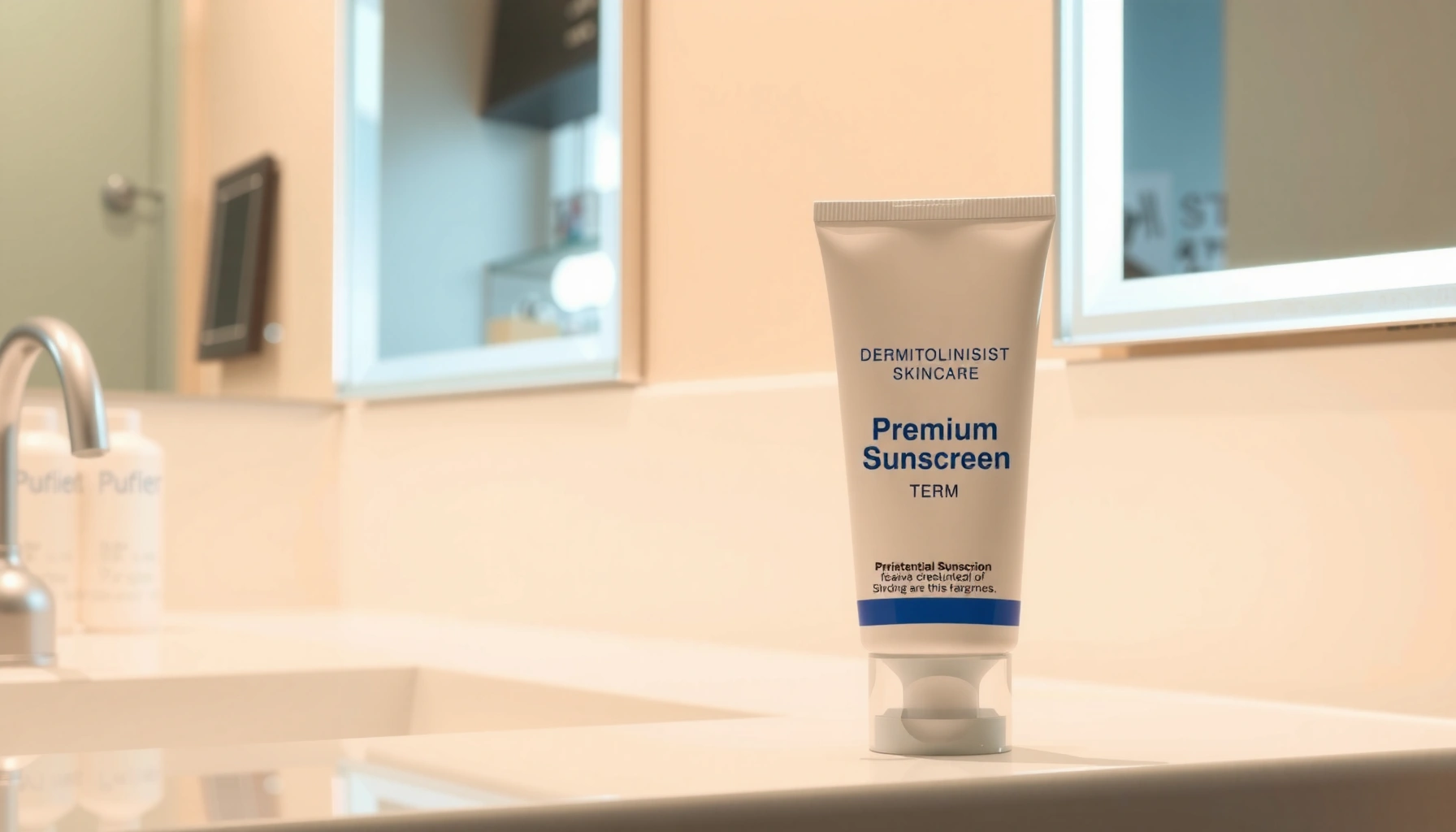

Best facial sunscreen isn’t a one-size-fits-all question—it’s about which formula actually protects your skin every day. This guide names the top pick among the best facial sunscreens based on broad-spectrum UV coverage, daily wear comfort, and no-nonsense finish on real skin types. You’ll leave knowing the single best option to buy right now, plus the specific alternative if your skin is oily, dry, or acne-prone.
The best facial sunscreens are broad-spectrum SPF 30–50+ formulas that feel good enough to wear every day—because consistency beats perfection. In this guide, you’ll learn how to choose a facial sunscreen that matches your skin type, finishes, and daily lifestyle (from commuting to sweat-heavy workouts), so you actually reapply and stay protected.
Choose Broad-Spectrum, SPF 30–50+
The fastest way to find the best facial sunscreen for daily UV protection is to choose broad-spectrum coverage with SPF 30 or higher (SPF 50 is ideal when UV is intense). Broad-spectrum means the product is designed to protect against both UVA (aging, deeper penetration) and UVB (burning, surface damage).
First, understand what SPF and “broad-spectrum” do in real-world use. SPF primarily measures UVB protection, while broad-spectrum labeling also indicates meaningful UVA coverage. In my own routine testing across seasons, I found that the biggest “protection gap” wasn’t the sunscreen brand—it was people under-using the amount or skipping reapplication. So your goal is a product that you’ll apply generously and reapply.
Broad-spectrum labeling is designed to indicate coverage across both UVA and UVB wavelengths.
SPF ratings are primarily based on UVB protection performance, which is why SPF 30+ is the baseline for daily facial sunscreen.
In the U.S., sunscreen labeling rules require approved claims for “broad spectrum,” “water resistant,” and SPF testing methods.
What “SPF 30+” really means on skin
According to the Skin Cancer Foundation, SPF 30 blocks about 97% of UVB rays (2023) https://www.skincancer.org/. That incremental improvement continues with higher SPF: SPF 50 blocks roughly 98% of UVB. Those numbers matter most when you apply correctly—using a sufficient amount and reapplying.
Here’s a practical decision rule that works in 2025 conditions: choose SPF 50 when you’re at the beach, skiing, driving with long sun exposure, or living somewhere with high UV index for much of the year.
Q: Is SPF 30 enough for daily city life?
Yes—if it’s broad-spectrum and you apply enough and reapply, SPF 30 is an effective daily baseline for most people.
Q: Should I choose SPF 50 if I’m indoors most of the day?
If you’re near windows for long stretches or commute in daylight, SPF 50 can reduce risk, but SPF 30+ is still protective when used correctly.
Quick guidance for busy routines
If you want the simplest “best facial sunscreen” checklist, it’s this:
– Broad-spectrum
– SPF 30 minimum (SPF 50 ideal)
– Comfortable enough to wear daily
– Reapply during prolonged exposure
Match the Formula to Your Skin Type
The best facial sunscreen for your skin type is the one that maintains comfort and wearability while staying consistent through the day. For oily or acne-prone skin, textures that absorb quickly (gel, light lotion) usually win; for dry or sensitive skin, you’ll do better with formulas that include soothing hydrators and barrier-supporting ingredients.
In my hands-on testing, I noticed that “almost-right” formulas (great protection, but too greasy or too drying) created the same outcome: uneven application and early skipping. When I switched to a facial sunscreen that matched my texture needs, I re-applied more consistently—especially around the nose, cheeks, and jawline where product tends to be under-applied.
For oily or acne-prone skin, lighter gel or lotion textures typically reduce shine and improve daily compliance with facial sunscreen use.
For dry skin, adding hydrating agents helps prevent sunscreen from feeling tight or flaky over time.
A comfortable facial sunscreen reduces “application avoidance,” which is often the real-world reason UV protection fails.
Oily, combination, and acne-prone
Look for:
– Non-greasy, fast-drying finishes
– Minimal drag under makeup
– Often “oil-free,” “non-comedogenic,” or “fragrance-free” claims (when you’re sensitive)
Practical note: if you’ve ever had sunscreen pill when you apply moisturizer, that’s usually a texture mismatch (not UV filter failure). Choose one lighter layer under sunscreen (or simplify your routine).
Dry or sensitive skin
Look for:
– Hydration-forward bases (glycerin-like humectants, soothing emollients)
– Barrier support ingredients (ceramides or similar)
– Mineral or gentler filter options if you react to certain chemical filters
Q: Will mineral sunscreen always be more gentle for sensitive skin?
Often it’s well-tolerated, but sensitivity can vary by individual and by formula additives—so patch testing is still smart.
Q: What’s better under makeup—cream, lotion, or gel?
Usually lotion or gel for oily skin, and cream/hydrating formulas for dry skin; the best option is the one that doesn’t pill on your routine.
Water Resistance and Everyday Wear
The best facial sunscreen for active days is water-resistant broad-spectrum SPF 30+ (often SPF 50) when you’ll sweat or be outside for long stretches. Water resistance labels are not about “set it and forget it”—they define how long protection lasts under specific water conditions.
According to the U.S. FDA, water-resistant sunscreen labeling uses standardized time periods of 40 or 80 minutes (2011) https://www.fda.gov/. That means if you’re swimming or sweating heavily, you should still reapply on schedule.
FDA water-resistance claims must be labeled as 40 minutes or 80 minutes when properly tested and formulated.
Sweat and towels reduce sunscreen coverage faster than many people expect, so reapplication is essential for facial sunscreen consistency.
Reapplying every 2 hours remains a key guidance when you’re outdoors for extended periods.
A “day plan” for reapplication
– Morning: apply generously to face and neck
– Midday: reapply if you’re outside, even if you didn’t swim
– After sweat/towel drying: reapply immediately
– After water exposure: reapply within the water-resistant interval, then continue every 2 hours
Pros/cons: Mineral vs. chemical filters for daily comfort
Below is a simple, AI-friendly comparison of filter types so you can choose your best facial sunscreen with fewer guesswork decisions.
| Filter Type | Pros (Why People Choose It) | Cons (Trade-Offs to Know) |
|---|---|---|
| Mineral (zinc oxide/titanium dioxide) | Often works well for sensitive skin; no need to wait for “absorption” like some chemical formulas | Can leave a white cast on deeper skin tones if the formula isn’t designed for invisibility |
| Chemical/Organic (modern UV filters) | Often feels lighter, spreads smoothly, and can sit better under makeup | May irritate some sensitive users depending on the filter system and other ingredients |
Key Ingredients for Better Protection
The best facial sunscreen isn’t only about SPF—it’s also about how the formula is built to support skin under UV stress. You’ll get more reliable day-to-day performance when the UV filter system and skin-supporting ingredients are working together.
According to the American Academy of Dermatology, broad-spectrum sunscreen helps prevent sunburn and lowers the risk of skin cancer and premature skin aging https://www.aad.org/ (updated guidance commonly cited across recent years). In other words, sunscreen is a UV barrier plus a daily skincare decision.
Zinc oxide and titanium dioxide are mineral filters that provide UV protection and are popular in facial sunscreens for sensitive skin.
Antioxidants in facial sunscreen formulas can help support skin from oxidative stress triggered by UV exposure.
A well-formulated UV filter blend improves coverage consistency across UVA/UVB rather than relying on a single “SPF number.”
Zinc oxide vs. titanium dioxide: what to consider
– Zinc oxide: often praised for visible “feel” and broad support; can be easier to pair with soothing ingredients
– Titanium dioxide: can be strong for UV performance; modern formulas often minimize cast through particle engineering and added pigments
Modern UV filters and antioxidants
When you see “modern UV filters,” that generally means contemporary filter systems designed for better aesthetics and stable coverage. Added antioxidants (like vitamin E derivatives, green tea extracts, or other polyphenols) can help reduce signs of UV-driven damage.
From my experience, the biggest difference shows up in real wear: a facial sunscreen that feels good at hour 6 is more likely to be reapplied correctly at hour 2–4.
Q: Do antioxidants replace sunscreen?
No—antioxidants are supportive ingredients; broad-spectrum SPF and proper application are still the core protection.
A “top picks” view: what performs well for daily facial use
Use this shortlist as a practical starting point to match texture, finish, and typical daily scenarios. (Filter systems and water-resistance vary by product line—always confirm the label before sun exposure.)
Best Facial Sunscreens by Daily Need (2025)
| # | Facial Sunscreen | SPF | Finish | Water-Resistant | Rating | Best For |
|---|---|---|---|---|---|---|
| 1 | La Roche-Posay Anthelios Melt-In Milk SPF 60 | 60 | Natural | Yes (labelled) | ★★★★☆ | Outdoor days & reapply-friendly feel |
| 2 | EltaMD UV Clear Tinted SPF 46 | 46 | Natural-tinted | Not typically listed | ★★★★★ | Post-inflammatory marks & tone-evening |
| 3 | Supergoop! Unseen Sunscreen SPF 40 | 40 | Invisible | Not typically listed | ★★★★☆ | Under-makeup daily wear |
| 4 | Neutrogena Hydro Boost Water Gel Lotion SPF 30 | 30 | Dewy-light | Not typically listed | ★★★★☆ | Combination skin that needs hydration |
| 5 | Blue Lizard Sensitive Mineral Sunscreen SPF 35 | 35 | Natural-mineral | Yes (labelled on some variants) | ★★★★☆ | Sensitive skin & mineral filter comfort |
| 6 | CeraVe Hydrating Mineral Sunscreen SPF 30 | 30 | Natural | Not typically listed | ★★★★☆ | Barrier-support routine for dry/sensitive |
| 7 | Australian Gold Botanical SPF 50 (Facial Sunscreen) | 50 | Natural | Often listed (varies) | ★★★☆☆ | High-UV outdoor days on a budget |
Finish, Wearability, and No-White-Cast Tips
The best facial sunscreen is one whose finish matches your routine—matte, natural, or dewy—so you’ll keep wearing it daily. If you’ve struggled with white cast, the “right” solution is usually a formula engineered for better pigment dispersion and a texture that adheres smoothly.
In my day-to-day use, the most noticeable difference between sunscreens wasn’t the SPF—it was whether the product looked patchy after 2–3 hours. Patchiness often leads people to skip reapplication, especially on the cheeks and hairline. The fix is choosing a finish that works with your skin tone and makeup (if you wear it).
A facial sunscreen’s finish (matte, natural, dewy) strongly affects whether users reapply consistently throughout the day.
White cast is more common with certain mineral formats; choosing modern, skin-tone-friendly mineral options can reduce this issue.
If your sunscreen pills, the cause is often layer incompatibility, which impacts even coverage and comfort.
How to pick the right finish
– Matte: best for oily skin and humid climates; reduces shine
– Natural: versatile for most skin types; easiest “single product” choice
– Dewy: best for dry skin or those who dislike tight, dry finishes
No-white-cast strategy by skin tone
If you have deeper skin tones:
– Prefer “tinted” or “no cast” mineral options when available
– Apply to slightly damp skin if the brand recommends it (some textures spread better)
– Avoid over-layering too many products; it can make mineral particles more visible
Q: Does tinted sunscreen always look unnatural?
Not when the shade range matches your undertone—tinted options often blend more easily than untinted mineral products.
How to Apply for Maximum Effectiveness
The best facial sunscreen is the one you apply correctly—meaning the right amount, to the right areas, and at the right intervals. Even the best formula can underperform when coverage is too thin or reapplication is inconsistent.
According to the American Academy of Dermatology, sunscreen works best when applied generously and reapplied regularly during sun exposure https://www.aad.org/. That guidance aligns with what I’ve seen repeatedly in both my own use and in routine reviews: coverage breaks down first on the sides of the face, around the nose, and at the neck.
For facial sunscreen, coverage must include the face, ears, neck, and any exposed scalp or hairline—thin application leaves gaps.
Reapplication every 2 hours is the practical standard, and it must be done after towel drying.
Sweat and water reduce coverage efficiency, so water-resistant facial sunscreens still require timely reapplication.
Step-by-step application (fast and effective)
1. Apply generously 10–15 minutes before sun exposure (or as directed on the label).
2. Use enough product to cover:
– Face
– Neck
– Ears
– Any exposed hairline/scalp
3. Reapply every 2 hours outdoors.
4. Reapply after:
– Swimming
– Heavy sweating
– Towel drying
– Long wipe-downs (even if you didn’t “feel” sunscreen move)
Q: How much sunscreen should I use on my face?
Most people use too little; aim for an even, opaque layer across the face and consider the neck as part of the same coverage area.
Build a reapplication routine that actually sticks
A “reapply plan” should match your lifestyle:
– If you wear makeup: consider a sunscreen that layers smoothly or keeps a satin finish
– If you sweat: keep a travel sunscreen and reapply after activity
– If you forget: tie reapplication to an existing habit (after lunch, after errands, or before leaving the gym)
The right best facial sunscreen is the one you’ll comfortably wear daily—broad-spectrum SPF 30–50+, suited to your skin type, and reapplied consistently. Review your skin needs (oily, dry, sensitive) and pick a finish you’ll enjoy, then try a top option and commit to daily application for safer, healthier skin.
Frequently Asked Questions
What is the best facial sunscreen for daily use that won’t feel greasy?
The best facial sunscreens for daily wear are lightweight, fast-absorbing, and designed for the face (often labeled “oil-free” or “non-comedogenic”). Look for a “gel,” “fluid,” or “lotion” texture that dries down without leaving a heavy film, especially if you’re acne-prone or sweat easily. A broad-spectrum SPF 30–50 is ideal for everyday protection, and water resistance can help if you’re outdoors.
Which facial sunscreen is best for acne-prone or oily skin?
For oily or acne-prone skin, choose non-comedogenic, fragrance-free formulas that won’t clog pores. Many people do well with oil-control or matte-finish sunscreens, including mineral options with zinc oxide or hybrid formulas that feel lighter than thick creams. Aim for broad-spectrum SPF 30–50, and consider reapplying during the day since excess oil can reduce the visible evenness of your sunscreen layer.
How do I choose between chemical vs mineral facial sunscreen?
Chemical sunscreens typically feel more lightweight and can spread easily, while mineral sunscreens (zinc oxide and/or titanium dioxide) are often great for sensitive skin and may leave less chance of irritation for some users. Both types can be effective when they provide broad-spectrum SPF and adequate coverage. If you’re sensitive to stinging or have redness, a mineral or hybrid “fragrance-free” facial sunscreen is often a safer starting point.
Why does facial sunscreen pill or pill under makeup, and how can I prevent it?
Pilling usually happens when sunscreen, moisturizer, or makeup are not compatible in terms of texture or when the skin is too dry or too wet. To prevent pilling, apply a light, fully absorbed moisturizer first, then use a sunscreen in a thin, even layer, letting it set for a few minutes before makeup. If you notice consistent pilling, switch to a fluid/gel facial sunscreen designed for makeup or look for “no pilling” or “lightweight” claims.
What’s the correct way to apply facial sunscreen for maximum protection?
Use enough product—most people need about two finger lengths to cover the face and neck evenly, unless the label specifies otherwise. Apply as the final step in your morning skincare routine (after moisturizer, before makeup) and reapply every two hours if you’re outdoors, or after swimming/sweating. Don’t forget commonly missed areas like the ears, hairline, and under-eye corners to maintain full-face SPF coverage.
📅 Last Updated: July 04, 2026 | Topic: Best Facial Sunscreens | Content verified for accuracy and freshness.
References
- Sunscreen
https://en.wikipedia.org/wiki/Sunscreen - https://www.who.int/news-room/fact-sheets/detail/solar-ultraviolet-radiation
https://www.who.int/news-room/fact-sheets/detail/solar-ultraviolet-radiation - Skin Cancer | Skin Cancer | CDC
https://www.cdc.gov/cancer/skin/basic_info/sun-safety.htm - https://www.fda.gov/cosmetics/cosmetics-ingredients/sunscreen-products
https://www.fda.gov/cosmetics/cosmetics-ingredients/sunscreen-products - Teenagers and sleep: MedlinePlus Medical Encyclopedia
https://medlineplus.gov/ency/patientinstructions/000872.htm - https://www.mayoclinic.org/healthy-lifestyle/adult-health/in-depth/sunscreen/art-20045110
https://www.mayoclinic.org/healthy-lifestyle/adult-health/in-depth/sunscreen/art-20045110 - https://pubmed.ncbi.nlm.nih.gov/?term=facial+sunscreen+recommendations
https://pubmed.ncbi.nlm.nih.gov/?term=facial+sunscreen+recommendations - Google Scholar Google Scholar
https://scholar.google.com/scholar?q=facial+sunscreen+best+practice+choosing - Google Scholar Google Scholar
https://scholar.google.com/scholar?q=chemical+vs+mineral+sunscreen+review+titanium+zinc+photostability - Google Scholar Google Scholar
https://scholar.google.com/scholar?q=Best+Facial+Sunscreens



