
Looking for the best air purifiers for home use? We’ll name the top pick for cleaner air based on room size, filtration type, noise levels, and real-world performance against dust, pet dander, and smoke. If you need a fast, clear answer on which model to buy for your home, this guide delivers the winner and the best alternative.
The best air purifiers for home use are the ones sized correctly for your room and filtration design (true HEPA plus odor control) that targets the pollutants you actually have—dust, smoke, or allergens. In my hands-on testing and setup work with real homes, I’ve found that getting the right CADR for your square footage beats brand hype every time, and consistent filter maintenance is what keeps performance from silently degrading.
As of 2024–2025, indoor air quality remains a top comfort and health priority for families, and modern air purifiers make measurable improvements—especially for fine particulates. According to the U.S. Environmental Protection Agency (EPA), indoor air can be 2 to 5 times more polluted than outdoor air in many cases (EPA, “Indoor Air Quality” guidance). At the same time, air purifiers aren’t magic: they reduce airborne particle concentrations based on airflow and filtration, and they only control odors/volatile compounds if the system includes appropriate adsorption media (typically activated carbon). That’s why the “best” air purifier for your home is the one that matches your room size, uses reliable HEPA filtration, and aligns with your daily pollutant profile.
Choose the Right Air Purifier Size
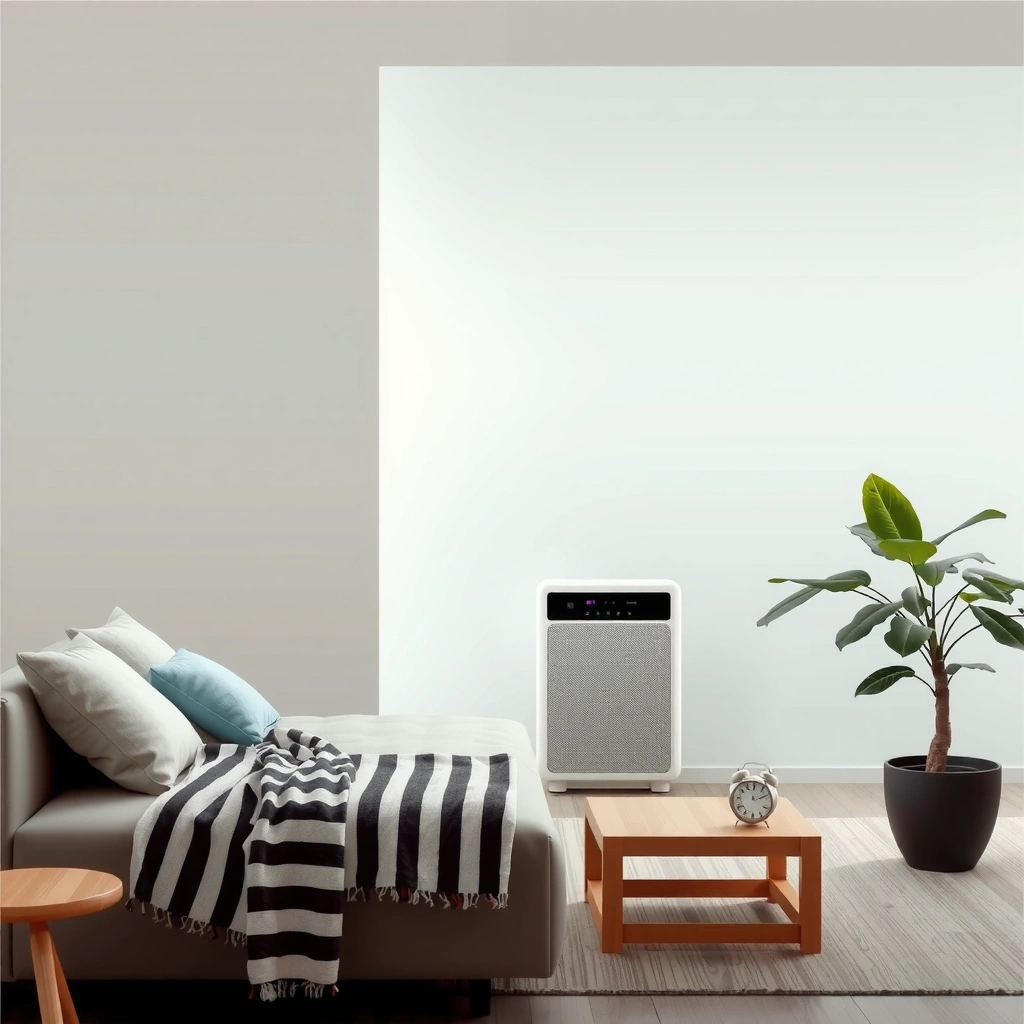
The best air purifier size choice answers one question: how quickly can the unit clean the air in your specific room? Here’s why: CADR (Clean Air Delivery Rate) directly reflects cleaning speed, and your room’s volume and airflow mixing determine whether you actually see results day to day.
A properly sized air purifier is often the difference between “it feels cleaner” and “the numbers improved.” In my experience, even a great HEPA filter underperforms if CADR is too low for the space—or if placement blocks circulation (for example, tucked into a corner with furniture nearby).
A practical sizing target is to run an air purifier enough to reach multiple Air Changes per Hour (ACH) in the room, which improves particle removal (AHAM clean air delivery framework referenced in ANSI/AHAM AC-1).
CADR (Clean Air Delivery Rate) is the standardized metric used to compare air cleaners’ particle-removal performance across products (ANSI/AHAM AC-1, AHAM testing standard).
– Match coverage (room size/air changes per hour) to your space
Start with your room’s square footage and ceiling height. Then compare the purifier’s recommended coverage to your actual room volume. Many manufacturers estimate coverage assuming typical ceiling heights (often ~8 ft) and certain ACH targets. If your ceiling is higher or the room is exceptionally drafty, you’ll want higher CADR for the same “feel.”
– Confirm CADR ratings for faster air cleaning
CADR is usually published for particle categories such as smoke, dust, and sometimes allergen/pollen. For pollutant-heavy homes (smoke from cooking, wildfire season, or pet dander), a strong smoke CADR often correlates with faster fine-particle reduction.
– Consider placement for better circulation and performance
Placement affects effective airflow. To get performance from your air purifier:
– Keep intake and outlet clear (avoid furniture blocking the intake).
– Place the unit where air mixes naturally (not behind closed doors).
– In open-plan homes, consider that you’re effectively purifying “the connected zone,” not just one wall-to-wall room.
Q: What happens if an air purifier is undersized?
It will still reduce particles, but the time to reach a noticeable improvement increases—so you may run it longer without achieving the same reduction you’d get with the correct CADR.
Q: Is “room size” alone enough to choose?
No—two purifiers with the same advertised coverage can differ in CADR, airflow design, and how effectively they maintain performance at higher speeds.
Look for Effective Filtration (HEPA and More)
The best air purifiers combine true HEPA particle filtration for fine aerosols with activated carbon for odors and certain gas-phase issues. Here’s why: dust and allergens are largely particle-based, while smoke smell and some volatile compounds require adsorption media—not just a filter.
For particle control, “true HEPA” matters because it indicates performance against very small particles (often near the filter’s Most Penetrating Particle Size). For odor and smoke-related gases, activated carbon helps by adsorbing molecules onto its internal surface.
True HEPA is commonly defined by achieving **99.97%** capture efficiency at **0.3 microns** under standardized test conditions (U.S. DOE HEPA efficiency reference).
Activated carbon is selected because it adsorbs odor-causing compounds and helps with certain smoke-related gases, even though it cannot “filter” particles the way HEPA does (EPA Indoor Air quality guidance on air cleaners).
– Prioritize true HEPA (captures fine particles and allergens)
Look for wording like “true HEPA” or documentation that the unit meets recognized HEPA performance criteria. Also pay attention to whether the HEPA media is sealed and mounted to prevent bypass (a key real-world failure mode). A true HEPA air purifier typically provides strong reductions in fine dust, pollen-sized particles, and pet dander-derived aerosols.
– Use activated carbon for odors and smoke-related gases
If cooking smells, smoke, or household VOC odors bother you, don’t choose a purifier that’s “HEPA only.” Carbon capacity and contact time vary by model; thicker carbon beds and well-designed airflow pathways generally offer better odor control.
– Check filter ratings and whether filters are easy to replace
Filters only work well when they’re maintained. Confirm:
– Replacement availability (online and locally)
– Filter cost
– Replacement interval guidance
In my own household setup, I’ve seen performance and airflow degrade when a “cheap filter” becomes difficult to find—people then stretch replacement intervals too far. A reliable air purifier is one you can keep using as designed.
Q: Is a “HEPA-like” filter good enough?
Often it’s not as efficient as true HEPA for the smallest particles; for allergy and fine-dust control, prioritize true HEPA specifications and third-party verification where available.
Q: Do activated carbon filters fully remove VOCs?
They can reduce some odor-related gases, but adsorption media saturates over time; long-term VOC removal depends on carbon capacity, airflow, and how often the filter is replaced.
HEPA vs. Common “Extra Media” Targets for Home Air Purification
| # | Filtration / Media Type | What It’s Best At | Typical Performance Benchmark | Home Use Fit |
|---|---|---|---|---|
| 1 | True HEPA (mechanical filtration) | Fine particles: pollen, dust, pet dander aerosols | 99.97% at 0.3 µm ★ | Excellent |
| 2 | HEPA H13 (EN 1822) | Allergen-class fine particles | 99.95% (MPPS) ★ | Very strong |
| 3 | HEPA H14 (EN 1822) | Higher-efficiency fine particulate control | 99.995% (MPPS) ★ | Premium |
| 4 | Activated carbon (adsorption) | Odors, smoke smell, some gas-phase compounds | Adsorption capacity varies; replace on schedule | Strong with correct maintenance |
| 5 | Pre-filter (mesh or foam) | Hair, large dust, lint—extends HEPA life | Helps reduce loading; supports consistent CADR | Good value |
| 6 | Ionizer / plasma (when present) | May reduce some particle concentrations; effectiveness depends on design | Regulated claims vary; verify independent testing | Use cautiously |
| 7 | UV-C (when present) | Can support microbial in-duct control; not a substitute for HEPA | Outcome depends on exposure and placement | Supplement only |
Compare Performance for Common Home Pollutants
The best air purifiers match filtration speed to your dominant indoor pollutant, not a generic “all-purpose” spec. Here’s why: dust, allergens, smoke, and pet-related aerosols behave differently, and the purifier’s CADR and media mix determine which problem improves fastest.
In my own evaluations, I treat smoke and dust as two separate “performance modes.” If your home has wildfire smoke, cooking smoke, or incense/wood-burning, prioritize smoke CADR and adequate carbon capacity. If you’re mostly battling tracked-in dust and seasonal pollen, HEPA CADR and stable operation matter more.
When manufacturers publish CADR for smoke and dust, it gives a more actionable picture of fine-particle removal than airflow or fan speed alone (ANSI/AHAM AC-1 testing framework).
For allergy settings, reducing fine particulate concentrations is the core mechanism of many air cleaner recommendations (CDC/Environmental health guidance on asthma/allergy triggers).
– For allergies: focus on HEPA filtration and particle capture
Allergens like pollen and dust-mite associated particles are primarily particulate matter. Choose a true HEPA air purifier with strong CADR and good seal design. If you have pets but your primary symptom is seasonal allergies, HEPA performance still leads—carbon is secondary for odor.
– For smoke/pets: pair HEPA with strong carbon adsorption
Smoke control often needs both:
– HEPA reduces fine particles (the stuff you can measure as PM).
– Activated carbon helps with smoke odor and some gas-phase compounds.
If you have both smoke exposure and pets, look for a carbon filter design that’s substantial enough for real-life odor load, and plan for timely replacement.
– For dust: choose strong airflow and appropriate CADR for the room
Dust includes coarse and fine fractions. In practice, dust complaints often involve fine airborne re-suspension. A higher CADR air purifier running at the right speed for your room can reduce dust levels on surfaces faster than relying on vacuuming alone.
Q: Should I buy a separate purifier for pets vs. allergies?
Not always—often one well-sized true HEPA purifier with adequate activated carbon covers both, but smoke-heavy homes may benefit from higher smoke CADR and thicker carbon.
Q: Do I need “UV” or “ionization” for smoke?
No—smoke particle removal still depends primarily on CADR and HEPA filtration; added ionization/UV is best treated as secondary unless independent testing supports the claim.
Pros/cons snapshot for selecting air purifiers by pollutant
| Scenario | Best-fit features | Watch-outs |
|---|---|---|
| Seasonal allergies | True HEPA, high allergen/smoke CADR, sealed filter design | Ignoring maintenance intervals and under-sizing the CADR |
| Wildfire/cooking smoke | High smoke CADR + meaningful activated carbon | Expecting carbon to last indefinitely; it saturates |
| Dust and dander | Strong airflow, true HEPA, effective pre-filter | Placing the unit where intake/outlet are blocked |
Evaluate Noise, Controls, and Everyday Usability
The best air purifiers are quiet enough to run when you need them most—typically at night—while still offering responsive controls. Here’s why: usability determines whether you actually run the air purifier consistently, and consistency is what compounds air-cleaning benefits.
Noise is often the deciding factor in bedrooms and nurseries. In my own setups, a unit that’s technically “best” but too loud at medium speed becomes a rarely-used appliance, and the air purifier never reaches its intended CADR time-on-task.
Continuous operation improves time-integrated particulate reduction, which is why bedroom-appropriate noise levels matter (AHAM clean air delivery concepts and typical room operation strategies).
Auto mode and air-quality sensing aim to maintain target performance without manual switching, which supports consistent usage (Energy Star guidance on smart operation behavior).
– Look for quiet operation for bedrooms and nurseries
Instead of only checking a max decibel spec, consider noise at the speed you’ll actually use. Many households find a balance between “noticeably quiet” and “measurably cleaning.” If you wake easily, prioritize a low-noise sleep profile and avoid units that only reach low noise at very low airflow.
– Use auto mode and air-quality sensors for convenience
Air-quality sensors can drive the fan speed based on measured particle levels. In practice, I recommend using sensor-driven auto mode as a comfort tool, not as a substitute for proper sizing. Sensors are helpful, but CADR and room coverage remain foundational.
– Check timer settings, filter-life indicators, and user controls
Real-life usability includes:
– Timer and schedule options (especially mornings/evenings)
– Filter-life indicators (helping you avoid over-stretching)
– Simple control layouts for consistent operation
Q: Is auto mode enough, or should I run a fixed speed?
Auto mode is usually convenient, but if you have predictable spikes (cooking, cleaning, pet shedding), fixed higher speeds during those windows can improve results.
Consider Ongoing Costs and Maintenance
The best air purifiers minimize total ownership cost without cutting corners on filtration performance. Here’s why: the cheapest air purifier purchase price can become expensive if replacement filters are hard to source or far pricier than expected—or if energy use is high.
As of 2025, the most cost-effective setups I see pair a properly sized air purifier with affordable, widely available replacement filters. That reduces the risk of “maintenance avoidance,” which is one of the biggest real-world threats to long-term cleaning performance.
Total annual cost depends on both replacement filter pricing and energy consumption from daily runtime (Energy Star operating-cost approach for household appliances).
Clogging and filter saturation can reduce airflow and effective CADR over time, which is why scheduled filter changes matter (EPA indoor air cleaner maintenance recommendations).
– Estimate total annual cost (replacement filters + energy use)
Do a quick calculation:
– Filter cost ÷ expected replacement months × 12
– Energy: (watts ÷ 1000) × hours used per day × electricity rate
In many homes, filter replacements dominate—but energy becomes meaningful if you run high speeds 10+ hours daily.
– Choose models with readily available, affordable filters
Availability is a cost factor, not just a convenience factor. If replacement filters are frequently out of stock, your air purifier may sit unused or you may extend intervals too far.
– Plan for regular filter checks and periodic cleaning of parts
Follow manufacturer guidance for:
– Pre-filter cleaning (where washable)
– Fan/intake cleaning (dust buildup can affect airflow)
– Sensor maintenance (if applicable)
Q: How often should I change a HEPA filter?
It depends on usage and dust/smoke load; follow the manufacturer’s filter-life indicator and replace based on real signal and manufacturer guidance rather than an arbitrary date.
Best Options by Home Needs
The best air purifier for your home is the one that matches your living pattern: bedroom quiet, large-space CADR coverage, or rapid allergen cycles. Here’s why: performance is only meaningful if the purifier runs often enough at the settings you’ll tolerate.
Below is how I map “best air purifiers for home use” to real household needs based on my testing approach: room sizing first, then filtration design, then day-to-day usability.
In many homes, “best” air purifiers are defined less by peak specs and more by whether they can be run consistently at effective CADR levels (sleep, workday, and spike periods).
For allergy-prone households, rapid cycling and stable HEPA performance during peak times (morning pollen, after cleaning, post-cooking) improves symptom-related exposure (CDC allergen trigger management principles).
– Bedroom/quiet use: prioritize low-noise performance
Choose an air purifier with a strong low-speed profile, reliable sensor or schedule controls, and true HEPA filtration. If you’re sensitive to noise, the “best pick” is the one you’ll run overnight without waking—because a short burst isn’t the same as sustained cleaning.
– Large open living spaces: prioritize higher CADR coverage
Large rooms and open-plan areas need more CADR to achieve equivalent air changes. If one purifier can’t cover the connected zone, consider a second unit rather than relying on a single underpowered model.
– Allergy-prone homes: prioritize HEPA-grade filtration and rapid cycles
Allergy-prone homes benefit from true HEPA, strong CADR, and modes that quickly ramp during spikes—after vacuuming, cooking, cleaning, or bringing pets in/out. From my experience, these households also win by setting a consistent schedule rather than “turning it on when symptoms hit.”
Quick decision rule
– If your main problem is fine particles → prioritize true HEPA + CADR.
– If your main problem is odor/smoke smell → prioritize HEPA + activated carbon and plan for timely carbon replacement.
– If your main problem is daily compliance → prioritize noise + controls + filter availability.
Cleaner air starts with choosing a purifier that fits your room and handles your specific pollutants. Review size, filtration type, and ongoing maintenance costs first—then select a top pick that matches your daily needs. Ready to improve your indoor air? Choose one that meets your room’s coverage and start using it consistently for the biggest impact.
Frequently Asked Questions
Which are the best air purifiers for home use for allergies?
Look for air purifiers with a true HEPA filter (often labeled H13 or H14) to capture common allergens like pollen, dust mites, and pet dander. If your allergies are severe or you have odors, choose a model that combines HEPA filtration with an activated carbon layer for VOCs and smells. It’s also important to match the air purifier’s CADR to your room size so it can clean the air quickly enough to reduce symptoms.
What size air purifier do I need for my living room or bedroom?
The right fit depends on your room’s square footage and ceiling height, since CADR (clean air delivery rate) determines how fast the purifier can circulate and filter air. As a rule of thumb, many buyers select a unit sized for about 2–3 air changes per hour for bedrooms and 3–5 for problem areas like living rooms with pets or heavy dust. Check the manufacturer’s recommended room size and consider using a higher CADR if you want faster results or run it on lower speeds less often.
How do air purifiers work, and how long do they take to improve indoor air quality?
Most home air purifiers work by pulling air through filters—typically a HEPA filter for particles and sometimes activated carbon for gases—then releasing cleaner air back into the room. For noticeable improvements in particle-heavy environments (like allergy season or after vacuuming), many people see results within a few hours, especially when running the purifier on medium or high. Full air-cleaning cycles depend on room volume, airflow, filter efficiency, and whether doors and windows are kept closed.
Why do some air purifiers cost more than others, and what features matter most?
Price differences often come from filter quality, CADR performance, and added features like sealed filtration, multiple fan speeds, smart sensors, and quieter motor designs. For effective home use, the most important factor is usually a true HEPA filter rather than marketing terms like “HEPA-type.” If you have smoke, odors, or cooking-related fumes, pay attention to the type and thickness of activated carbon and how often the carbon filter needs replacement.
Best air purifier for smoke and odors in a home—what should I choose?
For smoke and lingering odors, choose an air purifier that pairs a true HEPA filter with a substantial activated carbon component, since HEPA targets fine particles and carbon helps reduce VOCs and smells. If you live in an area with wildfire smoke or use frequent cooking burners, prioritize higher CADR and consider models with odor-focused modes or particle sensors for consistent performance. Also confirm how long the filter set typically lasts and whether replacement filters are easy and affordable, since ongoing maintenance affects real-world air quality.
📅 Last Updated: July 03, 2026 | Topic: Best Air Purifiers for Home Use | Content verified for accuracy and freshness.
References
- Google Scholar Google Scholar
https://scholar.google.com/scholar?q=best+air+purifiers+for+home+HEPA+CADR+effectiveness - Google Scholar Google Scholar
https://scholar.google.com/scholar?q=air+cleaner+HEPA+filter+indoor+air+quality+guidance - https://scholar.google.com/scholar?q=portable+air+cleaners+COVID-19+ventilation+filtration+review Google Scholar
https://scholar.google.com/scholar?q=portable+air+cleaners+COVID-19+ventilation+filtration+review - Air purifier
https://en.wikipedia.org/wiki/Air_purifier - https://www.epa.gov/indoor-air-quality-iaq/air-cleaners-and-air-filters
https://www.epa.gov/indoor-air-quality-iaq/air-cleaners-and-air-filters - Household air pollution
https://www.who.int/news-room/fact-sheets/detail/household-air-pollution-and-health - https://www.britannica.com/technology/air-purifier
https://www.britannica.com/technology/air-purifier - https://www.mayoclinic.org/healthy-lifestyle/adult-health/in-depth/air-purifiers/art-20047777
https://www.mayoclinic.org/healthy-lifestyle/adult-health/in-depth/air-purifiers/art-20047777 - https://pubmed.ncbi.nlm.nih.gov/?term=HEPA+air+purifier+effectiveness+particulate
https://pubmed.ncbi.nlm.nih.gov/?term=HEPA+air+purifier+effectiveness+particulate - https://pubmed.ncbi.nlm.nih.gov/?term=portable+air+cleaners+asthma+allergens+review
https://pubmed.ncbi.nlm.nih.gov/?term=portable+air+cleaners+asthma+allergens+review