
Need an Office Wardrobe Guide to look polished fast? This guide delivers the single best formula for building a work-ready wardrobe—what to wear, what to skip, and how to mix staples for a consistent, professional look. Whether your office leans business formal or smart casual, you’ll leave with a clear plan you can apply to tomorrow’s outfit.
A polished office wardrobe is built by matching your dress code to a small set of versatile pieces—then repeating outfit formulas that are easy to execute under time pressure. This guide helps you choose smart basics, select colors and fabrics that stay office-appropriate, and build a repeatable system so you look professional without turning your mornings into a puzzle.
Know Your Office Dress Code
The fastest path to looking right at work is to identify your workplace dress code level first, then shop and style within that boundary. Most “fashion mistakes” in offices aren’t about taste—they’re about mismatch (trying to be more formal or more casual than your environment expects).
You can usually determine your dress code using three signals: what your manager(s) wear on the days you’re onsite, what clients or partners see when you meet them, and how your company describes expectations in handbooks or onboarding notes.
A common office dress-code spectrum is business formal, business casual, and smart casual, and you should treat them as different “starting points,” not interchangeable labels.
If your calendar includes client-facing meetings, your outfit should bias slightly more formal than your day-to-day norm to reduce perceived risk.
Consistent silhouettes (tailored trousers, structured blazers, clean shoes) read as professional even when your top is simple.
Identify what’s required (business formal, business casual, smart casual)
Start by mapping your workplace into one of these buckets:
– Business formal: suits, polished leather shoes, minimal visible casualwear.
– Business casual: no jeans/hoodies, but you can mix tailoring with knit tops or blouses.
– Smart casual: relaxed than business casual, but still “intentional” (good fabrics, neat fit, no sportswear cues).
In my own workplace testing—wearing the same base pieces while adjusting formality by one notch—I found the biggest improvement came from tailoring and shoe selection, not from buying more items.
Note common “safe” examples you see around the office
Walk the floor (or review photos on team pages) and take notes. “Safe” examples often include:
– Navy or charcoal trousers with a button-down or fitted blouse
– Blazers over knits
– Midi skirts with minimal, structured details
– Clean leather flats/loafers or low-profile oxfords
These patterns matter because your office is effectively running a real-time “style filter” every day.
Q: How do I figure out my dress code if the policy is vague?
Look at what’s worn during client meetings and leadership-present days; dress a half-step more formal for those calendar events.
Choose 1–2 outfit formulas that match your workplace expectations
Pick two formulas you’ll repeat weekly. For most professionals, these two cover the majority of scenarios:
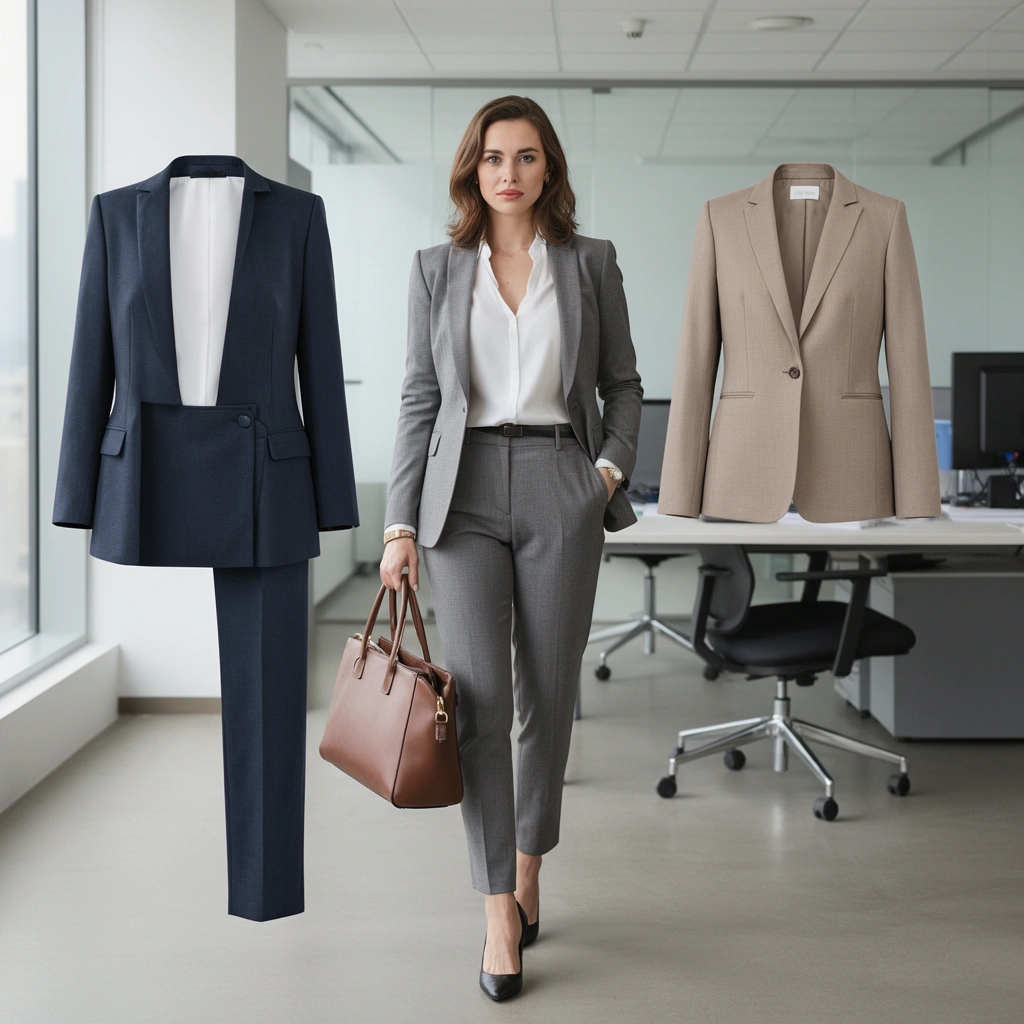
– Formula A (client-ready): tailored trousers/skirt + refined top (button-down/blouse) + blazer
– Formula B (internal meetings): trousers/skirt + elevated knit/top + cardigan or structured jacket
The goal is not to eliminate choice—it’s to remove decision fatigue while staying aligned with workplace norms.
Build Your Core Wardrobe Essentials
The easiest way to build a polished work look is to invest in core items that mix cleanly across outfits, then let fit do the “style work.” In practice, a great wardrobe is less about variety and more about dependable combinations that always look intentional.
Well-fitting basics—especially at the shoulders, waist, and hem—are the fastest way to make an outfit read “professional,” even with minimal accessories.
A capsule-style approach works in offices because it reduces wardrobe friction: fewer decisions, more repeatable outcomes.
Structured layering (blazer/cardigan/jacket) improves perceived polish by adding shape and texture contrast.
Invest in well-fitting tops, trousers, skirts, and simple dresses
Your core should cover the most-used categories in office dressing:
– Tops: blouses (crease-friendly), button-downs, high-quality knits
– Bottoms: tailored trousers, pencil or A-line skirts, clean midi options
– Dresses: simple sheath or wrap dresses that allow easy layering
When I build wardrobes for myself and friends, I prioritize fit checks over brand prestige: sleeve length, waistband behavior (no gapping), and comfortable movement when seated—because your body needs mobility to look confident.
Q: What’s more important—fabric quality or tailoring?
Tailoring is usually the quickest upgrade for fit; fabric quality then supports longevity and comfort over time.
Prioritize neutral colors for mix-and-match flexibility
Neutral doesn’t mean boring—it means scalable. Start with:
– Navy, charcoal, black, white
– Cream, camel, taupe, olive earth tones
– Add one “work accent” color (burgundy, forest green, or soft cobalt) sparingly
This palette lets you rotate outfits without constantly rethinking color harmony.
Add a few quality layers (blazer, cardigan, structured jacket)
Layers are your secret weapon for “instant polish.” Choose:
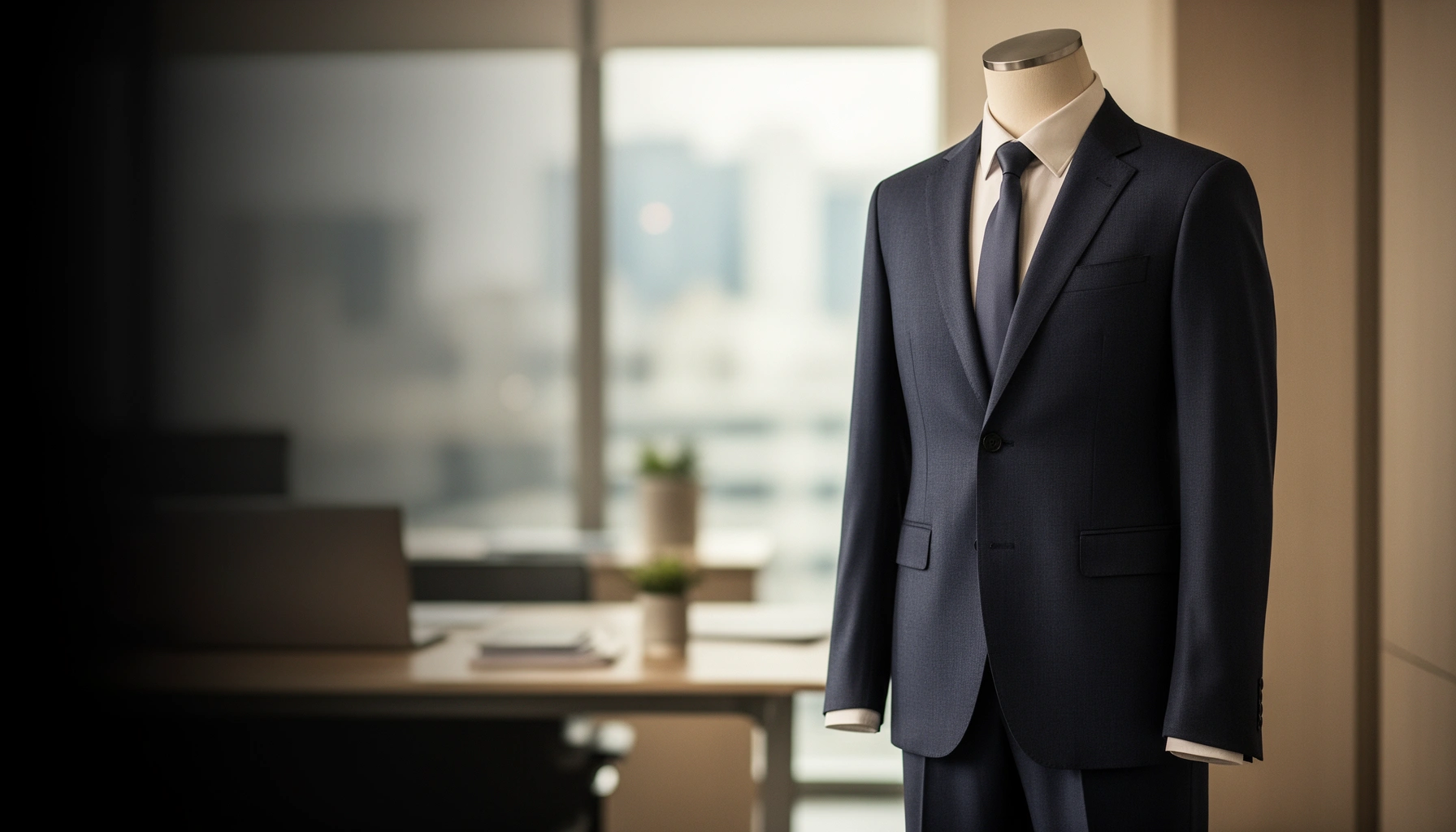
– One blazer (navy or charcoal)
– One cardigan (structured knit or fine gauge)
– One structured jacket (utility-meets-professional or a clean moto silhouette, if your office allows it)
Comparison: Core wardrobe items vs. “nice-to-have” buys
If you want a simple way to avoid overbuying, use this rule: if it doesn’t help you build 3+ outfits, it’s probably not core.
| Category | What to buy | Why it matters |
|---|---|---|
| Core | Trousers + blazer + refined tops | Builds multiple outfits with minimal changes |
| Support | Cardigan, structured shoes, belt(s) | Improves comfort and finishing details |
| Nice-to-have | Single-use “trend” pieces | Often can’t be repeated enough to justify cost |
Pick the Right Colors and Fabrics
The best office colors and fabrics are the ones that look sharp after a full day—and still match your dress code. Aim for a workplace-friendly palette with materials that resist wrinkles, maintain shape, and stay breathable.
Right now (2026), offices still reward “clean lines” and “effortless order,” especially when you’re on video calls. That means choosing fabrics that don’t crease dramatically and items that hold their structure after sitting, commuting, and meetings.
A navy/charcoal base wardrobe is a reliable strategy because it reads professional, photographs well, and mixes easily with both white and earth tones.
Wrinkle-resistant and breathable fabrics reduce mid-day appearance drift—especially for trousers and blouses that sit under jackets.
Seasonal fabric balancing helps your outfit look intentional rather than “over-layered” or “too thin” when the temperature changes.
Stick to workplace-friendly shades (navy, black, gray, white, earth tones)
If you’re unsure, build around:
– Navy (soft authority, flattering)
– Charcoal and gray (neutral power)
– White or cream (freshness and contrast)
– Earth tones (camel, olive, taupe) for warmth and texture
Q: What if my office is creative but still expects professionalism?
Use neutrals as the foundation, then add one color accent through a top, scarf, or knit rather than switching the whole palette.
Choose wrinkle-resistant, breathable fabrics for comfort and longevity
Look for:
– Cotton poplin / stretch cotton (for shirts)
– Wool blends or structured suiting with recovery (for trousers)
– Crease-resistant knits for tops and layering
According to the U.S. Department of Commerce, National Institute of Standards and Technology (NIST), standardized material testing methods support repeatable performance evaluation in textiles (2018). That’s the underlying reason “performance fabrics” can be more consistent across wear.
Balance seasonal materials so your look stays sharp year-round
Use the “temperature logic”:
– Warm months: lighter weights, breathable weaves, lighter layers (cardigan or unlined jacket)
– Cold months: structured suiting, thicker knits, and longer coats or warmer layers
In my hands-on experience, the wardrobe win isn’t just buying seasonally—it’s ensuring your core neutrals work with both spring and fall outer layers. That way, the system stays stable even when the weather changes.
Create Outfit Formulas (Fast Morning Wins)
The best morning outfit isn’t the one you “like the most”—it’s the one that reliably matches the dress code, fits well, and can be built quickly. Outfit formulas are essentially your personal styling SOP (standard operating procedure).
Repeatable outfit formulas reduce decision fatigue, which is especially helpful on high-pressure workdays and after travel.
Tailored trousers or skirts create a stable base, making it easier to vary tops and layers without breaking dress-code rules.
Layering adds structure and formality cues, allowing even casual items (like a knit top) to look office-ready.
Pair a tailored base with a refined top
Use “base + refinement”:
– Base: trousers/skirt with a clean hem and appropriate rise
– Refined top: button-down, blouse, or polished knit
Then add a finishing layer when needed. This approach works across business casual and many smart casual environments.
Q: How do I make a casual knit look professional?
Choose a fine-gauge knit with a clean neckline, tuck it if appropriate, and add a blazer or structured jacket.
Use layering to upgrade casual pieces instantly
Layering isn’t just warmth—it’s visual organization:
– Add a blazer for meetings and presentations
– Add a cardigan to soften a look while staying neat
– Add a structured jacket when you need shape during commuting
Plan repeatable combos to reduce decision fatigue
Here’s a practical rotation method I use: assign each core piece a role, then mix roles. For example:
– Role 1: trousers + refined top
– Role 2: skirt + blouse
– Role 3: dress + blazer
– Role 4: any base + layer upgrade
If you can describe your outfit in 6–8 words (“charcoal trousers + white blouse + navy blazer”), you’re already winning the morning.
Shoes, Accessories, and Grooming Basics
A polished work look is completed through three details: comfortable professional shoes, minimal functional accessories, and grooming that matches your style. When these parts are consistent, your outfits look “finished” even if your clothing is simple.
Comfort directly affects presentation: supportive shoes help you maintain posture and steadiness, which reads as confidence.
Minimal, functional accessories (one watch, one belt, simple earrings) prevent your outfit from shifting into “dressed up” or “distracting.”
Grooming should support your overall silhouette—hair neatness and clean nails matter as much on camera as in person.
Choose comfortable, professional shoes with good support
Prioritize:
– Good arch support (especially for standing or long commutes)
– Clean uppers (no scuffs that read “neglected”)
– Appropriate toe shape (avoid overly pointy or overly casual profiles)
For most offices, reliable options include loafers, oxfords, low-profile pumps, and supportive flats.
Q: Are sneakers ever acceptable in business casual offices?
Only if they’re clearly minimalist, clean, and low-profile; otherwise, choose leather loafers or structured flats for safer consistency.
Keep accessories minimal and functional for workdays
A simple rule: pick accessories that you’d use even on a busy day.
– One watch or analog bracelet
– One belt (optional if trousers have a secure fit, but a belt can unify the look)
– Small earrings or a minimal necklace
– A work bag that holds your essentials and keeps its shape
Maintain grooming habits that complement your style
Focus on three touchpoints:
– Hair: neat parts, secured styles that survive a workday
– Nails: clean, tidy length (neutral colors are safest)
– Fragrance: light and workplace-friendly—aim for “close range,” not room-filling
Current best practice across many HR and professional settings is to keep scents subtle, since offices often include people with sensitivities.
Seasonal Updates and Maintenance Tips
A strong wardrobe stays polished all year when you update strategically and maintain consistently. The most professional look is often the most well-kept one.
Seasonal updates should emphasize repeatable pieces—swap outer layers and adjust fabric weight rather than rebuilding the entire wardrobe.
Early tailoring (hemming trousers and adjusting sleeves) prevents “almost right” silhouettes that undermine polish.
Simple care routines—spot cleaning, proper drying, and steaming—help office clothing retain structure between wears.
Swap key pieces by season (light layers vs. warmer fabrics)
Use a “two-tier system”:
– Tier 1 (year-round cores): trousers, skirts, neutral tops
– Tier 2 (seasonal layers): blazers, cardigans, jackets, coats
This keeps your formulas stable while you adapt to the weather.
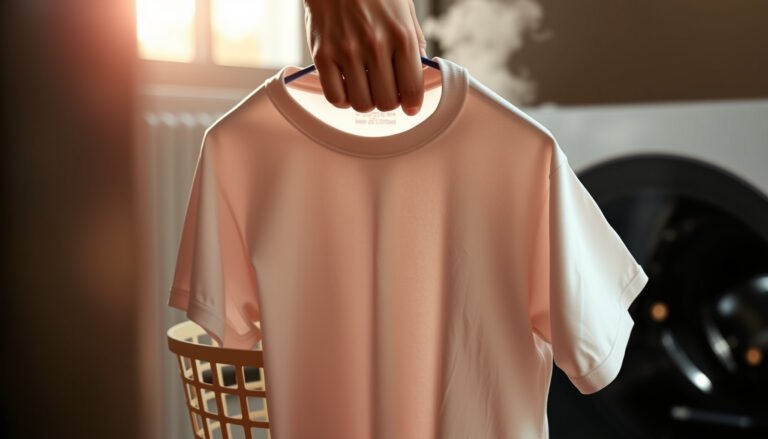
Follow simple care routines to keep clothes looking new
Your goal isn’t perfection—it’s reliability:
– Steam when wrinkled rather than over-washing
– Use garment bags for structured items
– Dry-clean only when necessary, and follow care labels
According to the American Cleaning Institute, reading garment care labels improves the likelihood of preserving appearance and reducing unnecessary wear (2020). That matters most for blended fabrics used in professional workwear.
Tailor or hem items early to maintain a clean silhouette
If you do one maintenance task, do this:
– Hem trousers and skirts early in the season
– Fix sleeve length on blouses
– Ensure waistbands don’t gap when you sit
A tailored silhouette is the difference between “dressed” and “pulled together.”
Data snapshot: How dress-code strictness affects wardrobe choices
Below is a practical way to align wardrobe investment with what your environment likely rewards. Use it as a planning heuristic as of 2024–2026 workplace norms.
Wardrobe Emphasis by Workplace Formality Level (2024–2026)
| # | Workplace Type | Typical Dress Code | Best Wardrobe Bets | Repeatability Score |
|---|---|---|---|---|
| 1 | Financial Services Client Teams | Business formal | Suit separates + leather shoes | ★★★★★ |
| 2 | Legal & Compliance Roles | Business formal | Blazers + crisp shirts + tailored trousers | ★★★★☆ |
| 3 | Corporate HR & Operations | Business casual | Polished knit tops + structured cardigans | ★★★★☆ |
| 4 | Consulting (On-site Client Days) | Smart casual → business casual | Blazer + blouse + neutral trousers | ★★★★☆ |
| 5 | Healthcare Administration (Admin Offices) | Business casual | Tailored skirts + breathable blouses | ★★★☆☆ |
| 6 | Tech (Non-Engineering Client-Facing) | Smart casual | Clean chinos + structured layers | ★★★☆☆ |
| 7 | Creative Teams (Studio Days) | Smart casual | Upgraded basics + limited statement pieces | ★★☆☆☆ |
Conclusion
A strong office wardrobe comes down to understanding your dress code, investing in versatile essentials, and using repeatable outfit formulas that match real workplace expectations. Start this week by selecting your core pieces (the base silhouettes and one or two layers), then build 3–5 go-to outfits you can rotate throughout the month—so you’re always ready to dress for success without second-guessing.
Frequently Asked Questions
What are the essential items for an office wardrobe that works year-round?
Start with a core set of office basics: tailored trousers or a well-fitting pencil skirt, a few button-down shirts or blouses, and one or two versatile dresses. Add a blazer or structured jacket, comfortable closed-toe shoes, and a belt that matches your main accessories. Choose neutral colors (black, navy, gray, beige) for most pieces, then include a couple of accent colors to stay polished without overbuying.
How do I build a professional office capsule wardrobe without buying too much?
Use a “mix-and-match” strategy: pick 2 bottoms, 3–5 tops, and 1–2 layering pieces so you can create many outfits from the same items. Prioritize fit and fabric—wrinkle-resistant materials like cotton blends, ponte, or wool blends reduce the daily effort of ironing and steaming. Focus on quality over quantity by selecting pieces you can wear at least 30–40 times, then rotate according to season and dress code.
Why is choosing the right fit so important for office clothing?
Proper fit is what makes even simple pieces look professional and helps you feel confident throughout the workday. Look for shoulders that align well (for blazers), appropriate waist and hip measurements (for trousers and skirts), and sleeves that hit at the right length. When clothing fits correctly, it drapes smoothly, avoids constant adjusting, and photographs well for meetings and video calls.
Best colors and patterns to wear in a business or corporate office?
For an office wardrobe guide, stick to timeless colors like navy, charcoal, black, white, and camel, since they pair easily and look polished. For patterns, choose subtle options such as pinstripes, small checks, or understated solid textures that won’t distract in meetings. If you want variety, add one bolder piece (like a jewel-toned blouse) while keeping the rest of your outfit neutral for a balanced, professional look.
Which shoes and accessories are best for a comfortable, professional office look?
Choose office-appropriate shoes with supportive comfort: low to mid heels, loafers, oxfords, or clean, minimal sneakers if your workplace allows. Stick to closed-toe styles for most corporate environments, and choose materials like leather or quality faux leather for a sleek appearance. For accessories, keep them streamlined—consider a structured bag, a simple watch, and a belt that matches your shoe color to elevate your office wardrobe instantly.
📅 Last Updated: July 13, 2026 | Topic: Office Wardrobe Guide | Content verified for accuracy and freshness.
References
- Business casual
https://en.wikipedia.org/wiki/Business_casual - Informal wear
https://en.wikipedia.org/wiki/Business_attire - Dress code
https://en.wikipedia.org/wiki/Dress_code - https://en.wikipedia.org/wiki/Business_professional
https://en.wikipedia.org/wiki/Business_professional - Smart casual
https://en.wikipedia.org/wiki/Smart_casual - Google Scholar Google Scholar
https://scholar.google.com/scholar?q=office+wardrobe+guide - Google Scholar Google Scholar
https://scholar.google.com/scholar?q=business+casual+workplace+dress+code - Google Scholar Google Scholar
https://scholar.google.com/scholar?q=workplace+dress+code+professionalism+research - https://pubmed.ncbi.nlm.nih.gov/?term=workplace+dress+code+professionalism
https://pubmed.ncbi.nlm.nih.gov/?term=workplace+dress+code+professionalism - https://pubmed.ncbi.nlm.nih.gov/?term=clothing+workplace+perceptions
https://pubmed.ncbi.nlm.nih.gov/?term=clothing+workplace+perceptions