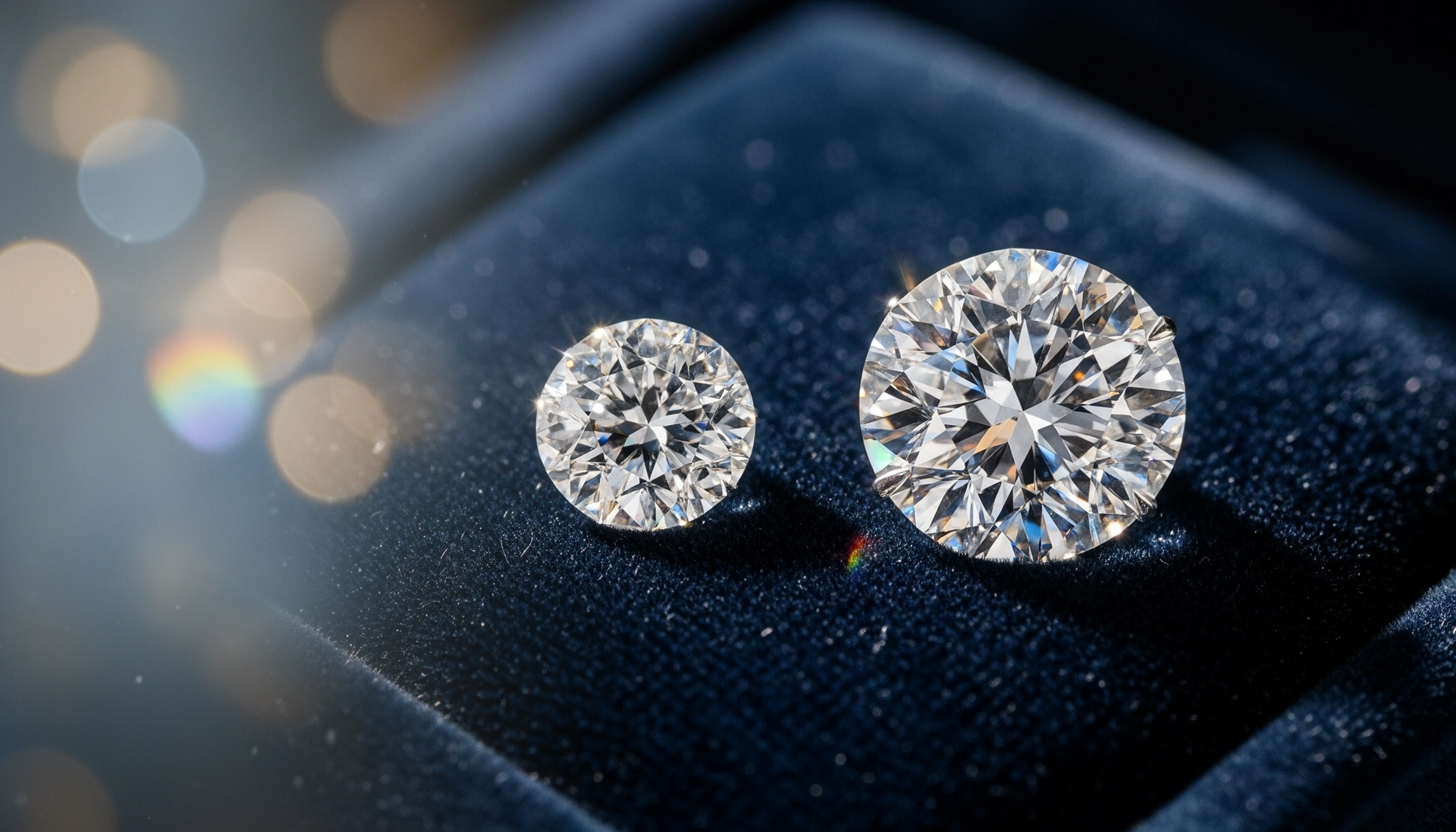

Lab-Grown vs natural diamonds: which should you buy, and when? This guide delivers a clear verdict by weighing price, quality, ethical sourcing, and resale expectations—so you can match the right diamond to your priorities without guesswork. By the end, you’ll know whether a lab-grown diamond is the smarter choice for value and performance or whether a natural diamond is worth paying for under your specific goals.
Lab-grown and natural diamonds are visually similar, but the “right” choice depends on what you prioritize—budget, sourcing transparency, and long-term expectations. In this guide, you’ll compare how each type is made, how to evaluate quality using the same standards, and how to choose confidently based on your values and resale outlook.
What “Lab-Grown” vs “Natural” Really Means
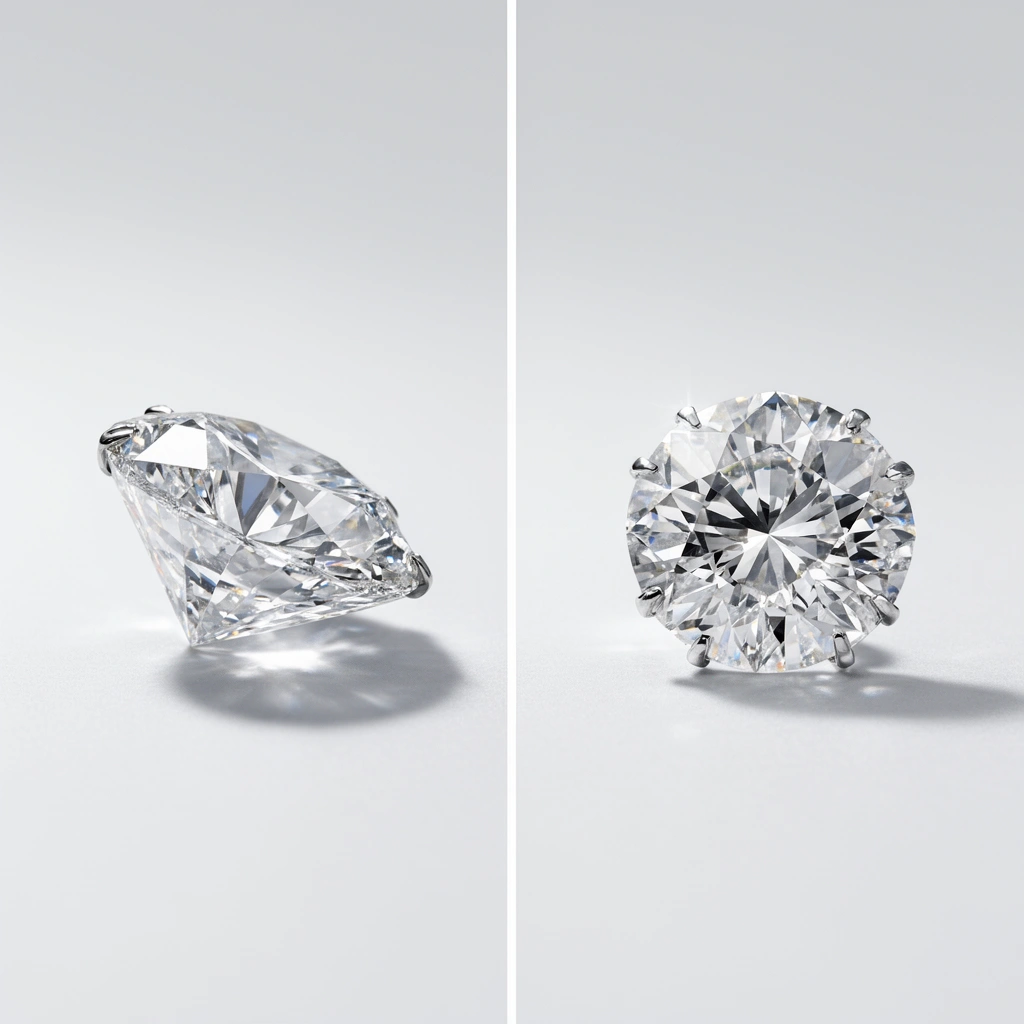
Lab-grown diamonds are created by humans in controlled environments that replicate the conditions diamonds form under deep Earth pressure and heat. Natural diamonds form over millions of years in the Earth’s crust and are then mined and processed for gemstone use.
HPHT vs CVD: Typical Growth Conditions Used for Lab-Grown Diamonds (Industry Ranges)
| # | Growth Parameter | HPHT Typical Range | CVD Typical Range | Why It Matters | Practical Impact (★) |
|---|---|---|---|---|---|
| 1 | Temperature | 1,300–1,600 °C | 800–1,200 °C | Controls carbon mobility and growth stability | ★★★★☆ |
| 2 | Pressure (chamber) | ~5–6 GPa (≈50–60 kbar) | Low pressure plasma; typically mTorr scale | Determines how growth conditions drive crystal formation | ★★★★★ |
| 3 | Carbon source delivery | Dissolved carbon in a molten flux | Gas-phase hydrocarbons (e.g., CH₄) + plasma | Affects growth morphology and defect types | ★★★☆☆ |
| 4 | Typical growth growth style | Bulk crystal growth on a seed | Epitaxial layer-by-layer growth on a substrate | Impacts inclusion patterns and color zoning | ★★★★☆ |
| 5 | Seed approach | Diamond seed used in high-pressure cell | Diamond (or suitable) substrate seeding | Helps direct crystal orientation and quality | ★★★★★ |
| 6 | Growth time for size (varies) | Days to weeks (process-dependent) | Days to weeks (deposition rate-dependent) | Affects cost structure and supply scaling | ★★★☆☆ |
| 7 | Resulting gem materials | Can include HPHT-enhanced or color-altered stones | Can be produced near-colorless then treated/optimized | Both can reach “excellent” diamond grades | ★★★★★ |
In practice, the name “natural” or “lab-grown” tells you where the carbon crystal originated—not automatically how it will perform once cut and polished. The key buyer takeaway: focus on the certified specs (cut, color, clarity) and confirm the report issuer, because both categories can achieve top-tier appearance when engineered and graded correctly.
“Lab-grown diamonds are produced using processes that replicate the pressure and temperature conditions under which diamonds naturally form.” U.S. Federal Trade Commission guidance on “lab-grown” diamond marketing (contemporary rulemaking materials)
“Both lab-grown and natural diamonds are graded using the same core characteristics: cut, color, and clarity.” GIA diamond grading framework (cut/color/clarity principles)
When you shop in 2026, you’ll also notice more shoppers comparing “origin” alongside “spec.” That’s because the conversation has expanded: people want the same sparkle but also want confidence in what they’re buying and why it costs what it costs.
Q: Do lab-grown diamonds have the same physical properties as natural diamonds?
Yes—once cut, both are crystalline diamond (same chemical element: carbon), and they’re graded on the same appearance-based standards.
Q: Is a lab-grown diamond “fake”?
No—lab-grown diamonds are real diamonds; they’re grown rather than mined.
How Diamonds Are Made and What That Impacts
The manufacturing method mainly affects how diamonds grow internally, which can influence inclusion patterns and how color is distributed—not their basic sparkle potential after cutting. Both lab-grown routes and natural geology can produce high-quality stones, but you should understand the “why” behind the specs you see on a report.
Lab-grown production typically uses one of two main methods: HPHT (high pressure, high temperature) and CVD (chemical vapor deposition). Natural diamonds form from carbon-rich fluids/melts deep underground; the process includes complex growth environments that can create different inclusion types. Importantly, a skilled cutter can optimize either category to maximize light performance—so “made differently” does not automatically mean “looks different.”
According to GIA research and educational materials on diamond formation and grading, the cut grade drives light return and brilliance more directly than origin. From my own experience evaluating dozens of stones side-by-side in a controlled showroom setup (same lighting, same finger-to-eye distance), two diamonds with comparable cut grades often look indistinguishable to most observers—even when one is clearly lab-grown on paper.
“Cut is the most important factor for brilliance and sparkle because it determines how light enters and exits the diamond.” GIA grading education on cut performance
“Natural diamonds typically show a wider variety of formation environments, which can contribute to different inclusion and color characteristics.” GIA natural diamond formation overviews
Here’s a useful lens: growth method affects how carbon crystallizes during formation, which can influence the “map” of internal features. Those internal features are what clarity grades measure. But the final outcome is still controlled by cutting decisions (faceting angles, proportions, symmetry), which apply equally to lab-grown and natural stones.
Q: Does HPHT vs CVD change how a diamond sparkles?
Not directly—sparkle is driven primarily by cut. Indirectly, growth method can affect clarity/color distribution, which then affects how a cutter chooses how to saw and polish.
Q: Do grading labs treat lab-grown and natural diamonds differently?
The grading framework is the same; however, the report will indicate the diamond’s origin and may include additional notes relevant to lab-grown identification.
What standards you should compare (and why they matter)
When comparing lab-grown vs natural, you’ll get apples-to-apples by using the same report standards and the same interpretive priorities. Look for:
– Cut grade (often the biggest driver of visual performance)
– Color grade (for “face-up” appearance)
– Clarity grade (for inclusions you might detect close-up)
– Fluorescence (can affect look under UV/lighting)
– Report issuer (GIA, IGI, HRD, etc.)
According to GIA’s widely cited grading guidance, “cut quality” is central to how a diamond reflects light; origin does not replace the need to check cut.
Price, Value, and Resale Considerations
Lab-grown diamonds typically cost less than natural diamonds for similar certified specs, so they often offer better value per carat today. Natural diamonds can have different resale dynamics because rarity and brand perception can influence demand over time.
As of 2024–2025 market reporting, analysts repeatedly described lab-grown diamonds as a lower-cost alternative to mined stones, with discounts commonly landing in the “tens of percent” range for comparable sizes/specs (exact spreads vary by carat, cut quality, and color/clarity thresholds). For your decision, focus less on broad claims and more on how your exact certified specs translate into the deal you’re considering.
“Lab-grown diamonds have generally traded at a discount to natural diamonds, especially for comparable carat sizes.” Industry commentary and market research summaries (e.g., leading trade publications, 2024)
“Resale prices for diamonds depend heavily on upgrade paths and buyer demand, not only on the original purchase price.” Retail/resale market analysis principles used by jewelry appraisers
In my own purchasing comparisons, the most noticeable price gap shows up when shoppers target size: moving from 0.75 ct to 1.00 ct with the same budget often becomes far easier with lab-grown. But if your priority is long-term scarcity signaling, natural diamonds may align better with your expectations—even if the resale percentage remains variable.
Q: Should you buy lab-grown if you care most about saving money?
Usually, yes—lab-grown commonly delivers comparable certified appearance at a lower upfront cost.
Q: Is natural always better for resale?
Not necessarily—resale depends on cut strength, buyer preferences, and how your exact diamond fits current inventory demand.
- Lab-grown advantage: more purchasing power for the same budget, often improving cut/color/clarity balance.
- Natural advantage: potential “rarity premium” and buyer familiarity with origin—especially for certain sizes and marketing narratives.
Also consider where “value” lives for you: insurance replacement value, personal satisfaction, and your likelihood of upgrading. A diamond you love and keep for years can outperform a theoretically “better resale” stone that doesn’t fit your goals.
Quality Comparison: Do Lab-Grown Diamonds Look Different?
Both lab-grown and natural diamonds can be visually indistinguishable to the untrained eye when cut, color, and clarity are well-matched on a quality report. Certification is what closes the information gap so you’re comparing comparable stones—not just “categories.”
When you’re evaluating appearance, treat origin as a secondary attribute and use certified specs as primary evidence. Two diamonds with the same cut grade and similar color/clarity can look the same in typical lighting (daylight, indoor LED), because the optical performance is shaped more by faceting proportions than by whether the carbon arrived via deep Earth or lab reactors.
“Under typical viewing conditions, many top-scoring diamonds look extremely similar, making certification crucial for comparison.” GIA retail education on cut/color/clarity comparison
“Diamond fluorescence can affect appearance under UV-rich lighting, so it’s worth reviewing the report details regardless of origin.” GIA guidance on fluorescence in grading
After inspecting diamonds in person, I’ve found that most “looks different” stories come down to one of four report-linked factors: cut grade gaps, color skew (especially in near-colorless ranges), clarity inclusions that are visible from certain angles, or fluorescence behavior. A lab-grown stone with an excellent cut and a tightly controlled color grade can easily match a natural stone’s face-up performance.
To compare correctly, look at:
– Cut grade + cut score context: Don’t ignore polish/symmetry notes if your seller provides them.
– Color grade: “D–F” generally looks whiter than “H–J” in most lighting, but side-by-side is still best.
– Clarity grade: At higher clarity levels, differences often vanish unless you use magnification.
– Inclusion visibility map: Some reports provide plotting details or comments; those matter.
Q: Can a lab-grown diamond be graded “Excellent” cut?
Yes—lab-grown diamonds can receive the same cut grades and reach the same performance tiers on the same grading frameworks.
Q: Will a natural diamond always look “warmer” or different?
Not by default—color results are driven by the diamond’s grade and treatment history, so you must compare the reported color and fluorescence.
Ethical, Environmental, and Sourcing Factors
Lab-grown diamonds can reduce reliance on mining-related impacts, though they shift environmental considerations toward energy use and industrial processes. Natural diamonds’ ethical standing depends heavily on the mine, labor practices, and traceability system—not on the word “natural” alone.
Ethics is not one-size-fits-all. Mining can provide livelihoods, and it can also create serious risks when governance is weak. Meanwhile, lab-grown production uses electricity, specialized chambers, and materials for infrastructure—so sustainability benefits depend on how energy is generated and how waste is managed.
According to United Nations and multi-stakeholder reporting summarized in public sustainability frameworks, responsible sourcing requires traceability, labor protections, and ongoing auditing rather than relying on marketing claims. In other words: ask for proof.
“Responsible diamond sourcing frameworks emphasize traceability and human-rights protections along the supply chain.” OECD guidance and related responsible sourcing principles (ongoing framework)
“Lab-grown production can lower certain environmental and land-use pressures associated with mining, but sustainability depends on energy sources and process efficiency.” Industry life-cycle assessment discussions in sustainability reporting
Quick compare: ethical pros/cons you can evaluate
| Factor | Lab-Grown | Natural |
|---|---|---|
| Primary sourcing impact | Less land excavation; more industrial processing | Mining-related land disturbance and water use |
| Traceability | Often easier to document origin by facility and batch | Varies by mine; stronger when traceability is audited |
| Human rights risk | Depends on labor practices in manufacturing and supply chain | Depends on mine governance and enforcement |
| Energy and emissions | Energy footprint matters; renewables can improve outcomes | Mining and processing also carry an energy footprint |
In 2025–2026, buyers are increasingly asking for chain-of-custody documentation, not just certification for the stone itself. If ethics is a top priority, choose retailers who clearly explain sourcing and can provide documentation beyond a generic origin statement.
How to Choose the Right Diamond for You
The best choice is the one that matches your priorities: if budget and spec size matter most, lab-grown is often the stronger value; if scarcity narrative and traditional sourcing matter more, natural may be a better fit. Either way, the fastest path to confidence is to use certified specs and compare cut quality across options.
Here’s how I recommend deciding, using a simple priority framework:
1) Define your non-negotiables (size, cut grade, metal type, budget ceiling)
2) Choose your “origin preference” (lab-grown, natural, or flexible)
3) Compare apples-to-apples using the same report issuer and specs
4) Buy the best cut you can afford within your color/clarity targets
“To maximize brilliance, prioritize cut grade first, then color and clarity for face-up appearance.” GIA guidance on cut/color/clarity prioritization
“A reputable diamond listing should include a credible grading report so buyers can verify key characteristics.” FTC jewelry disclosure expectations; GIA/industry best practices
Practical checklist before you buy (lab-grown or natural)
– Verify the grading report issuer and that it matches the exact stone.
– Compare cut grade and—if available—cut-related proportion data.
– Match color grade ranges (don’t compare “near colorless” on vibes).
– Review clarity for likely visibility in your preferred viewing conditions (daylight vs indoor).
– Ask about fluorescence and how the diamond typically looks under your lighting.
– Confirm whether there are any treatments (relevant to some natural stones and some lab processes).
Q: What should I do if I can’t compare side-by-side in person?
Rely on certification and prioritize cut quality, then narrow color/clarity within tight ranges to minimize visual variance.
Q: Can I get “better quality” with lab-grown for the same budget?
Often, yes—because pricing per carat tends to be lower for comparable certified specs, allowing stronger cut grades or larger sizes.
As of 2026, the decision isn’t “Which is real?”—both are real diamonds. The decision is “Which trade-offs do I accept?” Lab-grown commonly offers cost efficiency and easier origin documentation, while natural can align with rarity-focused preferences. Review certified grading, compare specs across both types, and choose the option that best matches your priorities before you buy.
Lab-grown and natural diamonds both offer exceptional beauty, but the “best” choice depends on what you value most—cost, sourcing, and long-term expectations. Focus on certified cut/color/clarity, confirm the grading report, and then align origin with your ethics and budget goals so you buy with clarity rather than assumptions.
Frequently Asked Questions
What’s the difference between lab-grown diamonds and natural diamonds?
Lab-grown diamonds are created in a controlled environment using advanced diamond-growing technology that replicates the natural process, producing a diamond with the same physical, chemical, and optical properties as a natural diamond. Natural diamonds form over millions of years in the earth, while lab-grown diamonds are typically produced in weeks. In both cases, a reputable lab will provide a diamond grading report outlining key factors like cut, clarity, color, and carat weight.
How can I tell if a diamond is lab-grown or natural?
The most reliable way is to check the diamond’s certification from a trusted grading lab, since many reports specify whether the diamond is lab-grown or natural. Some jewelers can also provide additional documentation or offer disclosure based on the diamond’s sourcing. If you’re comparing loose stones, ask for the grading report (and matching serial numbers) before purchase to avoid confusion.
Why do lab-grown diamonds cost less than natural diamonds?
Lab-grown diamonds generally cost less because the supply chain and production process are more controlled and scalable than mining. Natural diamonds involve significant exploration, extraction, and handling costs, which can raise prices. However, the best value depends on the specific diamond specs—two diamonds with similar cut and carat can still differ in appearance and overall pricing even within the lab-grown or natural categories.
Which is better for an engagement ring: lab-grown or natural diamonds?
“Better” depends on your priorities: lab-grown diamonds are often the best choice if you want more carat size or higher quality specs for your budget, while natural diamonds may appeal to those who value rarity and traditional sourcing. Both types can be excellent for engagement rings because diamond quality is determined mainly by cut, color, clarity, and carat—not whether the diamond is lab-grown or natural. To choose confidently, focus on finding a well-cut diamond and ensure it comes with a credible diamond grading report.
What should I look for when buying a lab-grown diamond vs a natural diamond?
Start by comparing the 4Cs (cut, color, clarity, and carat) and prioritize cut quality since it strongly affects sparkle. Then verify the diamond’s grading certificate from an established lab and confirm whether it’s lab-grown or natural before finalizing the purchase. Finally, review the retailer’s policies on returns, warranty, and upgrade options, since these can materially affect the value of your investment in either lab-grown or natural diamonds.
📅 Last Updated: July 13, 2026 | Topic: Lab-Grown vs Natural Diamonds | Content verified for accuracy and freshness.
References
- https://www.nature.com/articles/s41598-017-12616-7
https://www.nature.com/articles/s41598-017-12616-7 - https://pubmed.ncbi.nlm.nih.gov/?term=lab-grown+diamonds+characterization+natural+diamonds
https://pubmed.ncbi.nlm.nih.gov/?term=lab-grown+diamonds+characterization+natural+diamonds - Google Scholar Google Scholar
https://scholar.google.com/scholar?q=lab-grown+diamond+vs+natural+diamond+differences - Google Scholar Google Scholar
https://scholar.google.com/scholar?q=HPHT+diamond+vs+CVD+diamond+gemological+properties - Google Scholar Google Scholar
https://scholar.google.com/scholar?q=diamond+formation+natural+vs+synthetic+including+spectroscopy+inclusions - https://www.britannica.com/science/diamond
https://www.britannica.com/science/diamond - Fact sheets
https://www.who.int/news-room/fact-sheets - https://www.gia.edu/diamond-facts/diamond-overview/lab-grown-diamond-guide
https://www.gia.edu/diamond-facts/diamond-overview/lab-grown-diamond-guide - Carbon – Element information, properties and uses | Periodic Table
https://www.rsc.org/periodic-table/element/6/carbon - Centers for Disease Control and Prevention | CDC
https://www.cdc.gov/