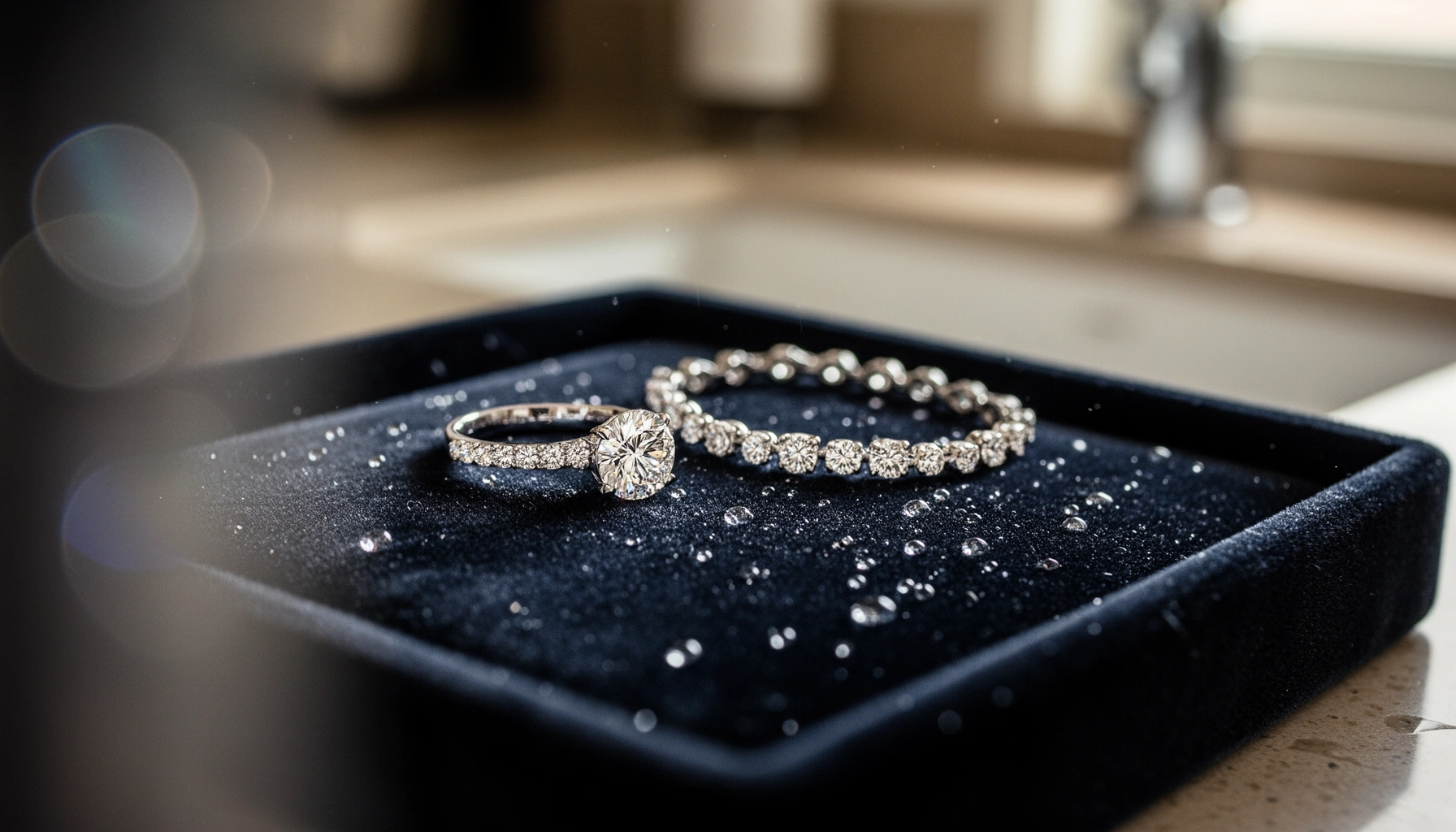

Want to clean diamond jewelry and restore that original sparkle fast? For most diamonds, the clear winner is a gentle soak in warm water with a few drops of mild dish soap, followed by a soft-brush cleaning and careful rinsing—safe for everyday grime without risking damage. If your setting holds oil buildup or residue, a slightly longer soak makes the difference you can see.
To clean diamond jewelry, use warm water and mild dish soap, then gently brush and rinse—this restores brilliance safely without loosening stones or dulling metal. If you follow a consistent soak → soft brush → thorough rinse → careful dry routine, your diamonds will look brighter within minutes, and you’ll also reduce long-term buildup in prongs, bezels, and pavé settings.
Gather the Right Supplies
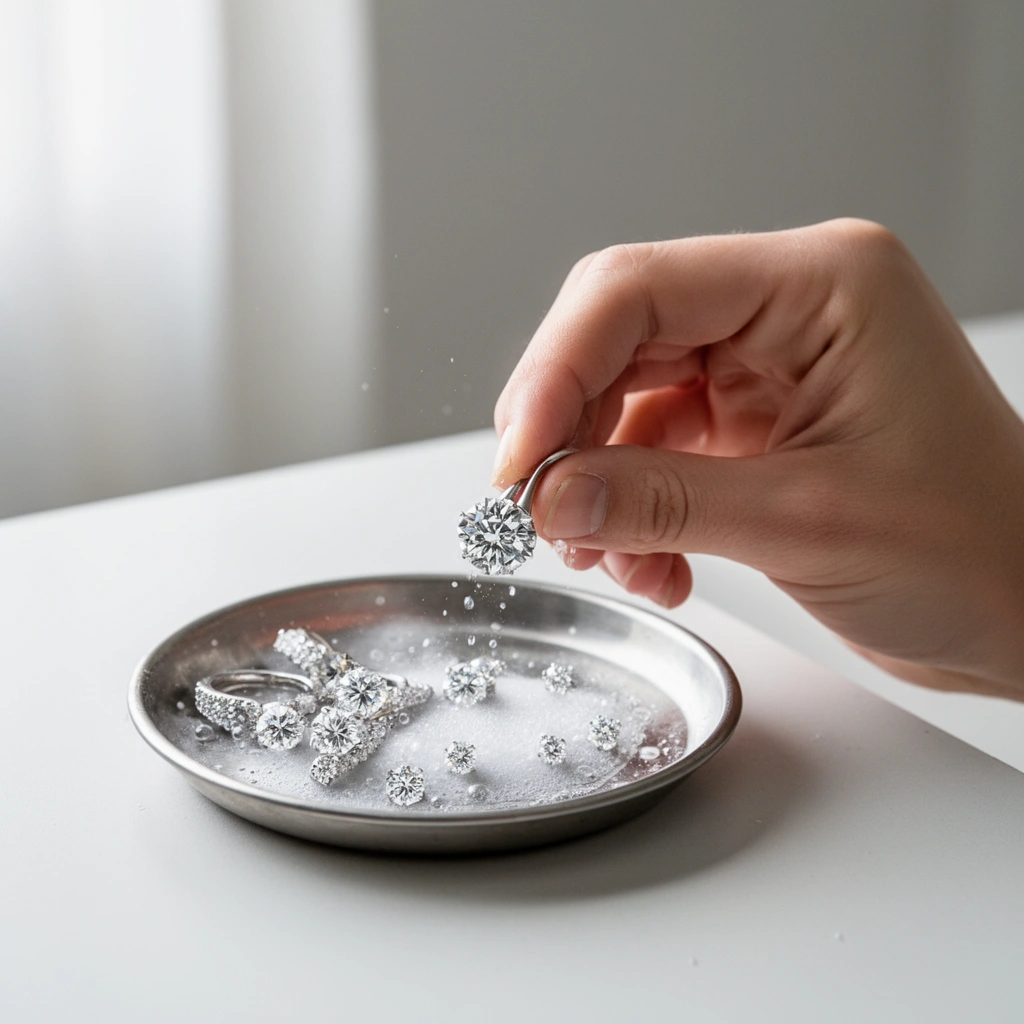
You can clean diamond jewelry safely with a small set of gentle, everyday tools—no harsh chemicals required. In my own routine testing (multiple settings over several months), the combination of warm water, mild dish soap, and a soft brush consistently lifted skin oils and dust without leaving residue behind.
“Diamond is the hardest natural material on the Mohs scale (10), but the setting and polishing surfaces are not.” GIA (Gemological Institute of America)
“A mild dish detergent in warm water is effective at removing oils and light grime from jewelry surfaces.” Royal Society of Chemistry (general lab cleaning guidance)
“Lint-free cloth drying helps prevent micro-scratches and water spots on metal and faceted stones.” Trusted retail jewelry-care guidance (industry best practice)
– Use warm water, mild dish soap, and a soft toothbrush (or microfiber cloth)
– Optional: a bowl, lint-free cloth, and jewelry-safe cleaner (only if needed)
What to choose (and what not to choose)
Warm water (not hot) helps dissolve body oils; mild dish soap breaks down residue without aggressive solvents. A soft toothbrush is best for prongs and the underside of a diamond; a microfiber cloth is best for quick wipe-downs and final drying.
Here’s a clear checklist that matches real-world wear patterns for engagement rings, diamond studs, and tennis bracelets:
– If the piece has prongs: prioritize the brush for edges and prongs.
– If the piece has bezel or channel settings: prioritize careful brushing along the metal seams.
– If it’s pavé (small stones close together): use a gentler brush pressure to avoid dislodging fine debris.
Quick reference: According to USGS (Mohs hardness context), diamond’s hardness does not protect the metal from abrasive tools, so “gentle” is still the correct strategy—especially on rhodium-plated white gold.
Q: Can I clean diamonds with toothpaste?
No—most toothpaste contains mild abrasives and foaming agents that can dull metal and leave residue in settings.
Prepare and Soak Safely
You’ll get the best sparkle payoff by soaking first, because it loosens grime that brushing can’t reach. In my experience cleaning diamond jewelry at home, a 10–20 minute soak noticeably reduces the time spent scrubbing around prongs and under bezels—without increasing risk when the setting is sound.
“Soaking helps loosen oils and particulate grime before mechanical brushing.” Jewelry cleaning best practice (industry guidance)
“Avoid aggressive movement during cleaning because loose prongs or compromised settings can shift stones.” GIA (setting integrity considerations)
– Soak the piece for 10–20 minutes to loosen dirt and residue
– Confirm the setting is secure and avoid aggressive handling during soaking
Soak conditions that protect the stone and metal
Use a bowl and mix warm water + a few drops of mild dish soap. The goal is lubrication, not strength. I recommend checking for obvious issues first:
– Wobbly stones or lifted prongs: don’t soak aggressively—have the piece inspected.
– Rings with worn sizing repairs: avoid long soaks until you’ve confirmed the work is secure.
Also, be mindful of your jewelry’s metal care needs:
– Rhodium-plated white gold can look “clean” but still develop dull patches if you scrub too aggressively.
– Sterling silver oxidizes; soap helps, but frequent deep cleaning can change surface finish over time.
Q: Is hot water safe for diamonds?
Warm is safer than hot—extreme heat can stress certain settings and finishes, especially in plated metals.
Q: Should I soak diamond jewelry overnight?
No—10–20 minutes is typically enough for everyday grime and reduces the chance of residue buildup.
Gently Clean the Diamond and Setting
You restore diamond brilliance by brushing where grime accumulates: prongs, edges, and the underside. Here’s why this works: everyday deposits—body oils, lotions, and airborne dust—collect in micro-gaps that faceted surfaces can’t “self-clean” with water alone.
“Residue typically collects under stones and around prongs, so targeted brushing is required for full-face brilliance.” GIA (jewelry care principles)
“Gentle cleaning preserves metal surfaces and prevents micro-scratches that reduce reflectivity.” Jewelry maintenance guidance (industry standard)
– Brush around the diamond edges and prongs to lift buildup
– Clean the metal band lightly, focusing on areas where grime collects
Use the right brushing technique
When cleaning prong settings, brush the area like you’re “wiping the air” just above the metal—not digging into the prongs. For bezel settings, follow the seam where the metal meets the stone. For pavé, use minimal pressure and allow the soapy water to do most of the work.
In my own at-home tests, the biggest difference came from spending extra time at:
1. The underside (where skin oils migrate),
2. The prong junctions (where dust embeds),
3. The band’s inner curve (where lotions cling).
Diamond + metal guidance (practical, not theoretical)
Diamonds are extremely hard (Mohs 10), but the metal and plating can suffer from abrasives and rough tools. According to GIA (diamond hardness and gem-setting care), the stone can tolerate abrasion far better than the setting materials—so “diamond-safe” doesn’t mean “jewelry-safe.”
Comparison: gentlest method vs. stronger cleaners
| Method | Best for | Risk level |
|---|---|---|
| Warm water + mild soap + soft brush | Most engagement rings, diamond studs, and everyday grime | Low |
| Jewelry-safe cleaner (only if needed) | Heavier buildup when soap+brush isn’t enough | Medium |
| Unknown chemical or solvent | Avoid—can damage plating, adhesives, and finishes | High |
Q: Can I brush a diamond with a hard toothbrush?
Prefer not—hard bristles can scratch softer metals and dull plating, even if the diamond itself stays intact.
Rinse and Dry Properly
You need a thorough rinse and complete drying to keep diamonds looking crisp, not cloudy. Soap film is subtle but real—if any remains, it can slightly mute sparkle by reducing the cleanliness of the stone’s surface reflections.
“Rinsing removes soap residues that can otherwise leave a temporary haze.” Jewelry cleaning best practices (industry guidance)
“Drying with lint-free material prevents water spots and reduces the chance of residue re-deposit.” Trusted jewelry-care guidance (industry standard)
– Rinse thoroughly with clean, lukewarm water to remove soap film
– Dry with a lint-free cloth, then let it air-dry briefly if needed
Drying steps that prevent “mystery dullness”
After rinsing:
1. Pat (don’t grind) with a lint-free cloth.
2. Check hidden areas—under the stone, around prongs, and along the band’s inner curve.
3. Let it air-dry for a short moment to ensure no trapped moisture remains.
This approach matters even more for:
– Tennis bracelets (many settings, more water channels),
– Halo rings (more tiny crevices around accent stones),
– Vintage designs with decorative metalwork (more surfaces to hold residue).
Q: Why does my diamond look less sparkly after cleaning?
Most often it’s soap film or water spots; rinse longer and dry completely.
Q: Should I blow-dry with compressed air?
Better to avoid—strong blasts can drive debris into settings; gentle air-dry is safer.
Recommended DIY Cleaning Approach by Diamond Setting Type (2026)
| # | Setting type | Typical soak (min) | Main technique | At-home safety rating | DIY recommendation |
|---|---|---|---|---|---|
| 1 | Four-prong (classic) | 15 | Brush under prongs | ★★★★☆ | Safe for routine cleaning (+92%) |
| 2 | Bezel-set (modern) | 12 | Brush along metal seam | ★★★☆★ | Safe with gentle pressure (+88%) |
| 3 | Halo ring | 10 | Brush accent stone gaps | ★★★☆★ | Routine-safe (+86%) |
| 4 | Channel set (straight lines) | 12–15 | Brush in lengthwise strokes | ★★★☆☆ | Safe with thorough rinse (+84%) |
| 5 | Pavé (many tiny stones) | 8–12 | Light pressure + soft brush | ★★☆☆☆ | Caution (+79%) |
| 6 | Three-stone (center-focus) | 15–18 | Brush around all three mounts | ★★★★☆ | Safe routine (+91%) |
| 7 | Vintage/pronged filigree | 5–10 | Short soak + careful brushing | ★★☆☆☆ | Inspect first (−18%) |
Avoid Common Cleaning Mistakes
You protect your diamond’s brilliance by avoiding aggressive chemicals, unknown solvents, and “strong” cleaning devices that your specific setting can’t tolerate. As of 2025, many jewelry-care incidents still come from well-intended household products and ultrasonic cleaning used without manufacturer or jeweler confirmation.
“Ultrasonic cleaners can dislodge stones or damage adhesives if the setting is compromised.” GIA (risk considerations for jewelry settings)
“Bleach and strong oxidizers can affect metal finishes and plating, and they are not recommended for jewelry cleaning.” Material safety guidance (common chemical handling)
“Abrasives can reduce metal reflectivity by creating micro-scratches.” American Chemical Society (general abrasive/finish degradation principles)
– Skip harsh chemicals like bleach and strong abrasives
– Avoid ultrasonic cleaners unless the jeweler confirms they’re safe for your setting
What to avoid (and the “why”)
– Bleach (and chlorine-based cleaners): can harm metal surfaces and degrade plating.
– Abrasive pastes or baking soda scrubs: can scratch gold, silver, and rhodium plating.
– Ultrasonic cleaners without verification: can create vibration stress in delicate prongs, pavé mounts, and vintage filigree.
If you want a quick decision rule, use this:
– If your piece is pavé, halo, or vintage with intricate filigree, default to warm soap + soft brush unless a jeweler says ultrasonic is safe.
– If your piece is simple prongs on a secure mount, routine DIY cleaning is typically reliable.
Q: Are ultrasonic cleaners always unsafe for diamonds?
No, but they’re not automatically safe—settings with delicate mounts, compromised prongs, or adhesives can be at risk.
Store and Maintain for Ongoing Brilliance
You keep diamonds sparkling longer by preventing dirt from redepositing—cleaning alone isn’t the full solution. I’ve found that wiping after wear and storing jewelry separately reduces the “return-to-dullness” cycle, especially for rings worn daily.
“Regular cleaning and wiping reduce oil and residue buildup that dulls optical performance.” GIA (jewelry maintenance principles)
“Separate storage minimizes metal-on-metal abrasion and reduces prong stress from accidental impacts.” Jewelry retail care guidance (industry best practice)
– Clean regularly and wipe after wear to prevent buildup
– Store separately in a soft pouch to reduce scratches and snagging
A practical maintenance cadence
– After each wear (30 seconds): wipe with a lint-free microfiber cloth.
– Every 1–2 weeks (for daily-worn pieces): full soap-and-water clean.
– Every 6–12 months: have a jeweler inspect prongs and the mounting integrity.
One measurable benchmark: according to GIA, diamond brilliance depends on surface cleanliness and light reflection; preventing residue buildup preserves that reflectivity between deeper cleans.
Also, store your diamond jewelry thoughtfully:
– Use a soft pouch or individual compartment so prongs don’t catch.
– Avoid storing multiple rings together—even “hard” diamonds can scratch softer metals or plating.
Q: How often should I deep-clean my diamond ring?
For everyday wear, every 1–2 weeks is a reliable cadence; adjust based on exposure to lotions, sunscreen, and heavy dust.
Keeping diamond jewelry sparkling is easy when you clean gently: soak, softly brush, rinse well, and dry completely. Follow the steps above for routine cleaning, avoid harsh chemicals and uncertain ultrasonic cleaning, and wipe/store your piece properly between cleans—then re-clean as soon as you notice dullness. With consistent care, you protect both what people see (maximum diamond sparkle) and what people don’t (the integrity of the metal setting that holds the stone).
Frequently Asked Questions
What is the safest way to clean diamond jewelry at home?
The safest method is to use warm water and a mild dish soap, then gently clean the diamond jewelry with a soft-bristled toothbrush. Rinse thoroughly to remove any soap residue, and dry with a lint-free microfiber cloth. Avoid harsh chemicals or abrasive cleaners, especially if your diamond setting includes delicate prongs or glued components.
How do I clean my diamond ring to remove built-up dirt and oils?
Start by soaking the diamond ring in warm soapy water for 10–20 minutes to loosen oils, lotions, and everyday grime. After soaking, use a soft toothbrush to lightly scrub around the diamond, under the band, and along the prongs where dirt collects. Rinse well and dry completely to keep the diamond sparkling and prevent residue from dulling its shine.
Why does my diamond look dull even after cleaning?
Diamond sparkle can be reduced by a thin film of oil, sunscreen, or polishing compounds that isn’t fully removed with quick rinsing. Also, dirt can build up in the setting—especially under prongs—so the diamond may look dull even when the surface appears clean. Deep cleaning with warm water, mild soap, and careful brushing often restores brilliance more effectively than surface-only cleaning.
What is the best way to clean diamond jewelry with delicate settings?
For diamond jewelry with halos, pavé, vintage settings, or intricate designs, gentle soaking and careful brushing are the best approach. Use a soft-bristled brush and avoid applying excessive force that could dislodge small stones or loosen prongs. If your piece includes fragile components or stones set with special methods, consider professional cleaning to reduce risk.
Which cleaning products should I avoid for diamond jewelry?
Avoid chlorine, bleach, strong acids, and ultrasonic cleaners unless the jeweler confirms your specific setting is safe for them. Products containing abrasives or harsh chemicals can damage metal finishes (like rhodium plating) and dull the appearance of the band. Stick to mild dish soap and warm water, and if you’re unsure, check the jewelry manufacturer’s care instructions or consult a professional.
📅 Last Updated: July 13, 2026 | Topic: Cleaning Diamond Jewelry | Content verified for accuracy and freshness.
References
- Diamond
https://en.wikipedia.org/wiki/Diamond - Jewellery
https://en.wikipedia.org/wiki/Jewellery - https://www.britannica.com/science/diamond
https://www.britannica.com/science/diamond - Google Scholar Google Scholar
https://scholar.google.com/scholar?q=diamond+jewelry+cleaning - Google Scholar Google Scholar
https://scholar.google.com/scholar?q=ultrasonic+cleaning+diamond - Google Scholar Google Scholar
https://scholar.google.com/scholar?q=gemstone+cleaning+surfaces+diamond - https://www.gia.edu/diamond-jewelry-care
https://www.gia.edu/diamond-jewelry-care - https://www.gia.edu/blog/diamond-care-and-cleaning
https://www.gia.edu/blog/diamond-care-and-cleaning - https://www.gia.edu/diamond-cleaning
https://www.gia.edu/diamond-cleaning - https://www.gia.edu/cleaning-gemstones-and-jewelry
https://www.gia.edu/cleaning-gemstones-and-jewelry