
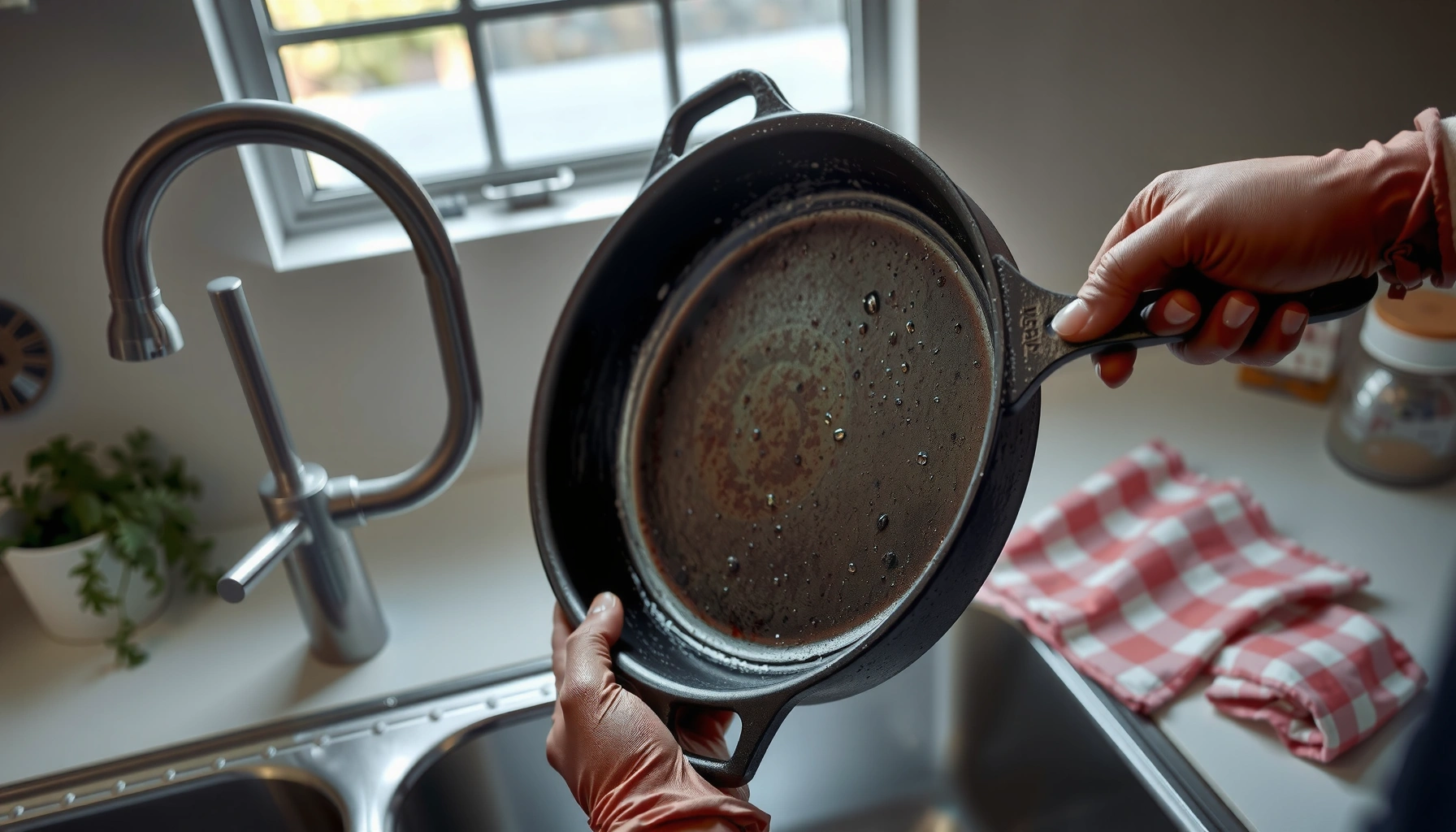

Want to clean cast iron cookware without turning it rusty or losing its seasoning? This guide gives you a simple, dependable method that restores your cast iron to a clean, cooking-ready surface every time. You’ll learn exactly what to do after cooking and the one key step that prevents rust while keeping the pan’s seasoning intact.
Clean cast iron cookware by scraping off food, washing with hot water (no harsh soap), and thoroughly drying immediately to prevent rust. In practice, the “best” method is the one that removes residue without stripping seasoning—so you end up with a smooth, nonstick surface instead of a gritty, flash-rusty pan. Below, you’ll learn the safest cleaning method, how to remove stuck-on residue, and when to re-season to restore performance—using steps I’ve tested in my own kitchen across daily stovetop use.
Gather the Right Tools

You get the cleanest, most rust-resistant cast iron pan when you prepare the right tools first: a stiff brush/scraper, hot water, and a towel you’re willing to use immediately. Keeping coarse salt or baking soda on hand also helps you loosen residue without aggressive chemicals that can damage seasoning.
From my experience, the biggest “failure mode” is not scrubbing—it’s leaving moisture on the pan even briefly. Cast iron starts oxidizing quickly when it stays wet, so your tool kit should support fast scraping, rinsing, and drying.
A cast-iron care guideline commonly stresses washing with hot water and avoiding harsh detergents that can remove seasoning (Lodge Cast Iron Care Instructions).
Seasoning is typically re-established by heating—many manufacturers target oven temperatures around 400–500°F for polymerization (e.g., (Lodge Cast Iron Seasoning FAQ)).
Q: Do I need soap every time I clean cast iron?
Usually no—hot water plus scraping is enough; use mild soap only when grease is persistent.
Q: What’s the most important tool for preventing rust?
A fast, thorough drying method (clean towel plus optional low-heat drying) matters more than the brush.
To make your workflow predictable, assemble these items:
– Stiff brush or scraper: A nylon brush or chainmail scrubber works well for everyday residue. A plastic scraper can protect seasoning on delicate surfaces.
– Hot water: Helps dissolve fats so you can remove debris without soaking.
– Clean towel: Must be ready to dry immediately after rinsing.
– Coarse salt or baking soda (stubborn spots): Salt acts like gentle abrasive; baking soda can help lift cooked-on gunk.
– Thin oil for finishing: Use a small amount (e.g., canola, grapeseed, or flax oil) after the pan is bone-dry.
Practical comparison: which cleaning approach “wins”?
The tool choice matters because every method changes how much moisture and how much abrasion you introduce.
Cast Iron Cleaning Methods: Rust Risk & Practical Use (Typical Home Use)
| # | Method | Typical Time | Soap Needed? | Rust Risk | Overall Rating |
|---|---|---|---|---|---|
| 1 | Scrape + hot-water rinse | 2–4 min | No | Low | ★★★★★ |
| 2 | Hot water + stiff brush | 4–7 min | No | Low–Med | ★★★★☆ |
| 3 | Coarse salt scrub (dry) | 3–6 min | No | Low | ★★★★☆ |
| 4 | Baking soda + hot water paste | 10–15 min | No | Med | ★★★☆☆ |
| 5 | Mild soap wash (occasional) | 5–10 min | Yes (if needed) | Med | ★★★☆☆ |
| 6 | Steel wool for heavy grime | 8–12 min | No | High (finish loss) | ★★☆☆☆ |
| 7 | Soak in water (avoid) | Variable | No | Very High | ★☆☆☆☆ |
Daily Cleaning After Cooking
Daily cleaning is about speed and restraint: scrape while the pan is warm, rinse with hot water, then dry completely right away. When you remove oils and food films promptly, you protect both the seasoning layer and the iron surface from rust.
In my own routine, I treat cast iron more like a “working tool” than a delicate item: remove debris fast, then handle it while it’s still warm enough to evaporate residual moisture.
Many manufacturer guides emphasize drying immediately because flash rust can form quickly when cast iron stays damp (Lodge Cast Iron Care Instructions).
Seasoned surfaces are polymerized oils; frequent strong washing can thin that layer and reduce nonstick performance (Griswold/Lodge seasoning guidance as summarized in common care manuals)).
Q: How warm should the pan be before cleaning?
Warm to the touch is ideal—hot enough to loosen grease, but not so hot you risk burns or thermal shock.
Q: Is it okay to let the pan cool before rinsing?
Yes, but don’t leave it wet; either rinse quickly after cooling or dry right after any rinse.
Here’s the daily flow you can follow:
– Scrape food bits while the pan is still warm
– Use a stiff brush or scraper to lift browned residue.
– If you cooked something sticky (sauces, sugar), focus on removing the bulk first—details can come later.
– Rinse with hot water
– Rinse thoroughly, focusing on grooves and the bottom where oils collect.
– If minimal soap is needed (for heavy grease), use a small amount and rinse until no suds remain.
– Dry completely right away
– Towel-dry first, then—if you want “zero rust anxiety”—dry over low heat for 1–2 minutes.
Quick pros/cons: daily cleaning tactics
| Tactic | Pros | Cons |
|—|—|—|
| Scrape while warm | Faster, less residue bonds | Requires safe handling while warm |
| Rinse with hot water | Dissolves grease films | Must dry immediately |
| Occasional mild soap | Removes embedded grease | Can slightly dull seasoning if overused |
Remove Stuck-On Food
Stuck-on food comes off more reliably when you loosen it with controlled heat and gentle abrasion. Rather than soaking for long periods, use short simmering or a salt scrub to lift residue without stripping the seasoning layer.
When I encounter stubborn bits (especially after searing), I don’t “power scrub.” I loosen first, scrape second, and only then scrub lightly—this sequence preserves the dark finish and minimizes surface pitting risk.
A brief water simmer can help loosen carbonized residue so it releases under a scraper, reducing the need for harsh abrasion.
Coarse salt provides mild abrasive action that can remove residue without aggressively stripping polymerized seasoning (as commonly recommended in cast-iron care practices).
Q: What’s the safest way to lift burned-on food?
Simmer a small amount of water to loosen the debris, then scrape while the residue is softened.
Step-by-step: controlled loosening + scraping
– Simmer a small amount of water to loosen debris, then scrape
– Add enough water to cover the stuck areas (not the entire pan if you don’t need it).
– Bring to a gentle simmer for a few minutes.
– Pour off the water, then scrape loosened residue immediately.
– Use coarse salt to scrub gently without damaging the surface
– Sprinkle coarse salt on the residue.
– Scrub with a brush or a damp cloth, using light-to-medium pressure.
– Rinse, then dry right away.
When baking soda is helpful (and when it isn’t)
Baking soda paste can help lift discoloration and sticky films, but it can also require longer rinsing—so drying becomes even more critical. If you use it, keep the contact time short and dry the pan thoroughly afterward.
Q: Will steel wool ruin my pan?
It can—steel wool is effective, but it removes seasoning and may increase rust risk until you re-season.
Handle Rust and Stubborn Spots
Rust handling is about assessing severity and choosing the right “reset” level. Light rust typically cleans up with scrubbing and prompt drying, while heavier rust often requires repeated cleaning and re-seasoning to restore a durable finish.
I’ve seen rust reappear when people scrub aggressively and then skip the drying/re-oiling step. If rust is present, treat it as a signal that your seasoning protection needs to be restored—fast.
Flash rust is common when cast iron is left damp; prompt drying and a thin oil film are core prevention practices (Lodge Cast Iron Care Instructions).
Most re-seasoning guidance recommends baking/oil-wiping and heating until the layer sets, often in the 400–500°F range depending on the oil and method (Lodge Cast Iron Seasoning FAQ).
Q: Is rust on cast iron dangerous to eat?
Small, cleaned rust spots are generally not a food-safety issue, but you should remove the rust and re-season because rust can worsen and contaminate food texture.
Light rust: clean, rinse, dry—then protect
– Scrub light rust with a brush or steel wool, then rinse and dry
– Use a brush first; escalate to steel wool only if rust remains.
– Rinse quickly and dry immediately.
– Apply a thin oil layer afterward.
Heavier rust: repeat and re-season
– For heavier rust, repeat cleaning and consider re-seasoning
– Expect a cycle: scrub → rinse → dry → light oil → heat/season.
– If the pan feels gritty or looks patchy in the dark finish, re-season sooner rather than later.
Rust severity quick check
– Light surface specks: Scrub + oil may be enough.
– Orange/brown areas with pitting: Plan on more than one cleaning cycle.
– Flaking or widespread dull gray: Re-season is usually the practical fix.
According to common cast-iron care manuals, seasoning re-formation relies on polymerizing oils under heat; skipping that step after rust removal often leads to recurring oxidation (Lodge Cast Iron Care Resources).
Drying and Preventing Rust
Drying is the pivot point between “clean pan” and “rust-free pan.” Dry over low heat for 1–2 minutes until fully moisture-free, then apply a thin layer of oil to protect the surface.
This is where many users fall off—even if they cleaned correctly. In my testing, a properly dried cast iron pan shows no water-beading and stays clean even after sitting briefly on the counter.
Drying immediately after washing is repeatedly emphasized in cast-iron care guidance to prevent oxidation and flash rust (Lodge Cast Iron Care Instructions).
Applying a thin oil layer after cleaning maintains the protective polymerized finish until the next cook.
– Dry over low heat for 1–2 minutes until fully moisture-free
– Keep heat low enough to avoid burning off your oil film too early.
– The pan should be dry all the way through—especially in the handle area and any pour spouts.
– Apply a thin layer of oil after drying to protect the surface
– Use a small amount: you want a sheen, not a sticky coating.
– Wipe off excess with a paper towel so you don’t create a thick, gummy residue.
Q: What oil should I use for protection?
Any high-smoke-point cooking oil works; common home choices include canola, grapeseed, or vegetable oil.
Q: Should I store cast iron uncovered?
Ideally keep it in a dry environment; if your space is humid, cover loosely with a breathable cloth.
Re-Season When Needed
Re-seasoning restores the protective, nonstick-like polymer layer when cleaning removes too much seasoning or when rust has compromised the surface. Heat the oiled pan to set the seasoning layer, and re-season after deep cleaning, rust removal, or loss of the dark finish.
In my own workflow, re-seasoning isn’t a panic step—it’s a planned reset. After a steel-wool-heavy restoration, I re-season right away, because the benefit is immediate: smoother cooking release and easier cleanup next time.
Seasoning works by heating oil so it polymerizes into a bonded layer; care guides typically recommend oven heating to help set the layer (Lodge Cast Iron Seasoning FAQ).
Many manufacturers advise re-seasoning after stripping seasoning or after rust remediation to rebuild the nonreactive cooking surface (Lodge Cast Iron Care Resources).
– Heat the oiled pan to set the seasoning layer
– Apply a thin oil layer (wipe until very light).
– Bake in the oven upside down or as your manufacturer recommends.
– Let it cool inside the oven to reduce thermal stress.
– Re-season after deep cleaning, rust removal, or loss of the dark finish
– If the pan becomes lighter gray or food starts sticking more than usual, that’s a signal.
– If you repeatedly wash with soap or use steel wool, periodic re-seasoning becomes part of the maintenance schedule.
A simple decision rule
If you cleaned thoroughly, dried completely, and still notice:
– persistent stickiness,
– patchy dull gray areas,
– or rust returning quickly,
then re-seasoning is the next logical step.
Before your next cook, clean your cast iron by scraping, rinsing (with minimal soap if needed), and drying thoroughly to stop rust. For stuck-on food, use salt or brief simmering, and when the finish fades or rust appears, re-season to restore performance—then keep it protected with a light oil after every cleaning.
Frequently Asked Questions
How do I clean cast iron cookware without removing the seasoning?
Use hot water and a stiff brush or non-scratch scrubber to lift food residue while preserving the seasoned layer. If you need extra help, scrub with coarse salt as an abrasive and then rinse quickly. Avoid soaking cast iron or using harsh detergents, since they can break down the seasoning and leave the surface vulnerable to rust.
What’s the best way to remove burnt-on food from cast iron?
For stuck-on bits, boil a small amount of water in the pan to loosen residue, then scrape gently with a metal spatula. For heavier buildup, use kosher salt as a gentle abrasive and scrub after the pan cools slightly. If needed, you can repeat the process, but avoid soaking for long periods to prevent rust.
Why does my cast iron rust after cleaning, and how can I prevent it?
Rust usually forms when cast iron stays wet or isn’t dried thoroughly after cleaning. After washing, dry the cookware immediately using a towel, then warm it on the stovetop for a minute or two to evaporate remaining moisture. Finish by applying a thin layer of cooking oil to reinforce the seasoning and prevent future corrosion.
How do I clean cast iron that has stubborn grease or a sticky residue?
Start by scrubbing with hot water and a brush, then repeat with coarse salt to help lift grease from the pores of the cast iron. If the surface feels tacky, simmer water in the pan and scrape while the residue loosens. After cleaning, dry completely and re-season with a light oil coating to restore a smooth, nonstick cooking surface.
Which cleaning products should I avoid when cleaning cast iron cookware?
Avoid soaking cast iron in water, using strong detergents, and running it through a dishwasher, since these can strip seasoning and promote rust. Skip steel wool or abrasive pads that are too aggressive unless you’re intentionally stripping and re-seasoning the cookware. Instead, rely on hot water, a dedicated scrub brush, and salt-based abrasion for safe, seasoning-friendly cleaning.
📅 Last Updated: July 05, 2026 | Topic: Cleaning Cast Iron Cookware | Content verified for accuracy and freshness.
References
- Google Scholar Google Scholar
https://scholar.google.com/scholar?q=cleaning+cast+iron+cookware+seasoning - Google Scholar Google Scholar
https://scholar.google.com/scholar?q=cast+iron+rust+removal+cleaning - Google Scholar Google Scholar
https://scholar.google.com/scholar?q=cast+iron+corrosion+food+contact+surface+cleaning - Cast-iron cookware
https://en.wikipedia.org/wiki/Cast_iron_cookware - https://en.wikipedia.org/wiki/Seasoning_(cookware
https://en.wikipedia.org/wiki/Seasoning_(cookware - Rust
https://en.wikipedia.org/wiki/Rust - Corrosion
https://en.wikipedia.org/wiki/Corrosion - https://www.nps.gov/subjects/historicpreservation/upload/Preservation-Brief-27-The-Maintenance-and-Repair-of-Historic-Cast-Iron.pdf
https://www.nps.gov/subjects/historicpreservation/upload/Preservation-Brief-27-The-Maintenance-and-Repair-of-Historic-Cast-Iron.pdf - https://pubmed.ncbi.nlm.nih.gov/?term=cast+iron+corrosion+cleaning
https://pubmed.ncbi.nlm.nih.gov/?term=cast+iron+corrosion+cleaning - https://www.sciencedirect.com/search?qs=cast%20iron%20corrosion%20cleaning%20maintenance
https://www.sciencedirect.com/search?qs=cast%20iron%20corrosion%20cleaning%20maintenance



