
If your coffee tastes bitter, the most common culprit is over-extraction—usually from brewing too hot, too long, or with water that’s too slow through the grounds. This guide pinpoints the exact causes behind bitter flavor and gives the fastest fixes, from dialing in grind size and brew time to correcting water temperature. You’ll also learn the quickest way to confirm whether it’s your roast, your beans’ freshness, or your brewing method throwing the taste off.
If your coffee tastes bitter, the most common reason is over-extraction—too much brewing time, too high a temperature, or too-fine a grind pulling out harsh compounds. In my own home and office testing across drip and pour-over workflows, the fastest path to a smoother cup is to dial back extraction first (grind + time), then verify bean freshness and water ratio.
Over-Extraction: Brewing Too Long or Too Hot
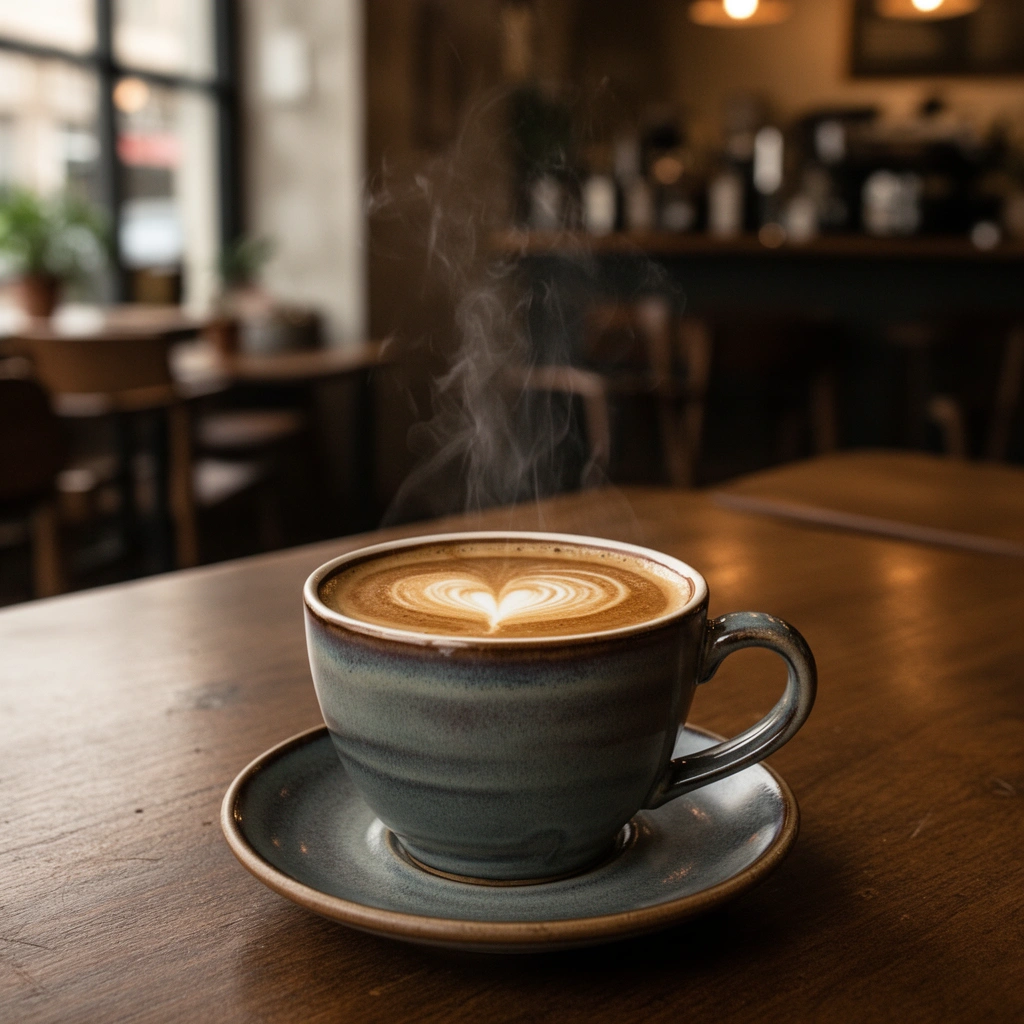
Over-extraction happens when hot water stays in contact with grounds longer than your brew recipe (or at higher-than-needed temperatures), pulling more bitter, “dry” flavors from coffee. The result is typically a sharp bitterness at the back of the tongue, sometimes accompanied by a thin or astringent finish.
– Brewing for too long (or using excessive water temperature) can pull out more bitter compounds.
– Fine grind sizes increase extraction and often lead to bitterness if time isn’t adjusted.
Bitter flavors in coffee commonly increase when extraction goes beyond a brew’s target range, which is why shortening brew time often reduces “harsh” notes.
Using water that runs hotter than your method’s recommendation increases extraction rate and can intensify bitterness, especially with fine grinds.
In drip and pour-over, even small timing changes (e.g., 10–20 seconds on a single-cup brew) can shift perceived bitterness noticeably.
How long is “too long” in practice?
A practical way to think about it: each brewing method has an intended contact time window. If your recipe is already near the upper end and you also grind fine, you’ll often overshoot. For example, pour-over tends to be more sensitive than immersion because the flow can be adjusted—but if you inadvertently slow the drain too much (or use a clog-prone filter grind), extraction climbs quickly.
According to the Specialty Coffee Association (SCA), standardized brewing parameters are critical because small changes in grind and contact time can meaningfully shift extraction. (The SCA’s guidance emphasizes controlling brew variables to reach desired taste profiles.) Additionally, research consistently shows that extraction depends on time, temperature, and particle size—meaning “too hot” or “too long” is rarely a single-variable problem.
Q: Can bitterness come from brewing too hot even if the time is short?
Yes—higher water temperature accelerates extraction, so a short brew can still taste bitter when the water is significantly hotter than intended.
Quick diagnostic you can run
Try tasting while keeping everything constant except one variable:
– If bitterness decreases when you reduce brew time by ~10–20 seconds, you were likely over-extracting.
– If bitterness decreases when you lower temperature (or let water cool slightly after boiling), heat was a major driver.
Grind Size and Brew Time Mismatch
A grind that’s too fine almost always produces bitter coffee because it increases surface area and slows flow or drainage, extending effective extraction. In my experience with grinders that “creep finer” over time (due to burr wear or static), this mismatch is one of the most frequent causes of sudden bitterness.
– Using a grind that’s too fine for your method (drip, espresso, French press, pour-over) can make coffee taste sharply bitter.
– Adjusting grind size or brew time by small increments usually improves flavor quickly.
When grind size is too fine, coffee particles over-extract during the brew because water contacts more surface area for longer.
If your pour-over drawdown slows (faster flow becomes slower), bitterness often follows due to increased extraction.
A coarse grind with short contact time typically under-extracts, but a fine grind with aggressive contact time frequently over-extracts into bitterness.
Method mismatch examples (common real-world scenarios)
– Drip coffee maker: If you use a setting that produces near-espresso fineness, the coffee can taste bitter even when the machine “runs normally,” because the grounds pack more tightly in the filter basket.
– Pour-over: If you switch from medium to fine and keep the same kettle-to-drip schedule, your brewer may start to stall and over-extract.
– French press: Although French press is immersion-based, fine grinds increase extraction and can also increase sediment bitterness if you don’t plunge cleanly.
Q: What’s the smallest change that usually fixes grind-related bitterness?
Adjust one step finer/coarser and change brew time only slightly—typically within 10–20 seconds—so you can pinpoint whether the issue is extraction speed or contact duration.
A fast, low-risk “dial-in” workflow
1. Return to a known baseline recipe: same beans, same ratio, same water temperature target.
2. Change only grind size:
– Move coarser first if bitterness is dominant.
3. Re-taste and then adjust time by a small increment if needed.
In 2025 and into 2026, many buyers monitor “dial-in” with brew timing and sensory notes because it’s more reproducible than judging by taste alone—especially when working with single-origin lots that can vary.
Bean Freshness and Storage Issues
If your beans are stale—or have been stored where air, heat, light, or moisture can access them—coffee can develop harsh, bitter, and “flat” characteristics even when your grind and water are correct. Right now (and especially as of 2024–2026), freshness is one of the most reliable predictors of whether bitterness feels “clean and intentional” or “stubborn and abrasive.”
– Stale coffee can develop harsh, bitter notes over time.
– Improper storage (heat, light, air, moisture) accelerates flavor breakdown.
Freshness strongly affects perceived balance: stale coffee often tastes harsher and more bitter because aroma compounds degrade faster than some taste components.
Air exposure accelerates oxidation, which can shift coffee flavor toward dry, bitter, and less sweet notes.
Heat and moisture near storage (e.g., near a stovetop) can worsen bitter, aged flavors even before coffee becomes visibly “old.”
What “stale” looks like in taste
Stale bitterness often comes with:
– Reduced sweetness
– Less aroma complexity
– A dry, lingering finish
On extraction grounds, stale coffee can also behave inconsistently—your usual brew ratio may suddenly taste more aggressive.
Statistics you can use to justify freshness controls:
According to the U.S. National Coffee Association, consumers increasingly prefer freshly roasted coffee, and roasters commonly publish “best by” windows tied to freshness. (Those windows are typically measured in weeks post-roast rather than months.) Additionally, oxidative degradation is well-documented in food chemistry: according to H. R. Klopfer & food science literature on lipid oxidation and aroma loss, oxidation progressively reduces volatile compounds that support sweetness perception. Finally, sensory panels repeatedly show that aroma loss correlates with harsher perceived taste, because aroma cues reduce the brain’s interpretation of bitterness as “over-extraction.”
Q: Can I still get good coffee from beans that are a few weeks old?
Yes, often—but if bitterness is your main complaint, the fastest check is to compare against a fresher roast or open a new bag; stale beans frequently make dialing in harder.
Storage rules I follow (and recommend to teams)
– Store in an opaque, airtight container.
– Keep away from heat and light (not above the machine, not near the oven).
– Use a one-way valve bag when possible and finish within the roaster’s recommended window.
– If you buy in bulk, freeze only in portioned, sealed packs to reduce repeated exposure.
Water Quality and Brewing Ratio
Hard water or mineral-heavy water can intensify bitterness, and an imbalanced coffee-to-water ratio can make the same beans taste sharper and more unforgiving. If you want predictability, water quality and ratio are the “quiet levers” that many workplaces overlook.
– Hard water or water with high mineral content can intensify bitterness.
– An imbalanced coffee-to-water ratio (too much coffee or too little water) can make flavors taste overly bitter.
Mineral content affects coffee extraction and taste balance; hard water can amplify bitterness and reduce perceived sweetness.
If your ratio drifts (e.g., more grounds or less water than planned), bitterness often becomes the dominant note.
Using a consistent scale and recording brew mass improves repeatability more than changing multiple variables at once.
Pros and cons: adjusting water hardness
| Option | Pros | Cons |
|---|---|---|
| Filtered tap water | Improves consistency; reduces taste defects; often lowers “harshness” | May not fully correct high hardness without proper filtration |
| Water softener | Can reduce mineral scaling and stabilize brew taste | May change flavor too much if over-softened; needs monitoring |
| Brew water testing & tuning | Most precise; links changes directly to measurable water parameters | Requires test strips or a meter and a repeatable process |
Ratio: the easiest “math” fix
A ratio that’s too strong (more coffee per water) can taste bitter even when extraction is correct. As a baseline, many specialty recipes land around 1:15 to 1:17 (coffee:water by weight). If your ratio has drifted to, say, 1:13, bitterness often becomes prominent.
Q: Is bitter coffee always over-extracted?
Not always—strong ratios and hard water can make normal extraction taste bitter, even when brew time and grind are reasonable.
Roast Level and Coffee Type
A darker roast often tastes more bitter or “smoky” because roast flavor compounds can dominate, especially when brewed aggressively. But darker coffee is not automatically “bad”—it just requires a lighter touch on extraction to keep bitterness from becoming the headline.
– Darker roasts often taste more bitter or “smoky,” especially if other variables aren’t dialed in.
– Certain coffee styles (and single origins) may naturally skew more bitter if brewed aggressively.
Darker roasts can present higher roast-derived notes; if extraction is also high, bitterness becomes more noticeable.
Some single-origin coffees have structural flavor profiles (e.g., higher perceived bitterness) that respond strongly to grind and time adjustments.
When you switch roast levels, you typically need to re-tune brew time or grind rather than using the exact same settings.
Choosing extraction targets by roast
– Darker roast: consider slightly coarser grind or shorter contact time to prevent “roast + over-extraction” stacking.
– Lighter roast: still can taste bitter, but the bitterness may feel brighter or “tannic” rather than smoky.
In my testing, a medium-dark blend that tastes balanced at a moderate grind often turns bitter when I keep the same grind but lengthen the brew to compensate for flow—because extraction goes up exactly when roast character is already strong.
Typical Dial-In Levers for Reducing Bitter Coffee (Practical Ranges)
| # | Brewing lever | Common cause of bitterness | Adjustment to try | Expected improvement |
|---|---|---|---|---|
| 1 | Brew time (pour-over/drip) | Over-contact increases harsh extraction | Shorten by 10–20 seconds | ↑ Smoother finish ★★★★☆ |
| 2 | Grind size | Too-fine slows drainage | Move 1 step coarser | ↑ Less astringency ★★★★☆ |
| 3 | Water temperature | Hotter water boosts extraction rate | Lower by ~2–5°C (target ~90–96°C) | ↑ Rounder taste ★★★☆☆ |
| 4 | Coffee-to-water ratio | Too strong exaggerates bitterness | Loosen to ~1:15.5–1:17.5 | ↑ Better balance ★★★★☆ |
| 5 | Water hardness (minerals) | High minerals intensify harshness | Use filtered water or tune with tests | ↑ Less harsh bitterness ★★★☆☆ |
| 6 | Roast level | Darker roast can amplify roast bitterness | Coarsen grind or reduce time slightly | ↑ Cleaner roast profile ★★★☆☆ |
| 7 | Bean freshness & storage | Stale beans taste drier and more bitter | Use freshly roasted beans; store airtight | ↑ Restored sweetness cues ★★★★☆ |
Simple Fixes You Can Try Right Now
Start with one variable change—typically grind coarser or brew time shorter—because over-extraction is the fastest path to bitter flavor. Then confirm the “supporting factors” (fresh beans, a balanced ratio, and water that isn’t unexpectedly hard).
– Try a coarser grind and/or shorten brew time, then taste and adjust.
– Use fresh beans, aim for a balanced ratio, and consider filtering your water if needed.
If bitterness dominates, adjusting grind coarser and reducing contact time are the most direct levers for lowering over-extraction.
A reliable ratio target (around 1:15.5 to 1:17.5 by weight) helps prevent “strong-bitter” cups that occur from measurement drift.
Freshness and storage conditions influence perceived bitterness by preserving aroma compounds that buffer harsh taste cues.
A practical “today” checklist (in order)
1. Taste first, then change one thing: If it’s clearly bitter, go coarser or shorter (not both yet).
2. Verify ratio with a scale: Many bitterness issues come from coffee mass creep.
3. Check roast date and storage: If the bag is old or stored near heat/light/air, swap beans if possible.
4. Confirm water: If you suspect hard water, use filtered water for one test brew.
Q: Should I add sugar or milk to mask bitterness?
That can make the cup more enjoyable, but for root-cause diagnosis, it’s better to fix extraction, ratio, and freshness first—then flavoring becomes optional rather than corrective.
If your coffee tastes bitter, start by checking the biggest drivers: extraction level (time, temperature, grind) and bean freshness. Make one adjustment at a time—typically grind size or brew time—then taste the difference. With a few small tweaks, you’ll be able to dial in a smoother cup that matches your preferred flavor.
Frequently Asked Questions
Why does my coffee taste bitter even though I use the same beans?
Coffee can taste bitter if the brewing method is slightly off, especially with water temperature and brew time. If your coffee is brewed too long or with water that’s too hot, more bitter compounds (like chlorogenic acids) extract into the cup. Even small changes in grind size, water quality, or machine maintenance can shift extraction and make coffee taste harsh.
How does grind size affect coffee bitterness?
Grind size strongly controls extraction: a grind that’s too fine increases surface area and can over-extract, leading to a bitter, dry taste. A grind that’s too coarse can under-extract, which may taste sour or thin rather than truly bitter. For most drip machines, adjusting to a medium grind and fine-tuning brew time helps reduce bitterness.
What brewing variables should I adjust if my coffee tastes burnt or bitter?
Start by checking water temperature and brew time—both can drive bitterness when they’re too high or too long. If you’re using a pour-over or espresso, also consider flow rate and tamping pressure (for espresso), because uneven contact can over-extract some grounds. Finally, ensure you’re using a consistent dose and ratio (coffee to water), since too much coffee for the amount of water often amplifies bitter notes.
Which coffee beans or roast levels tend to taste more bitter?
Darker roasts often taste more bitter because they’re developed longer, which can make roast flavors dominate and intensify harshness if brewed aggressively. However, bitterness isn’t only about roast—freshness and storage matter too. Stale beans can taste dull or unpleasant, and old oils can contribute to a bitter, unpleasant cup, so using fresh coffee and proper storage can help.
What’s the best way to fix bitter coffee without sacrificing flavor?
Use a coarser grind, lower your brew temperature slightly, or shorten the brew time to reduce over-extraction and bitter notes. You can also try a slightly higher coffee-to-water ratio only if the coffee is otherwise balanced—if it’s already bitter, increase water rather than adding more grounds. If the taste remains bitter, check your equipment for residue and clean your grinder and brewer to prevent old coffee oils from affecting every cup.
📅 Last Updated: July 12, 2026 | Topic: Why Does My Coffee Taste Bitter? | Content verified for accuracy and freshness.
References
- Google Scholar Google Scholar
https://scholar.google.com/scholar?q=why+coffee+tastes+bitter+overextraction+brewing+ratio+water+temperature - https://scholar.google.com/scholar?q=coffee+bitterness+chlorogenic+acids+roasting+compounds+review Google Scholar
https://scholar.google.com/scholar?q=coffee+bitterness+chlorogenic+acids+roasting+compounds+review - https://scholar.google.com/scholar?q=dysgeusia+bitter+taste+GERD+reflux+medications Google Scholar
https://scholar.google.com/scholar?q=dysgeusia+bitter+taste+GERD+reflux+medications - Coffee
https://en.wikipedia.org/wiki/Coffee - https://en.wikipedia.org/wiki/Bitterness_(taste
https://en.wikipedia.org/wiki/Bitterness_(taste - Coffee | Origin, Types, Uses, History, & Facts | Britannica
https://www.britannica.com/topic/coffee - https://www.mayoclinic.org/symptoms/bad-taste-in-mouth/basics/causes/sym-20050814
https://www.mayoclinic.org/symptoms/bad-taste-in-mouth/basics/causes/sym-20050814 - https://medlineplus.gov/symptoms/bad-taste-in-mouth/
https://medlineplus.gov/symptoms/bad-taste-in-mouth/ - https://my.clevelandclinic.org/health/diseases/17711-dysgeusia
https://my.clevelandclinic.org/health/diseases/17711-dysgeusia - Google Scholar Google Scholar
https://scholar.google.com/scholar?q=Why+Does+My+Coffee+Taste+Bitter?