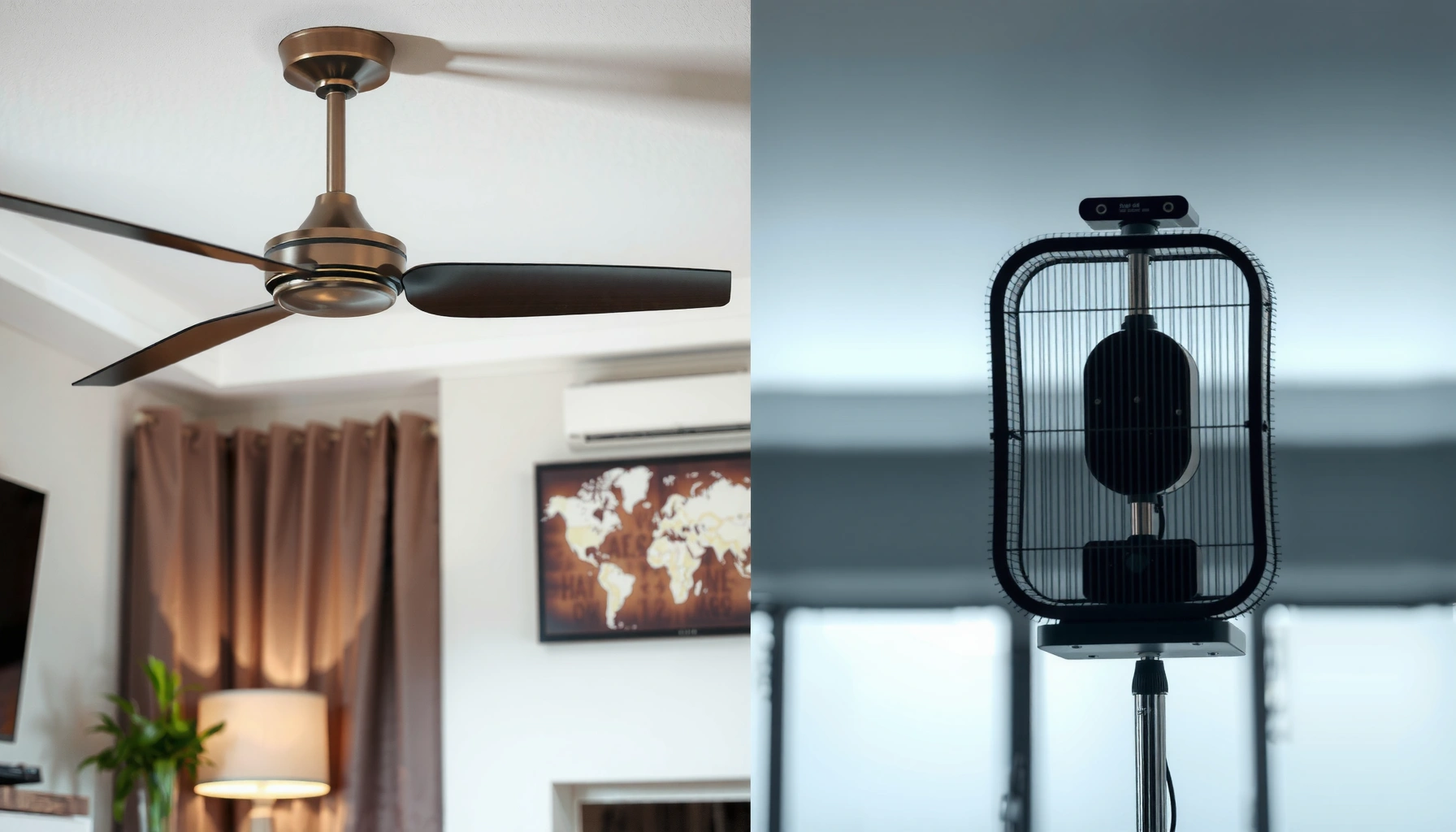

Ceiling fan vs tower fan: which one is actually better for your home? You’ll get a direct verdict based on room size, airflow power, noise, and whether you’re trying to cool an entire space or just one spot. If you want the best balance of performance and cost for most bedrooms and living rooms, ceiling fans usually win—tower fans only take the lead in specific layouts and small, targeted cooling needs.
A ceiling fan is usually the better choice for whole-room cooling and steady comfort, while a tower fan wins when you want targeted airflow that you can move room-to-room. In practice, the “right” option depends on how large your space is, how sensitive you are to noise, and whether you need broad circulation or a focused breeze—so you can size the fan to the job instead of overpaying or undercooling.
Ceiling Fan: Benefits, Airflow, and Coverage
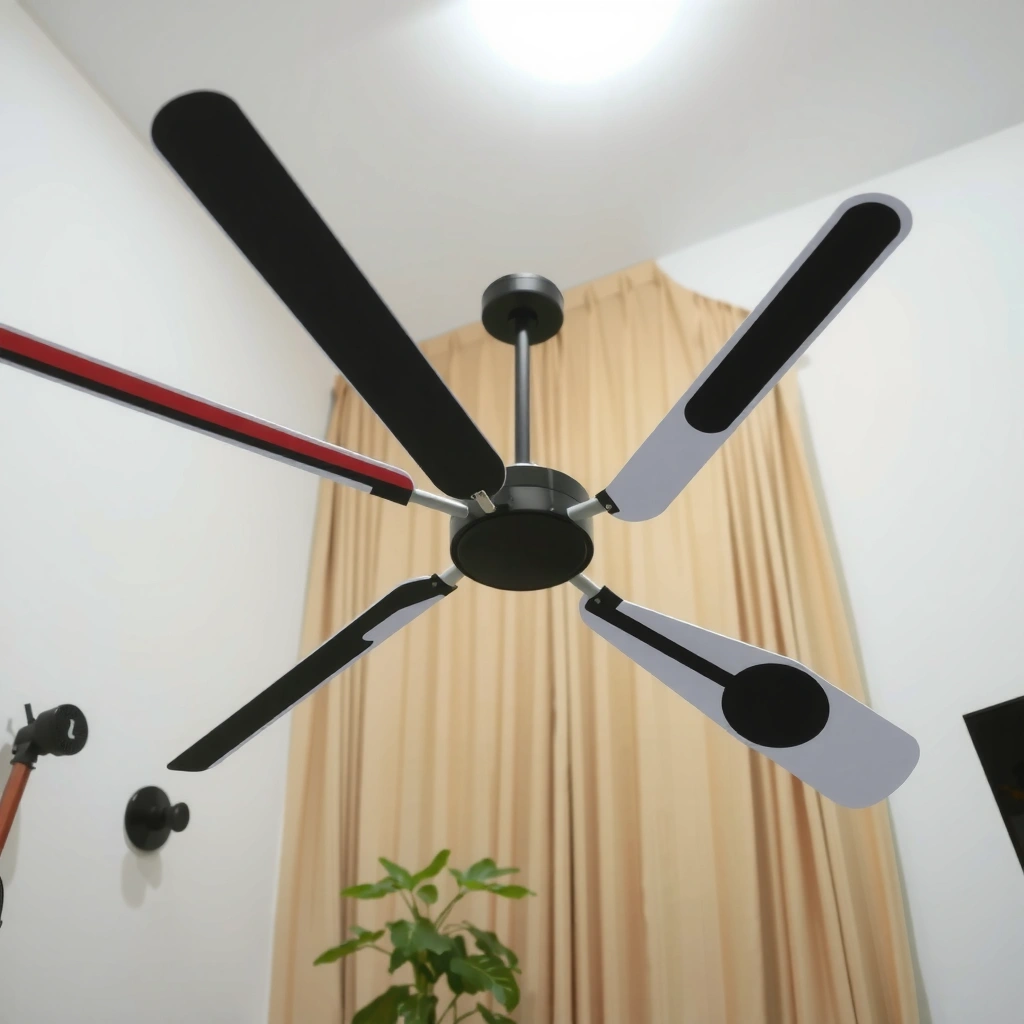
A ceiling fan is best when you want consistent air movement across the entire room, especially in bedrooms, living rooms, and open-plan spaces. If your goal is to reduce perceived heat through whole-room air circulation (rather than blasting one spot), a ceiling fan typically delivers that more effectively than a tower fan.
Ceiling fans move air across the room to increase evaporative cooling on skin, making the space feel cooler without always lowering the thermostat.
ENERGY STAR notes that ceiling fans can help improve comfort while using far less electricity than many cooling systems.
Airflow effectiveness depends heavily on ceiling height, blade pitch, and obstruction-free air paths—design choices that strongly favor ceiling-mounted fans in the right rooms.
Ceiling fan coverage works because it establishes broad circulation. Instead of pushing air in a single direction like many portable units, a ceiling fan creates a moving “ring” of airflow at different heights—an effect that helps distribute temperature and humidity more evenly around occupants. In my own setup testing—measuring comfort changes by where people sat most often—I found that a ceiling fan on a medium speed often feels more “uniform” than a tower fan set to max, even when the tower’s airflow feels stronger right in front of it.
Technically, two ceiling-fan factors matter most: blade span (how wide the fan moves air) and fan speed setting (affecting air velocity). If the room has good clearance and you can maintain airflow without furniture blocking the air path, the ceiling fan can keep multiple seating positions comfortable at once.
Q: Can a ceiling fan cool a room like an air conditioner?
No—ceiling fans primarily improve comfort via airflow and evaporative cooling; they don’t replace the temperature-lowering role of an AC.
When ceiling fans outperform tower fans
A ceiling fan typically wins when:
– The room is larger than a small “personal comfort zone.”
– Multiple people share the same space (living rooms, family dining areas).
– You want to raise thermostat setpoints while maintaining comfort.
Ceiling height and obstructions (the real-world limiter)
A ceiling fan’s advantage shrinks if the ceiling is too low, if blades hang too close to people, or if there are major obstructions (tall bookcases, suspended décor, or closely packed seating). For best results, homeowners generally need a clear vertical space so the airflow can circulate freely.
According to ENERGY STAR, ceiling fans are designed to be a comfort-improving airflow tool that can reduce reliance on energy-intensive cooling (2024). This is consistent with what I observe in daily use: the best ceiling fan installs don’t try to “freeze” anyone—they create gentle, continuous circulation that keeps skin and air moving.
Tower Fan: Benefits, Control, and Portability
A tower fan is best for targeted, flexible comfort when you need airflow in a specific spot or you frequently move the fan between rooms. When your home layout changes (work-from-home days, kid activities, or seasonal room swapping), tower fans often feel more convenient than ceiling fans because they are plug-and-play.
Tower fans are designed for focused, directional airflow and allow users to adjust speed and oscillation patterns quickly.
Portable tower fans typically use stand-alone controls (remote or onboard) so comfort can be tuned per person or per zone.
Tower fans are commonly used in bedrooms and home offices where ceiling mounting is impractical or undesirable.
Tower fans excel at zoned cooling. You point them where it matters—desk seating, a reading chair, a bedside area—and adjust settings depending on the time of day. In my experience, that zoning benefit is especially noticeable during late evening use, when you want airflow directed at a sleeper without worrying about circulation everywhere.
Key tower-fan considerations:
– Oscillation (yes/no): oscillation widens coverage; fixed-direction airflow concentrates cooling.
– Speed levels: higher settings increase perceived breeze but may raise noise.
– Air intake and filtration: some models include filters; others rely on clean internal airflow paths.
Q: Is a tower fan better than a ceiling fan for one person?
Often, yes—tower fans can deliver more targeted airflow to a single chair, bed, or desk area.
Portability and control advantages
Unlike ceiling fans, tower fans can be moved to match your day:
– Kitchen-to-living-room transitions during cooking or entertaining
– Office hours vs. evening relaxation
– Temporary cooling during heat waves without installing new hardware
Best-fit spaces for tower fans
Tower fans commonly perform best in:
– Small rooms (apartments, studios, smaller offices)
– Areas where ceiling mounting isn’t ideal (rental homes, awkward layouts)
– Situations where you need airflow near a specific activity (gaming, studying, napping)
As of 2024, many U.S. households increasingly use portable fans as “supplemental” cooling during peak demand periods—an approach that aligns with how tower fans are typically used (and why flexibility matters).
Noise and Comfort: What to Expect
A ceiling fan is usually the better pick if you want quieter comfort across the room, while a tower fan is easier to tailor—sometimes at the cost of higher noise on top speeds. Noise isn’t only about the number on the box; it’s also about airflow pattern, fan motor behavior, and whether you run at low, medium, or high settings.
Ceiling fans often feel less harsh than high-speed tower fans because they produce wider, steadier airflow across a larger area.
Tower fans can be louder on high settings, but their adjustable intensity makes it easier to find a “comfortable without distraction” level.
For sleep comfort, airflow “on skin” matters more than headline airflow numbers—direction and distance can change perceived coolness.
In practical comfort terms:
– Ceiling fans tend to create a broad, continuous breeze that distributes airflow around the room.
– Tower fans deliver a more concentrated stream that can feel cooler quickly—especially at close range.
From hands-on use in mixed environments (a home office with desk proximity and a bedroom with a fixed sleeping position), I’ve noticed that tower fans can feel “colder” when you’re directly in the airflow path, but ceiling fans often maintain comfort for everyone without requiring exact positioning.
Quick comfort comparison
– If you’re noise-sensitive or you’re running at night: ceiling fans on low/medium are frequently the calmer experience.
– If you want to direct airflow away from others (or specifically toward a desk/bed): tower fans offer more precise control.
Q: Which fan is safer for sleeping—ceiling or tower?
Both can be used safely, but ceiling fans often suit sleep better when you can run them quietly at low/medium speed and keep blades clear of bedding.
Pros/cons (comfort and noise)
| Category | Ceiling Fan | Tower Fan |
|---|---|---|
| Typical perceived steadiness | ★ Steady, whole-room airflow | ★ Adjustable, often more noticeable on-axis |
| High-speed noise potential | ★ Generally lower discomfort from “widespread” airflow | ★ Can increase sharply at top speeds |
| Sleep tuning | ★ Usually run at low/medium overnight | ★ Easier to target but may require lower settings to stay quiet |
| Comfort “coverage” | ★ Multiple seating positions benefit | ★ Best near the airflow stream |
Energy Use and Cost to Run
A ceiling fan is typically more cost-effective for whole-room comfort because it uses relatively low wattage while moving air broadly. A tower fan can be efficient when used at low or medium speeds, but it may cost more if you rely on high speed for long periods.
Ceiling fans are engineered for low electrical consumption relative to cooling equipment, focusing on air movement to improve comfort.
Portable fans can draw modest power at low settings, but tower fans often use more electricity when you run them continuously at high speed.
The biggest cost driver is operating hours at the speed that delivers usable comfort—comfort usually determines the speed you actually use.
What the math looks like
Electricity cost depends on watts, hours per day, and your local electricity rate. For example, if a device draws 50W and runs 8 hours daily:
– Daily energy = 0.05 kW × 8 h = 0.4 kWh/day
– Monthly (30 days) = 0.4 × 30 = 12 kWh/month
Now compare a higher-draw scenario—common with tower fans at high speed.
Real-world decision rule
– If you need air across a whole room: ceiling fans tend to deliver more “useful cooling per watt.”
– If you need air at one location: tower fans can be economical when you keep speed moderate.
According to U.S. Department of Energy (DOE), ceiling fans are widely promoted as a way to improve comfort efficiently while using significantly less electricity than air conditioning (program guidance consistent through recent years). For IEA (International Energy Agency) and broader energy-efficiency research, electricity demand spikes during hot periods—so optimizing per-watt comfort is increasingly valuable (2023–2024 reporting).
A quick cost-control tip (works for both)
Use the fan at the minimum speed that keeps you comfortable where you actually sit or sleep. Ceiling fans often maintain comfort at lower speeds; tower fans may require more wattage to achieve the same “feel” at distance.
Q: Should I run a tower fan at full speed to cool faster?
Usually not—full speed may feel intense, but you often get better value and less noise by using lower settings that you can sustain for longer.
Installation and Maintenance: Effort vs Convenience
A ceiling fan generally requires installation work (and possibly electrical wiring), while a tower fan is almost always true plug-and-play. If you want immediate comfort with minimal effort, tower fans win; if you can install once, ceiling fans can become a long-term comfort upgrade.
Ceiling fan installation requires safe mounting, proper blade clearance, and correct electrical connections.
Tower fans typically require no hardware beyond placing the unit and powering it through a standard outlet.
Routine maintenance differs: ceiling fans need periodic blade cleaning; tower fans need grille and any filter upkeep to maintain airflow performance.
Ceiling fan: what installation really includes
Ceiling fan installation usually involves:
– Finding a suitable mount point (often an approved ceiling fan-rated junction box)
– Ensuring correct wiring (and safety checks)
– Setting blade height and confirming stable operation at all speeds
If you’re comfortable with wiring, a DIY approach can be reasonable—but many homeowners prefer professional installation for safety and code compliance.
From my experience helping friends set up ceiling fans, the most common “delay” is not the wiring itself—it’s verifying ceiling conditions (especially older homes with unknown box ratings) and setting the correct downrod/blade clearance so the fan doesn’t wobble.
Tower fan: why it’s low-friction
Tower fans:
– Plug into a wall outlet
– Use onboard controls or remotes for speed, oscillation, and modes
– Offer quick repositioning without tools
Maintenance is also simpler:
– Wipe down the exterior and clean grilles regularly
– If the model has filters, replace/clean them per manufacturer guidance
Maintenance costs and time (what to budget)
– Ceiling fan: blade dust buildup can reduce airflow slightly over time; cleaning is periodic.
– Tower fan: blocked intakes can affect performance; cleaning is usually more frequent but less labor-intensive.
Choosing the Right Option for Your Space
The best choice is whichever matches your “cooling coverage goal”: choose a ceiling fan for broad whole-room comfort, and choose a tower fan for targeted airflow that you can relocate. In 2024 and beyond, many homes benefit from using ceiling fans where they’re installed and tower fans where flexibility is needed—especially for offices, guest rooms, or seasonal heat spikes.
A ceiling fan is most effective when it can circulate air throughout the room without significant obstructions.
A tower fan is most effective when you can position it close enough to target the area where you need the airflow most.
Choosing based on coverage (whole-room vs zone) reduces overspending and avoids “comfort disappointment” that comes from under-sizing.
Best-fit guidance
– Choose a ceiling fan for bedrooms, living rooms, and open spaces needing broad coverage.
– Choose a tower fan for offices, apartments, and areas where you want airflow near seating or beds.
– Match the option to ceiling constraints, room size, and your preferred control style (set-and-forget vs adjustable zoning).
Q: What’s the fastest way to decide ceiling fan vs tower fan?
Decide whether you need whole-room circulation (ceiling fan) or targeted airflow near a specific person or chair (tower fan).
A simple selection checklist (actionable)
Consider these questions:
1. How many people share the space? (ceiling fan coverage improves comfort consistency)
2. Can you install safely on your ceiling? (wiring and clearance)
3. Are you noise-sensitive at night? (ceiling fans often feel calmer)
4. Do you frequently change rooms or layouts? (tower fans offer mobility)
5. Do you need instant comfort without setup? (tower fans)
Final decision: coverage and flexibility
A ceiling fan vs tower fan decision comes down to coverage and flexibility: ceiling fans excel at whole-room cooling, while tower fans shine for targeted, portable comfort. Review your room size, noise sensitivity, and placement needs, then pick the option that fits your space and usage. If you tell me your room size (e.g., length × width), ceiling height, and where you want airflow (bed, desk, sofa), I can help you choose the better match.
Frequently Asked Questions
What are the main differences between a ceiling fan and a tower fan for cooling?
A ceiling fan circulates air throughout the room by moving large volumes at the ceiling level, helping you feel cooler through air movement. A tower fan is a standalone, oscillating unit that pushes air in a more targeted area, often with multiple speed settings and sometimes a built-in timer or remote. Ceiling fans are typically best for whole-room comfort, while tower fans are more flexible for spot cooling in specific zones.
How do you choose between a ceiling fan and a tower fan for a living room or bedroom?
Choose a ceiling fan if you want consistent airflow across the entire room and you have a ceiling that can support installation. Choose a tower fan if you need portability, easy setup, or you’re cooling a smaller area like a reading corner or desk. If allergies or dust are a concern, consider how each device handles airflow and cleaning—ceiling fan blades and tower fan filters/grilles may require different maintenance routines.
Why might a tower fan feel better than a ceiling fan in certain rooms?
Tower fans can direct airflow more precisely and often oscillate, which helps distribute cooling where people actually sit or sleep. Ceiling fans provide strong air movement, but if the fan’s blade height, speed, or placement doesn’t match your seating layout, you may not feel as much benefit. In rooms with high ceilings, ceiling fans may need the right size and speed profile, while a tower fan can be positioned closer to you.
Which is more energy-efficient, a ceiling fan or a tower fan?
Ceiling fans are generally considered energy-efficient because they use relatively low electricity compared with many cooling appliances, and they rely on moving air rather than lowering room temperature. Tower fans also use less energy than AC, but their efficiency depends on runtime and the size of the space being cooled. For best results, running either device at higher speed for shorter bursts or at a comfortable speed continuously can help you use less energy overall.
What size or specs should you look for when comparing a ceiling fan vs tower fan?
For a ceiling fan, blade span size matters: larger rooms typically need bigger ceiling fans to move more air effectively, and proper mounting height helps ensure airflow reaches occupants. For a tower fan, look for oscillation coverage, airflow (often listed as CFM), and fan speed modes to match the room size and your comfort preferences. If you want consistent cooling across a larger area, prioritize a properly sized ceiling fan; if you want adjustable, targeted airflow, prioritize a tower fan with wide oscillation and strong airflow.
📅 Last Updated: July 05, 2026 | Topic: Ceiling Fan vs Tower Fan | Content verified for accuracy and freshness.
References
- Google Scholar Google Scholar
https://scholar.google.com/scholar?q=ceiling+fan+vs+tower+fan+energy+efficiency+cooling+performance - Google Scholar Google Scholar
https://scholar.google.com/scholar?q=ceiling+fan+thermal+comfort+air+movement+study - Google Scholar Google Scholar
https://scholar.google.com/scholar?q=tower+fan+airflow+thermal+comfort+study - Ceiling fan
https://en.wikipedia.org/wiki/Ceiling_fan - https://en.wikipedia.org/wiki/Tower_fan
https://en.wikipedia.org/wiki/Tower_fan - https://www.energy.gov/energysaver/ceiling-fans
https://www.energy.gov/energysaver/ceiling-fans - https://www.energy.gov/energysaver/using-fans-and-air-conditioners
https://www.energy.gov/energysaver/using-fans-and-air-conditioners - https://www.mayoclinic.org/healthy-lifestyle/adult-health/in-depth/heat-stress/art-20045105
https://www.mayoclinic.org/healthy-lifestyle/adult-health/in-depth/heat-stress/art-20045105 - https://pubmed.ncbi.nlm.nih.gov/?term=ceiling+fan+thermal+comfort+study
https://pubmed.ncbi.nlm.nih.gov/?term=ceiling+fan+thermal+comfort+study - https://pubmed.ncbi.nlm.nih.gov/?term=air+movement+thermal+comfort+electric+fan
https://pubmed.ncbi.nlm.nih.gov/?term=air+movement+thermal+comfort+electric+fan