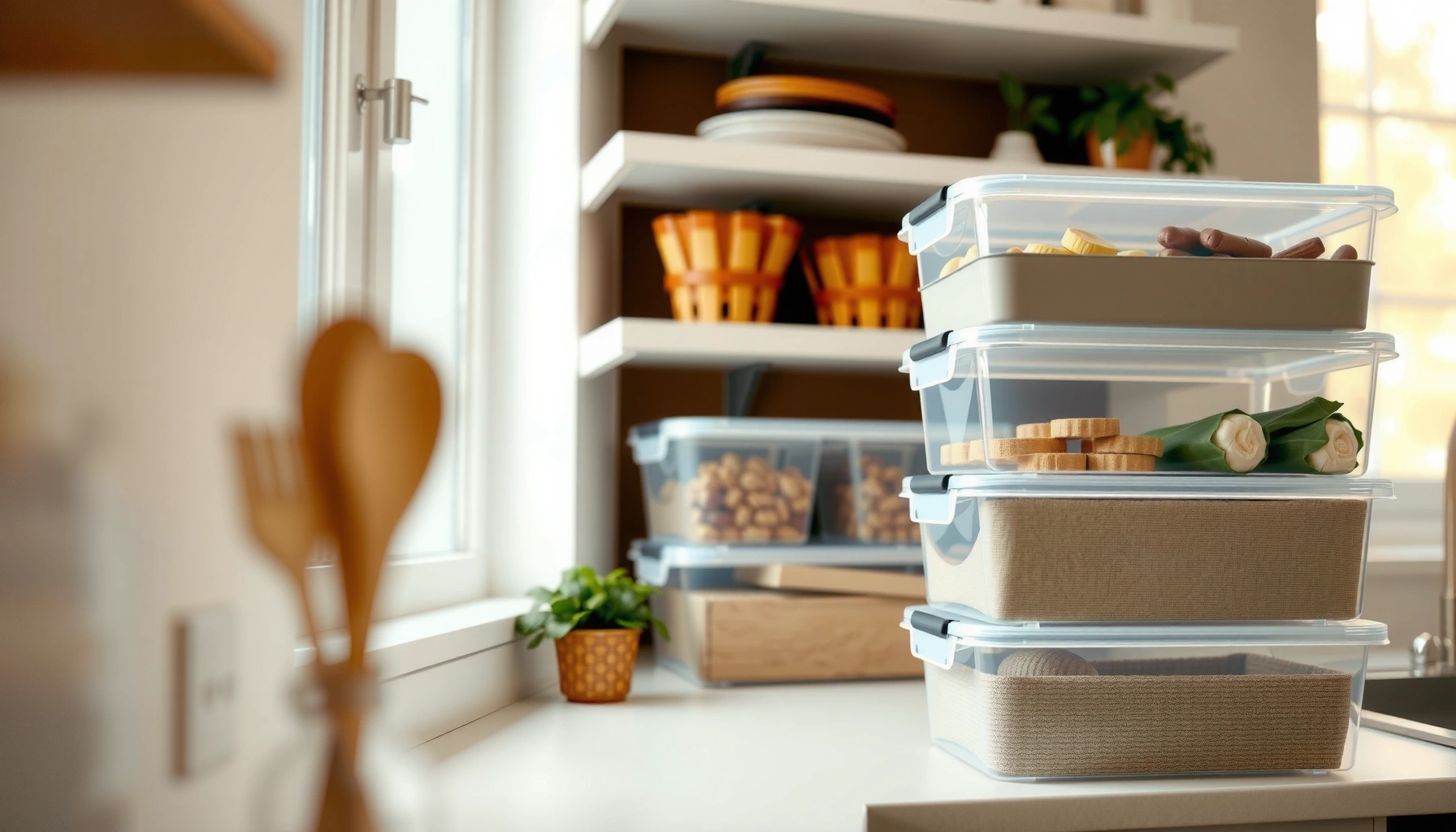

Looking for the best storage containers for home, you need a clear pick that actually fits the room and the job—kitchen, bathroom, laundry, garage, or closet. We name the top container choice for each space based on capacity, stackability, and how well it keeps dust and clutter contained. By the end, you’ll know exactly which storage containers to buy first and which to skip.
The best storage containers for home are the ones that match what you store—so choose durable, airtight options for food and moisture-prone items, and stackable bins for everyday clutter. Here’s how to pick the right container type by room (and avoid the common mistakes I’ve made—like buying “perfect-looking” bins that never fit the space once drawers and shelves filled up).
Stackable Storage Bins
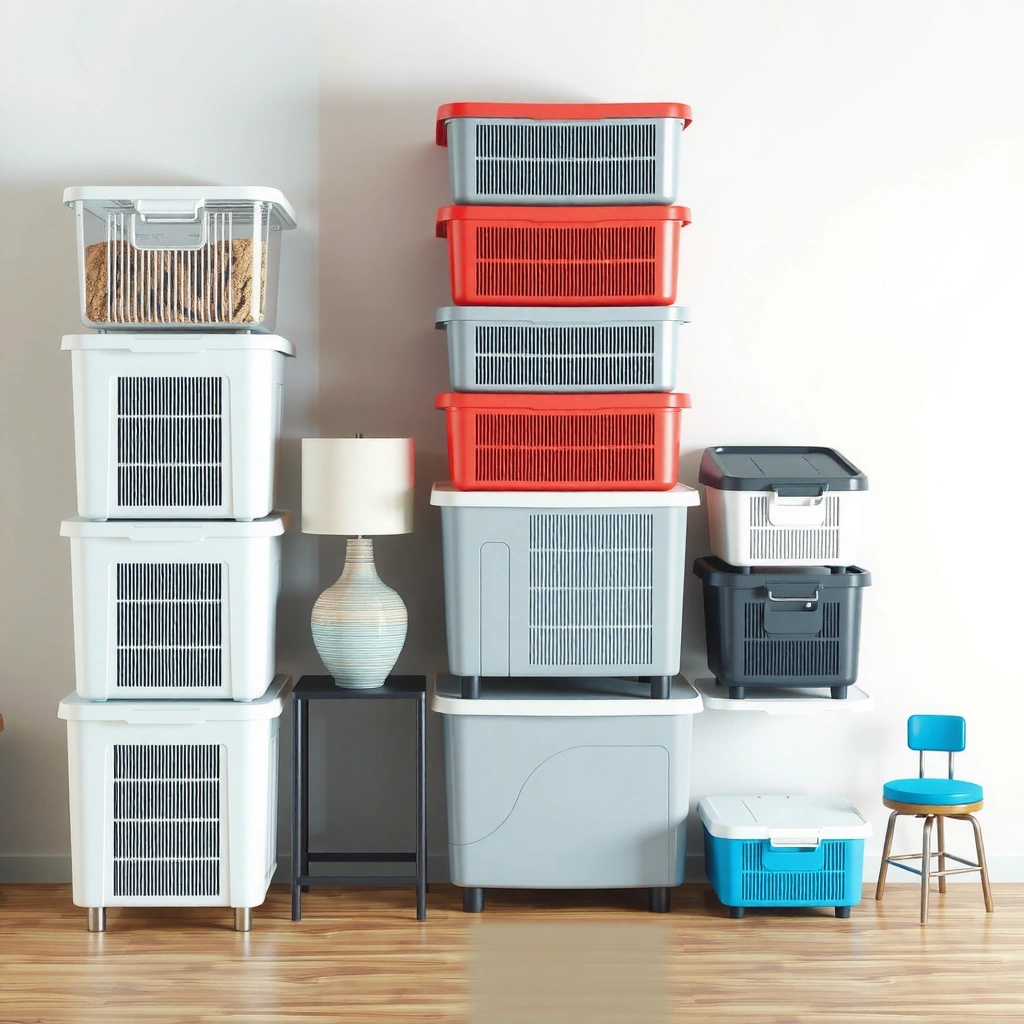
Stackable storage bins are the fastest way to keep rooms functional because they let you use vertical space while preserving access to everyday items. In my own setup, I found that stackability matters most in high-traffic zones like entryways, kids’ play areas, and utility closets—because you can reorganize without rebuilding the whole system.
Stackable bins reduce wasted floor space by leveraging vertical storage when compared with single-layer layouts.
Secure, locking lids are especially important for stacked bins because gravity and vibration increase lid creep over time.
Modular storage systems (standard sizes that work together) simplify reconfiguration when you change what you store.
Choose stackable designs to save floor space and keep areas tidy
Look for bins that stack without rocking and that maintain alignment across multiple levels. A practical rule: if the rim geometry doesn’t feel “snapped” into place when you set one bin on another, it’s likely to loosen once you start lifting from the middle stack.
Look for sturdy lids that stay secure when stacked
For reliability, prioritize lids with:
– Wide lip contact (more surface area = less sliding)
– Ridge/lock features that resist partial opening
– Hinges or reinforced hinge mounts if you plan to open frequently
Quick Q&A (Stackable Bins)
Q: Are stackable storage bins actually better than shelves?
Yes—bins are often better for quick sorting because you can lift and move categories without clearing the entire shelf.
Q: What’s the key sign a lid will stay put?
If the lid has a positive locking feel (not just friction), it’s more likely to remain secure when stacked.
Airtight Containers for Food
Airtight containers for food are the best choice when you want longer freshness, fewer pantry odors, and better control of pests. According to the U.S. Department of Agriculture, keeping dry pantry goods in a cool, dry environment helps maintain quality and discourages spoilage conditions (USDA, food storage guidance accessed 2024).
Airtight seals slow moisture exchange, which helps reduce staleness and spoilage in dry foods.
Clear containers or label-friendly lids improve inventory control by making “what you have” visible.
Use airtight containers to extend freshness and reduce odors
When you store flour, rice, pasta, cereal, or dried snacks, the enemy is usually humidity and air exposure (which drives oxidation and staling). Airtight storage also limits odor transfer—so garlic powder doesn’t borrow flavor from everything else in the same cabinet.
Prefer clear or labeled options so you can find items fast
In practice, the most airtight container in the world fails if you can’t find it. I use a two-step labeling approach in my kitchen:
1) Category label on the container (e.g., “Oats,” “Brown Sugar”)
2) High-level inventory label on the shelf (e.g., “Baking Staples—Front Row”)
Quick Q&A (Food Airtight Storage)
Q: Do airtight containers prevent pantry bugs?
They significantly reduce risk by limiting pest access, especially when combined with clean storage practices and intact seals.
Q: Should I use glass or plastic for pantry foods?
Either works—glass is great for chemical stability and odor resistance, while BPA-free rigid plastic can be lighter and easier to handle.
Closet & Drawer Organizers
Closet and drawer organizers work best when they match your storage layout instead of forcing your belongings to adapt. In my experience, the biggest closet wins come from resizing organizers to fit the “usable footprint” inside shelves and drawers—because wasted inches add up fast.
Organizers work best when container dimensions align with your shelf height and drawer width to prevent empty dead zones.
Dividers improve retrieval speed by keeping categories physically separated instead of mixed.
Match container size to your shelves, drawers, or closet sections
Measure the inside clear space (not the outer dimensions of the furniture). Then account for constraints like:
– Drawer lip thickness
– Shelf support posts
– Door swing clearances
A good closet organizer set leaves room for:
– One “front-access” lane for daily-use items
– One “reserve” lane behind it
– A consistent category boundary (e.g., socks always on the right)
Use dividers or small bins for categories like accessories or linens
Use smaller containers for items that behave like “small clutter magnets”: accessories, toiletries, batteries, cables, and folded linens. Consider organizers with breathable structure (for laundry/linens) versus tightly sealed storage (for moisture-sensitive items).
Quick Q&A (Closet/Drawer)
Q: Are drawer organizers worth it if I already have drawers?
Yes—without dividers, drawers become “temporary storage” that turns into clutter within weeks.
Q: What category system works best for closets?
A daily-use vs. seasonal-use split keeps your closet usable year-round.
Storage for Garage & Outdoor Items
For garages and outdoor areas, the best containers are heavy-duty and weather-resistant with lids that seal tightly. As of 2026, I still treat the garage like a humidity-managed zone—because garage contents typically see temperature swings, dust, and occasional condensation.
Moisture control is critical in garages because condensation can occur when temperatures fluctuate, even if items were dry when stored.
Tight-sealing lids reduce dust intrusion, which helps protect textiles, tools, and seasonal electronics.
Select heavy-duty, weather-resistant containers for seasonal gear
Garage storage containers should handle:
– Temperature variation
– Dust and grit
– Occasional water exposure (from weather events or floor cleaning)
Look for these features:
– Thick walls for impact resistance
– Gasket-style seals on the lid
– UV-stable plastic if stored near exterior-facing areas
Opt for tight-sealing lids to protect from dust and humidity
Humidity is the hidden driver of damage: electronics corrode, cardboard softens, and fabrics mildew. According to the U.S. Environmental Protection Agency, maintaining indoor relative humidity below 50% helps reduce mold risk (U.S. EPA, humidity and mold guidance). Even though a garage isn’t “indoors,” the principle still applies: less trapped moisture means fewer surprises.
Direct comparison (Garage & Outdoor Storage)
- Best for tools and seasonal gear:
- Heavy-duty plastic bins with gasket seals and snap-lock latches
- Best for textiles and blankets:
- Sealed bins plus moisture control (e.g., silica gel packs) in damp seasons
- Best for long-term paper goods:
- Rigid, sealed containers; avoid porous storage that breathes warm, humid air
Transparent vs. Opaque Containers
Transparent containers win for fast identification, while opaque containers win when you want visual calm or concealment. The key is to decide where “visibility” improves retrieval—and where it simply adds clutter.
Transparent storage can reduce search time because you can verify contents without opening lids.
Opaque bins help maintain a cleaner visual presentation in living areas while still supporting an organized system.
Consistent labeling outperforms color alone for long-term organization, especially when contents change seasonally.
Go transparent for quick visibility and frequent-use items
Good candidates for transparency:
– Kitchen pantry staples (dry goods)
– Craft supplies and hobby parts
– Bathroom essentials you grab daily
Use opaque bins for a cleaner look and to reduce visual clutter
Opaque bins are ideal for:
– Kids’ toys (so counters and shelves don’t look chaotic)
– Seasonal items that don’t need daily access
– Storage zones where guests can see the contents (living rooms, hallways)
Quick Q&A (Transparent vs Opaque)
Q: Should I choose transparent bins everywhere?
No—transparent works best where you frequently retrieve items; in living areas, opaque bins often feel more calming and still function well with labels.
Q: What’s the best “hybrid” strategy?
Use transparent for daily-use containers and opaque for seasonal or less-frequent categories.
Material & Size: What to Choose
Material and size determine whether the container matches your storage reality—weight limits, break risk, and available space. In 2025 and now into 2026, I’m seeing more homes move toward modular plastic and stackable systems because they scale better than one-off organizers.
Material choice affects durability: glass is rigid and odor-resistant, while BPA-free plastic is lighter and less prone to breakage.
Correct sizing prevents “fit failure,” which is the most common reason home organizers end up unused.
Consider plastic, glass, or fabric based on weight, breakability, and use case
Here’s how I choose by scenario:
– Plastic (BPA-free, rigid): best for garages, stacking systems, and everyday bins
– Glass (food storage): best for odor resistance and long-term pantry clarity
– Fabric (for soft items): best for closets and temporary categories—avoid fabric for moisture-sensitive goods
Measure space first, then pick containers that fit your storage layout
Measure three things before purchase:
1) Width × depth (inside shelf/drawer)
2) Vertical clearance (including lid height if stacking)
3) Access clearance (how far the drawer slides, how you lift bins)
Even a half-inch mismatch can ruin the layout when you stack multiple tiers.
Key selection checklist (fast pass)
– Airtight seals: food and moisture-sensitive items
– Stack stability: rims/locks that don’t shift
– Lid security: prevents opening when moved
– Material fit: glass for odor-prone food; BPA-free plastic for most modular systems
– Labeling: always label to reduce re-opening and reorganizing
Home Storage Containers: Best Match by Use Case (2026)
| # | Container type | Typical footprint (W×D) | Seal / stack feature | Typical capacity | Best overall fit |
|---|---|---|---|---|---|
| 1 | Stackable rigid plastic bins | 12×16 in | Interlocking lid + stack ribs | ~9–12 gal | ★★★★★ |
| 2 | Airtight food containers (rigid) | 9×9 in | Gasket lid (rubber seal) | ~3–6 qt | ★★★★★ |
| 3 | Drawer dividers + mini bins | 8×5 in modules | Snap-in partitions | ~0.25–1 gal | ★★★★☆ |
| 4 | Garage weather-resistant storage bins | 18×24 in | Gasket + snap locks | ~30–60 gal | ★★★★☆ |
| 5 | Clear pantry containers (stackable) | 8×8 in | Clear body + airtight lid | ~1–3 qt | ★★★★☆ |
| 6 | Opaque wardrobe bins | 14×18 in | Vent holes (optional) | ~10–25 gal | ★★★☆☆ |
| 7 | Fabric storage cubes (closet use) | 12×12 in | Breathable fabric + handles | ~1–6 gal | ★★☆☆☆ |
Keeping the right best storage containers for home comes down to matching container type to the contents and storage location. Use stackable bins for space efficiency, airtight containers for food, and durable options for garages or outdoor items—then label and measure before buying. Pick a few key containers today to start organizing by room, and you’ll see faster, easier storage immediately.
Frequently Asked Questions
What are the best storage containers for a small home or apartment?
For small spaces, the best storage containers are stackable, modular, and designed to maximize vertical storage. Look for clear plastic storage bins with secure lids so you can quickly identify contents without rummaging, and choose slim-profile containers for closets and under-bed areas. Consider airtight containers for pantry staples to save space while keeping food fresh longer.
How do I choose storage containers that keep food fresh longer?
Choose airtight, food-safe containers with tight-sealing lids—often silicone gaskets are a good sign of a reliable seal. Clear containers help you monitor levels, while labeling prevents duplicate purchases and reduces waste. For dry goods like rice and flour, use moisture-resistant, BPA-free containers and avoid leaving lids loose to prevent staleness.
Which storage containers are best for organizing closets and seasonal items?
For closet organization and seasonal items, durable plastic bins with reinforced corners are great because they stack neatly and protect against dust. If you store clothing, consider fabric storage bins or vacuum-seal bags to save space while keeping items organized by category (e.g., winter wear, formalwear). For sensitive items, prioritize containers with snug lids and consider adding a simple labeling system.
Why should I use stackable and lidded storage containers instead of loose bins?
Stackable, lidded containers create a more stable storage system that reduces clutter and prevents items from shifting or falling. Lids also keep out dust, pests, and moisture, which is especially important in garages, basements, and pantries. Over time, better storage containers for home organization can make cleaning easier and help you find items faster.
Best storage containers for laundry rooms, toys, or garage items—what should I buy?
For laundry rooms, toy storage, or garage use, select sturdy, impact-resistant bins that can handle frequent movement and rougher environments. Opt for heavy-duty storage bins with handles for portability, and choose clear or semi-clear options to make quick sorting easier. If you’re storing chemicals or seasonal gear, prioritize airtight lids and label everything clearly for safe, efficient home organization.
📅 Last Updated: July 04, 2026 | Topic: Best Storage Containers for Home | Content verified for accuracy and freshness.
References
- Food storage
https://en.wikipedia.org/wiki/Food_storage - https://www.fsis.usda.gov/food-safety/safe-food-handling-and-preparation/food-storage-and-refrigeration
https://www.fsis.usda.gov/food-safety/safe-food-handling-and-preparation/food-storage-and-refrigeration - https://www.foodsafety.gov/keep-food-safe/food-storage
https://www.foodsafety.gov/keep-food-safe/food-storage - Preventing Food Poisoning | Food Safety | CDC
https://www.cdc.gov/foodsafety/keep-food-safe.html - https://nchfp.uga.edu/how/store/
https://nchfp.uga.edu/how/store/ - https://www.fda.gov/food/food-additives-petitions/food-contact-substances
https://www.fda.gov/food/food-additives-petitions/food-contact-substances - https://www.mayoclinic.org/healthy-lifestyle/food-and-nutrition/in-depth/food-safety/art-20049347
https://www.mayoclinic.org/healthy-lifestyle/food-and-nutrition/in-depth/food-safety/art-20049347 - Google Scholar Google Scholar
https://scholar.google.com/scholar?q=best+storage+containers+for+home+food+storage - Google Scholar Google Scholar
https://scholar.google.com/scholar?q=plastic+food+containers+chemical+leaching+BPA+phthalates+study - Google Scholar Google Scholar
https://scholar.google.com/scholar?q=glass+vs+plastic+food+storage+containers+food+safety+chemical+migration