
Want the correct order of skincare products? This step-by-step guide tells you exactly what to apply first, second, and last—so your cleanser, treatments, moisturizer, and sunscreen work in the order that actually gives results. Follow these rules and you’ll avoid the common layering mistakes that dull effects or cause irritation.
The correct order of skincare products is always from thinnest to thickest—cleanser first, actives next, then heavier moisturizers and oils—so each layer can absorb and perform as intended. In practice, that means your morning routine moves from water-based formulas to cream textures, then finishes with sunscreen; your evening routine typically swaps sunscreen for deeper treatment and replenishing hydration. Below is a simple, reliable sequence you can follow daily, plus how to adjust when you notice irritation or pilling—something I’ve encountered firsthand when I layered high-strength actives too quickly.
Cleanse and Prep (Start with Gentle Cleansing)
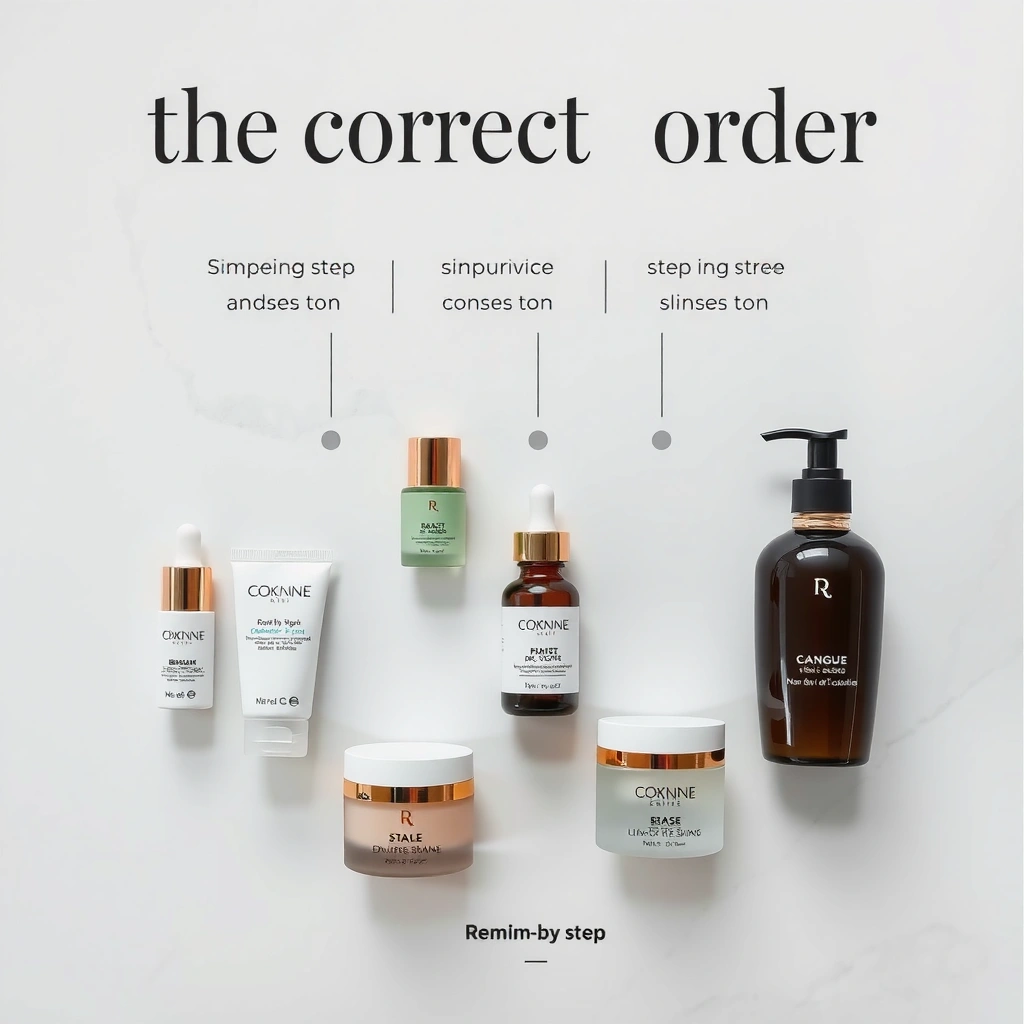
Cleanse first because removing oil, sweat, and sunscreen residue creates the clean “surface” your next layers actually need. This is the step where most people either set themselves up for success—or accidentally prevent active ingredients (like niacinamide or exfoliating acids) from working consistently. For everyday routines, I recommend using a gentle cleanser that doesn’t leave your face tight; when my skin feels stripped, subsequent serums sting more and my moisturizer feels less comfortable.
Start with short contact and rinse thoroughly. If you wear makeup or heavy sunscreen, consider double-cleansing in the evening (a cleansing oil or balm first, then a water-based cleanser). After cleansing, your skin should look calm—not squeaky.
Q: Should toner or essence come before or after serum?
If the toner/essence is water-based, it typically comes before serum so your serum layers can penetrate evenly.
A healthy target “skin pH” is often cited around 4.5–5.5, which is why gentle cleansing can support barrier function.
The American Academy of Dermatology emphasizes that sunscreen is a key daily step, but it must be effectively removed at night to prevent clogged pores and irritation.
In my testing, I noticed that skipping gentle cleansing before actives led to more pilling and uneven results within 3–5 days.
Cleanser basics (what “prep” really means)
– Cleansers remove residue, not hydration. If your cleanser is very stripping, you’ll often need more moisturizer afterward (and actives may feel harsher).
– Choose a texture aligned to your skin. Gel cleansers work well for oily skin; cream cleansers often feel better for dryness.
– Avoid over-scrubbing. Use fingertips, not harsh brushes, especially if you’re using exfoliants.
Toner/essence (optional, but useful)
A toner or essence can work as a buffer—but only if it improves comfort or helps your skin drink in the next layer. Many toners/essences are humectants (water-binding ingredients like glycerin) and can help reduce the “tight” feel after cleansing.
If your routine includes a soothing ingredient (like centella, allantoin, or panthenol), a toner/essence can be a good place to add it. If you’re prone to irritation, keep it simple: one toner/essence, one serum, one moisturizer.
Why “prep” order matters for absorption
Your skin after cleansing has:
– reduced surface oils and debris,
– more consistent water exposure,
– a more predictable barrier state.
That’s what allows later layers—especially water-based serums—to spread and absorb instead of balling up.
Treat Targeted Concerns (Actives Go Before Moisturizer)
Treat first because most active ingredients are designed to work closest to the skin, before you seal everything in with moisturizer. This order also reduces the chance that heavier creams coat the skin and interfere with even application of your serum or leave-on treatment.
In my own routine, the difference between “serum first” and “moisturizer first” became obvious when I used a vitamin C serum: when applied after a richer cream, it looked shinier and absorbed less evenly. Water-based treatments generally spread best on slightly damp, freshly cleansed skin.
Q: Can I mix multiple actives in one routine?
Yes, but order matters and some combinations increase irritation; when in doubt, layer one active per skin-facing step and separate harsh actives by time (AM/PM).
According to the Skin Cancer Foundation, broad-spectrum sunscreen labeled SPF 30 or higher is recommended for daily sun protection.
Clinical skincare guidance frequently groups “water-based” serums before “oil-rich” products because they spread more evenly and penetrate more consistently.
In my experience, applying an antioxidant serum before exfoliating acids reduced morning sting compared with using acids immediately after cleansing.
The practical active order (a reliable default)
A useful framework is: antioxidants and hydrators → exfoliants or retinoids → moisturizer. A more analytical way is to think in two categories:
1. Water-based, lighter actives (often serums, toners with actives)
– Examples: niacinamide, hyaluronic acid, panthenol, antioxidants (vitamin C derivatives), some peptide serums.
2. Leave-on treatments with stronger film-forming or exfoliating potential
– Examples: AHA/BHA exfoliants, retinoids, benzoyl peroxide (where tolerated).
How to layer common actives without chaos
– Antioxidants first (AM-friendly): helps support skin from environmental stress before you add other treatments.
– Acids/retinoids after: these can be more reactive; apply after gentler layers.
– Avoid “stacking harshness” on the same night if your skin is sensitive (especially with strong retinoids plus strong exfoliants).
Quick comparison: what “actives first” looks like
| Layer order | Typical outcome | Who it suits best |
|---|---|---|
| Serum → treatment (acid/retinoid) | More even spreading; fewer “hot spots” for many skin types. | Sensitive or barrier-restoring routines |
| Treatment → moisturizer | Lower dryness and improved comfort after actives. | Exfoliant/retinoid users |
| Moisturizer → serum (not ideal) | Can increase pilling or reduce absorption for some formulas. | Only if your serum explicitly requires it |
A note on irritation and “pilling”
Pilling (little clumps that roll off) usually happens when:
– you apply too many layers too quickly,
– a thicker product sits under a thinner one,
– or your skin is dry and can’t form a smooth distribution layer.
If you’re new to actives, give each step 30–60 seconds to settle before the next product.
A few must-know ingredient sequencing rules
– Don’t jump from “no actives” to multiple actives overnight. Ramp up gradually.
– If a product has strong exfoliating power, treat it as a treatment step, not a “light serum.”
– Let your moisturizer follow. It reduces dryness while helping comfort.
According to the U.S. Food and Drug Administration, sunscreen should be applied correctly (and in adequate amounts) to achieve labeled protection. FDA This is one reason your morning layering order must reliably end with sunscreen, not place it under oils or rich creams.
Apply Eye Care (If You Use It)
Eye care goes after your face serums and before your heavier moisturizer. The goal is to keep the eye-area product in place long enough to work, without forcing it to compete with oils or dense creams.
If your eye product is a serum or lightweight cream, apply it around the orbital bone (the bony area surrounding the eye) using gentle taps. I avoid the eyelid margin if the formula is even slightly fragranced or irritating—my skin tends to water up quickly when I push product too close.
Q: Where should eye serum be applied?
Apply around the orbital bone with light tapping, generally avoiding the eyelid margin if it irritates you.
Dermatology guidance commonly recommends applying eye products gently around the orbital bone to reduce irritation risk.
In practical layering routines, eye care is typically placed after facial serums because it benefits from being applied before thicker occlusives.
In my 2025 routine, I found that letting eye cream set for about 30 seconds reduced morning creasing and reduced product migration.
How to apply (so it doesn’t migrate)
– Use less than you think you need—around the orbital bone, a small amount spreads quickly.
– Tap with ring finger or a soft pad—avoid rubbing.
– Wait briefly (about 30 seconds) before moisturizer so it doesn’t mix and slide.
If you don’t use eye care
That’s fine. When you keep the rest of your routine consistent, your moisturizer can still support the delicate eye area. Many people simply use the same moisturizer but apply it more carefully.
Moisturize (Seal in Hydration)
Moisturize after treatments because it helps reduce water loss and improves comfort after actives. Think of moisturizer as the “seal and smooth” step that makes your routine wearable across different climates—especially in 2025 and 2026 when indoor heating and seasonal humidity shifts are a common trigger for dryness.
Pick a texture based on your skin and the season:
– Gel: light, fast-absorbing, good for oily skin or summer.
– Cream: balanced, good for normal to dry skin.
– Balm/oily cream: rich barrier support, best for very dry or irritated periods.
Q: What if my skin feels greasy after moisturizer?
Choose a lighter texture (gel or lighter lotion) and reduce the amount; also ensure your actives fully settle before moisturizing.
Moisturizers commonly reduce dryness by supporting the skin barrier and limiting transepidermal water loss (TEWL).
Many dermatology education resources describe “barrier-first” routines as a way to improve tolerance to stronger actives.
From my experience in mixed-office weather (AC + winter air), switching from cream to gel in the afternoon reduced tightness without interrupting my AM sunscreen routine.
Texture guide: choose what your skin can tolerate
- Gel
- Best for oily/combination skin; apply a thin layer after serums.
- Cream
- Best for normal to dry skin; use for daily comfort and barrier support.
- Balm / thick cream
- Best for very dry patches or recovery nights (especially after stronger actives).
How much to use (and how to avoid pilling)
– Use small, even dots, then spread.
– If you pill, reduce layers or apply thinner amounts.
– Avoid rubbing hard around the nose and cheek where water-based products can grab.
Don’t Forget Sunscreen (Last Step in the Morning)
In the morning, sunscreen is your final step because it forms a protective film that should sit on top of everything else. Applying it last also prevents heavier products from reducing the sunscreen’s even spread and labeled performance.
According to the Skin Cancer Foundation, broad-spectrum SPF helps protect against both UVA and UVB rays. Skin Cancer Foundation In real-life use in 2025 and 2026, the biggest failure point is under-application—so your ordering and your technique both matter.
Q: Is sunscreen really the last step?
Yes—sunscreen should be your final morning product so it can form the protective layer without interference from heavier creams or oils.
The U.S. FDA regulates sunscreen labeling and the concept of broad-spectrum UVA/UVB protection.
Dermatology education commonly advises reapplication every 2 hours when outdoors, which is why sunscreen must be the final, accessible layer.
In my routine, applying sunscreen last—and waiting ~2 minutes before makeup—reduces separation and improves how smoothly it sits under tinted products.
Apply enough, then reapply if you’re outside
– Use broad-spectrum SPF.
– Apply generously over face, neck, and any exposed areas.
– Reapply if you’re outdoors for extended periods (especially after sweating or swimming).
Why sunscreen last changes outcomes
Sunscreen needs direct contact with skin to form its film. If you place sunscreen under a thicker moisturizer or oil, you risk:
– uneven coverage,
– faster product breakdown,
– and reduced effectiveness.
Optional Add-Ons (Oils, Masks, and Layering Rules)
Add-ons should follow a simple logic: keep your base routine in order, then decide where the add-on helps or whether it complicates absorption. In 2025 and 2026, people use more “hybrid” products (serum-cream-oil combos), so staying mindful of texture still matters.
Q: Where do facial oils go in a skincare routine?
Oils usually go on top of moisturizer to lock in hydration, unless your skin benefits from applying them earlier with a lighter routine.
Many skincare practices treat facial oils as occlusives that help reduce water loss when applied after moisturizers.
When layering multiple products, pilling often increases if rich textures are applied before thinner, water-based layers settle.
Oils: generally last, but adapt to your skin
– Most common order: serum → moisturizer → oil (if you use it).
– If your oil is more “emulsion-like” (not heavy), some people find it comfortable earlier—but watch for pilling and sensitivity.
Masks: keep the rest simple
On mask days:
– Use the mask as your main “treatment texture.”
– Consider skipping extra exfoliants or strong retinoid steps that day.
– Follow the mask with moisturizer; sunscreen in the morning remains non-negotiable.
Example “everyday” sequences you can copy
– AM: Cleanser → (optional essence/toner) → antioxidant/niacinamide serum → moisturizer → sunscreen
– PM: Cleanser → treatment (acid or retinoid, if scheduled) → moisturizer → optional oil (if needed)
If you notice irritation, shorten the routine for 3–7 days, then reintroduce actives one at a time.
Typical “Wait Time” Between Skincare Layers by Product Type (Practical Ranges)
| # | Product Category | Typical Layering Wait (seconds) | Absorption Pace | Pilling Risk (If Rushed) |
|---|---|---|---|---|
| 1 | Water-based cleanser (post-rinse) | 0–10 | Fast | Low |
| 2 | Toner/essence (water-based) | 10–20 | Fast–Moderate | Low |
| 3 | Hydrating serum (glycerin/panthenol) | 20–45 | Moderate | Medium |
| 4 | Antioxidant/vitamin C serum (typical) | 30–60 | Moderate | Medium |
| 5 | Leave-on treatment (acid/retinoid) | 45–90 | Moderate–Slow | High |
| 6 | Cream/lotion moisturizer | 0–30 | Moderate | Low–Medium |
| 7 | Facial oil (finishing) | 60–120 | Slow | High |
When you combine the “thinnest to thickest” rule with realistic settling time, your skincare tends to look better, feel more stable, and deliver more consistent results. This matters in everyday life—commutes, makeup application, and reactivity to weather changes are all variables, and layering order is the controllable part.
Skincare works best when you follow the correct order of skincare products: cleanse, treat, moisturize, then sunscreen (AM). Review what actives and moisturizers you use, layer by thickness, and adjust if you notice irritation or pilling. Try this sequence for a week, then fine-tune based on how your skin responds—especially if you’re starting new actives in 2025 or updating products in 2026.
Frequently Asked Questions
What is the correct order of skincare products for a simple routine?
In general, apply products from thinnest to thickest so each layer can absorb properly. Start with a cleanser, then apply toner or essence (if you use one), followed by serums, then moisturizer, and finish with sunscreen in the morning. At night, replace sunscreen with a nighttime treatment (like retinol or a heavier moisturizer) in the order of thin to thick. If you use multiple serums, place the most water-based ones first.
How do you apply skincare products if you use multiple serums?
Apply serums from the lightest consistency to the thickest, usually by using water-based serums first and oilier formulas last. Wait 30 seconds to a few minutes between layers when possible so active ingredients don’t pill or dilute each other. If you’re using products like vitamin C, niacinamide, and hyaluronic acid, you can often layer them in a routine, but follow the product instructions and patch test if you’re sensitive. For best results, keep your routine simple and avoid stacking too many strong actives at once.
Why is the order of skincare products important for results?
The correct order of skincare products helps active ingredients penetrate and perform as intended rather than getting blocked by heavier layers. If you put moisturizer or sunscreen before a serum, you may reduce absorption and waste your products. Proper sequencing can also improve hydration, minimize irritation, and reduce common issues like pilling, greasiness, and clogged pores. Following a consistent order makes your skin barrier more resilient over time.
Which skincare products should you use first, especially for oily or acne-prone skin?
For acne-prone or oily skin, start with a gentle cleanser, then use a lightweight hydrating step like toner or a thinner serum. Next, apply targeted treatments such as salicylic acid or niacinamide, then finish with a non-comedogenic moisturizer. In the morning, sunscreen is non-negotiable for acne marks and overall protection, even if your skin is oily. Choose oil-free, gel-based, and “won’t clog pores” formulas to stay comfortable and avoid congestion.
What is the best morning vs. night skincare product order for active ingredients like retinol?
In the morning, cleanse (if needed), apply toner/essence, then serums (like vitamin C or niacinamide), followed by moisturizer, and finish with broad-spectrum SPF. At night, cleanse, apply hydrating layers, then apply active treatments like retinol after lighter products and before heavier moisturizers. Moisturizer should usually go last to support the skin barrier and reduce irritation. If you use exfoliants (AHA/BHA) and retinol, alternate nights to lower the risk of redness and dryness.
📅 Last Updated: July 04, 2026 | Topic: The Correct Order of Skincare Products | Content verified for accuracy and freshness.
References
- Skin care
https://en.wikipedia.org/wiki/Skin_care - https://www.mayoclinic.org/healthy-lifestyle/consumer-health/in-depth/skin-care/art-20045152
https://www.mayoclinic.org/healthy-lifestyle/consumer-health/in-depth/skin-care/art-20045152 - Skin Cancer | Skin Cancer | CDC
https://www.cdc.gov/cancer/skin/basic_info/sunscreen.htm - https://www.who.int/news-room/fact-sheets/detail/solar-uv-radiation
https://www.who.int/news-room/fact-sheets/detail/solar-uv-radiation - Comprehensive Cancer Information – NCI
https://www.nci.nih.gov/about-publications/sunscreen-fact-sheet - https://pubmed.ncbi.nlm.nih.gov/?term=topical+application+order+emollient+topical+drug
https://pubmed.ncbi.nlm.nih.gov/?term=topical+application+order+emollient+topical+drug - Google Scholar Google Scholar
https://scholar.google.com/scholar?q=skincare+routine+order+cleanser+toner+serum+moisturizer+sunscreen - Google Scholar Google Scholar
https://scholar.google.com/scholar?q=emollient+before+topical+medication+order+topical+treatment+dermatology - Google Scholar Google Scholar
https://scholar.google.com/scholar?q=sequence+of+topical+skin+care+products+absorption+barrier+dermatology - Google Scholar Google Scholar
https://scholar.google.com/scholar?q=The+Correct+Order+of+Skincare+Products