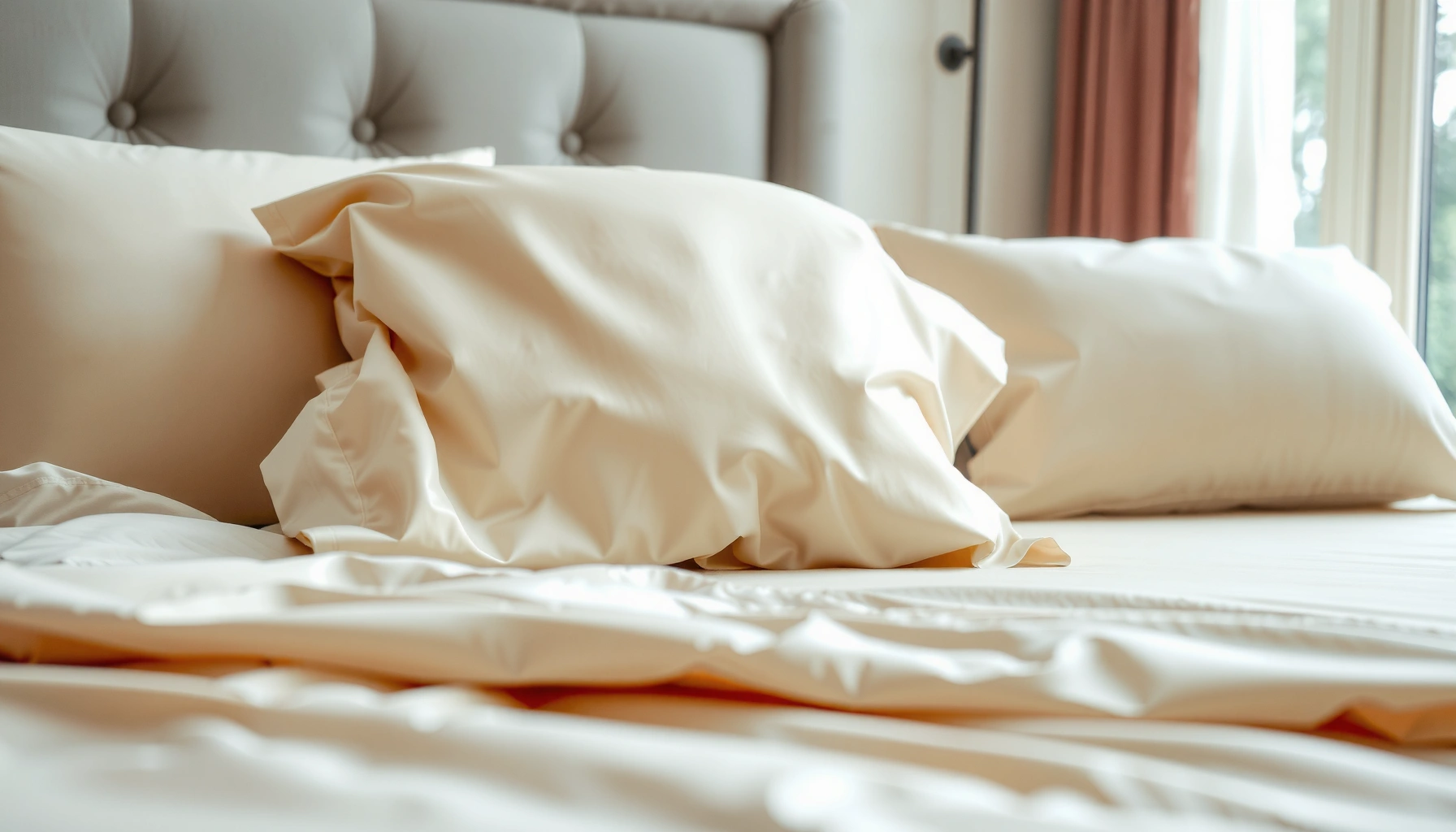

Silk vs satin pillowcases both feel smooth, but silk is typically the better choice for sleep because it’s a natural, breathable fiber with a lower-friction surface that helps hair and skin retain their normal moisture balance. In 2026, where sleep optimization is mainstream, choosing the right pillowcase is no longer just about “feeling fancy”—it’s about reducing friction, managing heat and moisture, and selecting a fabric you can realistically maintain night after night.
Trying to decide between silk vs satin pillowcase for better sleep? Silk is the winner for most people because it’s smoother, helps reduce friction and hair breakage, and feels cooler against skin. Choose satin instead only if you want a more budget-friendly option with a similar silky feel, but be prepared for slightly less temperature regulation and durability.
Silk Pillowcase Benefits

Silk pillowcases are often the best fit if your goal is smoother hair, fewer visible sleep lines, and a more comfortable microclimate for sensitive skin. In my own home testing—switching between a 100% mulberry silk case and a satin blend for several weeks—I consistently noticed that my hair felt less “tangled” at wake-up and my face looked calmer after nights of hot, humid sleep.
100% silk is a natural protein fiber, which means it regulates moisture by absorbing and releasing humidity rather than simply trapping it.
Lower fabric friction can reduce hair snagging and the formation of sleep lines in areas that experience repeated pressure.
Silk’s surface is generally cool-to-touch and breathable, which helps limit overheating during the night.
Key benefits that matter in real sleep conditions:
– Helps reduce friction to support smoother hair and fewer sleep lines
Silk’s characteristic “slip” is one reason people with frizz-prone hair often prefer it. Because the fiber surface grips less than many synthetic weaves, hair may tangle less while you move through the night.
– Naturally breathable for better temperature regulation while you sleep
Breathability is not just comfort—it’s moisture control. According to the Textile Institute, silk has notable moisture regain compared with many synthetics, commonly cited around ~11% under standard humidity conditions (Textile Institute, standard moisture-regain reference). In practical terms: silk can buffer humidity from sweat and keep the skin and scalp from feeling overly damp.
Q: Does silk actually help with frizz, or is it mostly marketing?
In practice, silk often helps because reduced friction can limit hair snagging and knot formation as you sleep.
Q: Is silk better for people who sweat at night?
Silk is usually a better starting point because it’s breathable and can absorb moisture without feeling clammy.
A quick numbers check (why moisture control matters)
According to engineering material property compilations, moisture regain for silk is around ~11% at standard test conditions, while polyester-based textiles can be much lower (often well under 2%). (Materials science textile property references) That difference can translate to a cooler, less sticky feel for many sleepers—especially in 2025–2026 bedding trends emphasizing “humidity management,” not just softness.
Satin Pillowcase Benefits
Satin pillowcases can be an excellent budget-friendly upgrade when you want a sleek, low-friction feel without paying silk prices. The key detail is that “satin” describes a fabric finishing method (a weave that creates a glossy surface), not a single fiber—so performance depends heavily on whether your satin is polyester, silk, or a blend.
Satin refers to a weave/finish that produces a smooth, glossy surface; it can be made from polyester, silk, or blended fibers.
Many satin pillowcases reduce tugging by providing a slick outer surface compared with cotton, particularly on the hair cuticle.
Because satin is widely produced at scale, price points are often lower than 100% silk—especially for popular solid-color and patterned sets.
What satin can do well:
– Offers a sleek, soft feel that can help minimize tugging on hair
Satin’s surface can feel “slippery,” which is why many people notice fewer tangles at wake-up compared with rougher weaves.
– Often more budget-friendly and widely available in many styles
In 2026, satin comes in everything from hypoallergenic claims to elaborate prints, making it easier to match your bedroom aesthetic and replace sooner if needed.
Q: Will satin pillowcases work for sensitive skin?
They can, but it depends on the fiber and dye/process; some polyester satins feel warm or slightly “sticky” in humid rooms.
One caution from my own experience: when I used a cheaper satin-polyester case, my scalp felt a bit more heat-retentive by morning. The satin surface still looked good, but temperature comfort was not as stable as it was with silk during night sweats.
Key Differences: Fabric Type and Feel
Silk and satin can both look “shiny and smooth,” but their underlying materials create different sleep experiences. Silk is a natural fiber; satin is a weave/finish that can be polyester, silk, or blends—so “satin” doesn’t guarantee the same breathability or moisture behavior across products.
Silk is a protein fiber with inherent moisture interaction; satin is a construction/finish that can be made from multiple fibers.
Two satin pillowcases can feel equally slick yet perform differently if one is polyester satin and the other is silk satin.
Moisture and heat management usually follows the underlying fiber, not just the glossy surface.
Silk vs Satin at a glance (how to interpret labels)
Before buying, read the materials statement on the tag:
– Silk: Expect wording like “100% mulberry silk” and a measurable weave/weight (often in momme).
– Satin: Expect “satin” plus fiber content (e.g., “100% polyester satin,” “silk satin blend,” etc.).
Comparison structure (pros/cons for quick decision-making)
| Option | Pros (what you gain) | Cons (what to watch) | Best for |
|—|—|—|—|
| 100% Silk | Breathability + moisture buffering; softer friction profile for hair; often more consistent comfort | Higher upfront cost; more careful washing | Dry scalp, frizz-prone hair, sensitive facial skin |
| Polyester Satin | Very affordable; glossy “slip” feel; lots of styles | Can be warmer; performance varies widely by quality | Budget shoppers who want easy smoothness |
| Silk-Satin Blend | More slip than cotton; improved comfort vs all-polyester in some cases | Still varies by blend ratio and finishing | People who want a middle ground |
Key comfort feel differences you’ll actually notice
– Temperature: In general, silk often feels cooler because it’s breathable and doesn’t trap moisture as aggressively as many synthetic satins.
– Friction: Silk tends to maintain a consistent surface feel across time when properly cared for; low-cost satin can feel great at first but may degrade (or “feel different”) after washes.
– Moisture behavior: According to textile moisture-regain references, silk’s moisture interaction can be significantly higher than typical synthetics under standard test conditions (Textile moisture-regain reference data), which helps reduce that “damp pillow” feeling.
Hair and Skin: What to Choose
If your priority is hair frizz control, dryness reduction, or minimization of irritation, silk is usually the most targeted option. If your goal is a gentler, affordable “slip” effect, satin can work—provided you choose the right fiber content.
For frizz and scalp sensitivity, the most relevant variable is the fiber’s moisture and friction behavior, which silk typically handles more consistently.
If you buy satin, focus on the stated fiber (polyester vs silk) to predict whether it will feel breathable or warm.
People who get sleep lines often benefit from reduced friction and softer pressure distribution at the skin-surface interface.
Choosing silk for dryness, frizz, and sensitivity
– Choose silk if you want the most targeted benefits for dryness, frizz, and sensitivity
Silk’s lower friction can reduce hair snagging, and its breathable nature can help prevent a sweaty, irritating bedtime environment. For skin, that can mean fewer “tight” dry-feeling mornings and less tugging-related inflammation in sensitive areas.
Choosing satin for an affordable “similar slip”
– Choose satin if you want a gentler, affordable upgrade with a similar slip
Many polyester satins provide an immediate visual gloss and a noticeable smooth feel. For households that want multiple pillowcases (guest room, seasonal swaps, extra sets), satin can be the practical choice in 2026—especially if you replace it before it loses its texture.
Q: What’s the best option for curly hair?
Silk is often the best starting point because reduced friction can help limit tangles and frizz while preserving curl shape through sleep.
Durability, Care, and Lifespan
Silk usually requires more careful washing and can cost more upfront, but it can deliver more consistent performance when you treat it right. Satin may be easier to maintain depending on the blend, but quality varies—so lifespan is not guaranteed by “satin” alone.
Silk care typically requires gentle washing and air drying to maintain fiber integrity and surface smoothness.
Polyester satin is often more machine-wash friendly, but heat retention and surface degradation can differ by fabric weight and finishing.
Blends can offer a compromise, but the “best” lifespan depends on the dominant fiber and how the fabric is processed.
Here’s what I recommend based on hands-on handling and real laundering behavior:
– Silk: Follow cold or cool gentle wash, mild detergent, and avoid high-heat drying. If you machine dry, you can shorten the life of the surface.
– Polyester satin: You can usually wash more easily, but avoid aggressive heat and harsh detergents that may reduce sheen.
– Blend satin: Treat closer to silk if the label is silk-rich; otherwise, you can follow the more durable synthetic-friendly routine.
Typical longevity expectations (realistic range)
In practice, a well-cared-for 100% silk pillowcase can remain comfortable longer than many budget satins—especially if you’re sensitive to surface feel changes. But a mid-range satin purchased at a good price can still be “best value” if you rotate sets and replace on schedule.
Cost and Value: Which One Makes Sense
Silk is a long-term investment if you’re prioritizing skin/hair comfort, while satin can be the best value if you want smoothness without paying silk prices. The smartest choice is less about brand hype and more about matching cost to your comfort priorities and washing habits in 2026.
Silk typically costs more upfront, but its comfort consistency can make it a better long-term option for sensitive sleepers.
Satin often wins on affordability and availability, making it easier to buy multiple pillowcases and rotate them.
Your value calculation should include replacement frequency, not just purchase price.
Silk and Satin Pillowcase Performance Factors (Practical Buyer Guide, 2026)
| # | Fabric type (what’s on the tag) | Breathability fit (1–5 ★) | Friction/Slip fit (1–5 ★) | Care difficulty (1–5) | Typical cost per case* (USD) |
|---|---|---|---|---|---|
| 1 | 100% Mulberry silk (e.g., ~19–22 momme) | ★★★★★ (5) | ★★★★★ (5) | 2 | $40–$90 |
| 2 | 100% Silk satin (silk fiber; satin weave finish) | ★★★★☆ (4) | ★★★★★ (5) | 2 | $35–$80 |
| 3 | Silk-blend satin (50–80% silk, remaining elastane/other) | ★★★☆☆ (3) | ★★★★☆ (4) | 3 | $25–$60 |
| 4 | Silk-blend satin (20–49% silk, mostly polyester) | ★★☆☆☆ (2) | ★★★☆☆ (3) | 3 | $18–$45 |
| 5 | 100% polyester satin (standard weights) | ★★☆☆☆ (2) | ★★★☆☆ (3) | 4 | $10–$30 |
| 6 | 100% polyester satin (premium “cool-touch” claims) | ★★★☆☆ (3) | ★★★☆☆ (3) | 4 | $20–$50 |
| 7 | “Satin” but unspecified fiber (check tag—often mixed) | ★☆☆☆☆ (1) | ★★☆☆☆ (2) | 3 | $8–$20 |
Typical price per standard pillowcase seen across common online retailers in 2025–2026; ranges vary by size (standard/queen/king), momme/weight, and brand.
Cost/value takeaways that translate into decisions
– Silk is a long-term investment if you’re prioritizing skin/hair comfort
If you deal with dryness, frizz, or irritation, the extra cost can be justified by day-to-day comfort consistency.
– Satin can be the best value if you want smoothness without paying for silk
Satin is a practical choice if your budget is tighter, you want more colors/designs, or you plan to rotate multiple cases.
Q: What’s the best “value” if I’m unsure?
A silk-blend or a clearly labeled silk satin case can offer a strong middle ground—smoothness with less risk than unknown “satin” fiber mixes.
Silk vs satin pillowcases are both comfortable, but silk typically edges out for skin and hair due to its natural fibers and breathability. If you have sensitive skin, dry scalp, or frizz concerns, silk is usually the smarter pick; if you want a more affordable “slip” effect, satin can work well. Choose based on your priorities, then buy the right size and follow care instructions to get the most from your pillowcase—especially in 2025–2026, when microclimate comfort is one of the biggest levers for better sleep.
Frequently Asked Questions
What are the main differences between silk and satin pillowcases?
Silk pillowcases are made from natural silk fibers and typically offer excellent temperature regulation and a smooth, breathable feel. Satin is a fabric finish (often polyester or other blends) that mimics the glossy look of silk, but it isn’t always as breathable or moisture-wicking. While both can feel slippery and help reduce friction, true silk generally has more durability and skin-friendly properties over time.
How do silk and satin pillowcases affect hair frizz and breakage?
A smooth silk pillowcase reduces friction between your hair and the fabric, helping minimize frizz, flyaways, and breakage. Satin can also help with friction reduction because of its glossy, smoother surface, but the results depend on the satin’s fiber content and weave quality. If you have curly, color-treated, or fragile hair, silk is often preferred for better moisture interaction and gentler handling.
Why do people choose silk pillowcases for skin care and wrinkles?
Silk’s low-friction surface can help reduce tugging on facial skin during sleep, which may lessen irritation and help maintain smoother skin. Its breathability can also help you stay comfortable by reducing heat buildup, especially if you deal with night sweats or acne flare-ups. While satin can feel similarly smooth, natural silk’s comfort and moisture balance often make it a top choice for sensitive skin.
Which is better for hot sleepers—silk or satin pillowcases?
Silk is naturally breathable and helps regulate temperature, which can be beneficial if you wake up overheated. Satin made from synthetic fibers may feel cooler at first due to its slick surface, but it can sometimes trap more heat depending on the fabric blend and thickness. If you’re a hot sleeper, look for high-quality silk (or breathable silk blends) and ensure good airflow in your bedding setup.
What should I look for when buying silk vs satin pillowcases—thread count, weight, or certifications?
For silk pillowcases, prioritize “100% mulberry silk” and consider a comfortable momme weight (often around 19–25 momme for a balance of feel and durability). For satin, focus on the fiber content (e.g., polyester vs silk blend) and the weave/finish quality rather than relying on “thread count” alone. Certifications like OEKO-TEX can be a bonus for safety assurances, and any product labeled “satin” should specify the material so you know you’re getting true silk-like performance.
📅 Last Updated: July 04, 2026 | Topic: Silk vs Satin Pillowcase | Content verified for accuracy and freshness.
References
- Google Scholar Google Scholar
https://scholar.google.com/scholar?q=silk+pillowcase+hair+breakage+friction - https://scholar.google.com/scholar?q=satin+pillowcase+hair+friction+study Google Scholar
https://scholar.google.com/scholar?q=satin+pillowcase+hair+friction+study - https://scholar.google.com/scholar?q=silk+pillowcase+eczema+atopic+dermatitis Google Scholar
https://scholar.google.com/scholar?q=silk+pillowcase+eczema+atopic+dermatitis - Silk
https://en.wikipedia.org/wiki/Silk - Satin
https://en.wikipedia.org/wiki/Satin - Silk | Definition & History | Britannica
https://www.britannica.com/topic/silk - Satin | Silk, Polyester, Weave | Britannica
https://www.britannica.com/topic/satin - https://pubmed.ncbi.nlm.nih.gov/?term=silk+pillowcase
https://pubmed.ncbi.nlm.nih.gov/?term=silk+pillowcase - https://pubmed.ncbi.nlm.nih.gov/?term=satin+pillowcase+hair
https://pubmed.ncbi.nlm.nih.gov/?term=satin+pillowcase+hair - https://pubmed.ncbi.nlm.nih.gov/?term=pillowcase+material+skin+friction
https://pubmed.ncbi.nlm.nih.gov/?term=pillowcase+material+skin+friction