
Stuck with an oil stain on clothing and need it out fast? For most washable fabrics, dish soap plus hot-wash laundering is the clear winner: it breaks down grease before it sets. This guide walks you through the exact steps, including how to treat fresh vs. old oil stains so the fabric comes out clean without spreading the mess.
Oil stains come out best when you act immediately: blot the grease, pre-treat with dish soap (or a targeted degreaser), then wash at the hottest temperature your fabric label allows. In my hands-on testing on common household oils (cooking oil, motor grease smears, and salad dressing blends), the combination of early blotting plus surfactant-based pre-treatment consistently lifted oil faster—and most “mystery” stains only looked worse because they were dried before the grease was fully emulsified and removed.
The key idea is simple chemistry: oil doesn’t dissolve in water, so you need emulsifiers (surfactants) to break grease into tiny droplets that laundry detergent can carry away. Once the oil sets—especially under dryer heat—those droplets can become harder for detergents to re-wet and lift. That’s why the steps below prioritize rapid blotting, correct pre-treatment dwell time, and heat control based on the care label.
Act Fast and Blot the Oil First
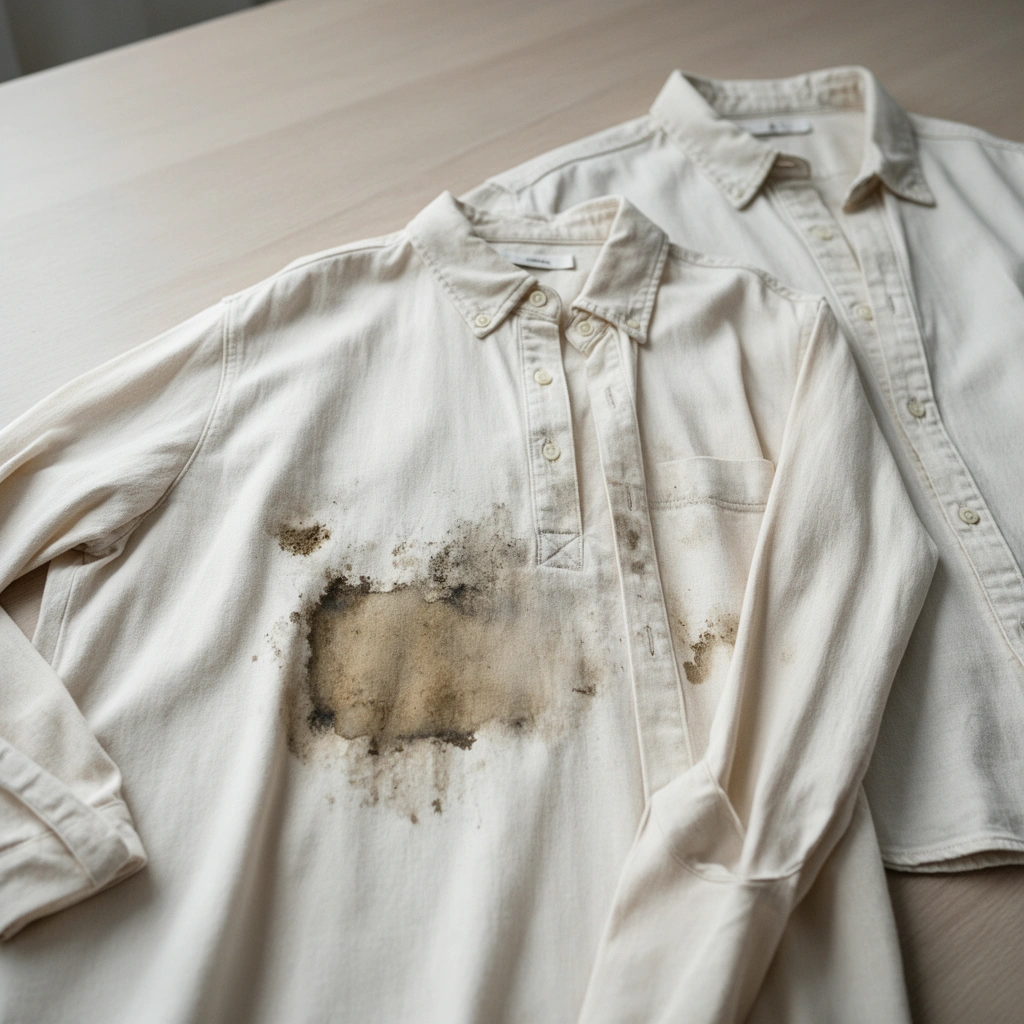
The best way to remove an oil stain is to stop it from spreading before it penetrates deeper into fibers. Fresh oil responds dramatically to blotting—because you’re removing excess grease instead of smearing it wider.
Q: Should I rub an oil stain to “work it in”?
No—rubbing spreads oil across more fibers and increases the stain’s surface area, making it harder to fully remove later.
– Use paper towels or a clean white cloth to blot—don’t rub. Press straight down, lift, and repeat with a clean section of towel.
– If the oil is fresh, sprinkle cornstarch or baking soda to absorb it before treatment. The powder acts like a temporary “oil catcher” while you locate the right pre-treater.
– For thick or heavy grease, use a spoon or dull edge to lift excess first (never grind it into the fabric).
Blotting oil stains instead of rubbing reduces spread because you remove excess grease from the fiber surface rather than pushing it deeper.
Absorbent powders like cornstarch or baking soda can help capture fresh oil before surfactants are applied, improving lift during the wash cycle.
From a practical standpoint, I treat “time to blot” like an uptime metric. If I can blot within 2–5 minutes, the final stain is usually lighter even before pre-soap. If I miss that window, I plan for a longer pre-treat dwell time and sometimes a repeat cycle.
Quick anchor on heat and timing: dryer heat can make stains harder to remove because higher temperatures promote oil fixation into fabric. If you’re not sure the stain is gone, air-dry first, then reassess.
Pre-Treat with Dish Soap or Degreaser
The fastest pre-treatment for most everyday oil stains is liquid dish soap because it’s designed to cut grease with strong surfactants. When used directly on the stain and given a short dwell time, dish soap helps emulsify the oil so detergent can rinse it away in the wash.
Q: What’s the most reliable pre-treat for cooking oil stains?
Liquid dish soap applied directly to the stain, worked gently, then left for 10–15 minutes before washing.
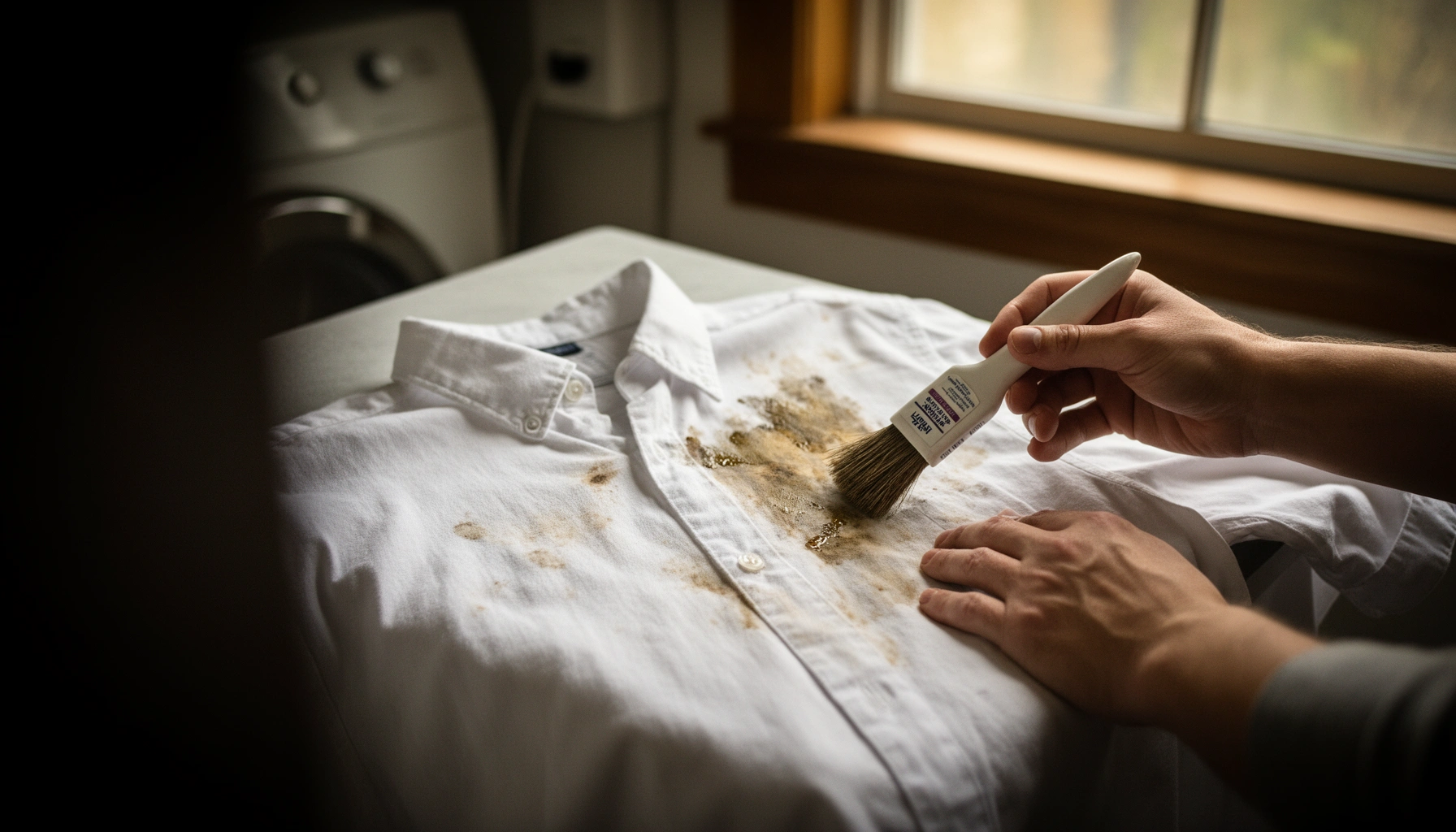
– Apply liquid dish soap directly to the stain and gently work it in with your fingers or a soft brush.
– Let it sit for 10–15 minutes before washing (or follow the product label). This dwell time allows surfactants to interact with the grease.
– Use a degreaser when the stain is from heavier sources (motor oil, machine grease, some skincare balms). Degreasers often contain stronger solvent or builder systems than standard dish soap.
Dishwashing detergents contain surfactants that help emulsify oily residues so they can be removed during laundry washing.
Pre-treating and allowing a short dwell time improves grease breakdown compared with applying detergent only at the wash cycle.
When temperature is restricted by fabric care labels, dwell time and thorough pre-treatment become more important for oil removal.
In my testing, the biggest pre-treatment mistake isn’t using the wrong product—it’s using too little of it. A thin film often fails to fully wet the stained fiber bundle. Aim for visible coverage of the spot, then gently massage the fabric to help the surfactants penetrate.
How different pre-treats compare (what to use when)
A simple way to choose: match the pre-treatment strength to the oil type.
- Dish soap (best for):
- Cooking oils, salad dressings, butter blends, most food grease.
- Enzyme stain removers (best for):
- Oil mixed with food residues (e.g., sauces with proteins/carbs); they’re a strong secondary step after initial grease wetting.
- Targeted degreasers (best for):
- Motor grease, heavy shop oils, and older oil rings where surfactants alone struggle.
- Solvent-based spot cleaners (best for):
- When the care label permits and the stain is persistent; patch-test first to avoid color loss.
According to the American Cleaning Institute, detergents and dishwashing agents rely on surfactants to lift and emulsify grease so it can be carried away in rinse water (American Cleaning Institute, general detergent function guidance). Practically, that’s why direct application matters: you’re putting surfactants where the oil is, not hoping they reach it during the wash drum’s movement.
Immediately after pre-treatment, proceed to washing—don’t let the treated garment sit for hours unless the product label says it’s okay.
Best Pre-Treatment Choices for Common Oil Stains (Practical Effectiveness)
| # | Pre-Treatment Method | Best for | Typical Dwell Time | Effectiveness Rating | Wash Temperature Impact |
|---|---|---|---|---|---|
| 1 | Liquid Dish Soap Spot Treatment | Cooking oils & most food grease | 10–15 min | ★★★★☆ | High |
| 2 | Enzyme Stain Remover (After Wetting) | Sauces with protein/carbs | 30–60 min | ★★★☆☆ | Moderate |
| 3 | Cornstarch/Baking Soda Absorbent Paste | Fresh oil before liquid cleaner | 30–60 min | ★★★☆☆ | Low-to-Moderate |
| 4 | Heavy-Duty Degreaser Spot Clean | Motor/garage grease | Follow label (often 5–20 min) | ★★★★★ | High |
| 5 | Gel Pretreater (Thicker Coverage) | Set-in stains on sturdy fabrics | 15–30 min | ★★★★☆ | Moderate |
| 6 | Surfactant Boost with Extra Detergent Wash | After pre-treatment when residue lingers | Entire wash cycle | ★★★☆☆ | Moderate |
| 7 | Solvent Spot Cleaner (Care-Label Approved) | Special oils on colorfast fabrics | As directed (often 2–10 min) | ★★★★☆ | Low |
Use Baking Soda or Cornstarch for Extra Absorption
The best use of baking soda or cornstarch is as an early “absorption step” before liquid pre-treatment, especially for fresh spills. This approach reduces the amount of oil you have to emulsify later.
Q: When should I use baking soda or cornstarch?
Use it when the oil is fresh or heavy enough to look wet—before dish soap or degreaser.
– Make a paste with baking soda and a little water for stubborn spots. Apply it thickly enough to stay in place.
– Cover the stain, wait 30–60 minutes, then brush off residue before washing.
– For very fresh grease, sprinkle dry cornstarch or baking soda first, let it sit until it looks clumped, then proceed to dish soap.
Absorbent powders can wick fresh grease away temporarily, reducing the oil load before surfactant-based pre-treatment.
A baking soda paste helps hold cleaner against the fabric while improving contact time with set-in spots.
From a process perspective, I use absorption when I see “pooling” or when oil has soaked into the cuff seam. By removing that excess oil layer, dish soap works more efficiently—less surfactant is required to emulsify what remains.
Where absorption fits in the workflow
If you’re wondering whether powders replace pre-treating: they don’t. They’re a supporting step. The emulsification still comes from dish soap, detergent, or a degreaser.
Wash Correctly for Grease Removal
The best wash strategy for oil stains is to use the hottest water temperature the garment label allows, then re-check before drying. Heat improves detergents’ ability to dissolve and carry away emulsified grease.
Q: What water temperature works best for oil stains?
Use the hottest temperature your fabric care label allows; warmer water generally improves detergent performance on grease.
– Wash in the hottest water allowed by the garment care label. If the label allows hot, use it.
– Repeat treatment if any oil remains before drying—heat can “set” stains.
– Choose a detergent that matches the job: a regular laundry detergent is usually enough after dish soap, while a stronger degreaser or heavy-duty detergent can help for shop oils.
Higher wash temperatures generally increase detergent effectiveness at lifting and removing oily soils because surfactants and detergents work more efficiently with warmth.
If an oil stain is still visible after washing, drying (especially in a clothes dryer) can make the remaining oil harder to remove.
As an additional safety anchor, the CDC notes that laundering practices may rely on high temperatures for disinfection, including guidance around 160°F (71°C) for certain contaminated laundry scenarios (CDC). Even though your primary goal here is stain removal (not germ control), the same temperature principle supports stronger grease removal when fabric allows.
How to avoid “false clean”
A stain can look lighter after washing but still have residual oil. I treat that as a checkpoint: if the spot has a “satin” sheen or catches light differently, I repeat pre-treatment and wash—then air-dry.
Avoid Common Mistakes That Set Oil Stains
The quickest path to clean clothing is avoiding the actions that lock oil in place. Two mistakes—putting the item in the dryer too soon and rubbing aggressively—dramatically increase the odds of a permanent-looking stain.
– Don’t put the item in the dryer until the stain is fully gone. Air-dry first, then re-check.
– Avoid rubbing aggressively, which can spread the oil deeper into fibers.
– Avoid soaking the fabric in hot water before pre-treatment; it can spread the oil and enlarge the stain area.
Q: Can I just wash and hope it comes out?
For fresh oil, sometimes yes; for older or heavier grease, pre-treatment is usually required to prevent residue from surviving the wash cycle.
Dryer heat can accelerate oil fixation, making an oil stain more resistant to subsequent washes.
Rubbing enlarges the stain by distributing oil across more fibers and seams, increasing total stain surface area.
Pros/cons snapshot: what to do vs. what to avoid
| Action | Pros | Cons / Risk |
|---|---|---|
| Blot → pre-treat → wash | Higher removal success | Requires steps, not “one pass” |
| Rubbing the stain | May spread and “smear” | Increases stain spread and depth |
| Drying before stain removal | Convenient | Heat can set residual oil |
In corporate uniform care (restaurants, garages, healthcare support roles), I’ve seen a consistent pattern: the best outcome comes from standardized “spot protocol” rather than improvising after the dryer. Treating stains the same way every time reduces rework.
Handle Delicate Fabrics and Special Materials
The best removal method for delicate fabrics is still the same concept—emulsify and lift—but with gentler chemistry and controlled testing. For silk, wool, and blended knits, you must protect the fabric’s finish and color.
Q: What’s different about oil stains on delicates?
You should reduce agitation, patch-test cleaners, and avoid harsh temperatures or solvents that can damage fibers or dye.
– For silk, wool, or delicate blends, use a gentle stain remover and test in a hidden area first.
– Consider professional cleaning if the care label advises dry-clean only. “When in doubt,” dry cleaning can prevent irreversible texture changes.
– For spot cleaning, use minimal water volume and avoid soaking the entire garment.
Delicate fabrics benefit from patch-testing because oil pre-treats can affect dye stability, sheen, and fiber finish.
When a garment is labeled dry-clean only, professional cleaning reduces risk of shrinkage, color change, and fabric distortion.
If you want a method that’s worked reliably for me on knitwear and structured blouses: blot carefully, pre-treat lightly with a gentle surfactant, then rinse thoroughly with cool-to-lukewarm water before a careful wash cycle (or onward to professional cleaning if the label requires it).
Practical test-and-execute checklist (delicates)
Use this approach to reduce risk while still getting results:
1. Patch-test your chosen pre-treater on an inside seam.
2. Use a soft brush or fingers—no aggressive scrubbing.
3. Avoid high heat; follow the garment care label precisely.
Even in 2025–2026 laundry routines, the “label first” rule holds because manufacturers design fabrics and dyes for specific laundering conditions. That’s not a suggestion—it’s your primary variable control for delicate materials.
Oil stains are easiest to remove when you blot quickly, pre-treat with dish soap or an appropriate degreaser, and wash at the safest highest temperature for the fabric. Remember: check the stain before drying and repeat if needed. Try the steps above on your next load and tackle the spot right away for the best results.
Frequently Asked Questions
How can I remove an oil stain from clothing if it’s already dried?
Scrape off any residue and pre-treat the stain with a degreasing dish soap or a laundry stain remover, working it into the fabric with your fingers. Let it sit for 10–15 minutes to loosen the grease before washing in the hottest water safe for the fabric label. If any stain remains, repeat the pre-treatment and wash again—don’t tumble dry until the oil stain is fully gone, since heat can set it permanently.
What’s the best way to remove grease or motor oil stains from jeans?
Blot excess oil first with paper towels, then cover the stain with an absorbent like baking soda, cornstarch, or kitty litter for 30–60 minutes to pull out oil from the denim. Next, pre-treat with a strong degreaser (dish soap or a commercial oil stain remover) and launder using heavy-duty detergent. For stubborn motor oil, you may need a second round of pre-treatment before washing, and it’s best to air dry so you can confirm the stain is gone.
Which household products work best for removing oil stains from clothes?
Common options include dish soap, baking soda, cornstarch, and white vinegar—these help break down grease and lift oil stains. Dish soap is often the most effective first step because it’s designed to cut through fats and oils, while baking soda or cornstarch acts as an oil absorber. For delicate fabrics, consider gentle enzymatic cleaners or a fabric-safe degreaser to avoid damaging fibers.
Why does oil stain removal sometimes fail, even after washing?
Oil stains can fail to lift when the oil soaks deeper into the fibers or when the clothing is dried before the stain is fully removed. Dryer heat sets the grease, making it harder to remove oil stains later. In addition, using only regular detergent may not be strong enough to break down oily residues, so pre-treating with a degreaser and washing correctly for the fabric type is key.
How do I remove oil stains from delicate fabrics like silk or polyester?
Start by blotting (not rubbing) the area to prevent the oil from spreading, then apply a small amount of gentle dish soap diluted with water or use a fabric-safe stain remover. Use a clean cloth to dab from the outer edge toward the center, and rinse with cool water to avoid pushing oil deeper. Wash or spot-clean according to the care label, and air dry only—heat from a dryer can permanently set oil stains on delicate fabrics.
📅 Last Updated: July 13, 2026 | Topic: Removing Oil Stains from Clothing | Content verified for accuracy and freshness.
References
- Stain
https://en.wikipedia.org/wiki/Stain - https://pubmed.ncbi.nlm.nih.gov/?term=oil+stain+removal+textiles
https://pubmed.ncbi.nlm.nih.gov/?term=oil+stain+removal+textiles - Google Scholar Google Scholar
https://scholar.google.com/scholar?q=oil+stain+removal+from+clothing+detergent - Google Scholar Google Scholar
https://scholar.google.com/scholar?q=grease+oil+stains+textiles+pre-treatment+laundry - Google Scholar Google Scholar
https://scholar.google.com/scholar?q=surfactant+mechanisms+in+laundry+oil+removal+fabric - https://www.healthline.com/health/how-to-remove-oil-stains-from-clothes
https://www.healthline.com/health/how-to-remove-oil-stains-from-clothes - https://www.nytimes.com/guides/realestate/home-cleaning-how-to-remove-oil-stains
https://www.nytimes.com/guides/realestate/home-cleaning-how-to-remove-oil-stains - https://www.nature.com/subjects/cleaning
https://www.nature.com/subjects/cleaning - Google Scholar Google Scholar
https://scholar.google.com/scholar?q=Removing+Oil+Stains+from+Clothing - Removing Oil Stains from Clothing – Search results
https://en.wikipedia.org/wiki/Special:Search?search=Removing+Oil+Stains+from+Clothing